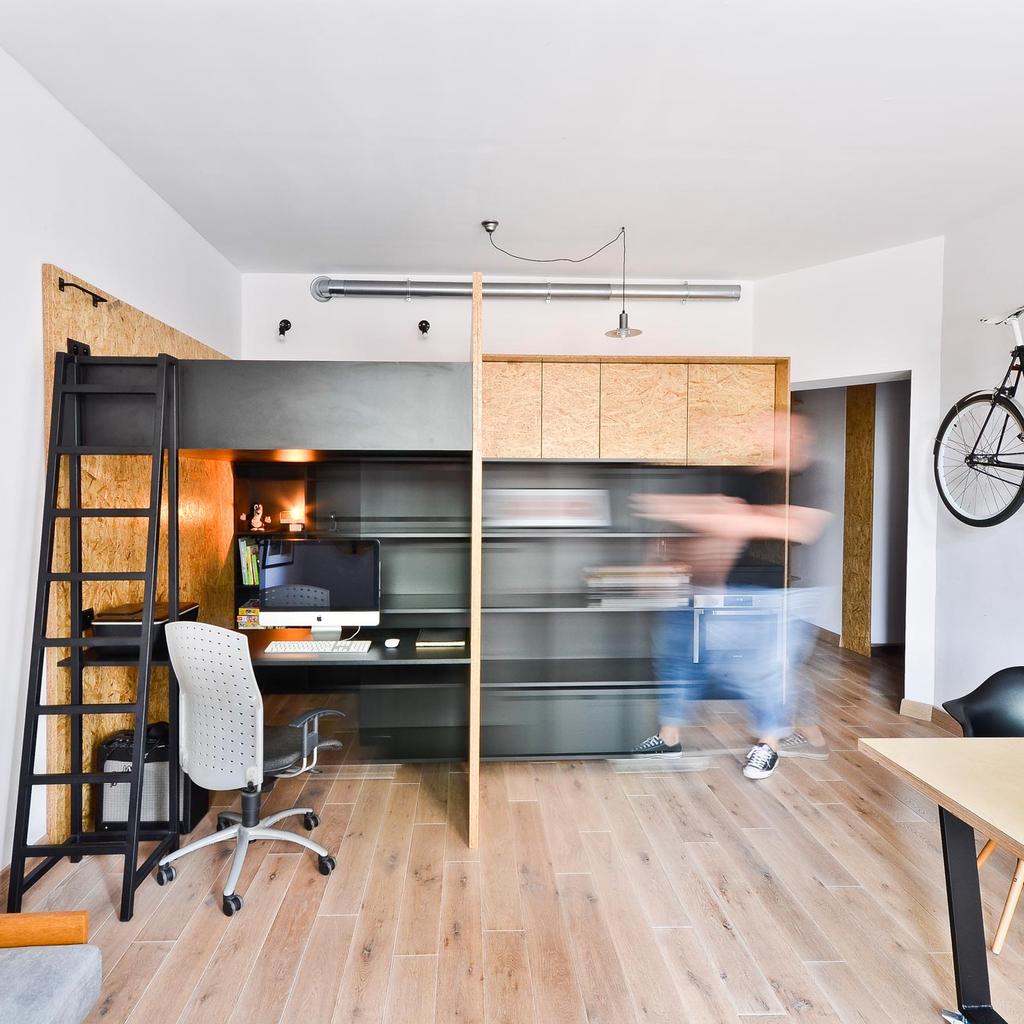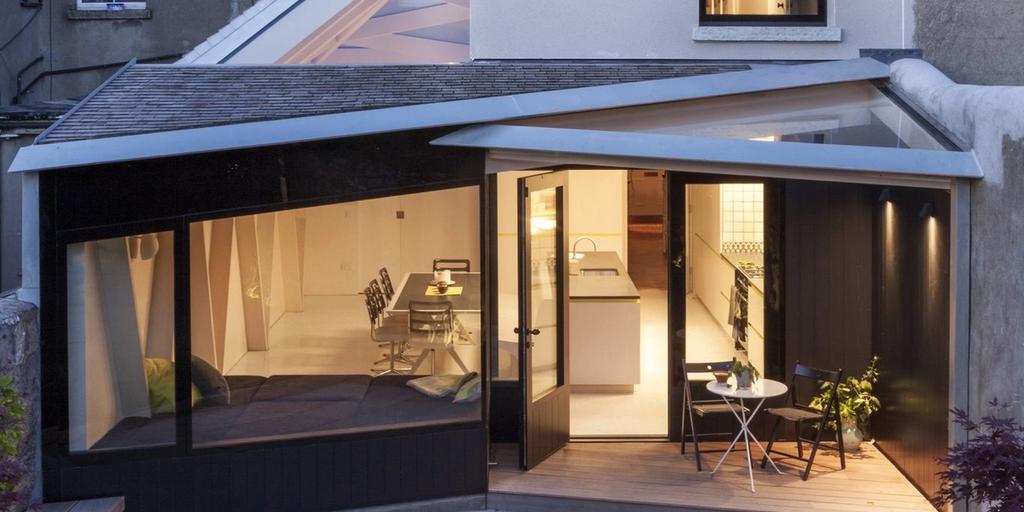
The two-storey house was dark and damp, with only a poorly built conservatory leading to the garden admitting any light into the interior. This house renovation opened up the space.
The geometry of the door and window openings echoes the patterns formed by the pale plywood structures. Paradoxically, this complexity in the treatment of the interior walls and ceilings is precisely what achieves a sense of minimalism in the overall design.


The geometry of the door and window openings echoes the patterns formed by the pale plywood structures.
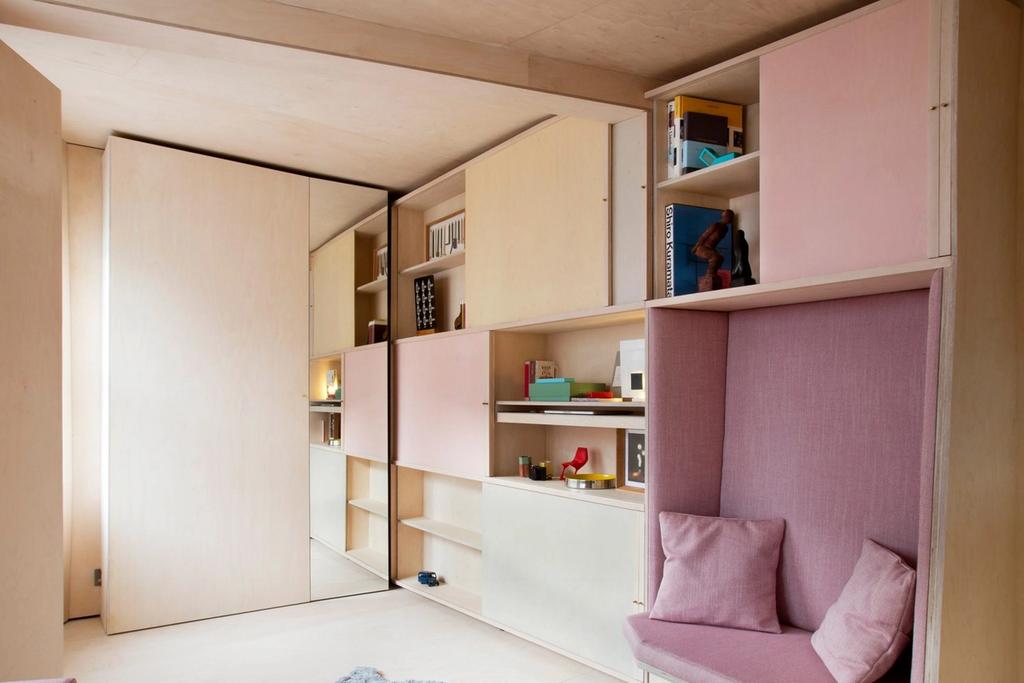
Working with plywood, NOJI Architects construct striking triangular forms that allow natural light to penetrate deeper into the house throughout the day as the sun moves across the sky. Within the project, the material serves three distinct purposes: it is aesthetically pleasing, it creates precise and volumetric structures, and it is cost-effective. On top of that, it is straightforward to assemble, which reduces construction time while improving accuracy and quality.


The furniture, the staircase, and the kitchen tiling are integrated into the design so seamlessly that they read as a unified whole — consistent in both colour and texture.


The bathroom continues the tradition of incorporating wooden surfaces.
Their presence brings warmth to the cool tones of the walls. The architects also retained the bathroom windows, which serve as a generous source of natural light; the remaining glazed surfaces, as elsewhere in the house, mirror the geometry of the wall design elements.
After the renovation, the old building is transformed beyond recognition. We invite you to see how the Studiomama studio managed to breathe new life into the spaces tucked beneath the roof of a three-hundred-year-old building in the historic centre of Stockholm.