More than 120 years ago, the Koyama family home in Japan served as a sealed greenhouse for cultivating koji, the key ingredient in sake and soy sauce. Now, through the efforts of its owners and architect Yoi Shigenori, the Moyashi machiya opens its doors to a new generation of guests.
The noun moyashi is often used to describe the process of plants and flowers growing, and it is this word that gives the house its name. The building type is characteristic of the traditional architecture of Japan's historic capital. In Kyoto it is known as a machiya and comprises a shop, a garden, and the owner's living quarters. As upkeep and restoration have become prohibitively expensive for owners, these structures are gradually disappearing from the city's streetscape, giving way to car parks and apartment complexes.
In response to the rapid decline in the number of these historic buildings, Masashi and Akiko Koyama restored the traditional character of their home, transforming it into a destination for visitors.

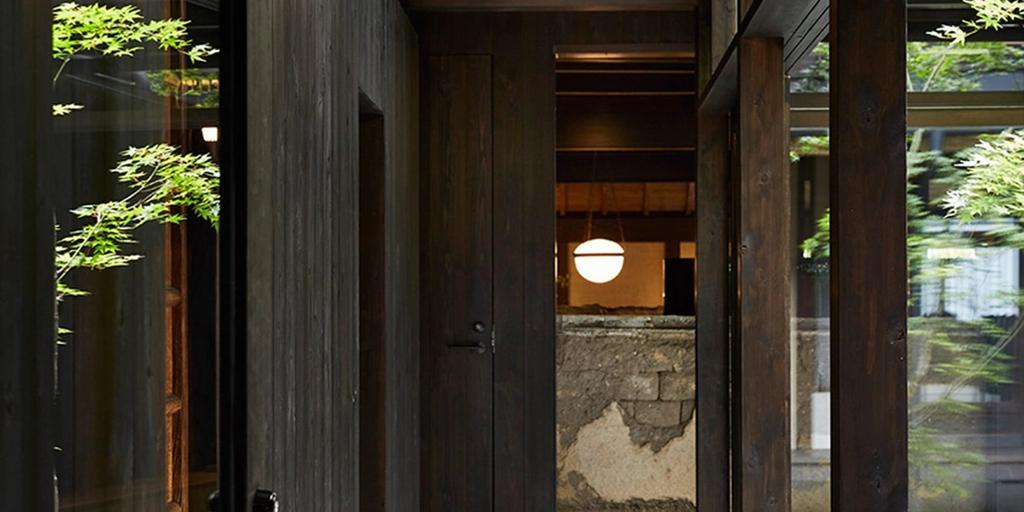
The restored interior details conjure a sense of life in Japan at the close of the nineteenth century. The floors are covered in tatami — an indispensable element of home design a century ago, now rarely found even in a single room. The machiya also retains the shoji sliding doors that are canonical to Japanese architecture.
The lightweight, durable paper used for the windows is called washi and is traditionally made from plant fibres. It shields the residents' privacy from outside eyes without blocking the light. Three layers of sand coat the walls, lending them a quietly textured finish.

The house is set into the open space between two gardens. The large dining room sits between them, while the living hall and kitchen wrap around the inner courtyard. The gardens provide natural ventilation and light, and bring living colour to the dark, restrained tones of the interior. The doors are opened in warm weather, allowing the plants to become part of the living space.
The renovation drew primarily on natural materials: stone, timber, sand, paper and straw. Traditional interior elements are complemented by mid-century furnishings alongside a contemporary kitchen and bathroom.
"The aim of restoring Moyashi is to remind people of the importance of traditional architecture in the modern world and to reveal the role of nature in design"
Japanese architecture is associated with serenity and restraint verging on the ascetic. Its design is deeply tied to the country's traditions, a sense of balance, natural harmony and an appreciation of comfort. A striking example of the seamless weaving together of architectural ideas from different eras, the house draws visitors into a tranquil atmosphere suited to rest and private retreats.