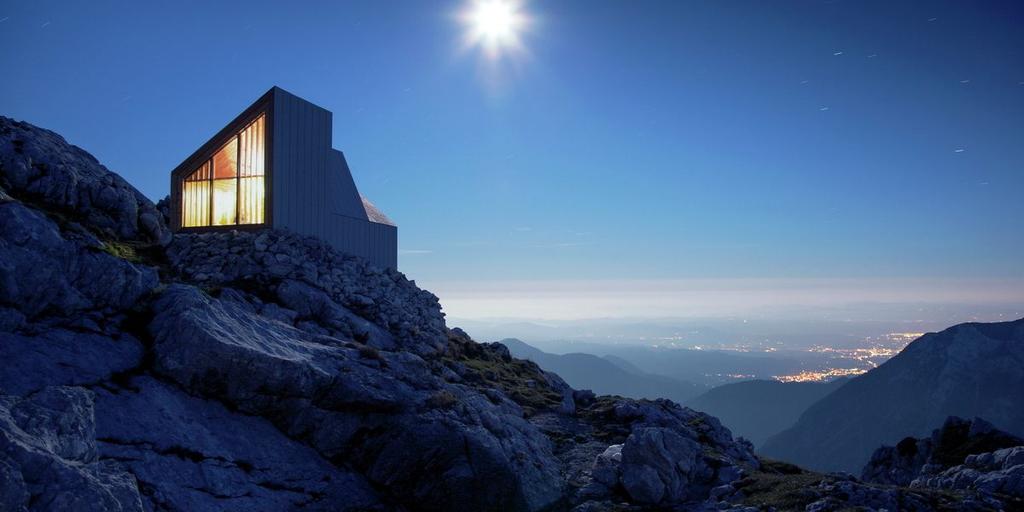
Freezing sleet, blinding blizzards, sudden drops in temperature — these are familiar sensations for climbers ascending Mount Skuta in Slovenia. Such extreme conditions demand precise architectural forms and considered design, as embodied by the Alpine Shelter Skuta bivouac.
The climatic conditions, difficult terrain and risk of landslides posed a genuine challenge for the architects. In 2015, designers from OFIS Architects in Slovenia and London-based engineers AKT II, working in collaboration with students from Harvard Graduate School of Design, succeeded in creating a shelter capable of keeping climbers safe and comfortable.

Alpine Shelter Skuta replaced a dilapidated, outdated refuge that had stood for more than fifty years.
The bivouac sits at an altitude of 2,045 metres (6,709 feet) above sea level on the mountain's southern slope. The trail leading to the shelter begins at the Kamniška Bistrica river, just a short drive from the Slovenian capital Ljubljana.
The first part of the ascent passes through a deciduous forest, which gradually gives way to pine. Above the treeline, the landscape is dominated by loose scree and steep grassy slopes. The final section of the hike is the most dramatic: wind sweeps through a high-altitude karst terrain rich in distinctive rock formations.


Dividing the bivouac into three separate modules made it possible to transport it to the mountain by helicopter, and also to give each section of the shelter a distinct function. The first module is devoted to storage and cooking. The second is a rest area that can serve as a bedroom when needed. The third module is fitted with bunk beds. In total, the shelter can comfortably accommodate eight people.
Panoramic windows frame a sweeping view over the Ljubljana Basin and the peaks that surround it.
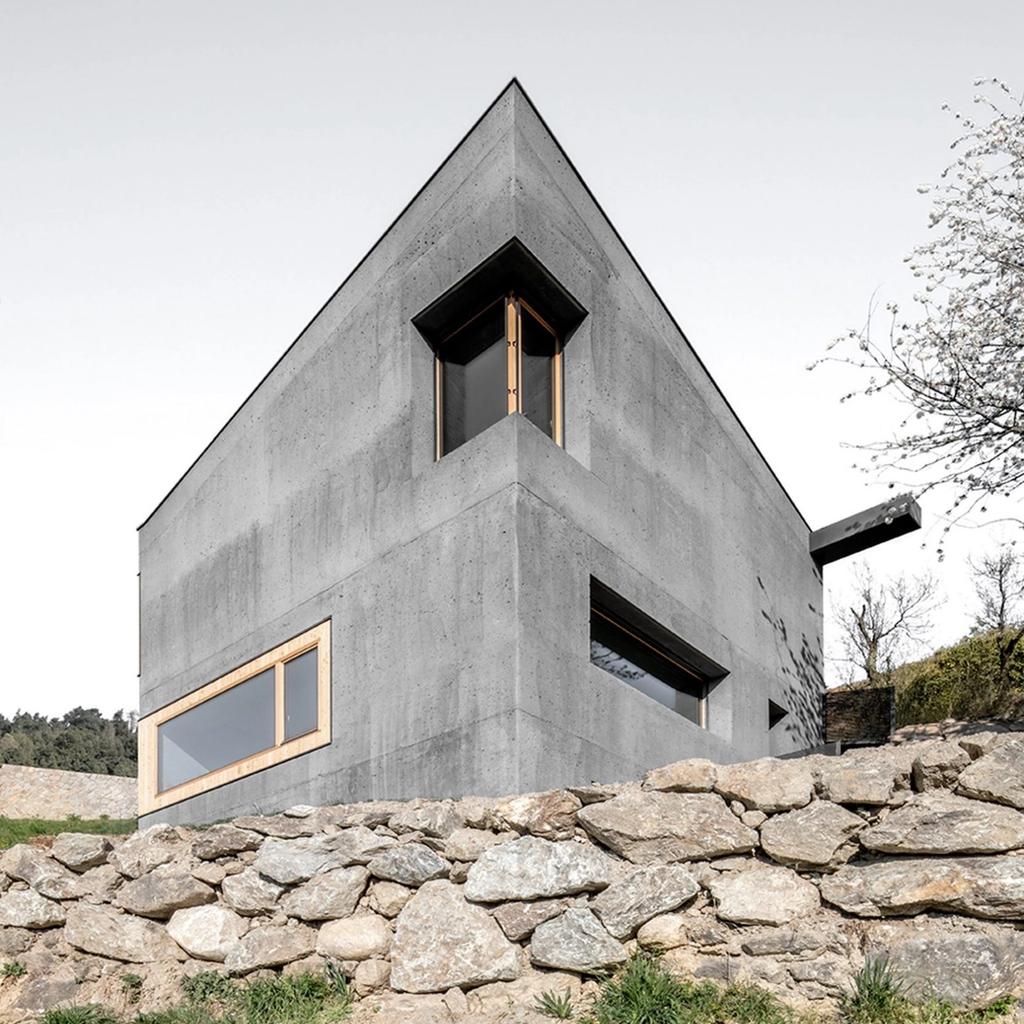
Out of respect for traditional Alpine architecture, the forms and materials were chosen to withstand extreme conditions as effectively as possible while minimising impact on the surrounding environment. The structural frames are firmly anchored without disturbing the bedrock. The exterior is made of reinforced concrete, the middle layer of steel, and the interior finish of larch wood. The shelter was assembled in a single day by 60 workers, the majority of whom were sponsors and volunteers.


The architects' efforts were guided by a desire to preserve the memory, spirit and culture of the mountains — places of particular significance to the people of Slovenia. The bivouac will serve as a reliable refuge for climbers for many years to come, provided they, in turn, help to maintain the integrity and singular character of Alpine Shelter Skuta.
Not so long ago we also wrote about two remarkable glass structures. Be sure to discover — or revisit — the delicate office building by Alberto Campo Baeza (Alberto Campo Baeza) and the endlessly inviting Archipelago House.