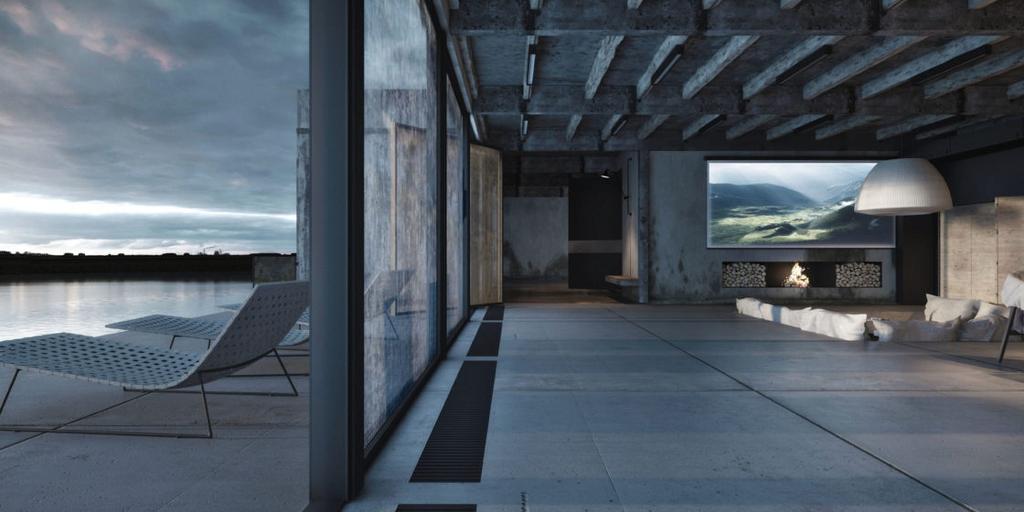
What do a camp in the heart of Antarctica, a treehouse and a fortress in the wild jungle have in common? The answer is simple: timber, concrete and a deliberately accentuated brutality. Losko magazine has selected ten buildings whose stylish interiors are impossible to look away from.
Refugi Lieptgas Chalet, Switzerland

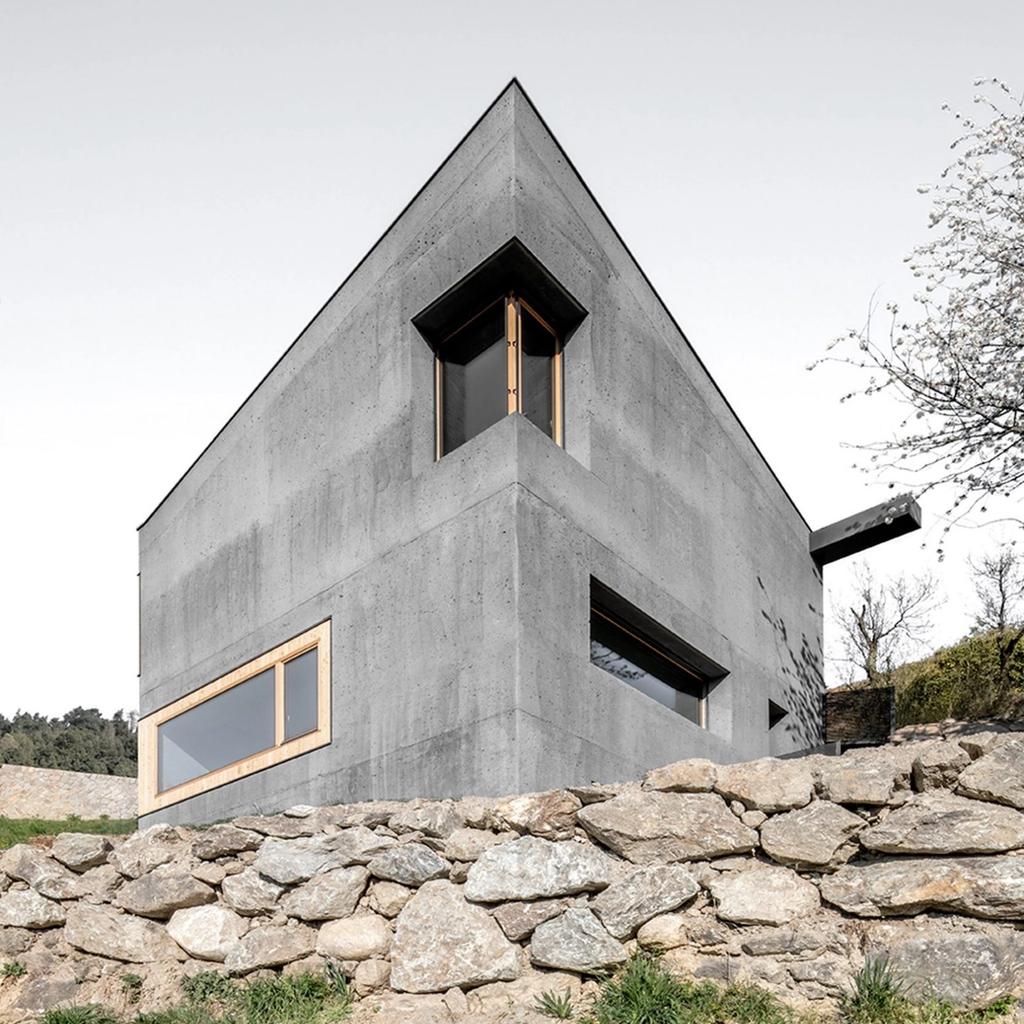
Who hasn't dreamed at least once of escaping from the whole world into the depths of a forest? Refugi Lieptgas chalet, tucked away among the woodland of the Swiss Alps, is perfectly suited to hiding its guests from prying eyes.
Architects Selina Walder (Selina Walder) and Georg Nickisch (Georg Nickisch) breathed new life into the traditional Swiss architectural form of the shepherd's hut. The thick concrete walls of the exterior facade mimic a timber log structure, blending organically into the surrounding landscape.
The interior's rawness is reinforced by a spartan environment: concrete ceiling, floor, fireplace and bathroom, deliberately rough-textured walls, and an almost complete absence of furniture. But there is no need to fear the cold. A carefully thought-out heating system ensures you can be alone with your thoughts in warmth and comfort.
Cabin Vindheim, Norway

Inspired by the sight of snow-covered houses, Norwegian architecture studio Vardehaugen led by architect Matre Aasarød (Matre Aasarød) presented its vision of the ideal winter retreat.
The structure of the house blurs the boundary between nature and architecture. In winter, the roof becomes a launching ramp for ski jumping, tubing and active outdoor play.
Vipp Shelter, Denmark

In January, Losko magazine wrote about one of the most striking examples of minimalist brutalist interiors — Vipp Shelter.
Danish design company Vipp began its story in 1939 with the creation of a pedal-operated rubbish bin. The current pinnacle of their work is the Vipp Shelter — a small yet supremely functional house in the forest.
"Shelter" means refuge or retreat, and the name reflects the idea its creators put into the building. They maintain that their goal was to construct not merely a cabin, but a dwelling that would allow its occupants to enjoy nature with complete immersion in the surrounding landscape.
Heike, China

Clean lines, a monochrome palette and an uncompromising rawness are the defining characteristics of this boutique project by Shanwei Weng(Shanwei Weng) and Jiadie Yuan (Jiadie Yuan) of the architecture studio AN Interior Design.
The substantial coal-black steel elements are left almost unpolished, allowing them to absorb light and accentuate the texture of the materials. Grey concrete walls provide a compelling backdrop for the abstract forms of the fitting rooms and counters, lending the space an air of deliberate incompleteness. For its unconventional approach to interior design, the project was awarded the prestigious World Interior of the Year 2016.
The 7th Room, Sweden

Have you ever wanted to stay in a treehouse? Thanks to the Norwegian architecture studio Snøhetta, that childhood dream is finally within reach. On 18 January 2017, The 7th Room hotel opened in a pine forest in northern Sweden, suspended ten metres above the ground.
Panoramic windows allow guests to take in breathtaking views of the Lapland treetops, the Lule River and the star-filled sky. Glass, iron and living trees merge into one, transforming the hotel into a secret retreat where there is no room for the everyday.
White Desert camp, Antarctica

In the article South Pole: A Luxury Journey we described a comfortable camp in the heart of Antarctica.
On the edge of the Schirmacher Oasis, at an altitude of around 2.8 km above sea level, sits the luxurious White Desert camp, comprising 6 'lodges' designed by Ryan Ashworth(Ryan Ashworth).
White Desert might not be nearly as remarkable were it not for its extraordinary interior, which lends the camp an understated luxury and maximum comfort amid Antarctica's harsh conditions. Guests can sink into low-slung soft leather furniture surrounded by deep-pile rugs. Notably, the furniture was created by one of the twentieth century's most significant architects and furniture designers — Eero Saarinen (Eero Saarinen).
Da House, Ukraine

The project by Igor Sirotov is a singular example of industrial design.
Here, softness of form borders on the austerity of clean lines. The interior's muted tones deliberately and casually accentuate the textures of wood and concrete, while the warm hues of the furniture and an abundance of plants fill the home with warmth. The house also has one further striking detail — a garage whose transparent roof doubles as the living room floor.
Antivilla, Germany

Rather than build a lavish villa on the lakeshore, the architects at Brandlhuber + Emde, Schneider chose to experiment, transforming a former knitwear factory into a designer loft. Aptly named the 'Antivilla', it provokes a genuinely ambivalent response. There is something compelling about the raw materials, the rough-hewn walls and the endless gradations of grey.
Casa na Mata, Brazil

On the Atlantic coast, nestled in the shaded jungle of a rainforest, stands the secluded fortress of Casa na Mata (Jungle House), designed by architecture studio mk27. Wood and concrete — the two primary materials used in the construction — complement each other perfectly. Casa na Mata is almost impossible to spot from the outside: built into a hillside and concealed by dense vegetation, it allows its inhabitants to retreat entirely into the wild.
Casa Brutale, Lebanon

It was apparently the James Bond films that inspired the architects at Open Platform for Architecture (OPA) to create Casa Brutale. Reinforced glass, concrete walls and a breathtaking landscape make the house a retreat worthy of Agent 007. Impregnability and solidity are its defining qualities. How does one get inside? Option one: a lift or staircase at the very foot of the cliff; option two: an entrance at the edge of the precipice, reachable only by plane.
Incidentally, the project has recently secured an investor, and construction is set to begin shortly.