Have you ever stopped to think about how you relate to the things you buy? What do those objects actually mean to you? Do you use your phone until it stops working, or do you upgrade to a new model every year? What matters more to you: quality or appearance?
The world of things
Nowadays, the idea of keeping an object and passing it down to your grandchildren seems almost absurd. Partly because modern people's relationships with new things lack any real depth. And partly because very few companies make products that are built to last that long.
Ernest Elmo Calkins, one of the earliest figures in advertising, divided all goods into two categories: those we use — such as cutlery or a telephone — and those we consume, like toothpaste or pencils. Building on this distinction, manufacturers work hard to ensure that people consume the things they merely use.
In the pursuit of profit, manufacturers devise improved versions of their products and persuade consumers to replace old models with new ones. The result: people leave homes already overflowing with possessions and pitch a tent outside an Apple store to be first in line for the latest device. A year later, the whole thing repeats itself.
The world of things is currently undergoing explosive growth, while consumer culture finds itself in deep crisis. Even so, there are objects that remain immune to the shifting tides of fashion — things that stay with us for decades without ever wearing out their welcome.
In this article you will discover what qualities define objects that serve us well for years without becoming tiresome. As our example, we take the legendary Anglepoise desk lamp.
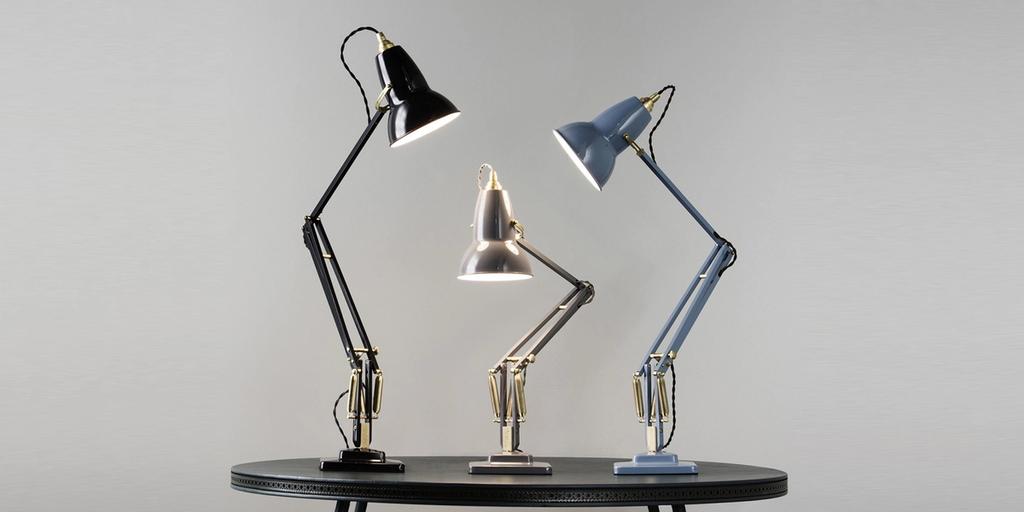
The iconic Anglepoise desk lamp
The Anglepoise lamp is a product that has been in production and in demand for 84 years. It was the first desk lamp whose arm and shade could be adjusted to any angle.
History
In his garage, automotive engineer George Carwardine invented an ingenious mechanism: a joint that locks in any position using springs. He took his design to Terry's, a spring manufacturer. Three years later the company launched a new product: the Anglepoise Model 1208, which incorporated Carwardine's mechanism.
The Model 1208 looked rough and bulky. For that reason, the first people to appreciate its functionality were workers in workshops and studios. Word of the new invention spread quickly, and before long the company began receiving letters asking for a design more suited to the home.
George Carwardine and Terry's in-house designers responded to these requests with the new Model 1227. The lamp had a more compact, less austere appearance than its predecessor. Three years later, George developed a revised version of the same lamp: the shade was larger and the light output stronger. Today, the Anglepoise 1227 with its updated mechanism is a classic — the archetype of the desk lamp.
The next model, the Anglepoise 75, did not appear until thirty years later. Its base is now round rather than square, and the shade and colour were also changed. Over the following thirty-five years the company released two more models, which differed little from one another beyond their colour options.
Since 2003, Terry's has collaborated with well-known designers, who typically work only on new colourways for existing models. New projects are undertaken quite rarely: over fourteen years the company has worked with just three designers.
The three pillars of the Anglepoise lamp
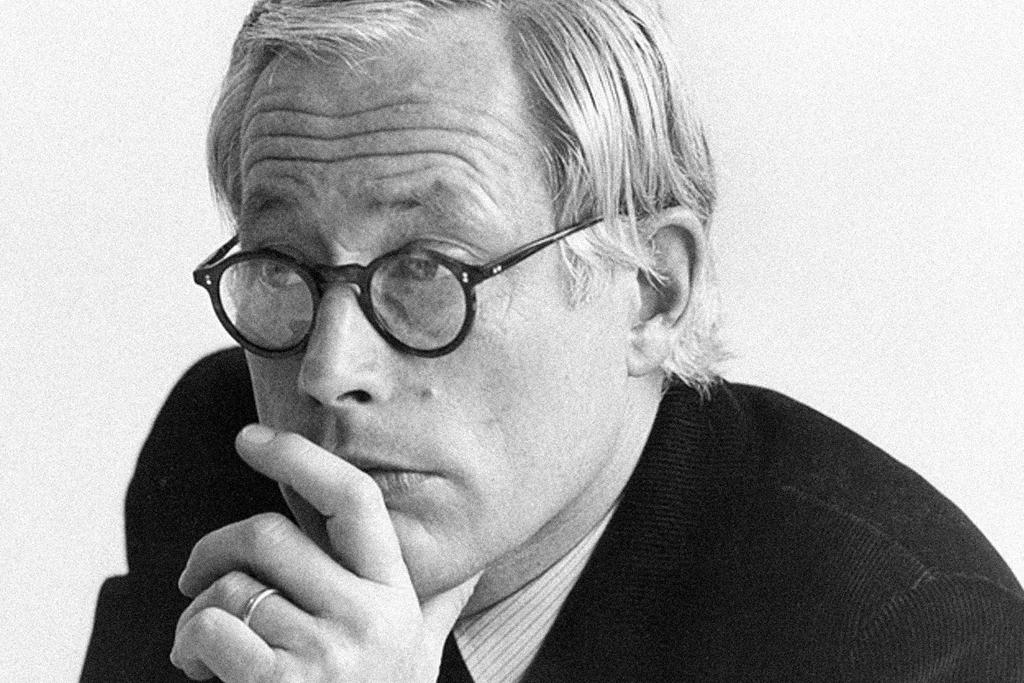
In designing his lamp, George Carwardine held much the same view of objects as Dieter Rams. Both men dreamed of creating things that would serve a person for a lifetime. George achieved his goals through three founding principles: functionality, quality and design.
Functionality
For draughtsmen and designers, the Anglepoise lamp became an indispensable working companion. This was largely due to the variety of mounting options: clamps, wall and ceiling fittings, and a heavy base that prevented the lamp from tipping over.
Working comfort was further improved by the lamp's flexibility: the arm adjusts to any angle and locks in place, while the shade rotates freely in any direction. Whatever position you put the lamp in, it holds its balance and does not fall. That may sound unremarkable — but consider that before the Anglepoise, desk lamps were rigid, which meant it was the designer, not the user, who decided where the light fell.
Another innovation that transformed the world of lamps and made desk work easier was the opaque shade, designed in the form of a deep, narrow bowl. Light is no longer scattered across the room — the shade directs it precisely where it is needed. Thanks to this concentration of light, a 25-watt bulb delivers the same luminous output as a 60-watt bulb in any other lamp.
Quality
When conceiving his future lamp, George Carwardine drew inspiration from stories of typewriters that had accompanied writers from the beginning to the end of their lives. He kept in mind tales told by war photographers about their seemingly indestructible cameras — cameras that had been dragged through mud, dropped on the ground, and still kept working. It was that same kind of enduring product that George set out to create.
Without paying much thought to the lamp's visual appeal, Carwardine settled on materials from the outset. Cast iron for the base, steel for the clamps and fittings, a strong aluminium alloy for the arm and shade, and brass for the remaining components and inserts.
Beyond the lamp's near-indestructibility, George also sought to make it as comfortable as possible for the user. The transparent shades of older desk lamps dazzled the eyes, scattered light across the room and produced unwanted reflections. The narrow aluminium shade resolved all of these problems.
Design
In the first half of the twentieth century, the lamp read as a quintessence of clever engineering ideas, while remaining immediately legible to anyone — its purpose and operation were self-evident. Above all, it embodied, and continues to embody, intellectual rigour rather than any earnest attempt to seduce the consumer through appearance.
The absence of ornamentation has made the lamp impervious to the shifts of fashion. Its appearance quietly suggests that it was made for something more serious than gathering dust on a desk. George used to say that switching the lamp on and adjusting it into position felt like a ritual that put him in the right frame of mind for productive work.
After George's death, three further designers worked on the lamp. British designer Kenneth Grange served as head of the design department at Anglepoise from 2003 to 2013, during which time he produced three new models. While developing them, he remarked on the difficulty of improving something that was already perfect.
In 2014, fashion designer Paul Smith coloured the Anglepoise Type 75 lamp and released it in three colour variants. The vivid hues of the first version evoke summer, while the deep, saturated tones of the second evoke autumn. For the third variant, the designer drew on the visual vocabulary of the Dutch art movement De Stijl.
In 2016, another fashion designer joined the company as a collaborator — Margaret Howell. Like Paul, she chose the Anglepoise Type 75 and created three colourways. Unlike him, however, Margaret's range has a quieter character. For each lamp she used a single colour.
Interesting facts
- In 1979, the band The Soft Boys released a record titled "I want to be an Anglepoise lamp".
- Forty years after the Second World War, a Navigator model lamp was discovered at the bottom of Loch Ness. The model had been purpose-built to illuminate the navigation table in military aircraft. When retrieved from the water, the lamp was found to be in full working order.

- To mark the 70th anniversary of the Anglepoise 1227, the Roald Dahl Museum asked the company to scale the model up to three times its original size. The oversized replica attracted so much attention that it is now in serial production under the name "Giant".
Explore the world of lamps and find inspiration in light as art in our articles:
— Elegant designer lighting
— Fire without flame in the lamps of Paul Fowler
— Compact lighting from Molto Luce
— The DISC flat lamp by design studio Robert Fehse
— A versatile lamp from design bureau Hop Design