In this article we discuss a living legend, explore the philosophy of aesthetics, and examine design principles.
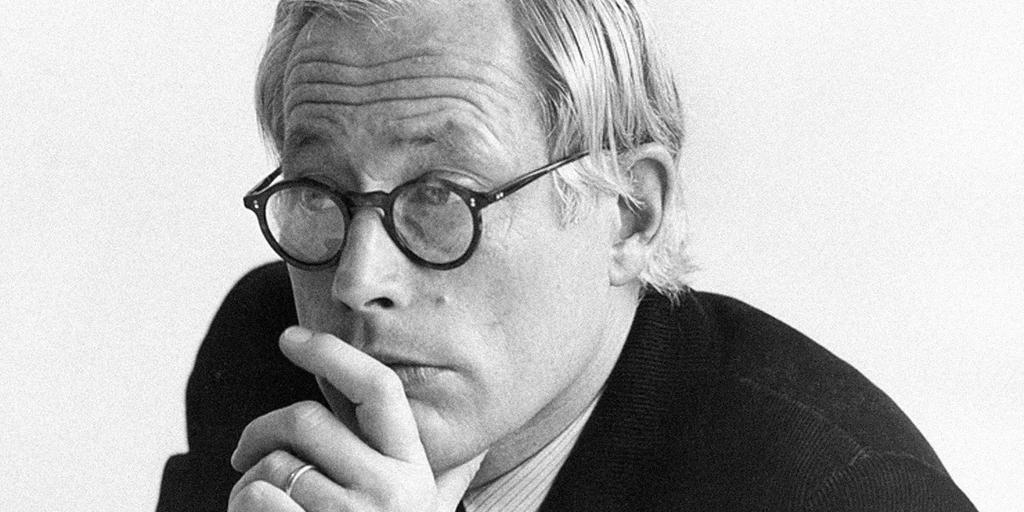
On 20 May, Dieter Rams celebrated his 84th birthday. He rose from carpenter to one of the most outstanding industrial designers of the 20th century — making this an ideal moment to revisit his iconic work.

The story of his career is inseparable from two brands: Braun and Vitsoe. Rams joined Braun on a friend's recommendation at the age of 23. Growing with the company, he became head of the design department in 1961 and did not leave that post until 1995.
While working at Braun, Dieter began working for Vitsoe, a collaboration that has now spanned 57 years of friendship. Together with Niels Vitsoe (Niels Vitsoe) and Otto Zapf (Otto Zapf) Dieter set out to create classic furniture.
Continuing his work with Vitsoe, Rams and his wife established the Dieter and Ingeborg Rams Foundation to promote the design philosophy he had first proposed in the 1980s.
Dieter Rams's design principles defining the approach to 'good design'
1. Good design is innovative
The possibilities for innovation are far from exhausted. The rapid advance of technology continually opens new opportunities for innovative design. Design always evolves in tandem with technology and can never be an end in itself.
2. Good design makes a product useful
A product is bought to be used. Yet it must be more than merely functional. It is equally important that a product satisfies psychological and aesthetic criteria.
3. Good design is aesthetic
Aesthetics are an integral part of any product. A product is used every day and has an effect on people, their personalities and their well-being. Only well-executed products can be truly beautiful.
4. Good design makes a product understandable
Design clarifies a product's structure. In turn, a product must be simple and intuitively easy to use.
5. Good design is unobtrusive
A product is a tool. It is important to remember that it is neither a decorative object nor a work of art. Its design should therefore be neutral and restrained.
6. Good design is honest
Nothing will make a product more innovative, powerful or valuable if it simply is not. Do not manipulate consumers or make promises you cannot keep.
7. Good design is enduring
Do not chase trends — fashionable design dates quickly. Particularly so in contemporary society, where trends change far too often.
8. Good design is thorough down to the last detail
Nothing should be left to chance or arbitrary decision. Care, precision and accuracy in the design process demonstrate respect for the consumer.
9. Good design is environmentally friendly
Design makes a vital contribution to the protection of the environment. It must help conserve natural resources and minimise physical and visual pollution throughout the entire life cycle of a product.
10. Good design is as little design as possible
Less, but better. Focus on the essential aspects and functions of a product, and do not burden it with a multitude of additional minor features.
Applying these 10 principles to the products created for Braun and the Vitsoe furniture range defined the path of both brands and became Rams's enduring legacy.
7 of the most iconic products designed by Dieter Rams
BRAUN SK4 Record Player (1956)
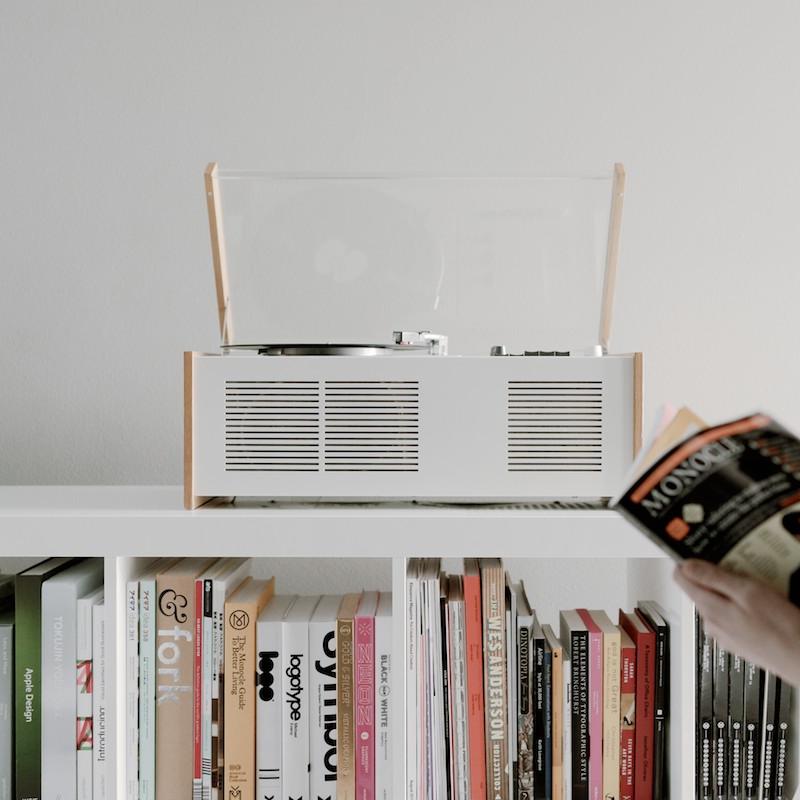
This radio and record player — also known as the Snow White's Coffin owing to its transparent lid — was designed by Rams together with Hans Gugelot (Hans Gugelot) for Braun. They abandoned the traditional wooden casing and replaced it with a metal body flanked by two light-coloured wooden side panels.
Atelier 1 Hi-Fi system and L1 speaker
Before Rams and Gugelot developed these devices, stereo systems consisted of a single unit and were considerably bulky. Their decision to separate the speakers from the record player subsequently became the standard approach in stereophonic technology.
Braun L2 speaker
Rams designed a new speaker and mounted it on a metal stand — an idea that was borrowed more than once by Braun's competitors.

Braun LE1 electrostatic speaker (1959)
In designing this model, Dieter was clearly guided by principle number 3: good design is aesthetic. Braun LE1 became a symbol of the era's innovation, being electrostatic and fitted with ultra-lightweight membranes as a visual allusion to sonic clarity. This was the first speaker model to be put on sale in the German market.

Braun Combi DL5 electric shaver (1957)
This electric shaver model embodies principle 5: good design is unobtrusive. A discreetly placed miniature logo, a fixed trimmer, chrome detailing and a smooth form.

Braun T3 pocket radio (1958)
The radio was conceived at a time when transistor radios were shrinking rapidly in size. The Braun T3 stood out from its competitors with its restrained design. It is widely said that this model inspired Steve Jobs in the creation of the Apple iPod.

Vitsoe 606 universal shelving system (1960)
A shelving system comprising shelves, drawers and tables attached to vertical rails, which can be fitted to a wall in full or in part. Their number, arrangement and configuration can be changed with ease, calling to mind principle 2: good design makes a product useful.

Braun T2 lighter
The cylindrical T2 lighter was one of Rams's favourite products. To make the lighters engaging to look at and pleasurable to use, he conceived them as "small sculptures".

The products created by Rams are the embodiment of the principle: "Good design is as little design as possible."
Many of Rams's creations are held in the New York Museum of Modern Art (MoMA), and are also represented in the Museum of Applied Arts in Frankfurt.
Dieter was recently asked what he would do if he were a young designer again. Without hesitation, he replied that he wouldset out to find new ways of harnessing alternative energy sources. He added that wind turbines are all well and good, but they spoil the landscape far too much.
Photos: dasprogramm.org
If you would like to explore Dieter Rams's work in more depth, we recommend reading our article on the iconicBraun SK55 vinyl record player. Dieter Rams was an inspiration toSteve Jobs, whose biography we have also published.
Follow us on social media so you never miss new content: VKontakte, Telegram — @loskomagazine.