Restraint, functional simplicity and a commitment to the user's convenience
— these are the defining qualities we know and love in the products of Apple, the company that revolutionised design and changed the course of technological development. Today we look back at Steve Jobs, the man who started it all: contradictory, eccentric and utterly brilliant.
In this article you will learn:
- what Steve Jobs was like in his early years;
- how the Apple computer as we know it came into being, and what its prototypes looked like;
- the core design principles of Steve Jobs;
- little-known and fascinating facts from his biography.
- inspiring quotes.

Childhood and early years
Steven Paul Jobs was born on 24 February 1955 to two graduates of the University of Wisconsin. His mother, Joanne Schieble (later Simpson), worked as a speech therapist, while his father, Abdulfattah 'John' Jandali, was a Syrian professor of political science. For reasons that remain unclear, they decided to put the child up for adoption, and married shortly afterwards. Steve Jobs was only able to learn about his biological parents once he turned 27.
Little Steve was adopted by Clara, an accountant, and Paul Jobs, a machinist and Coast Guard veteran. The newly formed family settled in the California neighbourhood of Mountain View, which would one day become known to the world as Silicon Valley.

As a child, Steve would help his father in the family garage: Paul showed his son how to work with electronics. This hobby gave Jobs a grounding in practical skills. From an early age he stood out for his quick mind and innovative thinking. Although formal schooling bored him before long, Steve performed well enough on tests that the school administration wanted to move him straight to high school. His parents saw things somewhat differently and, not wishing to rush matters, turned down the proposal.
For a long time Steve struggled to find his direction in life. He enrolled at Reed College in Portland, stayed for half a year, then decided to leave his degree programme and began attending university courses as a drop-in. Among them were classes in calligraphy, which Jobs later credited with having a profound influence on his lifelong love of typography.
Meeting Wozniak and the first computer
When Jobs was 16 and studying at Homestead High School, his friend Bill Fernandez introduced him to Steve Wozniak, a student at the University of California, Berkeley. The two hit it off immediately and became friends. They once even placed a call to the Vatican that very nearly reached the Pope. Jobs and Wozniak put their technological know-how to use building "blue boxes" — electronic devices that opened up new possibilities for making free long-distance calls.
In 1974, when Steve turned 19, he took a position as a video game designer at Atari and invited Wozniak to help him work on the promotion of the classic arcade game Breakout. Jobs was handsomely rewarded for his efforts and split the payment with his friend.


The two friends attended Homebrew together — a computer hobbyist club that had been meeting in Menlo Park, California since 1975. It was there that Wozniak first encountered the MITS Altair and resolved to build something even simpler. He assembled his own computer using a typewriter-style keyboard and an ordinary television as a monitor. The invention became the prototype for every modern computer and was later named Apple. Wozniak, however, had no ambition to change the world with his designs — he simply wanted to show what he had managed to create with relatively modest resources.
The founding of Apple Computer Inc. and the mystery of the logo
The collaboration between Jobs and Wozniak began in a modest family garage. Jobs sold his Volkswagen van and Wozniak his HP calculator in order to invest in the computer project. On 1 April 1976, the two friends founded Apple Computer Inc. In the early days they were joined by their acquaintance Ronald Wayne. Jobs persuaded him to take a 10% stake in the company and to act as a tiebreaker in his disputes with Wozniak. Wayne lasted less than two weeks before walking away, selling his share for $500 — a stake that, forty years later, could have been worth $72 billion.
By naming the company Apple, Jobs may have been storing up trouble for the future, given that the name sat uncomfortably close to The Beatles' label Apple Corps — though Steve's intentions were entirely innocent.
"From time to time he worked in the orchards of Oregon. I thought it might be because there were so many apple trees there, or perhaps it was down to his exotic background. Maybe the word simply came to him. Either way, we both tried to come up with something better, but neither of us could think of anything that topped Apple" — Steve Wozniak on Steve Jobs, in an interview with Byte magazine.
Jobs himself later recalled that the name had simply come to him after returning from an apple farm. He felt it was 'fun, spirited, and not intimidating.' It had the added advantage of beginning with the first letter of the alphabet, which guaranteed a top position in any alphabetical listing.
There was also a theory that the name Apple carried a connection to the story of Newton — a notion seemingly supported by the fact that the company's original logo was a rather elaborate illustration of Newton sitting beneath a tree. Apple's leadership later settled on the bitten apple. The new logo gave rise to a number of theories; some, for instance, see in it a reference to Alan Turing, the computer scientist and codebreaker who took his own life by eating a cyanide-laced fruit. The logo's designer, Rob Janoff, however, insists that this is nothing more than a remarkable urban legend.

Jobs and Wozniak are widely regarded as revolutionaries of the computer industry. They are credited with democratising technology, their goal being to create products that would be more streamlined, affordable, and intuitive for consumers. Steve Wozniak designed a line of user-friendly personal computers, while Jobs handled the marketing. Initially, the company sold computers at $666.66 apiece. By 1980, Apple Computer Inc. had become a publicly traded company with shares freely listed on the stock exchange. By the close of its first day of trading, its market capitalisation was valued at $1.2 billion.
Several of Apple's subsequent models suffered from a number of serious design flaws that led to negative reviews and consumer disappointment. The company found itself competing with the global market leader IBM/PC, which suddenly began to outsell Apple. Steve Jobs then decided to bring in marketing expert John Sculley from Pepsi-Cola and offered him the position of CEO at Apple.

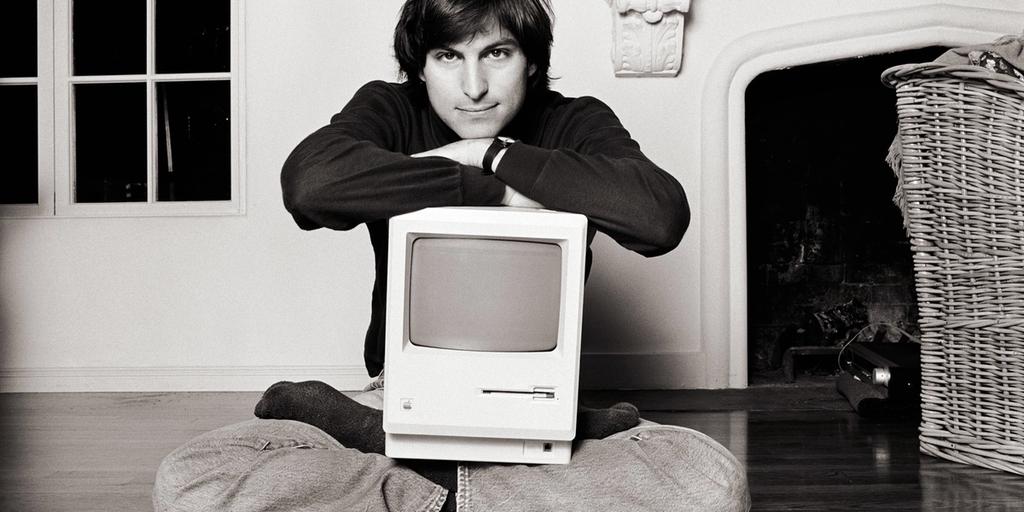
In 1984, the company released the Macintosh, which heralded a new identity for Apple — young, romantic, and creative. Its performance and sales figures significantly outpaced those of the IBM/PC, yet John Sculley remained convinced that Jobs was harming the company. Having persuaded the Apple board of directors of the same, Sculley gradually forced him out in 1985. Steve sold all his shares, which a decade later would have represented a net worth of some $36 billion.

Jobs's other ventures and his return to Apple
Just a year later, Steve bought an animation company from George Lucas that would subsequently become known as Pixar Animation Studios. Jobs genuinely believed in its potential and invested $50 million of his own money. The studio went on to produce animated films that became cultural touchstones, among them WALL·E, Toy Story, and Finding Nemo. Pixar's releases have collectively grossed $4 billion. In 2006, Steve Jobs sold the company, and Pixar merged with Walt Disney, with Jobs becoming its largest individual shareholder. According to Forbes, his net worth at that point stood at $6.5–7 billion.

After leaving Apple, Steve Jobs launched a new venture, NeXT Inc., focused on developing hardware and software. The company struggled to sell its specialised operating system to a mainstream audience, and Apple ultimately acquired NeXT in 1996 for $429 million. A year later, Jobs returned to his former role as CEO of Apple and breathed new life into the corporation. He voluntarily agreed to a salary of $1 a year, assembled a new management team, and turned his focus to design.
Over the following years, Apple launched the iMac, MacBook Air, iPod and iPhone — innovative products driven by the evolution of technology. Competitors, quick to follow the trend, rushed to copy the company's offerings. By 2007, the corporation could boast a remarkable profit of $1.58 billion, a surplus of $18 billion held in the bank, and an entirely debt-free balance sheet. Strong sales of the iPod and iTunes had brought Apple to second place behind Walmart.
Jobs's design philosophy and working principles
Few people know that Jobs's love of design began to take shape in childhood. The homes in Steve's neighbourhood were built by Joseph Eichler, who was inspired by Frank Lloyd Wright and his vision of a modern, unpretentious house for the ordinary American. The defining features of these buildings were floor-to-ceiling glass walls, an abundance of sliding doors and open-beam construction. Jobs spoke of him with great admiration: 'Eichler did a great thing. His houses were well designed, didn't cost a lot and offered clean design and simple taste for people with modest incomes.' It was this that instilled in Steve a passion for creating meticulously crafted products for the mass market.
'I love the idea of bringing truly great design and simple capabilities to something that is affordable. That was the original vision of Apple. That's what we tried to do with the first Mac. And that's what we managed to do with the iPod.'
Under Jobs's leadership, Apple's products acquired an exceptional design identity — spare, unconventional and instantly trustworthy. Industrial designers were not plentiful in Jobs's era, yet his partnership with Hartmut Esslinger in the 1980s, and later with Jony Ive from 1997, gave rise to a pioneering engineering and design aesthetic that set Apple apart and transformed it into one of the most valuable companies in the industry. In his work he was guided by the principle of profound simplicity — one rooted in a deep understanding of what a product is, the complexity of its development, and the role of each individual element.
'Simplicity is the ultimate sophistication' — Apple's first marketing brochure, 1977.
Jobs's attraction to spare, elegant design was fully crystallised when he began practising Buddhism. After leaving college, he undertook a lengthy pilgrimage through India in search of enlightenment. His college friend Daniel Kottke accompanied him on that journey and later shared his impressions: 'Zen had a profound effect on him. You can see it in Steve's entire approach — the rigorous, minimalist aesthetic, the intense focus.'
Who helped Jobs realise his design ideas
For a long time Steve's attention was focused on the Macintosh, but he then decided to create a unified design language for the entire Apple product range. Determined to find a world-class designer who would do for Apple whatDieter Ramshad done for Braun, he organised a competition. The winner was Hartmut Esslinger, a German designer previously responsible for the appearance of the Sony Trinitron television. His guiding principle was that 'form follows emotion' rather than function. He created a new design language for Apple in the 1980s: white casings, solid with rounded edges, and slim recesses designed equally for ventilation and visual appeal.
Some years ago, Esslinger provided the German publication Zeit Online with photographs of Apple device prototypes that he had developed in 1982.
Jobs's obsession with design was his salvation and his curse in equal measure: indulging his artistic impulses, he drove the company's costs to unsustainable levels, which is why he was pushed out in 1985. Having reflected on everything, Steve tempered his passion. When he returned to Apple, thirty-year-old Jonathan Ive, head of the design team, was on the verge of resigning, convinced that the company cared more about generating profit than about creating meaningful design. Jobs, however, persuaded him otherwise:
"Our goal is not simply to make a lot of money, but to make a great product. The decisions you make on the basis of that philosophy are fundamentally different from the ones that used to prevail at Apple."
Before long, Jony Ive and Steve Jobs would become true partners, and their collaboration would prove to be the greatest in the history of industrial design. The first major design triumph to emerge from the Jobs–Ive partnership was the iMac — a desktop computer aimed squarely at the home consumer.
"Simplicity is not just a visual style, minimalism or the absence of clutter. You have to deeply understand the essence of a product in order to get rid of the parts that are not essential." — Jonathan Ive
Personal life and health struggles
On 18 March 1991, Steve Jobs married Laurene Powell. The couple met in the early 1990s at the Stanford Graduate School of Business, where Laurene was an MBA student. They went on to have three children — Reed, Erin and Eve — and the family settled in Palo Alto, California. Jobs also had another daughter, Lisa, born when Steve was 23 and in a relationship with Chrisann Brennan, his first love. He did not acknowledge paternity in any formal sense, claiming to believe he was sterile. Jobs made no effort to connect with his daughter until she was seven years old. As a teenager, Lisa moved in with Steve, and later wrote the memoir Small Fry, in which she described her childhood and her relationship with her father.

In 2003, Jobs learned that he had a neuroendocrine tumour — a rare form of pancreatic cancer. Rather than agree to surgery straight away, he decided to make changes to the pescatarian-vegetarian diet he followed. By the time he had delayed treatment for nine months, Apple's board of directors had grown deeply concerned. Management feared that shareholders would withdraw their stakes if it became known that the company's chief executive was ill, and so information about Steve's condition was kept confidential.
A year after learning of the tumour, Jobs successfully underwent surgery to have it removed. In early 2009, rumours began to spread that Steve had started losing weight rapidly. Some predicted that his health problems had returned and that a liver transplant would be necessary, but Jobs explained that he was dealing with a hormonal imbalance. He took a six-month leave of absence, during which he told his staff that "the health issues are much more serious than he had anticipated."
Jobs soon appointed Tim Cook, Apple's Chief Operating Officer, to take charge of running the company. After an absence of nearly a year, on 9 September 2009 Jobs delivered the keynote address at a private Apple event. For most of the following year he remained the public face of its presentations. In January 2011, Steve announced that he was taking medical leave, and in August he stepped down entirely as chief executive, handing the reins to Cook.

Steve Jobs died in Palo Alto on 5 October 2011, at the age of 56, after nearly a decade-long battle with pancreatic cancer.
"I would like to believe in an afterlife — that the wisdom you accumulate over a lifetime does not simply vanish when you die. Surely it must have some kind of continuation."
The principles of Steve Jobs
Do what you love.
'People with passion can change the world for the better' — this was the guiding principle Steve Jobs liked to share with his employees. Without a grand purpose and a strong desire, it is rather difficult to come up with fresh, creative ideas.
Remember that time is limited.
'Your time is finite, so don't waste it living someone else's life. Don't be trapped by dogma — which is living with the results of other people's thinking. Don't let the noise of others' opinions drown out your own inner voice. And most importantly, have the courage to follow your heart and intuition. They somehow already know what you truly want to become. Everything else is secondary.'
Sell dreams, not products.
Steve never thought of his customers as 'consumers'. Each of them had their own hopes, goals and ambitions. He created products that could help them realise their dreams.
Never stop improving.
Jobs once said: 'Creativity is just connecting things.' He understood that in order to grow, one must look beyond one's own field and seek inspiration elsewhere. Steve frequently drew ideas from other industries — whether a simple telephone directory, Zen meditation or the Four Seasons hotel chain. But he did not steal them; he used them as inspiration for his own creative work.
Build a strong team.
Our surroundings shape our future, so the people we choose to surround ourselves with must be chosen wisely.
Say no to a thousand things.
Steve Jobs knew that innovation means eliminating the unnecessary. He held to this principle throughout his life: 'I'm just as proud of many of the things we haven't done as the things we have done. Innovation is saying no to a thousand things.'
Know your audience.
Customers must trust the person selling to them, and to earn that trust you need to understand what they actually need. Only in this way can you create a quality product for which there is genuine demand. If you don't give customers what they want, someone else will.
Don't work for the money.
Earnings matter, but far more important is the desire to change something and leave your mark on history. Put your energy into creating a quality product, and the money will follow.
Craft the right message.
Steve Jobs didn't only develop Apple's products — he also knew how to package and present them. Every company launch he turned into a form of art. Even the most innovative idea requires the right presentation. Make sure you are communicating your company's values clearly. Only then can you earn the trust of your customers.
Interesting facts
- When giving Steve up for adoption, his biological parents set just one condition for the adoptive family: they must hold a university degree. Things turned out differently — neither Paul nor Clara had completed university, and so they agreed that the adoptive parents would ensure Jobs was able to enrol in one.
- Steve Jobs was no stranger to experimenting with psychotropic substances. He was particularly drawn to LSD and described the drug as 'one of the three most important things in his life.'
- Jobs rarely showered and liked to go barefoot, even at work. While he was employed at Atari, complaints from colleagues began to mount, and as a result he was moved to the night shift.
- In the 1980s, Jobs's biological father, Abdulfattah Jandali, ran a restaurant. His sister Mona Simpson later recounted that Steve occasionally visited the place, where he was served by the owner himself — 'a balding Syrian', as Jobs noted, unaware that the man was his father.
- After leaving Apple in 1985, Steve applied to fly aboard the Space Shuttle Challenger as a civilian astronaut, but his application was rejected.
- Jobs also entertained the idea of starting his own computer hardware business in the Soviet Union.
- Steve Jobs never learned to programme.
- He frequently parked in disabled spaces, despite not being disabled himself.
- Jobs drove a Mercedes and never fitted licence plates, having discovered a loophole in California law: a car owner was allowed six months to attach licence plates. Rather than comply, Steve preferred to replace his car with an identical model every six months.
- In 2001, when Steve saw the beta version of OS X, he said: 'It looks so good I want to lick it!' With that, he leaned forward and actually licked the Mac monitor.
- Mona Simpson, Steve's sister, wrote in her eulogy that shortly before his death Jobs gazed for a long time at his sister Patty, then at his wife and children, then beyond them, and spoke his final words: 'Oh, wow!'
The book Design by Apple in California
The book Designed by Apple in California is published in a limited edition in two formats: small (25.9 × 32.4 cm) priced at $199 and large (33 × 40.6 cm) at $299. It is printed on specially manufactured paper of a distinctive colour with matte silver-edged pages. Available exclusively at Apple.com in the United States, Australia, the United Kingdom, Germany, Hong Kong, Korea, France, Japan and Taiwan, as well as at select Apple Store locations.
Notable quotes
- 'Being the richest man in the cemetery doesn't matter to me. Going to bed at night knowing we've done something wonderful — that's what matters.'
- 'Creativity is just connecting things. When you ask creative people how they did something, they feel a little guilty because they didn't really do it, they just saw it. It seems obvious to them.'
- 'I'm as proud of many of the things we haven't done as the things we have done. Innovation means saying no to a thousand things.'
- 'I'm convinced that about half of what separates successful entrepreneurs from unsuccessful ones is pure perseverance.'
- 'Your time is limited, so don't waste it living someone else's life. Don't be trapped by dogma — which is living with the results of other people's thinking. Don't let the noise of others' opinions drown out your own inner voice. And most importantly, have the courage to follow your heart and intuition. They somehow already know what you truly want to become. Everything else is secondary.'
Follow us on social media so you never miss new content: VKontakte, Telegram — @loskomagazine.