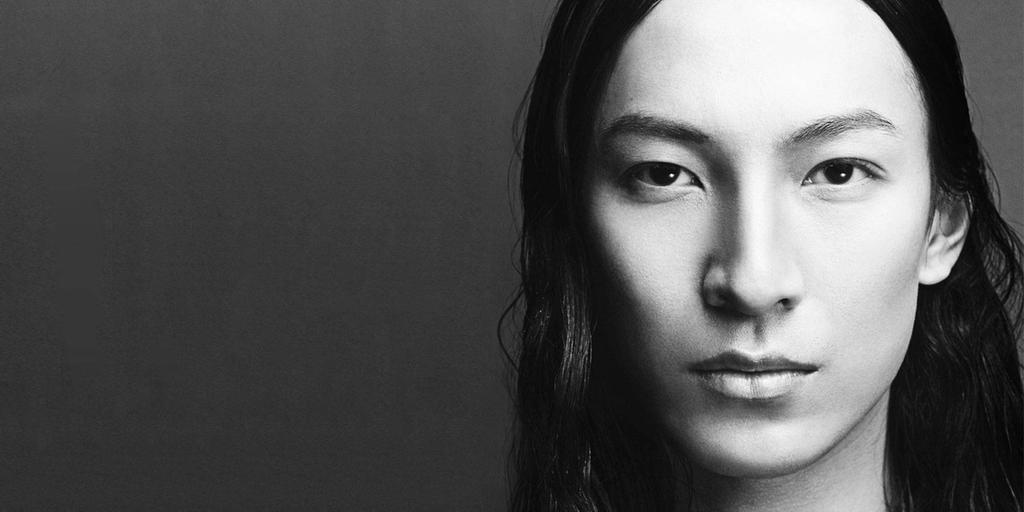
Alexander Wang is a talented American designer and fashion creator. Having left the prestigious Parsons School of Design early in his career, by the age of thirty he had not only founded his own successful brand but also taken the helm of the storied fashion house Balenciaga.
In his collections he masterfully unites minimalism and gothic grunge, streetwear and couture elements. His aesthetic is often described as 'complexity hidden within simplicity.' It is precisely this original approach to design, combined with an extraordinary capacity for hard work, that has secured Wang's meteoric rise to the heights of the fashion world.

In this article you will learn about:
- Alexander Wang's creative journey;
- the defining features of his style and his approach to design;
- interesting facts from Wang's life;
- the designer's most significant achievements.
A brief biography
First steps towards success: 1984 – 2004
Alexander Wang was born on 26 December 1984 in San Francisco, into a family of Chinese immigrants. His parents ran a small packaging-materials business. Yet from childhood Wang was drawn to fashion and the creative arts — he dreamed not of working in manufacturing, but of making something new and extraordinary.
His family did nothing to discourage this passion; on the contrary, they supported his every endeavour. While he was still a teenager, his mother gave him a sewing machine, and at fifteen he presented his first collection to the guests at his older brother's wedding. The collection was made especially for the bride and comprised 35 pieces conceived during a summer internship at Saint Martins in London.
In 2002 Wang moved to New York and enrolled at the Parsons School of Design. While studying, he completed internships at Marc Jacobs, Derek Lam and Teen Vogue. Towards the end of his second year he began developing his own clothing line. Work on the collection consumed so much of his time that it interfered with his studies, and he was eventually dismissed for academic underperformance.
Launching his own brand required him not only to sacrifice his place at the prestigious Parsons but also to turn down Diane von Fürstenberg herself, who had invited him to design a series of knitwear pieces for her label. The designer was undoubtedly flattered by the offer, yet ultimately chose to devote all his energy to building his own label.
Global recognition: 2005 – 2015
In 2005 the designer officially launched his brand Alexander Wang. The bold move was inspired by his close friend, the model Erin Wasson.
His family played an important role in establishing the label: his older brother, who had become a successful lawyer; his sister-in-law, who had experience in manufacturing; and his mother, who had spent her entire life as an entrepreneur. Although none of them had a formal background in fashion, the family's support proved a crucial key to Wang's success.

Initially Wang focused exclusively on womenswear, producing collections in a grunge and rock-and-roll vein. Some critics felt his work lacked femininity, but the commercial success of his 2006 collection and the subsequent nomination for an award from the Council of Fashion Designers of America put that debate to rest.
In 2007 the designer presented his first womenswear collection at New York Fashion Week. Beginning with a unisex knitwear line that was received with great enthusiasm by the fashion crowd, Wang went on to develop his sportswear direction, making extensive use of technical fabrics and the most pared-back cuts possible.
Alexander Wang autumn/winter 2007 collection
In addition to releasing collections under his own label, the young designer delighted his followers with collaborations with well-known mass-market retailers nearly every season. In 2008 he created a capsule collection for Uniqlo comprising dresses in various silhouettes rendered in black, beige and white. A year later, Wang teamed up with Vena Cava and Albertus Swanepoel to produce a limited women's clothing and accessories collection for Gap in a safari aesthetic.
In 2010, Wang decided to lower prices on his main line in order to reach a broader audience. This proved not only a shrewd commercial move, but also a vivid affirmation of the brand's core credo: accessibility, ease and impeccable style.
The most luxurious thing in your wardrobe doesn't have to be the most expensive. It could be a T-shirt, or something sentimental — what matters is how you wear it and what you pair it with. That's what makes it interesting.
That same year the designer launched his youth line, T by Alexander Wang. It distilled the defining ideas of the main Alexander Wang brand — monochromatism, pared-back cuts, clean lines, and a deft blending of grunge, sport and classic tailoring — while offering a more accessible price point than the main collection.
Around the same time, he expanded his offering further with a range of eyewear for men and women. By 2011, the first Alexander Wang flagship boutique had opened in SoHo.
At the end of 2012, Alexander Wang was appointed creative director ofBalenciaga, succeeding Nicolas Ghesquière in the role. Many were surprised that a young designer of everyday clothing, who had appeared on the fashion scene only five years earlier, had been chosen to lead one of France's most storied fashion houses. Yet the choice proved inspired — Wang's very first collection for Balenciaga was received with enthusiasm by critics and customers alike. His success owed as much to his commercial instincts as to his undeniable talent: he understood his audience well, and knew that wealthy women had no need of excess — they needed perfection. And Wang was capable of delivering it.
Despite the rapturous reception from the fashion world, Wang left Balenciaga after three years in order to focus on growing his own brand.
Alongside his work at Balenciaga, Wang continued to release collections under his own label and to pursue various collaborations. In 2014, for instance, he created a capsule collection for the Swedish brandH&M, and less than a month later launched a denim line under the name Denim X Alexander Wang. The announcement of Denim X Alexander Wang generated widespread attention, however, not so much for the designer's creative choices as for its strikingly candid advertising campaign, shot by Steven Klein —@stevenkleinstudio.

Campaign imagery for the Denim X Alexander Wang collection
In 2016, Alexander Wang expanded his responsibilities by becoming chief executive officer of his own label, Alexander Wang. Previously he had held only the position of creative director, with day-to-day management handled by his mother Ying Wang and sister-in-law Amy Wang. A year later, however, the designer stepped down as CEO, handing the reins to Lisa Gersh, and chose to concentrate entirely on design.
Design aesthetic and approach
The Alexander Wang brand has always embodied urban chic, contemporary innovation and considered nonchalance. His collections are infused with the energy of city life, a distinctive aesthetic and fluid lines. His style is instantly recognisable, yet leaves room for individual expression. The designer himself describes his approach as a balance between rigour and absolute freedom.
City life as inspiration
Alexander Wang has always been drawn to the immediate and the contemporary. By his own admission, his collections are inspired by grunge, rock, hip-hop, city streets and the people around him. He finds new ideas in the most ordinary everyday things.
"I'm not like most designers who need to go on some exotic trip to get inspired for a new collection. Most of the time I find inspiration on the way to work, or when I'm riding the subway and happen to notice something unexpected."
The designer emphasises that what matters to him is creating pieces that can be worn every day — in other words, stylish and comfortable clothing for city dwellers. That is precisely why, when developing his designs, he considers not only the aesthetic dimension but also wearability.
Wang favours monochromatic palettes and clean-cut silhouettes, using bold details as accents. Taking his cues from the inhabitants of the urban jungle, he creates not merely clothing but an entire way of life. In interviews, Wang admits that as a designer he is far more interested in how ordinary people dress than in celebrity gowns on the red carpet.
"For some people it's very easy to get dressed up, but who do they become when they take all that off? When no one is photographing them, when they're not out in public? That's what inspires me. In those moments you're relaxed, open to experimentation. Street style definitely reflects that, because it's simply how people dress every day."
While Wang did not invent street style as such, he has undeniably managed to elevate it to an entirely different level.
Complexity hidden in simplicity
Alexander Wang collections are a play of contrasts. The essence of his style is a fine balance between a strict silhouette and streetwear, a harmonious union of the refined and the imperfect. It is freedom of spirit and restraint in the same breath.
His collections move between delicate pieces with a nod to classic tailoring and deliberately crumpled or stretched-out garments. Wang effortlessly blends casual rock-grunge with a restrained androgynous aesthetic, combining geometric cuts with relaxed silhouettes. It is in these contradictions that his singular creative perspective on fashion finds expression — bold and utterly unaffected.
"Stereotypes exist, but the greatest satisfaction lies in breaking them."
The designer approaches his work with a strong sense of responsibility and is unafraid to take risks, yet his greatest secret is trusting his own instincts. Wang believes that presentation is just as important as the product itself, since it reflects the overall concept. His brand's advertising campaigns thus become a natural extension of his style philosophy. Bold visual imagery and a pronounced minimalism communicate his distinctive aesthetic better than anything else could.

Alexander Wang autumn/winter 2015 advertising campaign
Sportswear aesthetic
Wang frequently incorporates sportswear elements into his collections and experiments with volume. He develops clothing with clean, pared-back cuts, largely avoiding handcrafted detailing.
Despite continually evolving and reinterpreting the sportswear aesthetic across his collections, Wang himself is far from a sports enthusiast.
"I never played sports myself, and perhaps that's exactly why they intrigue me so much. I live in sportswear — I wear T-shirts, sweatshirts and shorts every day, so for me it's like a second nature."
The designer also pays particular attention to materials and fabric construction, working with technical textiles and the most straightforward cuts possible.
"With today's technologies we can create incredible things, more progressive things, and I always try to bring that into my work."
Alexander Wang spring/summer 2013 collection
Most notable achievements
Balenciaga
Alexander Wang's appointment as creative director of Balenciaga in 2012 sparked lively debate within the fashion world. Many critics were sceptical of the pairing, feeling that the young designer was too firmly rooted in street style. Others, however, considered the decision entirely right and timely from a commercial standpoint. Moreover, despite the obvious differences between Alexander Wang and Balenciaga as brands, their collections do share certain common ground — a love of monochrome, sportswear-inflected elements and volume, for instance.
In 2013, Alexander Wang presented his first collection for Balenciaga. Futuristically cut, rendered in clean forms and monochromatic tones, the collection was fully in keeping with the house's direction.
Alexander Wang for Balenciaga, Autumn/Winter 2013
His debut for the French house was met with approving responses from critics, designers and journalists alike. It was a promising start, but Alexander Wang still had considerable work ahead of him to learn how to draw skilfully on Balenciaga's heritage — including the legacy of his predecessor, Nicolas Ghesquière. Several observers also noted that the collection lacked Wang's own distinctive handwriting.
Taking the fashion world's expectations to heart, in subsequent collections Wang introduced his signature urbanism and sportswear undertones into the sculptural lines associated with Cristóbal Balenciaga's style.
In March 2015, Alexander Wang presented the Balenciaga Autumn/Winter 2015/2016 collection at Paris Fashion Week. That season, the designer turned to the house's origins, creating a collection in the finest traditions of Cristóbal Balenciaga. Wang wove quotations from the great couturier throughout his work, to the delight of a discerning audience. The collection featured luxurious tulip skirts, elegant strapless dresses, short fitted jackets, coats with voluminous upper bodies, and sculptural coats with extended shoulder lines. Wang presented noble silhouettes, precisely calibrated lines and carefully considered details.
Balenciaga Autumn/Winter 2015
Joining Balenciaga also opened up other creative avenues for the enterprising Wang. In 2014 he created the house's first fragrance, given the pared-back name 'B'. The ambitious designer was involved not only in composing the scent but also in designing the bottle, which features a cracked-glass effect.
Despite all his achievements as creative director of Balenciaga, Alexander Wang departed the French house at the end of 2015. While his brief tenure may not have allowed him to leave an iconic mark on Balenciaga's history, he nonetheless succeeded in infusing the storied brand's collections with his signature aesthetic. His goal as a designer was to bring a contemporary spirit to the house's output — and in that, he unquestionably succeeded.
Alexander Wang x H&M
In October 2014, the capsule collection Alexander Wang for H&M was presented in New York. It featured womenswear and menswear pieces crafted from technical fabrics. The collection was stylish, comfortable and enormously appealing. In creating it, Wang drew inspiration from sportswear, which he sought to adapt for everyday life. Black leather, knitwear, a sporting aesthetic and a unisex sensibility — everything that admirers love about this talented American designer — was available at genuinely accessible prices.
Women were offered running tops, laser-cut perforated shorts, seamless T-shirts and sport-cut dresses. Outerwear included seamless parkas in waterproof fabric, striking oversized coats and puffer jackets.
Alexander Wang for H&M women's collection
For men, the lineup featured hoodies, sweatshirts, trousers, as well as seamless vests and T-shirts, shorts and leggings. Outerwear included down jackets, waterproof windbreakers with a detachable gilet, and leather biker jackets.
Alexander Wang for H&M men's collection
Wang did not overlook accessories. Among other pieces, the looks were completed by narrow long gloves, sports beanies, bags and backpacks.
Every piece has a unisex, minimalist and slightly androgynous feel. The collection was executed in Wang's signature palette — black, charcoal and grey. For the clothing, the designer used neoprene: it holds its shape perfectly and works equally well for swimwear and sweatshirts alike.
By the time the collection launched, Alexander Wang's name was already well known beyond the fashion industry, yet the collaboration with H&M significantly raised the American designer's brand recognition. Almost immediately after sales began, many pieces from the capsule collection were appearing on eBay with prices marked up threefold. According to representatives of the Swedish brand, the most popular items were the fitness tops, neoprene sweatshirts and sports bags.
The Adidas Originals x Alexander Wang collection
In 2016, Alexander Wang and sportswear giant Adidas Originals announced the creation of an ongoing collaborative line. Their aim was to take the heritage of the adidas Originals brand as a starting point and look at its logo in an entirely new way — they quite literally turned it upside down and added something extraordinary.
The Adidas Originals x Alexander Wang collection
The collaboration made its debut at New York Fashion Week. The American designer presented a collection of 84 unisex pieces. The limited line comprised pared-back black-and-white garments featuring the iconic three stripes — sweatshirts, hoodies, tracksuit bottoms and jackets that combine fabrics of different textures, including velvet and glossy satin. The pieces were adorned with an innovative inverted adidas trefoil — a kind of ironic commentary on the sportswear brand's logo, a parody of the countless counterfeits that adidas has spawned.
When it comes to choosing collaborators, Wang takes the decision very seriously. In his own words, working with other brands means far more to him than simply slapping his logo on a product. Any collaboration he undertakes must offer something genuinely valuable — something neither party could have achieved alone. His work with the German brand Adidas proved to be exactly that kind of promising and highly fruitful partnership. Adidas has always been renowned for its innovations, and for Wang it represented an ideal opportunity to realise his boldest ideas.
The first instalment of Alexander Wang's collection for adidas was a resounding success — queues of enormous length formed for the pieces.
In July 2017, the second collaborative collection by Alexander Wang and adidas Originals was released. This time the collaboration was dedicated to cycling and rave culture. The collection included cycling bodysuits, hoodies emblazoned with 'Alt dimension', cycling shorts, regular shorts, balaclavas and trainers.
The line was later expanded by a further 36 pieces. Among them were neon tracksuits and hoodies, windbreakers with diagonal 1990s-style logos, mesh rain jackets and puffer coats. The collection also featured five footwear styles: rubber flip-flops, black and grey trainers with a tricolour sole, and emerald and black suede sneakers.
Adidas Originals 2017 Lookbook
The American designer also continued his experiments with the retail format — whereas in the previous season pieces were sold from vans at various locations across New York, this year the collection could be purchased through a chatbot. Advertising posters were plastered across the city bearing a phone number through which shoppers could place an order and have it delivered virtually to their door.
Awards and accolades
Alexander Wang received his first fashion award in 2008 from the Vogue/CFDA Fashion Fund, which supports emerging designers. In addition to widespread recognition, he was awarded a cash prize of $200,000, which he reinvested in the development of his own label.
In 2009, Wang was named Best Womenswear Designer by Swarovski and was recognised by the organising committee of the Swiss Textiles Award.
In 2011, GQ named Wang its Best Menswear Designer, while the CFDA (Council of Fashion Designers of America) awarded him the title of Accessory Designer of the Year.
Interesting facts
- While studying at the Parsons School of Design, the young designer worked part-time for a period in the shoe department of Barneys department store. At the time, he could not have imagined that within a few years his collections would be sold in that very shop.
- Shortly after leaving Parsons, Wang launched a line of unisex cashmere sweaters. They were initially sold door to door, but following a feature in The New York Times they became a genuine sensation. Many people took notice of Wang's sweaters, and it was around this time that Diane von Fürstenberg also spotted the young designer.
- After Wang's debut collection in 2007, Anna Wintour became the young American designer's most prominent champion. She subsequently used her influence in the fashion world to draw attention to Alexander.
- In 2015, Alexander Wang presented New York Fashion Week guests with an all-black collection, leaving the fashion crowd bewildered. The collection featured some rather provocative combinations: fringe trimmed a dress made of chains, a leather bulletproof vest was discreetly concealed beneath a tuxedo jacket, and Gothic-style footwear was paired with skirts and shorts cut with an extremely high waist.
- Wang has always been drawn to the aesthetic of black, and this is reflected not only in his collections but in his personal wardrobe as well.
- In one interview, Wang admitted that he loves not only creating clothes but watching them 'live' in the real world. According to Wang, his greatest pleasure is observing people wearing pieces from his brand.
'My wardrobe is full of black clothing: black cashmere, black cotton, black knitwear, dressy black and plenty more black pieces for every occasion'
Alexander Wang collection, autumn/winter 2015
Other collaborations
In 2010, Alexander Wang designed cat-eye sunglasses for Linda Farrow. In 2013, a capsule collection was presented —Alexander Wang x Linda Farrow. It comprised three pairs of glasses with semi-transparent frames in blue, pink and black. The defining feature of the accessories was a mink fur strap that replaced the conventional temples.
In 2011, Alexander Wang announced a collaboration with Sally Hansen. The partnership resulted in a nail polish collection in three shades: Pumice (grey-mint), Bandage (pastel) and Ion (asphalt).
In January 2013, news broke of a collaboration between Alexander Wang and Samsung. The joint project yielded a limited-edition bag collection, with prints for the accessories created using the Samsung Galaxy Note II.
In 2015, Alexander Wang and the Italian company Poltrona Frau presented a capsule furniture collection. It comprised two chairs in leather and velvet and a small cube-shaped side table with a concealed bar. All pieces were presented in black.
You can learn more about the philosophy of minimalism in fashion design in our article on the work of Yohji Yamamoto.
Follow us on social media to stay up to date with new content: VKontakte, Telegram — @loskomagazine.