Buying a painting for the price of a Moscow apartment, marrying an actress, becoming the subject of a scandalous play, turning a private home into a museum — a hundred years ago, only Ivan and Mikhail Morozov were capable of such things. The brothers ran factories and built hospitals, yet they are best remembered as art collectors. Their contemporaries found the Morozov collections extravagant; today they are admired around the world.
Were Ivan and Mikhail serious scholars or extravagant spendthrifts? We explore the question in this article.
In this article you will learn:
- How the Morozovs made their fortune
- How their passion for collecting began
- What the Morozov brothers were like in life
- How society reacted to merchants who collected art
- What happened to the collection after the deaths of Ivan and Mikhail
- Where to see the brothers' collection today
Origins
Savva Morozov: serf and millionaire
Before turning to Ivan and Mikhail Morozov, a few words must be said about the founder of the dynasty, their great-grandfather Savva Morozov. What made this man so remarkable?
Today we would call Savva Morozov a self-made man, and he would surely feature on every possible Forbes list: born a serf, he managed to grow wealthy, establish seven factories, and buy freedom for himself and his four sons.
Savva Morozov came from an Old Believer family and had never been one to sit idle: as a child he helped his father with fishing and farming, worked as a coachman and a shepherd, and later took a job as a weaver at a small factory. To buy his way out of military service, Savva Vasilyevich borrowed money from the factory owner. For two years he worked without respite — and repaid the enormous sum in full.

Morozov's wife was a free woman, Ulyana Afanasyevna, the daughter of a dyeing master. She bore him a daughter and five sons, and also made an immense contribution to Savva's enterprise: it was her dowry that funded the Morozovs' first business — a silk-weaving workshop.
Before long, the quality of Savva Morozov's goods and his integrity in business had become known across the country. His fabrics sold in Moscow, and the situation was further helped by the Patriotic War of 1812. When the capital's industry was destroyed in the fires, Moscow's residents turned to the products of factories in the surrounding region. Morozov had a gift for reading consumer demand, and his business continued to grow.

In the 1820s, Savva Vasilyevich enrolled in the first and highest merchants' guild; in 1842 his entire family was granted hereditary honorary citizenship. Thousands of workers were employed at Morozov's factories. His sons became the heirs and continuers of his enterprise.
Each of them, with the exception of Ivan, founded one of the four branches of the famous dynasty. This article focuses on the grandsons of Abram Savvich Morozov — Ivan and Mikhail, representatives of the Abramovich line and owners of the Tver Manufactory.
Abram and Varvara Morozov: successful entrepreneurs
Abram Abramovich Morozov was considered one of Moscow's most eligible bachelors: he may have written with spelling mistakes and had no French, but he stood to inherit the Tver Cotton Manufactory and become a man of considerable means.

This trump card proved useful when the young man set out to court Varvara Alexeyevna Khludova — she came from a family of industrialists whose affairs were not faring as well as the Morozovs'. For three years Varvara Alexeyevna rebuffed his proposals, but her father eventually compelled her to accept. Abram Abramovich converted from the Old Belief to Edinoverie, and the wedding took place. Three years later, Morozov received his share of the inheritance.
Everything seemed to be going as well as could be: Varvara Alexeyevna had given birth to three sons, and her husband was running the business with great success. But in 1877 Abram Abramovich fell gravely ill. The doctors diagnosed a severe nervous disorder accompanied by progressive paralysis. Even Moscow's foremost psychiatrist, Sergei Korsakov, was unable to help.
Varvara Alexeyevna nursed her husband to the very end — she never had him committed to a psychiatric hospital. No miracle came: Abram Morozov died at the age of forty-three, leaving all his property to his children and appointing his wife as their guardian. The will contained a cunning clause: should Varvara Morozova remarry, she would forfeit all rights to the family's capital.

From the moment of her husband's death, Varvara Alexeyevna threw herself into philanthropy: she established a public lending library, donated half a million roubles toward the construction of the A. A. Morozov Psychiatric Clinic at the medical faculty of Moscow University, and later joined other members of the family in founding the Morozov Cancer Institute.
Varvara Alexeyevna took steps to improve working conditions at the Tver Manufactory and was sympathetic to liberal ideas. In the words of the memoirist Nikolai Varentsov, she was 'one of the most progressive free-thinking ladies in Moscow's merchant circles.'

These views were shared by her common-law husband, Vasily Mikhailovich Sobolensky, a professor and editor of the newspaper Russkie Vedomosti. They were not, however, approved of by Varvara's eldest son, Mikhail Abramovich Morozov.
The Morozov couple had three children: Mikhail, Ivan, and Arseny. The first two became art collectors, and Ivan was also an entrepreneur. The youngest, Arseny, had a reputation as a rake and a wastrel. His one significant legacy is the Moscow mansion on Vozdvizhenka in the Hispano-Moorish style.

Mikhail Morozov: the elder brother
Student
As children, Mikhail and Ivan Morozov pursued painting seriously: their teachers included the renowned instructor Nikolai Martynov, the young Konstantin Korovin, and the Peredvizhniki landscape painter Yegor Khruslov.
'He looks as though he has just been fired from the Tsar Cannon.' — Valentin Serov
Although neither of the Morozovs became a painter, a love of beauty stayed with them throughout their lives. Mikhail's passion for art and the humanities was so great that his exacting mother relented and allowed him to enrol in the history and philology faculty at Moscow University. He showed little interest in commerce, and so the role of true heir to the family business passed to his younger brother Ivan.
Mikhail's years at university were a source of genuine misery: Varvara Alexeyevna gave him seventy-five roubles a month — and not a kopek more. For the heir to a merchant family, this was a pittance. He complained that his mother's parsimony left him in a ridiculous and humiliating position. The wait would not be long: at twenty-one, Morozov was due to receive his share of the inheritance.

In the meantime, Mikhail was an eager student and a fierce critic of his mother. Their disagreements continued throughout his life, though they ceased to matter quite so much to Mikhail on the day he came of age. He was at last an independent man and one of the wealthiest people in Russia. The elder Morozov soon married — and so a new chapter of his biography began.
Husband
Who could be a suitable match for a young man from a wealthy merchant family? A well-off girl from the same social class, of course. That had always been the way in the Morozov household — until the sons of Varvara Alexeyevna grew up. Whether it was her liberal outlook that made the difference, or a shift in social mores typical of the era, is impossible to say.
Ivan married a chorus girl from the Yar restaurant, Arseny married a little-known actress, and Mikhail offered his hand to Margarita Kirillovna Mamontova. She was regarded as the greatest beauty in Moscow and came from an illustrious family — the patron of the arts Savva Mamontov was her cousin on her father's side. The one shortcoming was that Mikhail's bride brought a rather modest dowry.
When Margarita was a child, her father took his own life and left the family penniless. Her mother opened a fashionable dressmaking atelier, so the family did not go without — though neither did they live extravagantly. For the adult Mikhail Morozov, however, money was never a problem.

The young couple had everything they could have wished for: a lavish wedding at the Hermitage restaurant, a honeymoon in St. Petersburg, the best seats at the theatre, new acquaintances, and trips to Paris, Nice and Monte Carlo.
In March 1892, Mikhail and Margarita returned to Moscow, and half a year later acquired an enormous mansion. Each of its rooms was finished in its own distinct style. The entrance hall was Egyptian, complete with a real mummy; the reception rooms were in the Empire style; the smoking room was Moorish; the drawing room was à la Louis XV; the large dining room à la Russe; and the smaller one à la Henri IV.

The mansion was always full of guests: artists, industrialists, civil servants and public figures. Receptions, theatrical performances, concerts, balls, masquerades and dinners followed one after another. The Morozovs employed a vast household staff, and the house had its own power station.
In the first six years of their marriage the couple had three children: Georgy, Elena and Mikhail. A fourth child — their daughter Maria — would be born only after her father's death.

Amid all this splendour, and three times a mother, Margarita Kirillovna did not feel happy. The interior of the house was expensive but tasteless. The relentless round of noisy events was exhausting. And she described Mikhail Abramovich's character with diplomatic restraint as "stormy" — though in truth it was simply violent.
Those around them said that Morozov's faults included heavy drinking, coarseness, despotism, irritability and jealousy. He was not an easy man, and his relationship with Margarita Kirillovna was fraught. On one occasion, Mikhail was sailing along the Volga with his pregnant wife, decided to take the helm himself and ran the vessel onto a rock. The boat began to sink, and Margarita barely escaped with her life.
In the summer of 1897 she realised she could no longer endure her husband's behaviour and left his house — a departure that was whispered about for a long time afterwards by their enemies. Only the entreaties of Varvara Alexeyevna persuaded Margarita Kirillovna to return.

This particular subject for gossip was soon forgotten: that same autumn brought an unpleasant episode that society seized upon with fresh relish.
A character in a play
In October 1897, the Maly Theatre staged a new play by Alexander Sumbatov-Yuzhín, The Gentleman. Audiences laughed: the model for the central character, Larion Rydlov, was all too recognisable. It was Mikhail Morozov.
"All Moscow is saying that he [the author] has depicted Mikhail Morozov, and now the debate has flared up everywhere again — whether an author, whether a writer or a playwright, has the right to take another person's entire life wholesale. Wherever you go, it is all anyone talks about!" — Lydia Mizinova in a letter to Anton Chekhov
The playwright put the following words into the character's mouth: "I feel within myself vast ambitions. I have put myself to the test — and what did I find? I can be a critic, a musician, an artist, an actor, a journalist. Why? Because I am a Russian natural talent, tempered by civilisation!"
Indeed: after graduating from the Department of History and Philology at Moscow University, Morozov published a monograph on Charles V, and then turned to art criticism. He was a regular at the theatre, moved in circles of artists and composers, and wrote an erotic novel that was, however, banned for licentiousness.
All coincidences purely accidental? At first glance, coincidence seems out of the question. And yet some biographers insist that Sumbatov-Yuzhín did not have Morozov in mind. Yes, he had read Mikhail Abramovich's study of Charles V. Yes, he had gathered that its author was a wealthy and self-assured man. Yes, he drew on that image when creating his play about a contemporary nouveau riche.
But the scholarly work on the Holy Roman Emperor had been published under a pseudonym — and Sumbatov-Yuzhín only learned who its true author was after he had finished writing The Gentleman.
Whether or not this was true, we shall never know. For Mikhail Abramovich it made no difference: in Moscow the play was selling out, and debate around it was fierce. The only thing the Morozovs were able to influence was preventing the production from being staged in Tver, where their factories were located. Family agents bought up all the tickets in advance, and the performances never took place.
Of course, Sumbatov-Yuzhin was not the only one to mock Morozova. The poet Andrei Bely was for a long time in love with Margarita Kirillovna, wrote her anonymous letters, and proclaimed her in his verse the 'Eternal Companion', the 'eternal Feminine, the Soul of the World, the Morning Dawn, the Beautiful Lady'. He then published a book entitled Symphony (2nd, Dramatic), in which he created the figures of the Fairy Tale and the Centaur — recognisable portraits of Margarita and Mikhail Morozov.
Businessman
By nature, Mikhail Abramovich was a man of enthusiasms, and this was plain to see not only for Sumbatov-Yuzhin. When Morozov engaged in philanthropy, he received orders for it. When he played cards, he lost a million. When he collected art, he collected only the most contemporary. When he made merry, he took things to the point of absurdity — organising, for instance, the funeral of an Egyptian mummy from his own mansion.
There was just one sphere to which his enthusiasm did not extend: the management of the factory. Formally, Mikhail Morozov held a position in the leadership of the Tver Manufactory, but in practice he took no interest in the family business, unlike his brother Ivan.

The one thing that gave Mikhail no peace was Varvara Alexeyevna's efforts to improve the lives of the factory workers, which he dismissed as 'playing up to the people'. In his view, his mother's intentions stemmed from her association with liberals and her relationship with her common-law husband Sobolevsky. Did Mikhail's opinion have any bearing on Varvara Alexeyevna's reforms? Most likely not.
That said, it would be wrong to call Mikhail indifferent to people: he served as a trustee of numerous charitable societies, invested in education and the development of the arts — he was, for example, a member of the Committee for the Establishment of the Museum of Fine Arts, served as churchwarden of the Assumption Cathedral in the Moscow Kremlin, and funded its restoration.
For his work, Morozov was awarded the Order of St Anna, Second Class, and died just one month short of receiving the Order of St Vladimir, which would have conferred upon him a hereditary noble title.
Yet even without it, Mikhail Abramovich lived in a manner that many noblemen could not afford: in 1901, for instance, he spent 184,000 roubles. Consider that figure against the personal expenditure of the Russian Emperor, which in 1903 amounted to 212,000 roubles.
Collector
Paris, Berlin, Trieste, Alexandria, Turin, Rome, Nice, Monte Carlo — this is far from a complete list of the cities Mikhail Morozov visited during the 1890s. There he frequented art museums and acquainted himself with historical monuments.
In 1894, Mikhail Abramovich acquired his first works of art: Paris Boulevard and Northern Idyll by Konstantin Korovin. From that moment, his career as a collector began.

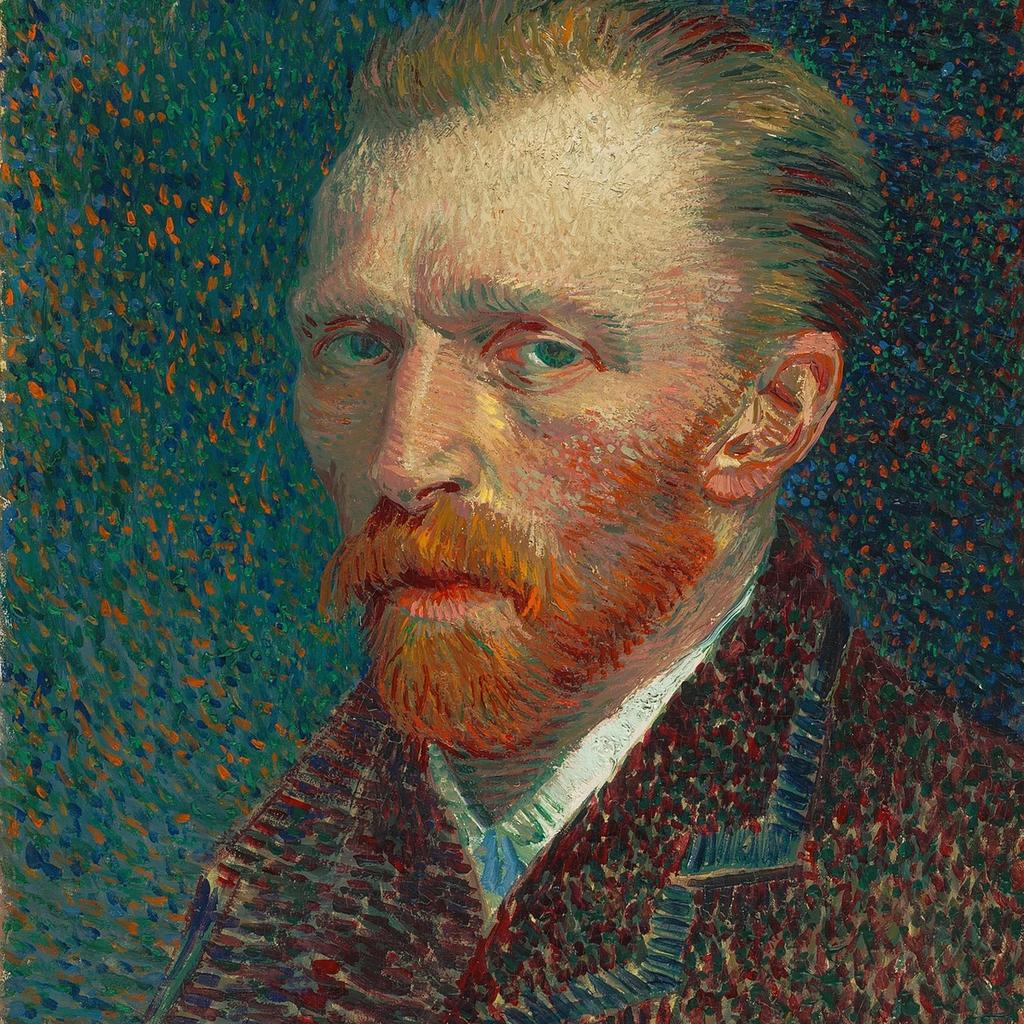
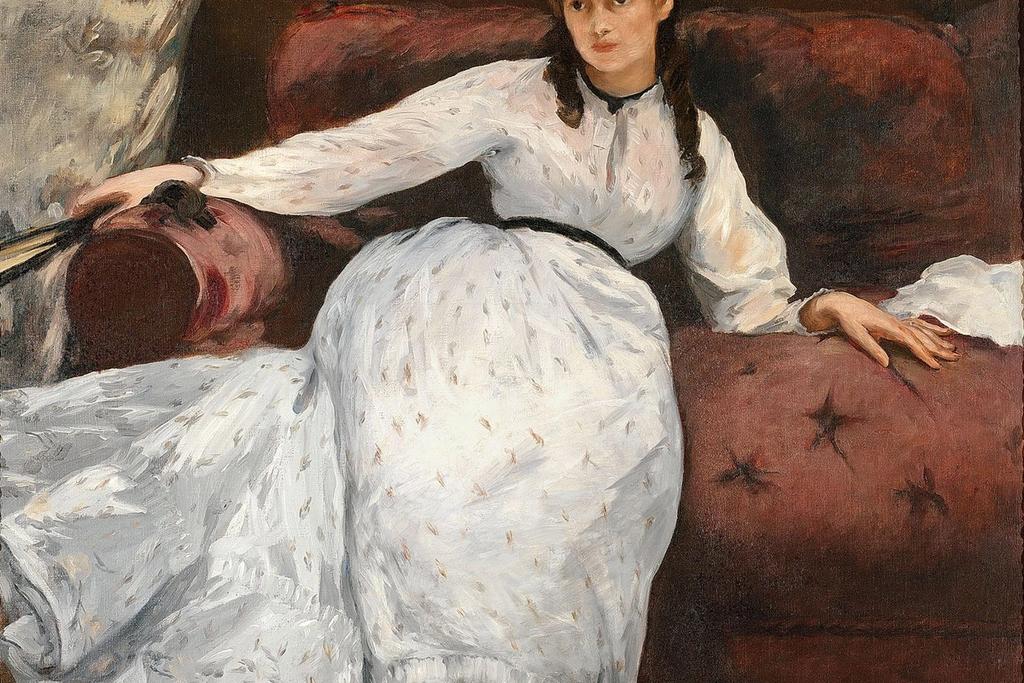
His collection came to include Russian painters: Levitan, Nesterov, Vasnetsov andVrubel. From Paris, Mikhail brought back works by Degas, Bernard, Denis, Monet,Manet, Corot, Cézanne and Renoir. He was the first in Russia to buy works by Gauguin, Van Gogh and Bonnard, and introduced their art to Ivan. The only work byMunchin the country was acquired by the elder Morozov.

For his collection, Mikhail set aside the winter garden of his mansion. There, as in Morozov's life itself, old and new intertwined. Placing the finest French wine on the table beside a Russian samovar? By all means. Hanging Old Believer icons next to Impressionist canvases? With pleasure.

Mikhail's collection was not the largest in the Russian Empire, but it was among the most distinctive. In the early 1900s it comprised 83 paintings by Russian and European artists, 10 sculptures, and more than 60 icons.
To understand what he was buying, Morozov read voraciously about art. Margarita Kirillovna later recalled that his study was filled with tables stacked with art publications from every country in the world. Mikhail Abramovich also kept company with creative people: artists and critics were regular visitors to his mansion. He would show his collection to other guests as well, and before long it was the talk of all Moscow.
The last work Mikhail Morozov acquired was Henri de Toulouse-Lautrec's Portrait of the Singer Yvette Guilbert. This happened just a few months before the collector's death.

An Anecdote from the Life of Mikhail Morozov
Konstantin Korovin enjoyed telling semi-legendary stories from the life of Mikhail Morozov. Here is one of them.
At a Parisian gallery, Mikhail Abramovich came across paintings by Gauguin. He made up his mind: 'I'll buy them, hang them in the dining room and astonish everyone' — and acquired four works for two thousand francs.
A year and a half later, at the same gallery, someone remarked to Morozov: 'You got quite a bargain on that Gauguin!' On learning that the gallery owner was prepared to buy the paintings back for 30,000 francs, Mikhail wrote to his manager in Moscow, and the works were sent to Paris.
Morozov sold them — but could not sleep for the thought that the magnificent canvases no longer belonged to him. The following morning he went back to the gallery and bought them again, this time for 50,000 francs.
Is the story true? Most likely not — all the more so since Mikhail Abramovich's collection contained only two works by Gauguin. Even so, Korovin's anecdote captures the collector's impulsive character perfectly.

The Subject of the Portrait
Valentin Serov painted portraits slowly, accepted far from every commission, and often laid bare precisely that trait in a person which his subject would desperately have wished to conceal. Even so, the artist was much sought after among the wealthy.
Working with the Morozovs was, in all likelihood, a source of genuine interest for Serov — he never once turned down their commissions. His brush captured Margarita and Yevdokia, Ivan and Mika Morozov. He painted Mikhail in 1902, just a year before the merchant's death.
Margarita Kirillovna disliked this portrait. After her husband's death she said of the painting: 'He stands there as if alive! Eyes bulging, the whole figure gleaming — as if in a deathly fever... How Serov saw that, the mind cannot fathom!' And yet, when exhibited at the World of Art show, the portrait was met with rapturous admiration from the public.

What did Serov himself think of the portrait? The painter Igor Grabar recalled the occasion:
'In 1902, during the World of Art exhibition in Moscow, I happened to be there and ran into him [Serov] quite by chance in the street. After exchanging greetings, I asked what he was working on at the moment.
— Well, I've just finished a portrait of Mikhail Abramovich Morozov.
— And are you pleased with it?
— Me? What's amusing is that they are pleased, — he said, placing the stress on the word they.
I looked surprised, for the remark left me quite puzzled.
— Well, you'll see for yourself, then you'll understand, — he said, and took his leave.
Indeed, it was only when I saw, some time later, that now-celebrated portrait in the Tretyakov Gallery — one of the most caustic pieces of social satire in painting in the entire history of Russian art — that I understood his fleeting aside.'

This comes as no surprise: Margarita Kirillovna later mentioned that she was somewhat in awe of Serov, and felt uneasy in his presence. She noted his humorous pessimism towards people, and remarked that the artist saw a caricature in every human being. And yet it was Margarita Morozova herself who initiated the establishment of a fund for Serov's family after the master's death.
A Man with No Sense of Moderation
Mikhail Morozov was careless with his health: he ate and drank without restraint — and this despite heart and kidney problems that had begun in childhood.
"Mikhail Abramovich Morozov was, in every sense, an extraordinarily distinctive figure. There was something singular about his whole bearing — something inseparable from Moscow itself. He was a vivid particle of the city's life: slightly eccentric, elemental, yet expressive and impossible to overlook." — Sergei Diaghilev
"When the doctors had already diagnosed him with nephritis, he drank vodka every day and ate raw meat with pepper alongside it. It was terrible to watch!" recalled Margarita Kirillovna.
Mikhail Abramovich died in 1903 at the age of thirty-three. His daughter Marusya was born three months after her father's death. His wife outlived Mikhail by fifty-five years and became heir to a fortune of three million roubles, which was confiscated by the Soviet state after the Revolution.
In 1910, Margarita Morozova donated the greater part of the collection to the Tretyakov Gallery, from where the paintings passed to the Pushkin Museum and the Hermitage. The works that remained in Margarita's possession were later seized by the state.

The Morozovs' younger son, Mikhail — or Mika, as he was known at home — went on to become a celebrated Soviet Shakespeare scholar. The eldest, Yuri, was a naval officer who disappeared without trace during the Civil War. The daughters, Elena and Maria, emigrated after the Revolution.
Ivan Morozov: the younger brother
Student
At first glance, Ivan Morozov seemed the very opposite of his brother. A serious young man, a student of chemistry at the Zurich Polytechnic, he had been preparing from an early age to take over the management of the family enterprises.
— So you are an artist?
— Of course, an artist! In 1892, 1893 and 1894 I studied at the Polytechnic in Zurich, and when I grew tired of drawing plans I would paint landscapes in oils on Sundays. I have not held a brush since. I know painting too well to dare practise it.
From an interview with Ivan Morozov by Félix Fénéon
But the lessons of Martynov, Korovin and Khruslov were not wasted. For all his discipline and technical cast of mind, Ivan was a creative personality. In his early years of study he took drawing and painting as electives, and he continued to paint long afterwards.
On completing his studies, Morozov returned home — it was time to take charge of the manufactory.

Businessman
How much work does it take to run several factories, assemble a collection of the most relevant works of art, and still make a meaningful contribution to philanthropy? Ivan Morozov maintained that he devoted nine to twelve hours a day to business affairs, and spent whatever time remained studying and acquiring art.
When Ivan first became managing director of the factories, he had no idea that he would soon begin collecting paintings and sculpture. For five years, from 1895 to 1900, Morozov worked to establish the manufacturing operation in Tver, then moved to Moscow and continued to run the business from there.
Ivan Morozov was a gifted businessman: between 1904 and 1916 he tripled the company's capital. Thanks to his efforts, the manufactory not only avoided bankruptcy during the First World War but achieved its highest profit — the Russian army became a major buyer of Morozov fabrics.

Like his family, the younger Morozov devoted considerable time to philanthropy: he funded the Institute for Cancer Diseases and, together with Mikhail and other family members, contributed to the establishment of an institute for the treatment of tumour patients.
Unlike his elder brother, Ivan was concerned with the lives of his workers. Between 1898 and 1900 he built a theatre for those employed at the Tver Manufactory's factories, and in 1905 became a member of the Commission on the Labour Question under the Moscow Stock Exchange Committee.
Man about town
Had Ivan Morozov lived today, he would surely have become a digital nomad — someone who works remotely and travels without ever stepping away from his affairs. At the end of 1899, Ivan Abramovich moved to Moscow and purchased the Prechistenka estate from his late uncle's widow. Like his elder brother, he travelled widely.
"Morozov loved life and knew how to live it. His paintings did not turn him into a miser; he never gave up trips to the theatre, visits to resort towns, calls on his acquaintances, or evenings at restaurants." — Yuri Bakhrushin

At the time, Morozov was running the Tula Manufactory and leading an active social life. Unlike his brothers, for whom everything was always 'too much', Ivan knew when to stop. Gambling away his fortune and losing himself to excess? Out of the question. Hosting dinner parties, inviting creative people over, and dropping in at the Yar restaurant? With pleasure.
It was Mikhail who inspired his brother to start collecting, and in the early 1900s Ivan made his first purchases. Then, in 1905, he decided: 'I'll build a picture gallery on the second floor of the house' — and proceeded to redesign the mansion. Glazing was added to the roof, and the rooms hung with canvases became proper museum spaces.

That same year, Morozov invited the French painter Maurice Denis to decorate the dining room of his home. Denis was a member of the Nabis group — whose adherents followed in Gauguin's footsteps and painted vivid, life-affirming canvases. To fulfil the commission, Maurice travelled to Moscow. For the collector's mansion he created a series of panels depicting the story of Cupid and Psyche, along with furniture, vases and sculptures.

Denis's fellow Nabi Pierre Bonnard painted no fewer than three panels for Ivan Abramovich: one for the staircase and two for the entrance hall. For Morozov, Bonnard became something of a Matisse to Shchukin: he bought the artist's works one after another.

Valentin Serov declared that Pierre Bonnard's Mirror over the Washstand was the finest work in Morozov's collection — and this despite the fact that Ivan's holdings included portraits painted by Serov himself. In one of them, Serov depicted Morozov's beautiful wife.

Family man
You may recall that Ivan Morozov was fond of visiting the fashionable Yar restaurant. In 1901, an encounter took place there that would change the collector's life.
The Yar was famous for its pretty chorus girls. One of them was Yevdokia Kladovshchikova — regulars knew her as Dosya. Like the other girls at the Yar, she had her share of admirers, but she kept everyone at a distance. With Ivan, things turned out differently: a romance blossomed between them, and six years later they were married.
"The high-society merchant circles of Moscow received young Yevdokia Sergeyevna Morozova with reserve and undisguised suspicion [...] Yet the young Morozova conducted herself so naturally and did everything with such ease, as though she had moved in such company all her life." — Yuri Bakhrushin
The couple had a daughter before they wed — she was also named Yevdokia. Why did Morozov and Kladovshchikova put off the wedding for so long?
The reason lay in public opinion: in the eyes of Ivan's circle, a successful entrepreneur, heir to an immense fortune and a figure in high society could not marry a cabaret singer. But after long inner struggle he made his choice — and it proved to be the right one.
The couple were happy in their marriage. In 1910, when Valentin Serov was painting Ivan Abramovich's portrait, Morozov asked him to draw attention to his wedding ring: 'Let all Moscow know — Morozov married late, and he loves his wife!' By that point Yevdokia had been welcomed into the Morozov circle and had become a beloved figure in the family.

At first, of course, there were wariness and condescension. But Yevdokia Sergeyevna turned out to be such a warm and agreeable person that many took to her on the very first evening. Others needed a few years. In time, Morozova became 'a fully fledged member of Moscow's high society'.
After the wedding, the Morozovs set off on their honeymoon. Among the cities they visited was Paris, where Ivan acquired paintings by Gauguin, Monet, Van Gogh and Cézanne. On their return, he commissioned Valentin Serov to paint a portrait of his wife, in which she appeared the very picture of a society lady.

Collector
Wanderers exhibitions, World of Art shows, conversations with painters and musicians, creative evenings at his brother's home — this was the world Morozov stepped into when he moved to Moscow. He was a capable businessman, but his heart was drawn to art.
Capital became for Ivan Abramovich a means of acquiring any work he desired. One might be tempted to say 'without a second thought', yet most of the collector's decisions were carefully considered.
'The Russian who never haggles' — Ambroise Vollard on Ivan Morozov
In 1901, the Morozov brothers attended an exhibition of paintings organized by the magazine Mir iskusstva. The experienced Mikhail acquired a Bonnard and a Gauguin in a single sweep. Ivan was more restrained: he bought, depending on the source, either a study by Manuil Alajalov or a canvas by Isaac Levitan.
The first work in a collection is like an aperitif before dinner: it sharpens the appetite for more. Ivan Abramovich went on to buy paintings by Russian artists, and works by Somov and Benois soon joined his holdings.

Although the Morozovs are known as collectors of Western European art, they never stopped acquiring Russian works. Ivan's collection included 326 paintings and six sculptures by domestic artists — above all, the avant-gardists.
Ivan Morozov bought his first painting by a European artist in 1903 — it was Frost in Louveciennes by Alfred Sisley.

That same year brought grief: Mikhail died. Ivan inherited part of his brother's collection, which included Portrait of the Actress Jeanne Samary by Auguste Renoir. Morozov soon acquired a sketch for the canvas, paying nine thousand roubles for it — the price of a 120-square-metre Moscow apartment at the time.
Ivan did not stop there. He travelled to Europe regularly, visited exhibitions, and became a familiar figure among the Parisian art dealers. In France, Morozov would spend entire days studying and buying art. By evening he was so exhausted that he never went to the theatre — even when he was staying directly across the street from one.

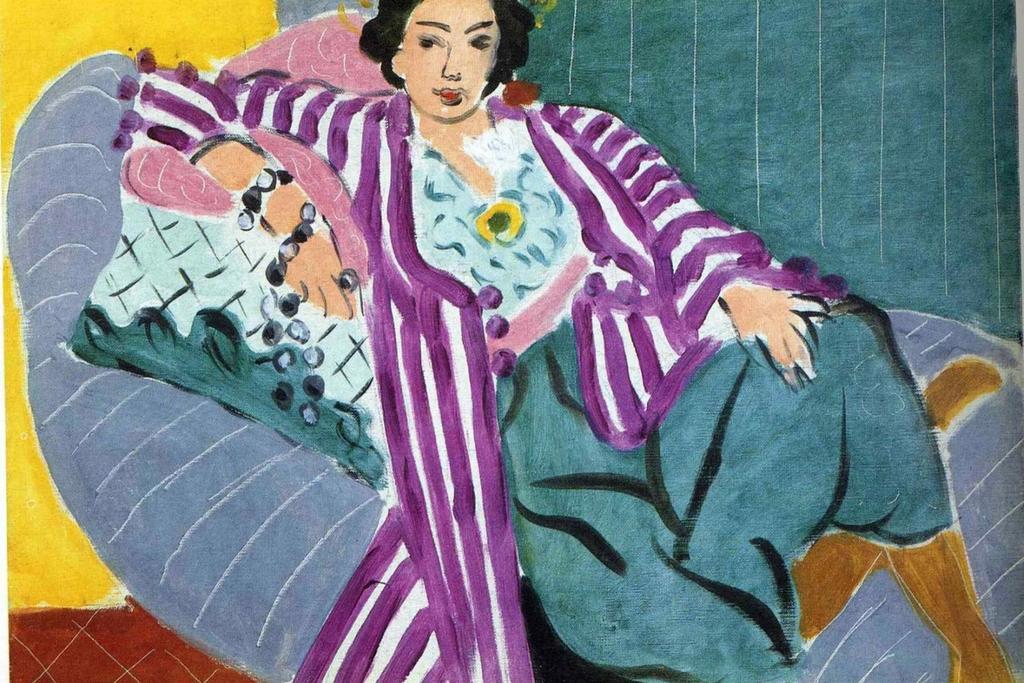
Ivan Abramovich's early acquisitions were modest, but his taste gradually deepened. Around him formed a reliable circle of advisers drawn from artists and critics. A fellow passionate collector, Sergei Shchukin, became a friend and introduced Ivan to his own favourite artists — Picasso and Matisse.
One might assume that since Shchukin and Morozov were united by their love of art, their approaches to collecting were similar. They were not. Sergei Shchukin was ardent and impulsive, buying whatever seized him in the moment. Ivan Abramovich preferred system, steadily filling the gaps in his collection.
Van Gogh soon entered the Morozov collection: The Night Café cost him a sum that could have bought a fine automobile. Ivan ultimately owned five works by Vincent. He also acquired paintings by Monet, Cézanne, Gauguin and other masters — canonical figures today, but radically innovative in their own time.

In 1915, Marc Chagall's name was still unknown to the general public. Even so, Ivan Morozov bought three of his paintings. With the proceeds, Chagall married Bella Rosenfeld. Around the same time, Picasso moved into his own mansion: his prices had risen, in no small part thanks to Morozov.
Remember the phrase 'opposites attract'? In Ivan Abramovich's case, they collided within a single person. Morozov bought works with the overall harmony of his collection in mind. He could wait years for a painting — as he did with Picasso's Girl on a Ball. The collector kept every receipt and invoice, a habit that, a century later, has made the work of art historians considerably easier.

At the same time, Ivan allowed himself never to haggle — every art dealer knew it. His credo might be summed up as: 'If I need a work, I buy it regardless.' On one occasion he bought 15 works by Van Gogh, Gauguin, Matisse and Cézanne from Vollard in a single transaction. It was this decisiveness that made him especially beloved in Paris.
The First World War broke out in 1914, after which Morozov could no longer visit France as frequently as before. By that point his collection comprised some 600 paintings and 30 sculptures by European and Russian artists. He had spent one and a half million French francs on art — a fortune on which one could have lived in luxury for a lifetime.

Ivan Morozov acquired his last painting in 1918 — it was Night with a Bonfire by the River by Konstantin Korovin. Four months later, the October Revolution erupted.
An Exile
Open the collection to all comers and lead guided tours through it? Or occasionally lift the veil of secrecy and enjoy the masterpieces with those closest to you? Sergei Shchukin chose the first path. Ivan Morozov chose the second. Yet both collectors shared a single ambition: to bequeath their collections to Moscow in the future.
The October Revolution altered — or hastened — those plans. The new government's decisions were devastating for the Morozov family. The Bolsheviks nationalised the Tver Manufacturing Partnership, Ivan Abramovich's mansion and his collection.

There was no point in remaining in Russia. In the spring of 1919, Ivan, Yevdokia and their daughter left for Paris. Morozov spent the last two years of his life there. He died of acute heart failure in July 1921, while travelling to Carlsbad for medical treatment.
For a long time, no one outside Morozov's immediate family knew where his grave was. It was recently discovered in Karlovy Vary.

Who the Morozov brothers were
The Morozovs were among the most systematic art collectors in Russia. They did not simply buy things that caught their eye; they studied the art world in theory and in practice. Ivan and Mikhail supported young artists, and through their patronage many painters gained both popularity and critical standing.
The collections would not have existed without the brothers' substantial inheritance. Credit is due to Ivan: he worked hard and significantly grew the manufactory's revenues. Another advantage from the outset was family support — the elder Morozovs introduced their children to art from an early age.
Mikhail and Ivan had every condition needed to become collectors. Yet they also faced real difficulties: conventional classics would have been far easier to study, acquire and present to others. The brothers approached the enterprise with such seriousness that we still trace the development of art at the turn of the 19th and 20th centuries through the lens of their collections.
The fate of the collection
Shortly before Ivan Abramovich's departure abroad, the Second Museum of New Western Painting was opened on the basis of his collection. For a few days Morozov served as deputy curator of his own holdings.
The First Museum was founded on Shchukin's collection. In 1923 both collections were merged into the State Museum of New Western Art. At the same time a swap took place: works by Western artists from Mikhail's collection were moved from the Tretyakov Gallery to the GMNZI, while works by Russian masters acquired by Ivan were transferred from the GMNZI to the Tretyakov Gallery.
More than a hundred works from the Morozov collections were dispersed to regional museums across the country. The windfall was shared by Astrakhan, Kazan, Vladivostok, St Petersburg and other cities. The works were distributed so meticulously that some of them are still being traced today.
All the while the Soviet government was rebuilding the country's economy. In 1929 a decision was made: sell the masterpieces from the museums to raise money for the needs of the people. Foreigners came to Russia and left with whichever paintings they desired. Among the works to suffer were Morozov's Madame Cézanne in the Conservatory by Cézanne and The Night Café by Van Gogh. Both are now held in American museums.

During the Second World War the Western European collection was evacuated to Novosibirsk. On its return, there was no rush to unpack the works: in 1948 the campaign against cosmopolitanism began, and formalism and Impressionism fell firmly out of favour.
The Museum Department of the Committee on Arts proposed distributing some works from the State Museum of New Western Art to provincial institutions and destroying others. Fortunately, these plans never came to fruition. Even so, the collection was divided between the Pushkin Museum and the Hermitage. At the same time, the Academy of Arts of the USSR moved into Ivan Morozov's former mansion.
For the first time in many years, some paintings from the Shchukin and Morozov collections were shown to the public in 1955–1956. From the late 1960s, the majority of the works began to be exhibited at the Hermitage and the Pushkin Museum.
Ivan and Mikhail would no doubt have been glad to know that in 2019 the greatest masterpieces of their collections were reunited at the exhibition The Morozov Brothers. Great Russian Collectors at the Hermitage. They then appeared in the Paris exhibition The Morozov Collection. Icons of Modern Art, and at the exhibition Brother Ivan. The Collections of Mikhail and Ivan Morozov at the Pushkin Museum.
Today, the majority of the works are held at the Hermitage, the Pushkin Museum, and the Tretyakov Gallery. If you are planning to visit these museums and wish to see items acquired by the brothers, consult the catalogue The Collections of Ivan and Mikhail Morozov.
In 2012, the auction house Sotheby's put the value of Ivan Abramovich's collection at five billion dollars. Whether this is truly the case is difficult to say: no one in the world is in a position to name a price for works held in museum collections. Art critic Sofia Bagdasarova explores this question further on her blog.
What to see and read about the collections of Ivan and Mikhail Morozov
- The documentary film The Eye of God — about the collections that formed the Pushkin Museum and about the history of the museum itself
- The exhibition catalogue Brother Ivan. The Collections of Mikhail and Ivan Morozov
- The book The Morozov Brothers. Collectors Who Don't Haggle? by Natalia Semenova
- The NeWestMuseum website — a virtual reconstruction of the State Museum of New Western Art
Sources: Blueprint, Forbes, Tatler, Wikipedia, ArtPanorama, Diletant, Kultura.RF, the Museum of Entrepreneurs, Patrons and Philanthropists, Russkaya Vera, Sovsem Drugoy Gorod, Stol, TPHV, Encyclopedia of the Russian Avant-Garde, the Pushkin Museum website
Follow us on social media so you never miss new content: VKontakte and Telegram — @loskomagazine.