The BMW Museum in Beijing, which opened in August 2016, draws visitors into the captivating world of the German marque's classic automobiles.
The Bavarian brand's passion for innovative technology and refined, understated design finds expression in an original approach to the museum's exhibition spaces. Here, contemporary design meets traditional Chinese symbolism, throwing the exclusivity of the cars on display into sharp relief. The project was realised by architectural firm Crossboundaries, known for its inventive spatial solutions in the design of BMW dealerships across China.


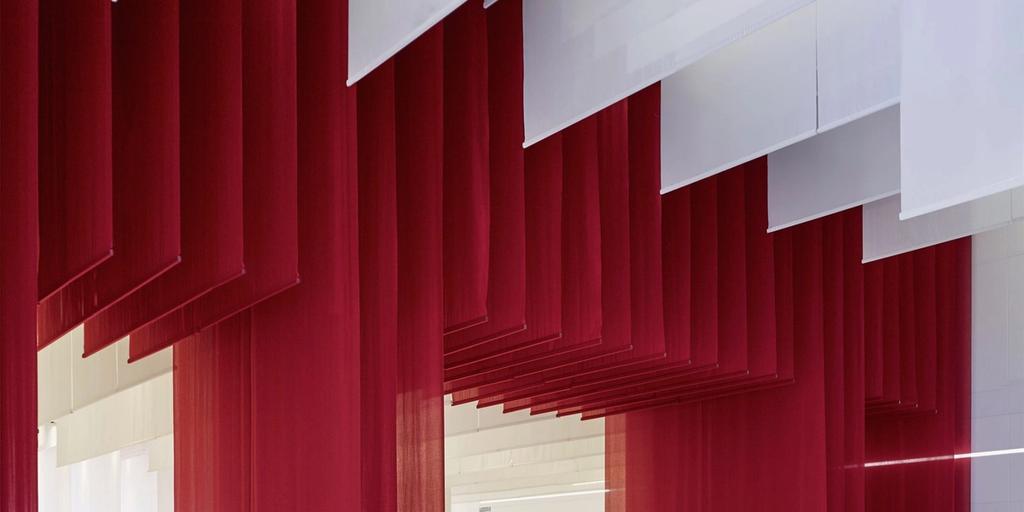
By the designers' concept, the first thing visitors see upon entering the Beijing museum is a simulation of traditional Chinese gates fashioned from red fabric. Beyond its obvious symbolism, the bold textile serves to divide the space into distinct functional zones. In addition to the car collection, the museum's third floor houses a cinema, a lounge, a play area, and dedicated exhibition spaces for smaller exhibits.

The architects' primary goal was to embody BMW's defining brand attributes — speed, style and reliability — in the museum's design. Walls decorated with horizontal glossy stripes create the illusion of city lights rushing past. White textile panels suspended from the ceilings soften the dynamic character of the exhibition space: they make the environment feel more welcoming while also serving as projection screens.
"Fabric of varying lengths brings the high ceiling down to a human scale; white textile symbolises generosity, while the red colour evokes China's imperial past." — Crossboundaries.

All the cars are mounted on mirrored platforms, arranged parallel to one another. Visitors can read detailed information about each vehicle on screens embedded in the walls. Voluminous mirror structures above every exhibit allow multiply reflected light to fill every corner of the museum. The glossy surfaces not only visually enlarge the space but also let visitors examine the exhibits from every angle.
The very arrangement of the cars suggests that they have frozen mid-motion — caught for just a moment in the flow of busy highway traffic — so that visitors can take in their every detail.

The BMW museum in Beijing is only the second of its kind in the world. The first was designed by the German design studio Brückner and opened back in 2008 in Munich, adjacent to the BMW headquarters.
Admire vintage cars in the photographs of Sinziana Velescu and a luminous Havana through the lens of Tom Blachford in Losko Magazine.