An architecture museum can display monuments from a particular era, a master architect or a city — or it can turn the building itself into an exhibit. The Losko editorial team has selected 11 beautiful and significant museums well worth visiting as a starting point for exploring architecture across different countries.
The selection spans buildings in a range of styles: these museums offer a way into classicism, modernism, metabolism and other architectural movements of the past two centuries.
Sir John Soane's Museum
Location: United Kingdom, London
Address: 13 Lincoln's Inn Fields, Holborn, London WC2A 3BP
Architectural style: Neoclassicism
Museum website: soane.org
One of the oldest architecture museums in the world is in London. Sir John Soane, the great British neoclassical architect, transformed his own home into a museum. He filled it with a collection of paintings, sculptures, architectural models and decorative fragments from long-lost monuments. Soane also built the Dulwich Picture Gallery, which became a prototype for many modern art galleries — among them the Getty Center in California.
When Soane was appointed Professor of Architecture at the Royal Academy in 1806, he began to consider turning his home into a museum for students. His collection grew to encompass thousands of objects, ranging from antiquities to models of contemporary buildings. One of the most striking exhibits is the sarcophagus of the Egyptian pharaoh Seti I — the most valuable item in the collection. When the sarcophagus arrived at Soane's house in March 1825, he marked the occasion with a three-day celebration attended by 890 guests.
The museum is distinguished by its extraordinary spatial quality. Inside the building there are numerous niches, secret doors, and double walls concealing paintings within. Soane suffered from cataracts and as a result devised new approaches to lighting his spaces. Thanks to his innovations, the house is suffused with light, refracted through coloured stained-glass windows and an abundance of mirrors. The museum preserves the atmosphere of the owner's lifetime: labels are almost entirely absent, the lighting is subdued, and there is no information desk or café.
Each room in the house is itself a kind of work of art. Soane continually rearranged the displays, adding new objects and drawing out the qualities of different pieces through unexpected juxtapositions. In the model room, he placed models of his own buildings alongside models of the ancient structures that had inspired him.
It was at the Soane Museum that the first gallery of contemporary sculpture in Britain appeared. It occupied a small space leading off the main staircase known as the Tivoli Recess. The miniature gallery was converted into a staff lavatory in 1918 and restored in 2001.
Today the museum is widely known for its restoration programmes. The Opening up the Soane project, for instance, reconstructs the house's interiors in accordance with the architect's original intentions — made possible by the survival of the building in numerous nineteenth-century watercolours.
Original colour schemes and furnishing arrangements have been reinstated throughout the rooms. Three of the courtyards that Soane created have also been restored, and in one of them his pasticcio — a column assembled from architectural fragments — has been reconstructed.
The Museum Meijimura
Location: Japan, Inuyama
Address: 1 Uchiyama, Inuyama, Aichi 484-0000, Japan
Architectural style: Meiji
Museum website: meijimura.com
Another classic architecture museum is this open-air complex in Inuyama, Japan, dedicated to the buildings of the Meiji. It was founded by architect Yoshiro Taniguchi and Motoo Tsuchikawa, vice-president of the railway company Nagoya Railroad.
During the Meiji era, Japan underwent the most profound transformation in its history: emerging from centuries of isolation, the country opened itself to Western ideas. Architectural styles and construction techniques were among the many things borrowed. This practice shaped the character of Meiji-era architecture.
Travelling along the Yamanote tram line in Tokyo, Yoshiro Taniguchi grieved over the demolition of the Rokumeikan palace, a symbol of Meiji architecture. He persuaded his former classmate Motoo Tsuchikawa to join his efforts to preserve Meiji-era buildings. On 18 March 1965, the Meiji Mura museum opened on the shores of Lake Iruka with 15 structures.
The museum's purpose is to preserve early examples of architecture shaped by Western influence. Many of the buildings survived only thanks to a fortunate set of circumstances.
The most prominent feature of the complex is the Imperial Hotel building, constructed byFrank Lloyd Wrightfor central Tokyo in 1923. Between 1967 and 1985, the structure was relocated to the museum, and a larger building was erected in its place. Only the entrance composition and lobby of the Imperial survive, yet it remains the largest exhibit at Meiji Mura.
German Architecture Museum / Deutsches Architekturmuseum
Location: Germany, Frankfurt
Address: Schaumainkai 43, 60596, Frankfurt, Germany
Architectural style: Postmodernism
Website: dam-online.de
The first architecture museum in Europe is the German Architecture Museum, orDeutsches Architekturmuseum. The idea of founding such a museum in Frankfurt emerged as far back as a century ago, in the early 1920s, when Ernst May was head of the city's urban planning committee. The plan was revisited in the late 1970s, alongside the development of the Museumsufer — the museum embankment that came to house the city's cultural institutions. Art and architecture historian Heinrich Klotz was brought in as a consultant.
On 1 June 1984, the Deutsches Architekturmuseum opened with the exhibition The Revision of the Modern, a reflection on postmodernism. The museum's first years were marked by debates on postmodernism, sparked by Heinrich Klotz, who was appointed its director. The museum was conceived as a place for educational events and the development of urban planning policy.
The Deutsches Architekturmuseum occupies a building dating from 1912. Between 1979 and 1984, it was redesigned by the celebrated German architect Oswald Mathias Ungers. He transformed the early twentieth-century mansion into a conceptual structure — a house within a house. Only the outer walls of the building were left untouched. As the architect said, he wanted to create a pure space that borders on the very essence of architecture.
The conceptual framework of the project was devised by Heinrich Klotz. He believed it was grounded in the central principle of postmodern architecture: the merging of a building's façade and its interior into a complex that tells a story. The Deutsches Architekturmuseum is also one of the earliest examples of the revitalisation of a dilapidated historic building.
Pavillon de l'Arsenal / Pavillon de L'Arsenal
Location: France, Paris
Address: 21 Boulevard Morland, 75004, Paris
Architectural style: Neoclassicism
Website: pavillon-arsenal.com
The Parisian Pavillon de l'Arsenal is a centre for architecture and urbanism. The museum building was constructed in 1878–1879, commissioned by the merchant Laurent-Louis Borniche. He had made his fortune in the timber trade and had a passion for painting. The building was intended to house a public display of his collection. The pavilion takes its name from a former monastery nearby, which was later converted into an arsenal.
After Bornish died, the building was sold and used as a warehouse, a restaurant, and later a studio. In 1988 it was converted into an architecture centre. It now houses an architectural archive and hosts exhibitions devoted to Parisian urban planning.
The permanent exhibition, titled 'Paris, a city in the making', is dedicated to Parisian architecture and urban planning. An additional space hosts exhibitions on Parisian buildings, city life during the era of Baron Haussmann, and urban planning projects yet to be realised.
The museum is also open to experimental projects. In 2017, for example, when Paris won the bid to host the 2024 Olympics, a 13-metre climbing wall was erected inside the pavilion. Designed in the colours of the event's visual identity, it was intended to inspire visitors to take up sport climbing — which has since become an Olympic discipline.
Bauhaus Archive / Bauhaus Archiv
Location: Germany, Berlin
Address: Berlin, Charlottenburg, Knesebeckstr. 1 – 2
Architectural style: Modernism
Website: bauhaus.de
This complex holds the archival collection of the world's most influential school of architecture and design. It also features a permanent exhibition where visitors can see, among other works, pieces by Wassily Kandinsky and Paul Klee.
The idea of assembling a collection telling the story of the Bauhaus was first proposed by the German art historian Hans Maria Wingler in 1960. His aim was to popularise the ideas of the school, which had closed in 1933. The founding of the collection was supported by Walter Gropius — the founder of the Bauhaus.
The collection was initially housed in the Ernst Ludwig Building in Darmstadt. As the holdings grew too large, Gropius developed a design for an archive building whose appearance would enter into dialogue with the work of the Bauhaus. Local authorities refused to allow its construction, but the project found support from the municipality of West Berlin.
The archive building was completed only in 1979, ten years after Gropius's death. The design changed considerably during construction, yet certain elements of the architect's original vision were retained. The roof pattern, for instance, remained as Gropius had conceived it.
Bauhaus Museum Weimar / Bauhaus-Museum Weimar
Location: Germany, Weimar
Address: Stéphane-Hessel-Platz 1, 99423, Weimar
Architectural style: Neo-modernism
Museum website: klassik-stiftung.de
Another Bauhaus museum is located in the school's birthplace — the city of Weimar. The new institution opened in 2019, on the centenary of the Bauhaus's founding.
Before the current building was constructed, the museum dedicated to radical Constructivism was paradoxically housed in a Classicist stable. It held 250 works by Bauhaus teachers and students. The new museum contains 13,000 exhibits, and the central pieces of the collection were personally selected by Walter Gropius.
The museum is designed in the Bauhaus style — it takes the form of a minimalist five-storey concrete cube. The floors are united by a two-level open space. The facade surface is lined with 24 rows of LED lights and scored with horizontal grooves bearing the words 'bauhaus museum'.
The permanent display focuses on the early years of the Bauhaus, from 1919 to 1925. After 1925, the Nazi government forced the school to relocate to Dessau, where it eventually closed in 1933. The ground floor houses a gallery telling the story of the school's founding. The second floor presents exhibitions showing how Bauhaus ideas were put into practice. The upper floors contain galleries devoted to the Bauhaus directors of successive eras — Walter Gropius, Hannes Meyer and Mies van der Rohe.
Adjacent to the building stands an ensemble from the Weimar Republic period, a former Nazi forum and a GDR student dormitory from the 1970s. The museum brings together these stages of Weimar's architectural history, forming a topography of modernism. Nearby are also the New Weimar Museum and an exhibition space with a display dedicated to forced labour under National Socialism. Together, these sites make up the city's museum quarter.
Museum of Architectural Drawing / Museum für Architekturzeichnung
Location: Germany, Berlin
Address: Christinenstraße 18A, 10119, Berlin
Building style: Neo-modernism
Museum website: tchoban-foundation.de
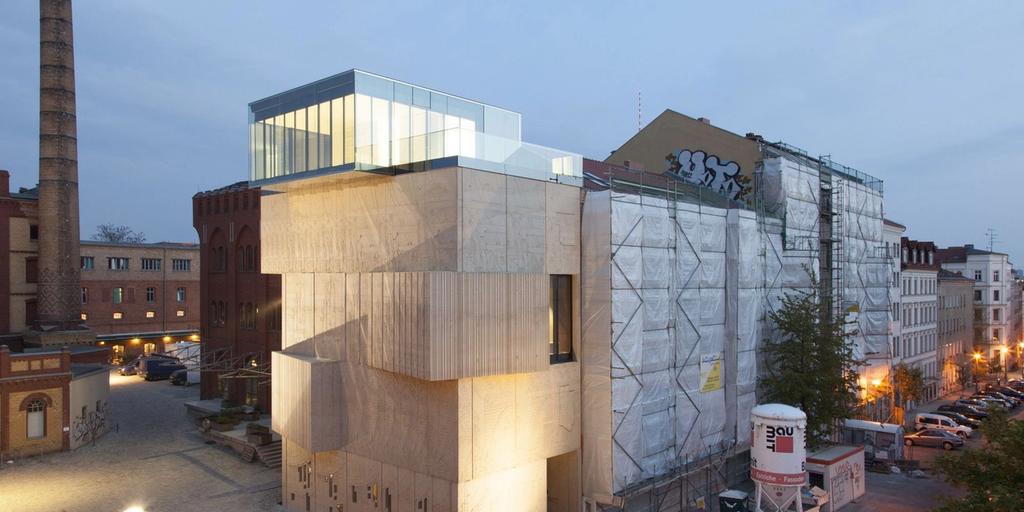
The Berlin Museum of Architectural Drawing was conceived by Russian architect Sergei Tchoban, himself well known for his graphic work. The museum aims to revive interest in the lost art of architectural drawing. Its inaugural exhibition featured works by Piranesi.
Sergei Tchoban's collection began in 2001, when he purchased a drawing by the Italian architect Pietro Gonzaga. The collection now comprises several hundred sheets, ranging in date from the sixteenth century to the present day.
The museum opened in the historic Berlin district of Prenzlauer Berg, on the site of a mid-nineteenth-century brewery. The building extends the line of a fire-wall and slots into a row of traditional Berlin residential blocks. The four-storey structure with a glazed roof is reminiscent in its outline of a stack of building blocks.
The three concrete facades of the building are decorated with reliefs in the form of architectural sketches. These are arranged into repeating patterns and depict drawings by Pietro di Gonzaga and Angelo Tosselli, two Italian stage designers of the nineteenth century who worked in Russia. The facade surfaces are divided into groups of overlapping planes that imitate stacks of sheets of paper.
Danish Architecture Centre / Dansk Arkitektur Center
Location: Denmark, Copenhagen
Address: Bryghuspladsen 10, København
Building style: High-tech
Museum website: dac.dk
The Danish Architecture Centre was built by OMA — the firm led by Rem Koolhaas. The building stands in Copenhagen's historic harbour, on the site of a former brewery. A road runs through the structure, weaving the architecture centre into the fabric of the city. An unexpected addition to Copenhagen's historic ensemble, the building sits opposite two other experimental landmarks: the National Parliament and the Royal Library known as the Black Diamond.
The building is a complex of green glass blocks. The architects describe the coloured cladding panels as 'pixels'. 'We chose green deliberately, because the water in the Copenhagen canal is a beautiful deep green, and also because the green on the roof connects the building to the many copper-topped spires on the skyline,' said Ellen van Loon, one of the project's lead architects.
The heart of the architecture centre is an exhibition space that doubles as a working studio for architects. 'People don't need a sterile museum. They enjoy watching the process of making — how we work, how models are built. For me, the most important thing about this building is that the architecture museum feels like a production workshop with an exhibition space, rather than a conventional museum,' van Loon commented.
Toyo Ito Museum of Architecture / Toyo Ito Museum of Architecture
Location: Japan, Omishima Island
Address: 2418 Omishimacho Urado, Imabari, Ehime 794-1308, Japan
Architectural style: Metabolism
Museum website: tima-imabari.jp
The world-renowned Japanese architect Toyo Ito built this eponymous museum on Omishima Island. It is Japan's first museum dedicated to the work of a single private architect. The site looks out over the Seto Inland Sea, and the building itself evokes the deck of a ship.
The museum comprises two structures. The first is called the Steel Hut. Clad in steel sheets, it is conceived as a three-dimensional graphic object. Alongside it stands a second pavilion — the Silver Hut — a reconstruction of Toyo Ito's own home, originally built in Tokyo in 1984.
The house consists of small living units connected by a patio and covered by vaults of varying sizes. Ito has spoken about the project: 'First of all, I thought about the different things we do at home — cooking, eating, resting, sleeping. The kitchen, for instance, is a working space filled with appliances for preparing food [...] When I think about architecture, I think of it as a garment that should wrap itself around people.' Ito endowed his urban home with elements drawn from vernacular architecture, such as stilt houses in South-East Asia or Native American tipis.
The architect and his team conceived the museum as a space for a range of activities that would breathe new life into the local community. The museum is intended to draw in local residents and revive near-forgotten local values. Toyo Ito believes that architecture 'beyond modernism' can emerge from communities like Omishima.
MAXXI
Location: Italy, Rome
Address: Via Guido Reni, 4a, 00196 Roma RM, Italy
Architectural style: Deconstructivism
Museum website: maxxi.art
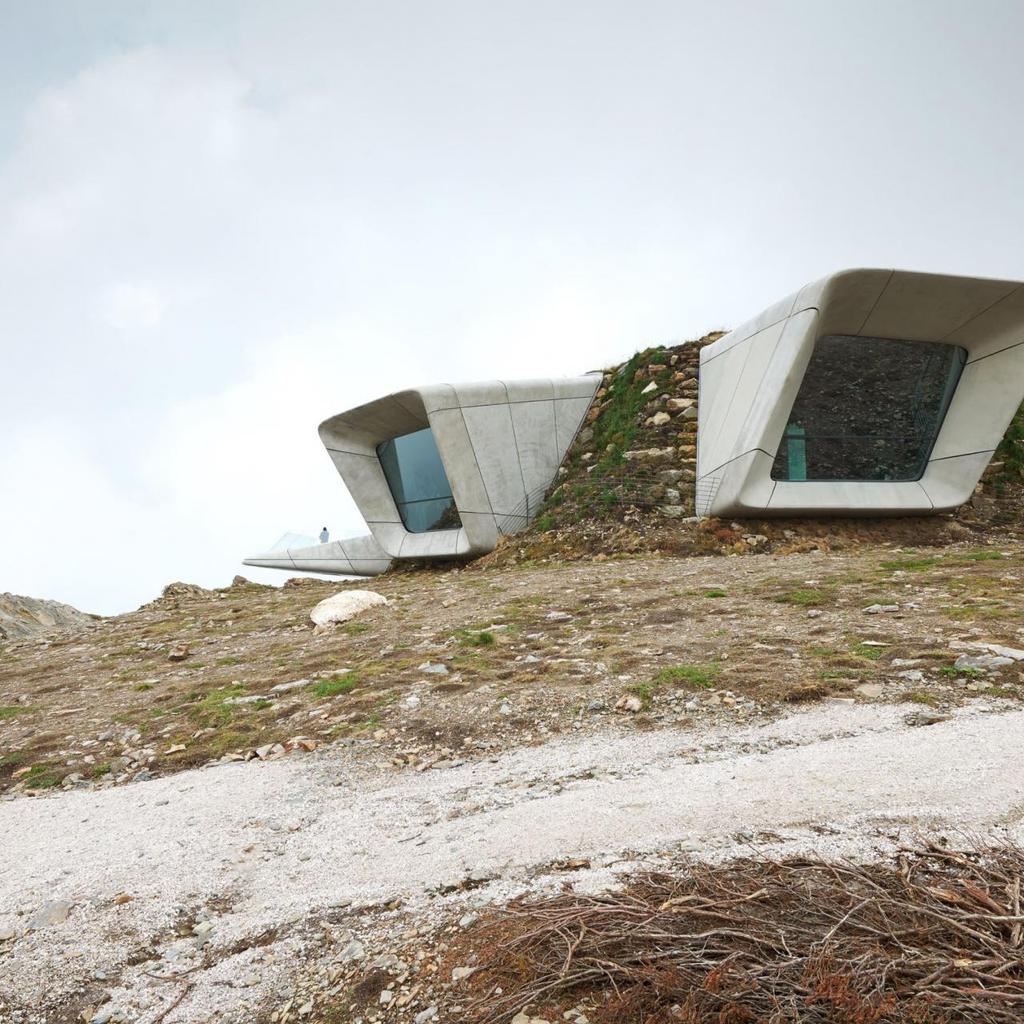
Italy's first national museum of contemporary art and architecture was built in Rome by Zaha Hadid. The ultra-modern building contrasts with the city's skyline, yet viewed from above it becomes clear that the museum slots into the layout of Rome and the course of its river. The wings of the museum end in panoramic windows.
The building's defining elements are concrete curved walls, black staircases that appear to float in mid-air, and an open ceiling that admits natural light. The museum's walls shift as they bend, in places flowing seamlessly into the floors. Critics have compared the walls of MAXXI to bobsled tracks. Hadid herself said she wanted the museum's walls to "unwind like a ribbon in the air." Some have called the museum's plan "the most hypnotic and alluring since Frank Lloyd Wright unveiled his seemingly impossible drawings for the Guggenheim in New York more than 50 years ago."
The experience of the museum begins in a vast entrance hall that stretches the full height of the building. On the ground floor, visitors can choose their own route: between galleries, staircases, or lifts. Two of these paths lead into the heart of the exhibition space, while the third exits the main volume of the museum and guides visitors along a glazed walkway, offering a view of the galleries from the outside.
"For me it is like standing in the Roman Piazza del Popolo", says Hadid. "When you look north, the square opens out into three streets, offering an unexpected and exhilarating choice of direction. Yet all three roads lead to the same point."
MAXXI is built in the Flaminio district, which in recent years has been the focus of a public-space renewal programme. The Auditorium by Renzo Piano, for instance, was built here. MAXXI takes its place among the landmarks of a reinvented city. The museum fills with meaning as the twenty-first century unfolds.
Museum of Architecture in Moscow
Location: Russia, Moscow
Address: 5/25 Vozdvizhenka Street, Moscow
Architectural style: Classicism
Museum website: muar.ru
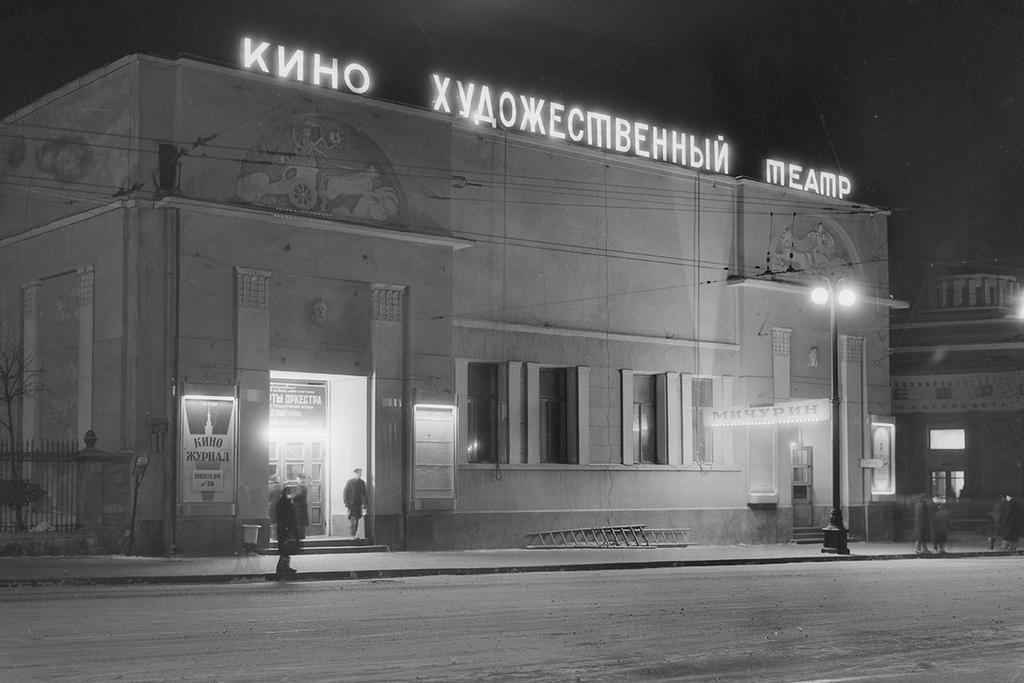
In 1934, a closed museum was established in Moscow under the Academy of Architecture of the USSR. It was housed in the Donskoy Monastery. The museum's first exhibition consisted of fragments of demolished monuments displayed in the open air. The monastery's buildings and its surviving eighteenth- and nineteenth-century necropolis also formed part of the display.
After the Second World War, the Republican Museum of Russian Architecture opened in the Talyzin estate on Vozdvizhenka — a public museum and research centre for architecture and urban planning. It was also at this time that the director, Shchusev, brought objects of Soviet architecture into the collection. The estate itself — a Classicist monument of the eighteenth century, built by Matvei Kazakov — became an exhibit of the museum, much as the Donskoy Monastery had been for the Academy's museum. In 1964, the two architecture museums were merged.
In 1991, the Donskoy Monastery was returned to the Russian Orthodox Church. The Museum of Architecture was promptly relocated to the Talyzin estate on Vozdvizhenka, which by that point was in a near-derelict condition. A shortage of space forced the permanent exhibition to close.
The museum was saved by David Sarkisyan, who took charge of it in 2000 and transformed a long-forgotten cultural institution into a pioneering one. He preserved the historic interiors of the Talyzin estate and replaced the acronym GNIMA with MUAR. The museum had no funds to reconstruct the estate's annex, so the director devised the idea of turning it into a singular exhibition space — the "Ruin." After Sarkisyan's death, the "Ruin" was reconstructed by the Rozhdestvenska bureau, which honoured the director's vision: "everything should look exactly as it did, only without falling apart."
In 2012, two years after Sarkisyan's death, the installation 'David's Study' opened at the Shchusev Museum of Architecture. It was designed by the Moscow studio Meganom: the architects painstakingly moved every object from the late director's former office into a climate-controlled case. Sarkisyan's study had been an enormous collection of artefacts, relics and everyday objects arranged within an ordinary working space. It was described as a total installation — 'the unofficial centre of the architectural community'. Today the study can be visited on the second floor of the Ruina building.
'Rem Koolhaas used to ask him to put on exhibitions; Zaha Hadid would send him five text messages a day. All those foreigners told each other that Moscow had a handful of sights worth seeing: the Kremlin, the Mausoleum, St Basil's Cathedral — and David Sarkisyan's study,' recalled architecture critic Grigory Revzin.
If you have been drawn to exploring architecture, take a look at our selection of books on architecture that will help you find your way around the field. For a closer look at different styles, see our article on the key movements in contemporary architecture.
Follow us on social media so you never miss new content: VKontakte, Telegram — @loskomagazine.