Joel Filipe, designer and art director at Spanish Radio and Television — "the only designer in the entire world who doesn't drink coffee," as he describes himself on his website — pursues a passion for photographing Spanish architecture alongside his day job.
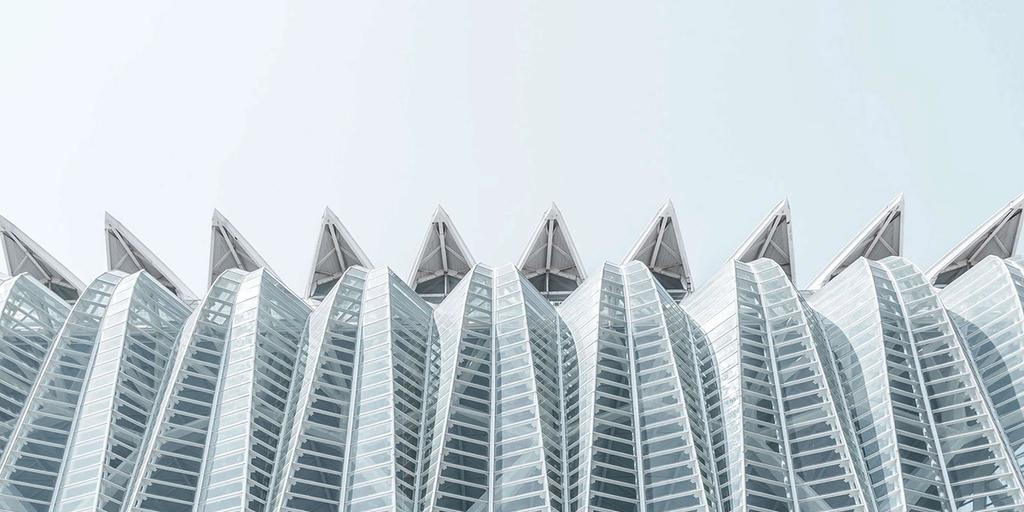
In his recent project City of Lights — White Harmony Filipe reveals the monochromatic beauty of the City of Arts and Sciences — the architectural complex in Valencia that has become a popular tourist destination.


The City of Arts and Sciences was built at the turn of the twenty-first century on the site of the dried-up bed of the Turia river. Originally conceived as a science museum, the project expanded through debate into a complex of five buildings: an opera house, a planetarium, a gallery, the science museum itself and an oceanographic park, all surrounded by parks and water features.


The complex is listed among the 12 Treasures of Spain alongside the Guggenheim Museum, the Alhambra and Seville Cathedral. The futuristic appearance of its buildings attracts not only tourists but also people from the art world: several scenes of the Disney science-fiction filmTomorrowland and oneepisode of the British science-fiction series Doctor Who ("Smile", s10e02) were filmed on the grounds of the City of Arts and Sciences.

A carefully designed lighting system makes the City of Arts and Sciences look especially striking at night, yet Joel Philip chose daytime to photograph the complex. The clean white surfaces serve as a backdrop for the latticed beams that slice through the sunlight falling on them. So much glass has been used in the buildings of the City of Arts and Sciences that the vast spaces — filled with air and light — seem to have been cut from paper, while at the same time giving the impression of giant spacecraft or palaces of the future.


Philip's fondness for white is hard to miss: most of his other photo series are similarly drawn to pale monochromes. Several of his projects focus on the architecture of Madrid, where the designer now lives — its geometry and carefully chosen colour palette. Philip has also photographed projects in Lisbon, including the seriesThe Shell — Maat Museum Lisbon, dedicated to the Museum of Art, Architecture and Technology.
We wrote about another of Spain's treasures, the Guggenheim Museum, in ourroundup of contemporary art museums. And the city of Brasília through Bruno Candiotto's lens is sure to appeal with its equally pure, clean lines and shades of white.