Japanese photographer
Japanese photographer Hiroharu Matsumoto explores the relationship between people and the urban environment in his work. The subjects of his series are the inhabitants of the metropolis, as well as the streets and spaces of Tokyo themselves.
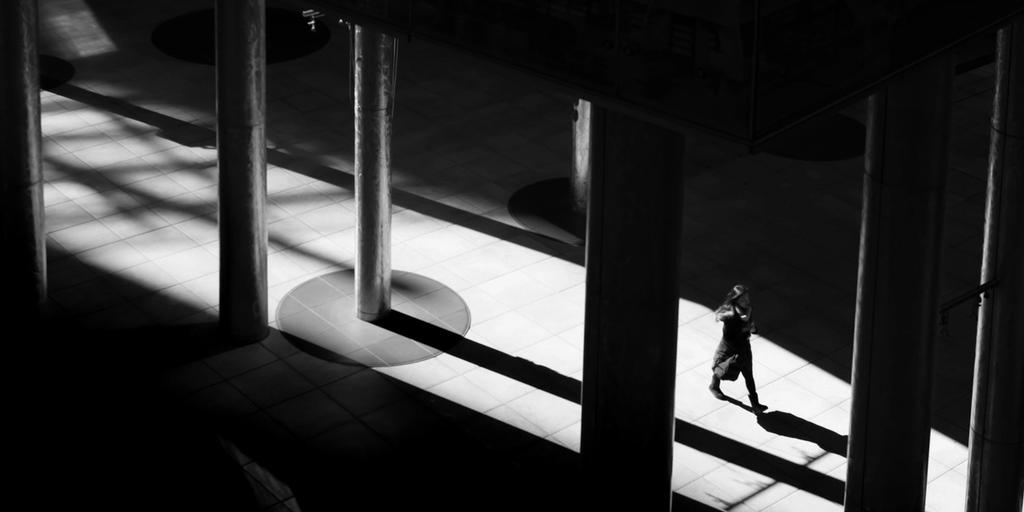
In his most spare black-and-white series, Quiet Tokyo,Matsumoto depicts the solitude of the capital's residents: he observes that the loneliness of Tokyo's inhabitants is "unique" — perhaps because Tokyo is a loud, busy metropolis, and the individual is not easily singled out from the crowd.
Through an extremely simple, carefully calibrated composition and the use of backlighting, the photographer strips his images of everything superfluous. What remains is only the urban environment — segmented, schematically laid out, optimised for the convenience of the city dweller — and the angular human figure, caught mid-movement.


Matsumoto's figures are perpetually on their way somewhere: carrying briefcases, umbrellas, shopping bags, paper bags from fast-food restaurants. The relentless busyness of the city dweller stands in sharp contrast to the emptiness and anonymity of the surroundings — the space is so vast and uniform that movement seems to lose all meaning.
"The space is so vast and uniform that movement seems to lose all meaning."
A similar compositional impulse runs through Hiroharu Matsumoto's other work as well — a human figure set against an urban backdrop. Many of his photographs also reveal a love of geometry: road markings, wayfinding signage, building facades and the paving of streets and squares appear both as backgrounds and as subjects in their own right.
If you enjoy street photography, you will almost certainly appreciate the work of Clarissa Boné, which we covered recently. We also recommend exploring Jan Vranovsky's industrial landscapes of East Asia.