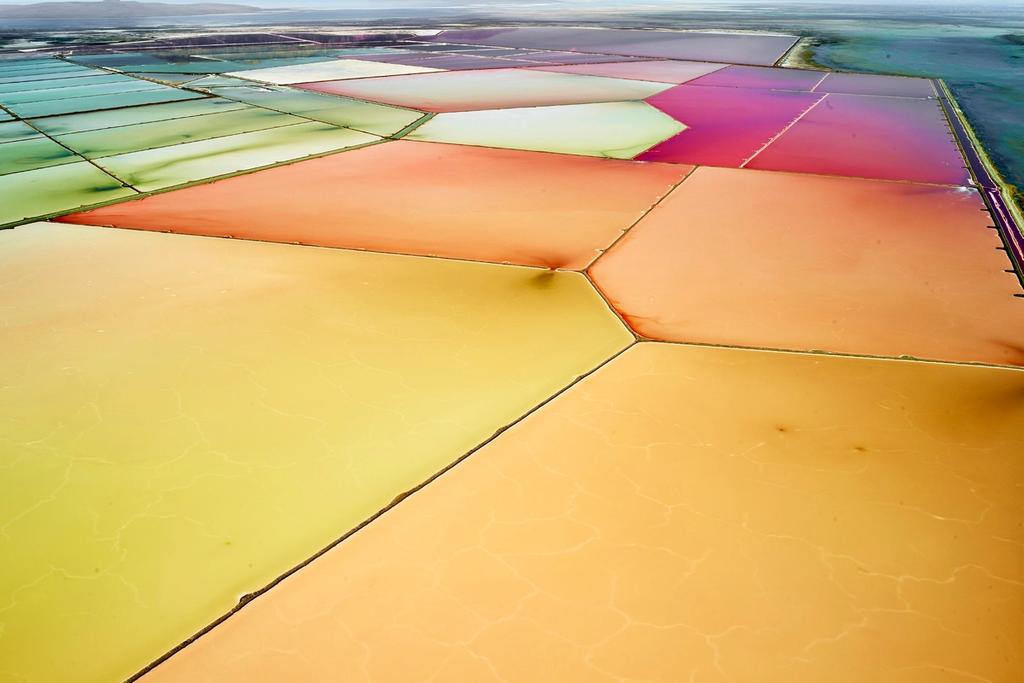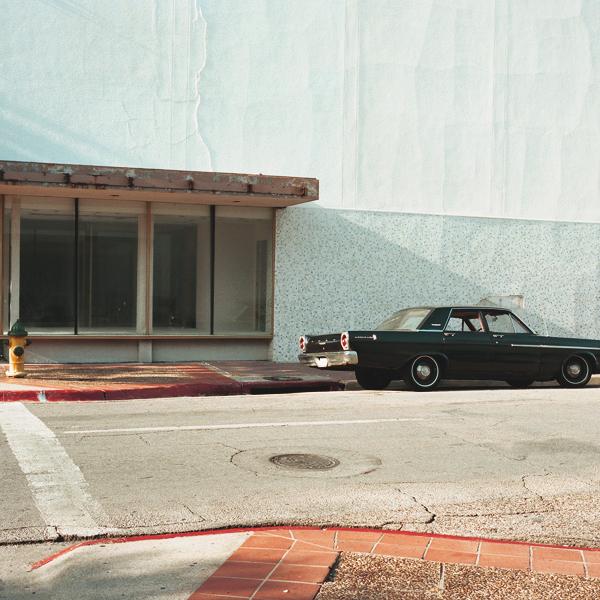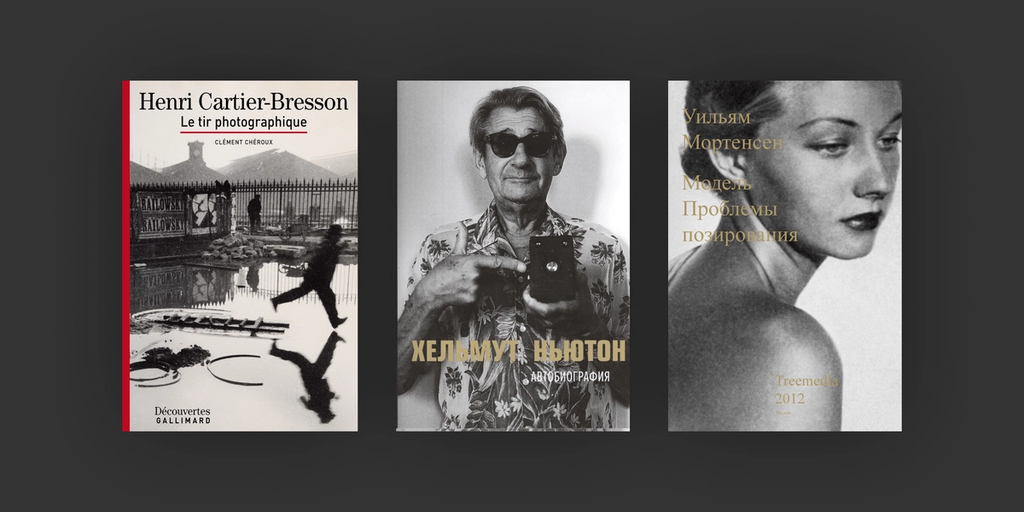
Losko has compiled a selection of books for those who want to develop their skills in photography and the visual arts. These titles will help you see composition within the frame, spot posing mistakes, and understand how to work with colour. We have gathered books across a range of genres and approaches, so there is something to engage both beginners and experienced photographers alike.
Alexander Lapin. Photography as

Subject: Research
Year: 2003
Alexander Lapin is a Soviet and Russian photographer and researcher. In his book he examines the process of constructing a photograph, at times employing complex conceptual frameworks. One chapter, for instance, is devoted to the affinities between poetry and photography. The text contains references to prominent Western art theorists who worked on the theory of perception. Lapin also identifies a particular aspect of composition he calls the pictorial connections between objects.
A chapter deserving special attention is the one in which Lapin analyses the documentary and artistic possibilities of photography and introduces the reader to the genre of reportage. The closing section of the book consists of notes. Departing from convention, Lapin's notes read almost as a literary work in their own right: the author includes excerpts from forthcoming books, conducts a dialogue with an imaginary opponent, and holds a conversation with himself. Here one finds reflections on the problem of perceiving the Black Square, an alternative reading of Bruegel's painting The Blind Leading the Blind, and much else besides.
Buy: Chitay Gorod
Download: LitRes
William Mortensen. The Model: A Book on the Problems of Posing

Subject: Portrait
Year: 1937
William Mortensen worked in Hollywood during the 1920s, where, among other things, he photographed actors. In this book he explores how to create a portrait — though readers will find no ready-made instructions: Mortensen simply shows what not to do. In doing so, he grants readers creative freedom rather than confining them to a set of standard rules.
Mortensen approaches the problems of posing by drawing on the classical canons of fine art. He believed that the best way to learn how to depict the human body was to study classical painting, drawing and sculpture. "Leafing through several volumes that contained a good deal of advice and reflection on the subject gave me the idea for a book that would address the problems of the human figure's plasticity from a photographic standpoint. Those lavish volumes struck me as far too prudish. Their advice and instructions were wrong not only from an artistic perspective, but from a biological one as well," he notes.
Mortensen turns his attention to the physical and psychological aspects of working with a model. He explains how to choose a hairstyle, clothing and body position, how to set the light, and how to establish a rapport with those posing. Above all, Mortensen considers the most important skill to be the photographer's ability to communicate to the model the idea at the heart of their work.
Download: LitRes
Lydia Dyko. The Fundamentals of Composition in Photography

Subject: Constructing Composition
Year: 1983
Soviet cinematographer and VGIK lecturer Lydia Dyko writes in thorough and systematic detail about photographic composition, breaking it down into its constituent concepts: the subject, the construction of planes, camera angle and perspective. Dyko also analyses composition as a means of visual expression.
The book opens with an essay tracing the history of photography from its earliest experiments to the emergence of contemporary documentary work. This volume can be considered the best first book for a photographer starting out. Dyko's book resembles a textbook: each chapter ends with questions that allow the reader to review and consolidate what they have read, and the manual closes with a set of practical exercises.
"We have defined composition as one of the most important means of realising an ideological and artistic concept — and its roots, therefore, lie in that concept, in precisely what the artist is expressing, and deeper still, in what they are reflecting upon and what conclusions and judgements they seek to lead the viewer towards. One must not, of course, underestimate the other dimension of composition. The concept extends to the visual structure of the frame, whose architectonics and geometric coherence make it possible to articulate the author's thought with clarity and translate it into visible forms, into a visual sequence," writes Dyko on the purpose of the book.
Henri Cartier-Bresson. Dialogues

Subject: A Photographer on Himself
Year: 2013
Dialogues brings together twelve interviews with Bresson. As the editors emphasise, the photographer himself wrote almost nothing about his practice, making these conversations the best available source of insight into it.
Bresson spoke to journalists about the equipment he used and the techniques he applied. He never, for instance, used a flash, in order to keep his images authentic. On the artistic side of photography he maintained: "I am not a romantic. I love classicism. To my mind, the most beautiful cinematographic image is found in Chaplin's early films, where the light falls from a single direction." He also declared: "Colour photography is a castrated vision — it appeals only to merchants and magazines."
In his interviews, Bresson spoke at length about the profession: having worked as a photojournalist himself, he reflected extensively on the nature of reportage photography. Taking issue with Berger, Bresson argued: "Photography is not a means of propaganda — it is a way of crying out what you feel."
Buy: Chitay Gorod
Chris Knight. Dramatic Portraiture

Subject: Portrait
Year: 2017
Chris Knight's book addresses two aspects of portrait-making. The author explains how to produce a compelling image and how to use it to convey an idea. Knight draws on art history to identify the key techniques of portraiture and to explore how they shape psychological perception.
The author gives particular attention to light, which he regards as the primary means of telling a story in photography. The book explains how to work with different lighting schemes — such as Loop lighting and Rembrandt lighting — which, in Knight's view, help to build the character of a portrait subject. To make the right choice of technique, he advises drawing on various principles of perception, including Gestalt psychology.
Knight also explores how colour works, what meaning different colours carry, and what colour schemes exist. He explains the building blocks of digital photography — knowledge that is essential for processing images effectively in graphics editors. The book closes with Knight analysing his own work to demonstrate how he applies every method discussed throughout.
Buy: Chitai Gorod
Susan Sontag. On Photography

Topic: Study
Year: 1977
On Photography is the book that made American writer Susan Sontag famous. In her essays she reflects on the meaning and development of photography. The collection of interconnected pieces grew out of an article in which the scholar wrote about "certain aesthetic and moral problems raised by the omnipresence of photographic images."
It is precisely this omnipresence that Sontag dissects in her book. "By duplicating with images a world already cluttered with them, photography makes us feel that the world is more available than it really is. The desire to confirm reality and extend experience through photographs is an aesthetic consumerism to which everyone is now addicted. Industrial societies turn their citizens into image-junkies," she writes. Sontag's ideas illuminate the role of photography in today's information society.
She also draws attention to the conceptual and aesthetic dimension of photography: "The appetite for beauty, the reluctance to probe beneath the surface, the intoxication with the physical world — all these components of the erotic impulse are present in the pleasure we take in photographs. But this pleasure has a dark side, one that is alien to freedom. It is not an exaggeration to speak of people acquiring a photographic dependency: the need to turn experience into a way of seeing."
Buy: Chitai Gorod
Pavel Kosenko. Living Digital

Theme: Working with Colour
Year: 2015
"Many contemporary photographers encounter the feeling that digital photography doesn't 'breathe'. We look at a print, admire the vivid colours and crystal sharpness, and yet find ourselves longing for the old snapshots of the pre-digital era," says colourist photographer Pavel Kosenko. In his book, he explains how to make digital colours as warm and alive as those in film photography — without simply imitating it.
The book explores the relationship between colour and composition, as well as techniques for working with Adobe Photoshop and RAW converters. The instructions for these programs focus on the aspects of their operation that affect artistic perception.
The book is intended for photographers who already have some experience. It will be most useful to those familiar with the RAW format and the RGB and Lab colour models, and who know how curves work.
Buy: Chitay Gorod
John Berger. Photography and Its Uses

Theme: Research
Year: 2013
This book is a collection of essays by the English critic John Berger, devoted to questions of visual art. Among other things, Berger explains how photography replaced portrait painting and why it cannot be considered a fine art.
The central subject of the book is the experience of engaging with photography. "Every photograph is a means of testing, confirming and constructing a self-sufficient judgement about reality," he writes. As a committed Marxist, Berger emphasises the importance of photography's role in ideological struggle. He argues: "Hence the necessity of our understanding the weapon we can use and that can be used against us."
In his essays, Berger analyses how photography can foster particular moods in society, create myths or, conversely, dismantle them. He compares Rembrandt's famous painting The Anatomy Lesson of Dr. Nicolaes Tulp with a photograph of Che Guevara's corpse. "These two images share a similar function: both are intended to show a formal, objective examination of a dead body. Moreover, both are intended to demonstrate something through the dead: the first in the service of medical progress, the second as a political warning," writes Berger, reinforcing his argument about the ideological significance of photography.
Buy: Chitay Gorod
Helmut Newton. Autobiography

Theme: A Photographer on Himself
Year: 1982
The great photographer Helmut Newton recounts his Berlin childhood, his youth in colonial Singapore, and his wanderings through Australia, America and Europe. One after another, Newton tells captivating stories about photographers, fashion magazine editors and the celebrities of the era whom he encountered along the way.
The autobiography reveals that Newton never worked in a studio, that he loved photographing mannequins, hired real paparazzi to pose alongside his models and made use of the red-eye effect. He also discusses the works that influenced him, among them books by Arthur Schnitzler and Stefan Zweig, and the films of German director Leni Riefenstahl.
The final section of the autobiography focuses on Newton's work. He explains how lived experience became a source of inspiration for him and which methods he employed. Here, too, Newton explains why he rejected the concept of photography as a fine art.
Andrei Zeigarnik. The Mythology of Composition in Photography

Theme: Building Composition
Year: 2016
Photographer and artist Andrei Zeigarnik calls into question the notion that composition is governed by fixed, inviolable rules. He argues that blindly following these rules is harmful for beginner photographers — and so he refers to the principles of composition as myths.
"The idea that you must first learn to do things 'the right way' before you can develop a spirit of creative freedom is completely alien to me. <…> The myths of photographic composition often arise as a result of replacing the instruction for the beginner photographer 'think and feel' with the directive 'do as we taught you,'" he writes.
The book's aim is to teach beginner photographers to understand the logic behind compositional techniques, rather than forcing them to mechanically follow a fixed set of rules. Zeigarnik unpacks the myths surrounding the 'tilted horizon', the focal point within the frame, and even the idea that every photograph must have an interesting composition. He also proposes several unconventional methods for learning to compose images — for example, photographing television broadcasts and combining film stills with one's own images.
We also have curated selections for those whose interests go beyond photography. If that sounds like you, take a look at our features on books on design and architecture and urbanism, as well as fine art.
Follow us on social media so you never miss new content: VKontakte, Telegram.