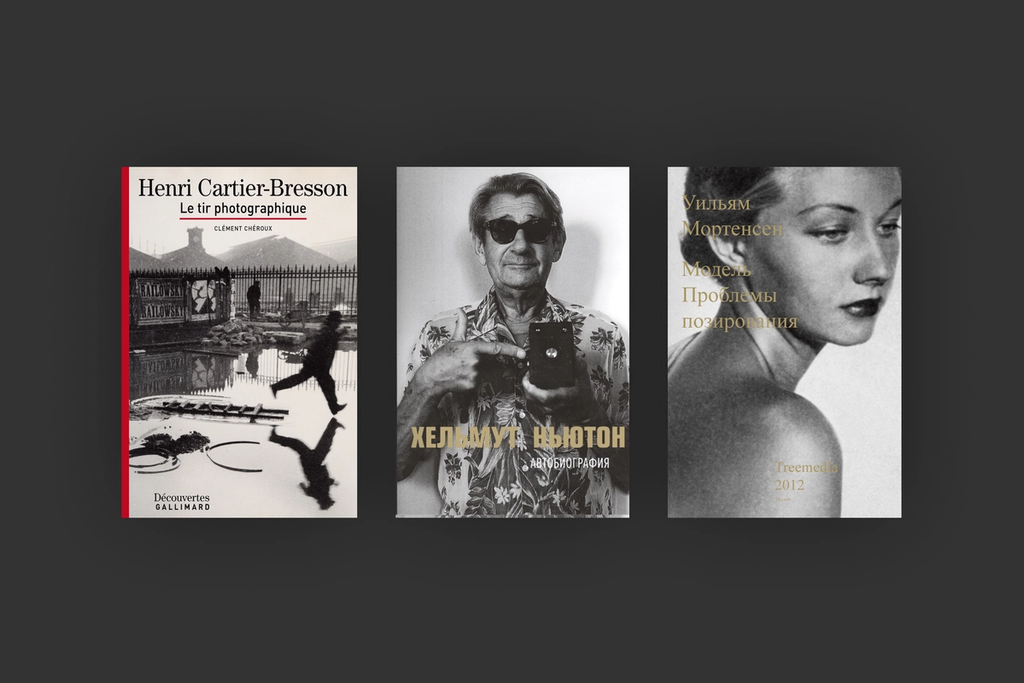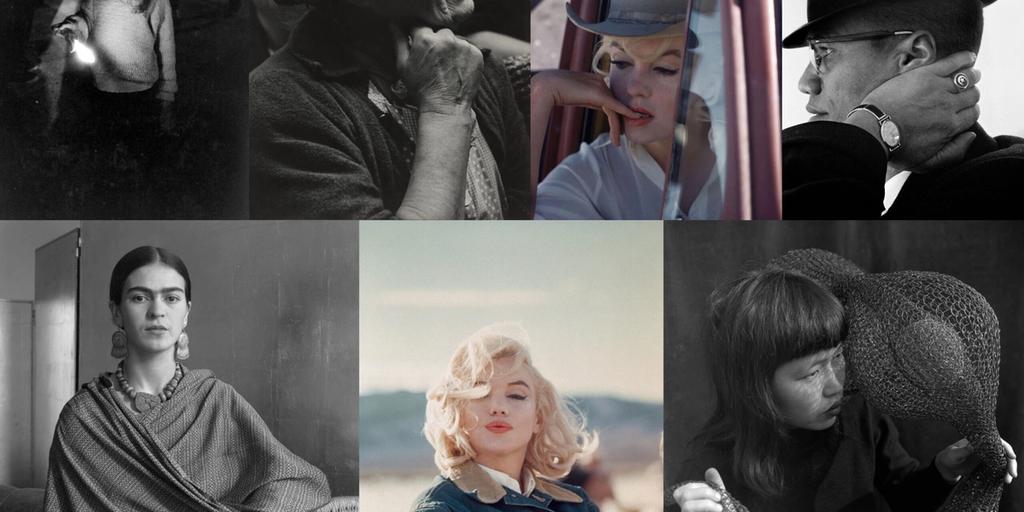
When we study the history of photography, we read about Henri Cartier-Bresson, Helmut Newton and, of course, Peter Lindbergh. Women rarely appear in such accounts — largely because the patriarchal society of the last century assigned them a very different 'place'. Young women of that era had to overcome sexism and fight for their rights and freedom.
In this article you will learn:
- about five women who shaped the history of photographic art on equal terms with men
- who the first woman was at the originally all-male international photo agency Magnum;
- who served as Marilyn Monroe's personal photographer;
- about the adventurous spirit and exploits of a Ukrainian female photojournalist;
- about how women set trends in the world of photography.
Eve Arnold
Eve Arnold was the first woman to join the New York branch of the photo agency Magnum Photos, founded by Henri Cartier-Bresson in 1947 and still active to this day. She was a member of the Royal Photographic Society and an Officer of the Order of the British Empire, and is considered one of the founding figures of the golden age of photojournalism.
Biography
Eva Cohen was born in 1912 into a family of Russian Jews who had emigrated from Russia to the United States. She was one of nine children.
The photographer recalled that as a child a fortune-teller had predicted she would find fame and success in a male-dominated profession. Her family assumed this meant medicine, and so the young Eva set her sights on becoming a doctor. Confident that success in such a field awaited her, she did not take photography seriously at first. Yet a medical career was not to be: the Cohen family was too poor to afford university tuition.
At sixteen she moved to New York and found work in a studio developing film. She then completed a six-week course and went on to become a photojournalist.
During the Second World War, Eva married Arnold Arnold and gave birth to a son.
Career
Although she had been familiar with a camera since the age of thirteen, it was not until her thirties that she built a real career. Eva turned seriously to photography after receiving a substantial commission from a New York factory. Having completed it, she realised that documentary reportage was where her ambitions lay.
In 1948 Arnold enrolled in a photography course taught by Alexey Brodovitch, art director of Harper's Bazaar. Impressed by her work, he soon invited her to collaborate with the magazine. She began appearing regularly not only in Harper's Bazaar but in other leading publications as well.
Eva Arnold's work was held in high regard by the photographer Henri Cartier-Bresson. He supported her appointment as an associate member of Magnum in 1955, making her the first woman to be officially accepted into the international agency.
As a photographer, she explored the lives of vastly different — sometimes diametrically opposed — people. She documented poverty in New York's Harlem, with its many homeless residents, and equally the glamour of Hollywood, ablaze with the signs of cinemas and restaurants. In this way Arnold showed people within their own surroundings, revealing how they related to that world and how they felt within it.
"I was poor and wanted to document poverty; I had lost a child and was consumed by the subject of birth; I was interested in politics and wanted to understand how it shaped our lives; I am a woman and I wanted to learn about women."
Photography
Friends, critics and colleagues alike described Eva Arnold as a warm and magnetic person, possessed of an unpretentious openness and a natural gift for putting people at ease.
She built relationships of genuine trust with her subjects and photographed them in moments of candour. Her sitters seem almost to have been caught unawares — and it is perhaps this quality that makes her images feel so authentic and alive.
Eva Arnold drew back the curtain on life in Hollywood. Through her work we are able to glimpse behind the scenes: a visibly nervous Marilyn Monroe reading a script before stepping on stage; an exhausted Marlene Dietrich waiting for midnight to begin a recording session; or Jacqueline Kennedy dressing her daughter before a public appearance.
"If you are gentle with people, they will reveal a part of themselves to you. That is a great mystery."
Marlene Dietrich at a recording studio, waiting for midnight to begin work on the advice of her astrologer. New York, USA.
Many of the most celebrated photographs of Marilyn Monroe were taken by Eva Arnold. The two women not only worked together but were friends until the actress's death. Images taken over the course of a decade were published as a stand-alone photobook, Marilyn Monroe: An Appreciation.
Points of Interest
Eva Arnold travelled to Afghanistan, Russia, Africa, Egypt and Mongolia. She immersed herself in local cultures and customs, attended rallies and protests, and produced photographic reportages from psychiatric hospitals — conveying her response to everything she witnessed through her camera.
For fifteen years the photographer sought permission to travel to China, and was granted a visa only at the age of 67. She became one of the first Western photojournalists to visit the People's Republic after the normalisation of relations with America. She travelled 60,000 kilometres across China, documenting the everyday lives of its people, their culture and customs. Eva's remarkable photographs were shown at her first solo exhibition in New York, for which she was awarded the prize of the American Society of Magazine Photographers.
Eva Arnold died in 2012, a few months before her hundredth birthday, in a care home.
Imogen Cunningham
Imogen Cunningham was a woman who, through force of character and an utterly individual vision, became one of the defining American photographers of the twentieth century.
Cunningham was among the first women to claim photography as her profession. A committed feminist, she wrote notes on photography as a means of earning a living for women. Critics described Imogen as sharp, outspoken and difficult.
Biography
Imogen encountered photography at eighteen, taking nude self-portraits. As she later recalled, she attached no particular meaning to these images and felt no fear of social judgement. Even so, after a few experiments she sold her camera, having lost interest in the pictures.
Imogen was ambitious and possessed a quick, lively mind. She set clear goals and pursued them: she was the only one among seven children in her family to enter university, where she studied chemistry in Washington.
At university, her chemistry professor introduced her to the work of the Pictorialist master Gertrude Käsebier and taught her the basics of working with a camera. Inspired, she began taking on part-time work photographing plants for the university's botany department.
After graduating with distinction, Imogen apprenticed herself to Edward Curtis, the celebrated ethnographic photographer. She later recalled that her teacher rarely appeared in class, and that the real secrets of the craft were revealed to her by a German named Mur, who served as his assistant.
After that, Imogen left for Dresden, where she devoted all her spare time to research into accelerating photographic printing and the direct development of platinum paper for warm brown tones. During this period she stopped taking photographs altogether, concentrating entirely on her research.
In 1910, Cunningham opened her own studio. Later still, she co-founded the celebrated Group f/64, whose central aim was absolute sharpness of focus and the rendering of an accurate, naturalistic image.
Career
In 1915, Imogen married and moved to San Francisco, where the couple had three children. Despite her domestic responsibilities, she continued to photograph, and her sons and husband became her most frequent subjects.
Imogen was among the first female photographers to shoot male nudes and pregnant women. Critics responded negatively to these experiments, regarding them as indecent. Although Imogen paid little heed to criticism or acclaim, the widespread disapproval of these images prompted her to take a break from work.
By the mid-1920s, Imogen had stepped away from commercial work, having decided to return to where she had begun. Cunningham started photographing plants. One of her most celebrated images is Magnolia — a work whose beauty, in the photographer's own words, was destroyed by its popularity. In her botanical studies, Cunningham depicted plants naturalistically, capturing their innate beauty without sentimentality or artistic affectation.
Photography
Imogen had no interest in belonging to any particular group or school; she never settled on a single style, and trends held no sway over her — she set them herself.
What interested her most was the technical dimension: function and method. She was critical of the followers of Henri Cartier-Bresson and his concept of the 'decisive moment' — a philosophy centred on the ability to release the shutter at the climactic instant of an action. Imogen believed that how a photograph was made mattered far more than what it depicted. This is why her street photographs stand apart from the classical Cartier-Bresson school. Imogen explored society and its behaviour entirely on her own terms.
The photographer's work is available to purchase on her official website. Prices range from $1,800 to $40,000.
Interesting
Imogen was a wilful woman — fame, popularity and recognition held no interest for her. She was given to sharp remarks, which led critics to describe her as blunt and caustic. Their comments, in turn, left Cunningham entirely indifferent.
Nevertheless, Cunningham was and remains a defining photographer of the twentieth century. Her global recognition did not come through personal charm, influential connections or an ability to follow trends — she achieved it through sheer force of character. Imogen was always driven by a desire to experiment; she worked relentlessly on her craft and pursued her goals with determination. She had no time to scatter her energies or to dwell on admiration.
Even when the Mayor of San Francisco declared 12 November a day in her honour, she said she had no idea what success was and that fame was not for her. Had Cunningham lived to learn that a crater on Mercury had been named after her, she would quite possibly have taken no notice at all — the world's recognition simply meant that little to her.
Imogen Cunningham died at the age of 93, never having completed her project on life after ninety.
Letizia Battaglia
Letizia Battaglia was a Sicilian photographer whose principal subject was the Mafia of the 1970s. Her fearlessness was remarkable: she photographed the Cosa Nostra crime organisation and, despite receiving threats, refused any form of personal protection.
Biography
Letizia was born in 1935 in Palermo, Sicily. At sixteen, without finishing school, she married and went on to have three children. Her husband was a staunch patriarchalist, which left her with little hope of completing her education or pursuing a profession. She devoted herself to raising the children and managing the household.
At thirty-five, Letizia divorced her husband and moved to Milan, where she found part-time work at a local magazine. She noticed that articles sold better when they were accompanied by photographs. She began experimenting with a camera. Before long, her editors were asking her to supply images to illustrate her own column.
Battaglia taught herself photography by studying the work of celebrated photographers Diane Arbus, Josef Koudelka and Mary Ellen Mark.
Career
In the 1970s, Letizia returned to her homeland and found herself on the front lines of the 'Second Mafia War'. Politicians, prosecutors, law-enforcement officers, activists, drug dealers and prostitutes were being killed in the streets. Undeterred, she began documenting the brutal actions of the Mafia in photographs. Battaglia now calls these images her 'archive of blood'. The series has become part of Italy's cultural heritage.
Letizia received threats from the Mafia: phone calls, letters ordering her to leave the island, people spitting at her and smashing her cameras. Despite all of this, she stayed in Palermo and kept shooting. On principle, she refused a bodyguard, believing that one would curtail her freedom.
In 1974, Letizia became the first full-time staff photojournalist in Italy.
In the mid-1980s, Letizia stepped back from photography to fight the Mafia by other means. She joined the Palermo city council and later the regional parliament. As she herself recalls, the enthusiasm did not last long.
In 1992, the Mafia killed two of Letizia's friends — Falcone and Borsellino, who had been a popular symbol of hope and change. Their deaths shook her deeply, and for the first time in her career she withdrew from photography for many years. It felt to her as though all hope of victory had gone.
'When you photograph corpses and poverty, working in black and white is a way of being tactful, respectful. Black and white creates a kind of silence, and that silence was very important to me
Photography
Although Letizia was occupied for the most part with her 'archive of blood', she is also known for other work, since the Mafia was not her only subject. She documented women, the intelligentsia, the poverty of the island, and psychiatric hospitals.
One of her best-known photographs is a portrait of a small girl with a football in a neighbourhood where drugs are sold. Years later, the photographer returned to find her subject and take a follow-up portrait of her as a young woman. The search proved fruitless — Letizia never found her.
'I don't think things ended well for her,' Battaglia said.
More
In 1991, Battaglia founded the magazine Mezzo Cielo. A committed feminist, she decided that the publication would be run entirely by women.
Today, Letizia Battaglia lives in Italy and is working on the first museum in Palermo dedicated to photography.
'I still have so much to do, and I feel an inner strength I never felt at twenty, thirty or forty. Perhaps I feel strong because today I am my own master, and that gives me strength. Like Napoleon,' laughs Battaglia.
Lisette Model
Lisette Model was an Austrian-born American photographer and one of the founding figures of street photography. She was a devotee of the 'decisive moment'. Her style was described as harsh, and she herself taught people to photograph 'from their guts, tearing open the inner world of their subjects and grasping the essence of their surroundings'.
Biography
Lisette Model was born on 10 November 1901. Her father was a military doctor with a comfortable income, and as a result she grew up speaking three languages and studying voice and music.
At twenty-three, she moved to Paris to study singing professionally, but soon abandoned music and turned to painting and photography. Her painting teacher was the French sculptor and artist André Lhote, who was also teaching Henri Cartier-Bresson at the time.
Lisette took her first steps in photography under the guidance of her sister, who taught her never to photograph anything in which you are not 'passionately interested.' Before long, Model began shooting on her own.
Career
In the 1940s, Lisette married the painter Evsa Model, and the couple moved to the United States. She found endless inspiration in the rhythm of New York and its people. The city electrified her in every way: the hum of its wide streets, solitary old men in parks, couples in love, carefree children, reflections caught in skyscraper windows, stately ladies and businessmen. It was during this period that some of her most celebrated works emerged — Reflections and Running Legs.
She began shooting regularly for Harper's Bazaar and was accepted into the New York Photo League.
In 1940, her first exhibition was held at the Museum of Modern Art, where it received high critical acclaim.
Eleven years later, Lisette became a teacher at the New School for Social Research, where she would go on to teach such notable figures as Diane Arbus and Larry Fink.
'The camera is an instrument of detection. We photograph not only what we see, but what we don't know' — so Lisette taught.
She died in 1983 at the age of eighty-one.
Photography
Lisette Model strove to photograph in a way that revealed the meaning of a moment caught at its most decisive point. Some of her images are genuinely harsh, grotesque and provocative — but that is precisely what compels the viewer to look inward.
Sofia Yablonskaya
Sofia was a Ukrainian photojournalist, writer and adventurer. Her biography is steeped in a spirit of adventure and mystery: tiger hunts, living among a cannibal tribe, travels to every corner of the world. Yablonskaya is rarely remembered as a photographer — she received no awards or recognition, and her images are almost impossible to find online. Yet her documentary photographs are truly unique and compelling, which is why we want to tell her story.
Biography
Sofia was born in the village of Tarasivka, in the Lviv region, into the family of a Greek Catholic priest. Father and daughter were deeply devoted to one another. Sofia sent him letters from all corners of the world, and he kept them for the rest of his life.
In 1922, Sofia passed the entrance examinations for the first year of a teacher-training college, though she studied there only briefly. At the institution she met Olena Kyselevska — one of the founders of the women's movement in western Ukraine — and their friendship did much to shape Sofia's outlook.
After the teacher-training college, Yablonskaya enrolled in a Drama School to study acting, passed her examinations successfully and was transferred to the third year, but eventually abandoned her studies.
In 1926, Sofia received an acceptance letter from the Paris School of Cinematographic Art, Louis Paglieri, to which she had previously applied. To fund her move, she took charge of running two cinemas in Ternopil and saved enough money to leave.
Career
In 1927, Sofia Yablonskaya moved to Paris, where she studied the art of cinema, appeared in several films and worked as a model.
The young woman possessed a natural charm and beauty. She had an easy gift for connecting with all kinds of people — cheerful and ever ready for adventure. These qualities drew her into bohemian circles, where she met the traveller and writer Stepan Levinsky and the Ukrainian revolutionary Volodymyr Vynnychenko.
Vynnychenko wrote of Sofia: 'This little girl is constantly trying to present herself to us as a demonic, fatal woman. Men slash their wrists over her, stab her with knives, kill themselves…'
In the late 1920s, Sofia met the French artist Christian Caillard, who had just returned from Morocco. His stories struck her to the core, and before long she had packed her bags and set off for the country alone.
Photography
On her travels, Yablonskaya discovered photography and began documenting Moroccan people, their culture and rituals. During the same period she wrote her first novel, I and Morocco. She soon embarked on a round-the-world journey. To fund her travels, Sofia signed a contract to shoot short documentary sketches about the lives of indigenous peoples in the French colonies.
Sofia visited Indochina, Thailand, Malaysia, Australia, New Zealand, and the islands of Java and Bali.
In Tahiti, Queen Marau invited the young woman to become part of the Tahitian people and gave her the name Teura — 'the red bird' — for rumour had it that her travels had left her hair burnished by the sun to a deep copper shade.
Sofia also visited a Chinese tribe in Hunan Province, where she won the people's trust through gestures alone, a smile, and a mixture of English and French that no one there understood. She was the first person ever granted permission to photograph the tribe.
Points of interest
Stranded in China by the Second World War, Sofia lived there for an extended period and tried opium for the first time. She managed to render the narcotic visions in her essays, and when she finally left China, she was presented as a parting gift with an entire box of high-quality substance — which she declined: what happened in China would stay in China.
Sofia was one of the very few women to have taken part in a tiger hunt. She was honoured with the right of the first shot, though she later admitted she had missed. She did, however, manage to bring back a great many photographs.
Yablonskaya went on to photograph sacrificial processions of dancers in Bali, found ways to approach cannibal tribes, attended the wedding of Vietnamese Emperor Bảo Đại and photographed the newlyweds' portrait.
Between 1946 and 1950, Sofia endured the deaths of Stepan Levinsky, her sister Olga, her mother Modesta, her beloved husband, and her first son Alan. She relocated to the French island of Noirmoutier, built a house to her own design and lived there alone. She continued to write books about her travels, adventures and the people she had encountered along the way. In 1971, Sofia was travelling to Paris with her latest manuscript when she died in a car accident.