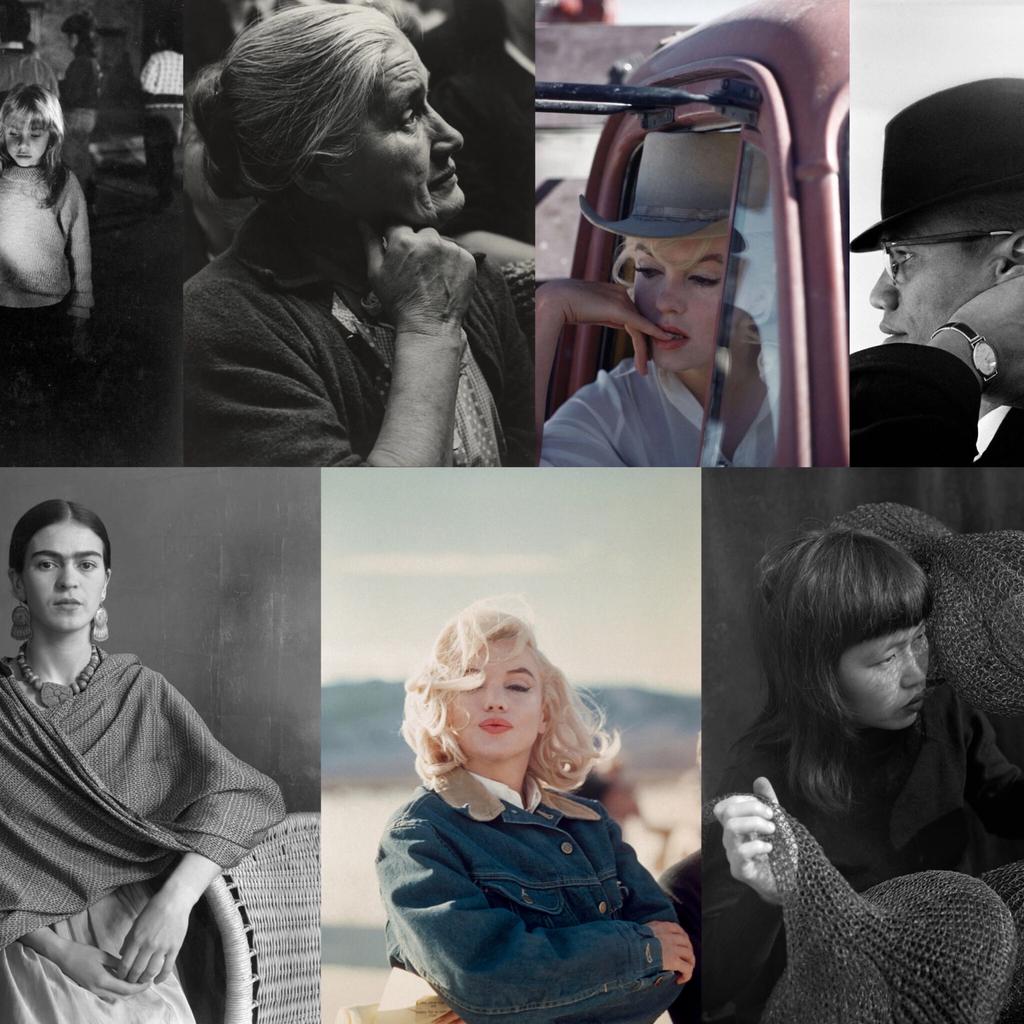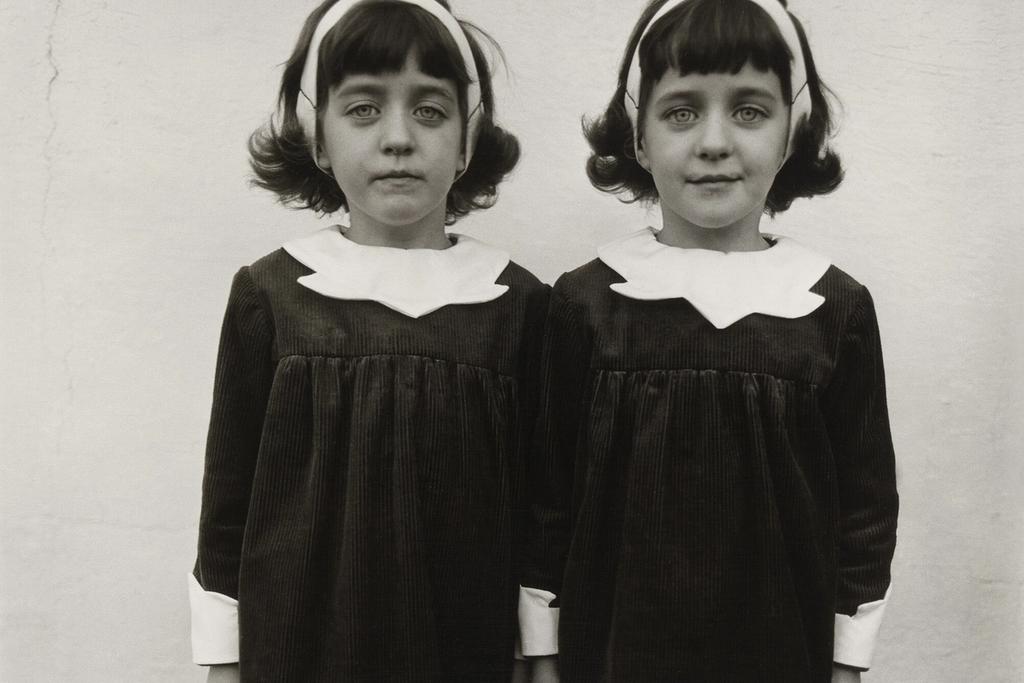
A legendary street photographer and the only Russian member of the Magnum photo agency — that is how Georgy Pinkhassov is customarily introduced. His portfolio brings together photographs from conflict zones and fashion shows; images of people who shaped the course of an era alongside chance passers-by. He receives commissions from the world's leading magazines. Pinkhassov's colleague, New York Times Magazine photo editor Kathy Ryan, considers working with him "a privilege."
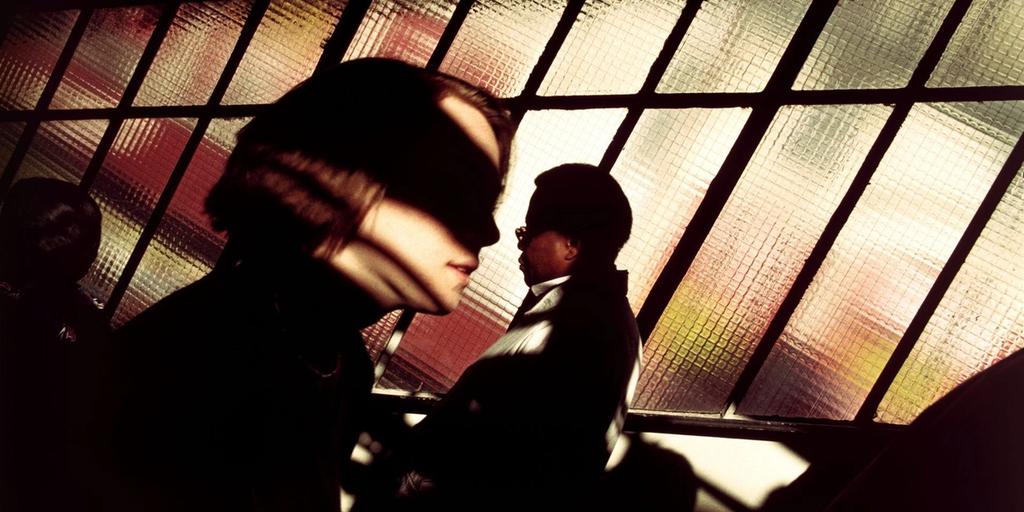
A play of light and shadow, saturated colours and visual metaphors lend Pinkhassov's work the quality of paintings by the great masters. Despite universal acclaim, he prefers to think of himself as an amateur photographer and to answer "Why not?" to any proposal that comes his way.
By reading this article, you will learn:
- how Georgy Pinkhassov's artistic language took shape,
- what role Andrei Tarkovsky played in Pinkhassov's life,
- what it means to work as a documentary photographer,
- why professional photographers benefit from shooting on a phone.

Childhood
Georgy Pinkhassov was born on 12 August 1952 in Moscow. The future photographer's family lived in a communal apartment at the corner of Palchikov Lane and Third Meshchanskaya Street, where the Olympiysky sports complex now stands. He recalls his childhood with particular warmth.
"What is etched in my memory is that old Moscow, where everyone visited one another, lace doilies lay on the chests of drawers, and there was always a jar of kombucha — looking just like a jellyfish — kept somewhere in the house."
Life in the communal apartment was lively for adults and children alike. This, as Pinkhassov remembers it, was a typical day in the kommunalka. Men played chess and dominoes at large wooden tables in the courtyards. Nearby you could see small front gardens with yellow globe flowers, storage sheds and pigeon lofts. Women busied themselves around the home, clattering pots and pans, feeding and scolding their own and other people's little rascals. Children clambered carefree over fences and rooftops, then spent hours peering at slides about patriotic border guards. A visit to the nearby market was always an option, where the eyes of the youngsters would wander across every imaginable trinket.


Holidays broke the familiar rhythm of communal life. Pinkhassov vividly remembers the day the first human flew into space. The adults talked over one another as they shared the joyful news they had heard on the radio. The children were allowed to jump on Uncle Georgy's expensive divan — something that would normally have earned them a scolding from him. The residents hurried into the city centre to catch a glimpse of Gagarin. Pinkhassov regrets that he was too young to capture that mood of universal happiness on camera.
As construction of new metro lines began, the city's master plan swept away its dilapidated buildings and narrow streets. Only rare traces of the old, beloved Moscow remained. Georgy's mother, for instance, was able to identify the spot where their house had once stood only by a familiar lilac bush.
Fortunately, the Moscow of the 1950s can still be encountered through the photographs of Henri Cartier-Bresson and Robert Capa, the founders of the Magnum photo agency — which our subject would himself join in later years.
"…today these old frames, shot by Magnum members, are like an archaeologist's excavation, unearthing cultural strata and reviving memory. I saw myself there, confirmed my own existence — and that served not only me, but our history as well."
The beginning of a professional path
Georgy Pinkhassov traces the starting point of his professional journey to a "secret shed" in the courtyard of his building. As a boy he would slip inside and watch, transfixed, as a craftsman turned a lump of clay into a piggy bank in the shape of a cat. That act of creation ignited in Pinkhassov a desire to become a maker himself.
Photography was the craft he chose. At school he happened to witness a boy who knew how to take photographs being let out of class to go and shoot. He sensed that a photographer enjoyed a great freedom of movement — something that made the profession feel akin to that of a traveller. Setting off to wander through distant lands was Georgy's dream.
One might say, half in jest, that Georgy Pinkhassov became a street photographer in childhood. Together with his friends he photographed crowded festivities and street demonstrations, though he took no particular pleasure in observing people unawares.
In 1969, Pinkhasov enrolled at VGIK. By his own admission, he was acutely aware in those years that he lacked any visual culture. Classical art repelled the young man with its moralising tone, provoking rejection and even hostility. It is telling that Georgy first visited the Pushkin Museum only shortly before his entrance exams. His sister reproached him for applying to VGIK without knowing a single art form. After that museum visit, Pinkhasov did not, in fact, change his mind.
At VGIK, Pinkhasov began to pursue photography seriously — in spite of the institution rather than because of it. The school constrained his experiments, and he made the decision to leave. That is how Pinkhasov found himself enlisted in the Soviet Army.
Self-education
During his military service, Pinkhasov encountered Andrei Tarkovsky's film Andrei Rublev for the first time. He had longed to see it while still a student at VGIK, but the film had been kept from public circulation. Then it was finally released across the country. Pinkhasov convinced the entire unit that it was a patriotic picture they absolutely had to see. The soldiers were deeply disappointed. Pinkhasov shared their feelings.
His attitude toward the director changed with Tarkovsky's next film, Solaris. It stunned Pinkhasov both in terms of content and style. In an attempt to capture the spirit of Tarkovsky, Pinkhasov arrived at pictorialism — a photographic approach whose very name derives from the word pictorial. Pictorialists can be compared to painters, except that instead of a brush they use a camera. Pinkhasov's still lifes, styled after Dutch masters, and his melancholy landscapes recalled freeze-frames from Tarkovsky's films. He felt and absorbed the melancholy of European culture that emanated from the director's work.
"If Tarkovsky wove the Old Testament, then Nabokov and the exhibition at the Pushkin ['Moscow–Paris'] became the New Revelations"
Vladimir Nabokov and his verbal patterns, along with the Post-Impressionists and Modernists brought out of the Pushkin Museum's reserves for the first time for the legendary Moscow–Paris exhibition in 1981, pushed Pinkhasov toward visual experimentation. Works from this period display an abundance of angular lines that reference the Suprematists.
An understanding of avant-garde art came to him through inner struggle. At VGIK he had dreamed of seeing the enigmatic Marc Chagall, whose work was banned at the time. But when an exhibition of his paintings finally opened, it brought only disappointment: Pinkhasov found nothing remarkable or talented in the artist's work.

It was chance that helped Pinkhasov fall in love with the avant-garde. After seeing Solaris, he became interested in Renaissance art and set out to find Pieter Bruegel the Elder's The Hunters in the Snow, which had appeared in the film. He began dropping into one of Moscow's antique shops and asking whether any Bruegel had come in. One day the shop manager handed his regular visitor a book wrapped tightly in paper. Pinkhasov unwrapped it immediately, only to be stunned: instead of Bruegel, he found Marc Chagall. For some reason, at that moment he decided to give the new a chance — and, to his surprise, the artist's work finally opened up to him. So did the Japanese artistic tradition, which had been opaque to Pinkhasov before this significant acquisition. "Why not?" — marking the death of a prejudice — would later become the photographer's motto. The creative process itself, in his view, is precisely that "Why not?"
An Encounter with Andrei Tarkovsky
Having joined Mosfilm as a photographer, the protagonist works up the courage to show his work to his idol. To his surprise, Tarkovsky is unimpressed by the photographs. They are far removed from the reportage style of Henri Cartier-Bresson, whom the director regarded as the pinnacle of photographic art.


Sensing that change was coming to the country, Tarkovsky urged Pinkhasov to go out into the streets and quickly document what would soon cease to exist. The filmmaker believed that a person stripped of memory loses their connection with the outside world and becomes captive to an illusory existence. A fact of reality, he said, must be captured through the observation of life and given as delicate a form as a Japanese haiku.
Pinkhasov listens attentively to Tarkovsky's lessons. A bond of trust develops between the two artists: Tarkovsky invites Pinkhasov onto the set of his new film Stalker, and even entrusts him with making a portrait of his father, the poet Arseny Tarkovsky.
As a result of this education, the young man heeds his mentor's words and sets out in search of the decisive moment. He strives to document Soviet reality with absolute honesty towards himself. Shooting openly was impossible: the photographer aroused suspicion in people, which tipped into paranoia. For this reason, Pinkhasov appears in his photographs only as a shadow.
A move to France. Joining the Magnum agency
In 1985, Pinkhasov marries a French woman and moves to Paris. The new country proves difficult: galleries and photo agencies turn down the unknown photographer one after another.
I remember bringing my work to a gallery; they looked carefully at my photographs and said: you have one shortcoming — nobody knows who you are.
For a time, Pinkhasov works at the small, provocative publication Actuel. One of his assignments was to photograph the wedding of a minister's son and a prominent businessman's daughter. His pictures did not make it into the coverage of the ceremony, but several years later they caused a major scandal. A conflict between Jews and Catholics had broken out in France, and a leading French magazine decided to show that members of the two faiths could live together in harmony — and ran one of Pinkhasov's wedding photographs on its cover, presenting it as the marriage of a Jewish man and a Catholic woman. The editors had made an error, however: both the bride and groom were Jewish. The girl's mother was furious. She called the director of the Actuel agency and demanded to speak with the author of the controversial photograph. She chose not to take Pinkhasov to court for one reason — his photograph turned out to be the finest of all those taken during the ceremony.
Photography is a document. The photographer bears no responsibility for it.
In the end, Pinkhasov receives a positive response from the legendary Magnum photo agency, which brings together the finest documentary photographers from around the world. The celebrated Brazilian photojournalist Sebastião Salgado had recommended that Pinkhasov be admitted to the organisation.
With characteristic modesty, Pinkhasov says that joining Magnum was nothing more than a fortunate turn of events. One might reasonably suppose that the agency's members not only recognised his superb technique, but also sensed in him the passion for the profession, for travel, and for discovery that is written into Magnum's DNA.
On the road
Magnum fulfils Pinkhassov's childhood dream, giving him the chance to travel to places he never imagined he would see. He has little time for photographers who arrive, shoot and leave straight away, preferring instead to spend a couple of days getting to know a place and its people. Pinkhassov does not plan his photographs in advance. A wealth of accumulated knowledge and an innate curiosity guide him in his search for the visual metaphors concealed within a space. The true craft of photography, in Pinkhassov's view, lies in the apparent simplicity of a frame that conceals a powerful image beneath.
Up to 90 per cent of everything a photographer shoots on a trip is taken for himself; the remaining 10 per cent is for the client. It often happens that a magazine's photo editor has no real sense of what a place actually looks like, and is more than happy to run the spontaneous shots.
Photo project Sightwalk — Tokyo, 1996
Moscow, the 1990s
On the road
Pinkhassov believes that the value of photojournalism lies not only in documenting an event — the significance of which we can often gauge only in hindsight — but also in the possibility of showing that event from an unexpected angle. Cartier-Bresson did exactly this when photographing the coronation of the British monarch: his frames capture the British people who had come to welcome their new head of state, yet not a single image shows the king himself.
For all the appeal of life as a photojournalist, one cannot overlook how genuinely dangerous the profession is. Over the years Pinkhassov has been sent on assignments to the area around Chernobyl, to the earthquake in Armenia, to the coup attempt in Moscow, and to the protest rallies on the Maidan. Each time he heads into the epicentre of events, he risks never seeing his family again. His children came early to understand what the fear of war means.
"12 December 1999. Danik runs joyfully towards me: 'Papa, Pierre Lemony told me that dads who have children aren't sent to war.'" — from the diary of Georgy Pinkhassov
In the age of digital photography
Times change, and so does the style of our subject. Pinkhassov is in a state of constant creative searching. He has no desire to forge a recognisable, signature style — that path leads to self-repetition, which amounts to pandering to public taste and to vulgarity.
"Every artist begins as a prophet and ends as a priest — that is, repeating things that were once popular."
Pinkhassov agrees with Cartier-Bresson that a street photographer should shoot whatever chance sends his way and always remain an amateur at heart.
In the advent of digital cameras, Pinkhassov saw new possibilities for developing his craft. Automatic mode allowed him to think less about settings and to trust his intuition instead. One of his favourite devices became the iPhone camera — proof that equipment is of secondary importance compared with the ability to see and a command of technique.
Images from Georgy Pinkhassov's Instagram
The social media format proved well suited to a photographer who has little inclination to mount solo exhibitions or publish monographs. Instagram gives Pinkhassov the freedom to be an amateur. Some viewers may find his posts disappointing — at first glance the profile of the celebrated photographer looks like a collection of random frames, often without any legible narrative.
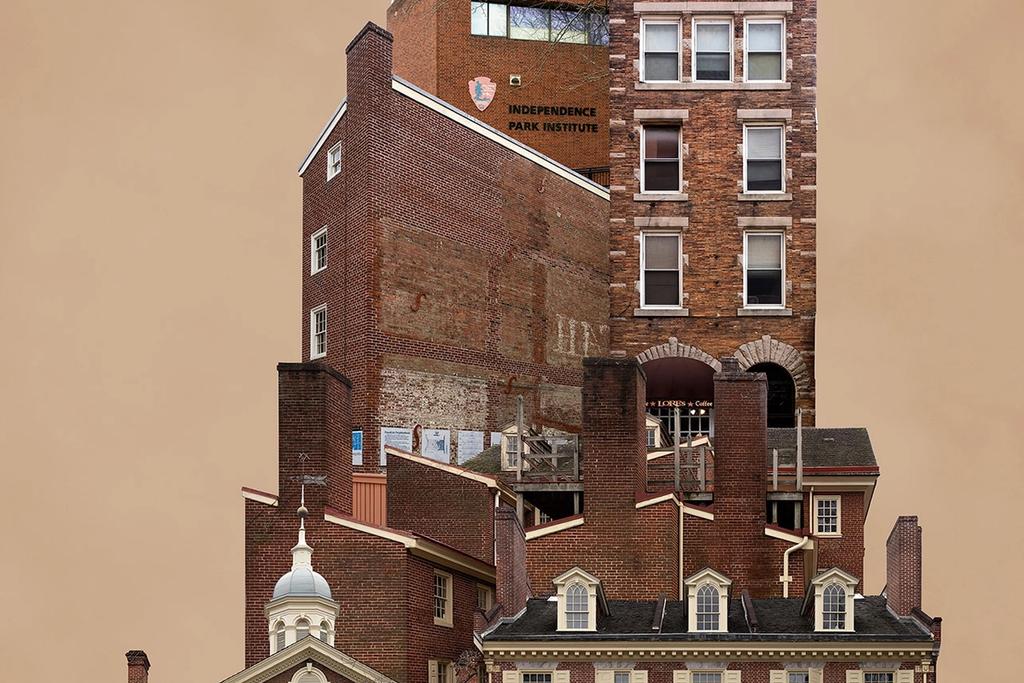
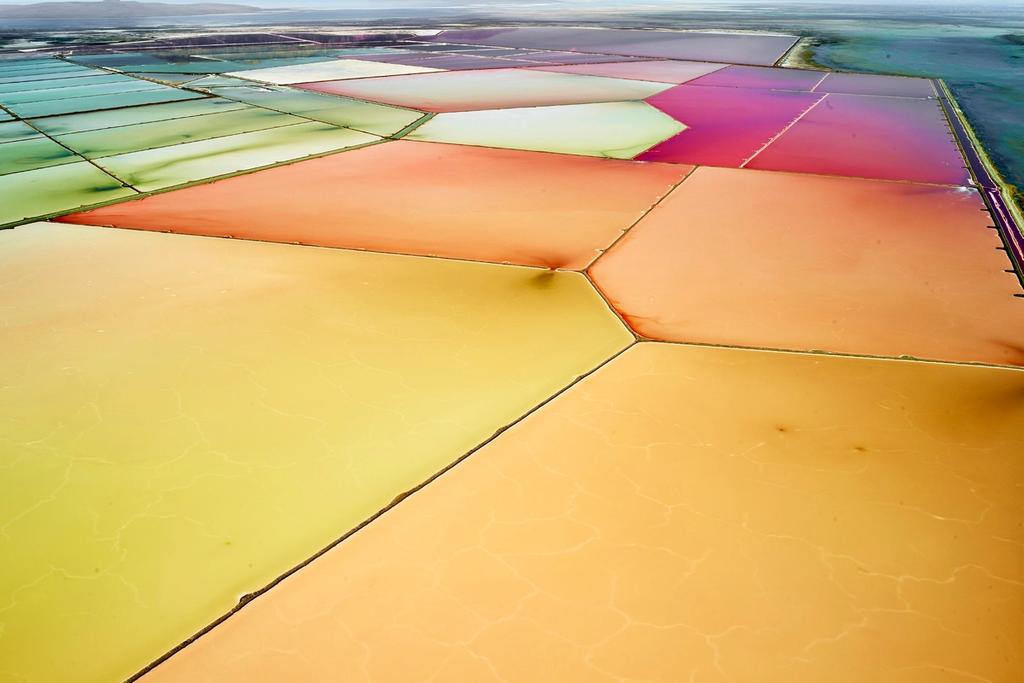
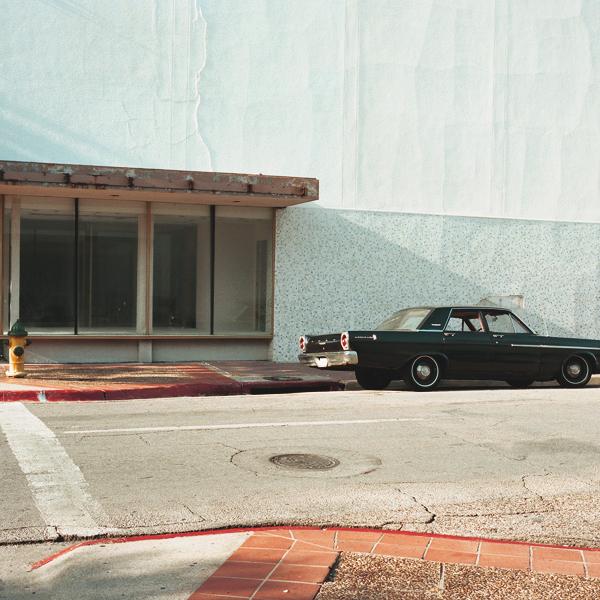
A closer look at the new work reveals Pinkhassov's signature devices: the play of light, experiments with surfaces and visual metaphors. In his compositions the arrangement of lines continues to play the leading role, creating a pattern in which people and objects are not immediately recognisable.
When arguments break out in the comments between critics and admirers of his new work, Pinkhassov joins the discussion — but takes the side of his detractors. He understands that a difference in sensibility prevents them from appreciating poetic photography. As carriers of a pragmatic culture, they try to extract information from an image; Pinkhassov's work, however, must be experienced at the level of feeling.
Georgy Pinkhassov's advice for photographers
- A camera is a notebook, and you can photograph anything. There is no need to hunt for masterpieces. My best photographs are accidents, mistakes.
- Only by freeing oneself from desire and preconception can one hope to find something new. Then you begin to make use of the chance moments that fly past you.
- When shooting, you must be immeasurably generous; when editing, ruthlessly sparing.
- Selecting photographs requires a trained eye. A sense of values develops when you spend a great deal of time in museums, when you feel and love images.
- Anyone who finds themselves in a photograph has the right to have it deleted.
- Never put the camera down, even when there are no commissions.
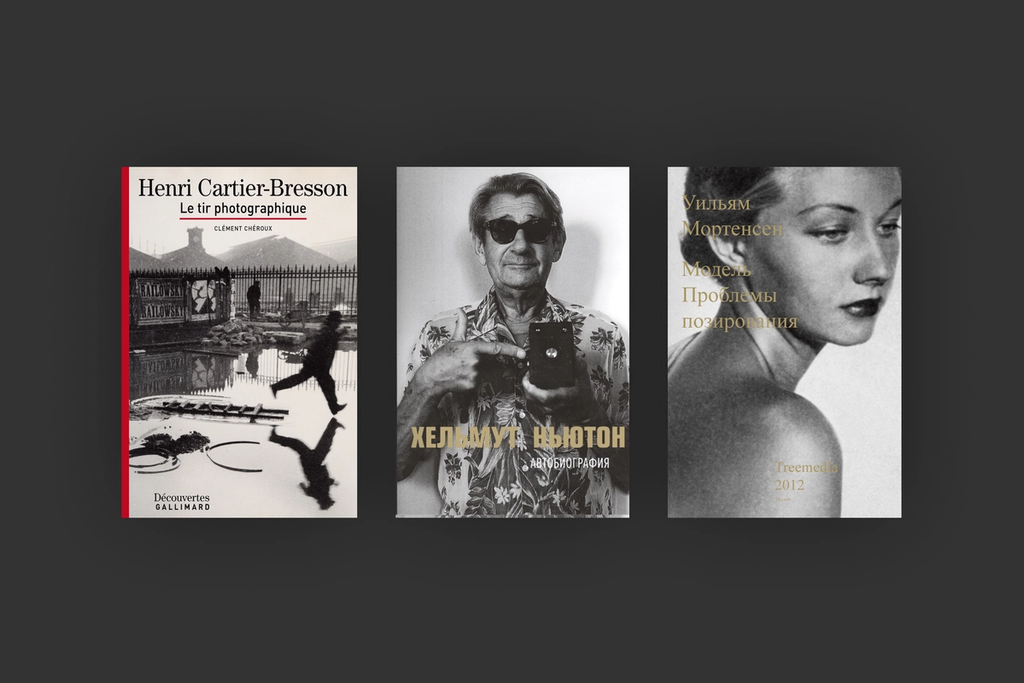
If you enjoy the work of Pinkhassov and Henri Cartier-Bresson, you may also be interested in the work of Hiroharu Matsumoto and Saul Leiter. Losko has also published an article on five classics of street photography.
Follow us on social media so you never miss a new piece: VKontakte, Telegram — @loskomagazine.
Photographs © Magnum Photos