As recently as the mid-twentieth century, photography was considered a man's domain. A woman who wanted to master the craft had to overcome prejudice, disrespect from colleagues and low expectations. We look at five great women photographers who left their mark on history.
In this article you will learn:
- the most fascinating facts from their lives
- what makes each photographer's style unique
- which great names were intertwined with their destinies
Diane Arbus

History
Diane Arbus is one of the most significant figures in documentary photography. She devoted her life to a singularly compelling subject: people with peculiarities, unusual traits, and those who simply did not fit in. Her lens took in dwarfs, people with disabilities, circus performers — people from whom we instinctively avert our gaze. Yet the purpose of her photographs is far from sympathy. She invites us to see the world from a different angle.
Diane Nemerov was born in New York in 1923. The Nemerovs were a prosperous family of Jewish emigrants from Russia. Diane's father and grandfather were businessmen who devoted their entire lives to their work, and thanks to their industry the family never wanted for anything.
Arbus's biographer Arthur Lubow describes her life in these terms: 'The Nemerov household — comprising Diane's parents, her older brother, and her younger sister — occupied a vast apartment with many rooms draped in heavy curtains that kept the interior in a state of perpetual dusk. Safe within this sheltered nest, the Nemerovs required the services of three nannies, two maids, a cook, and a chauffeur.'
In the 1930s Diane studied at the Ethical Culture School, where she discovered her gift for the visual arts. In 1937 she met Allan Arbus — actor, photographer, and her future husband — the man with whom she would begin her creative life. The newlyweds decided to dedicate themselves to photography, and in 1946 they opened the studio Diane & Allan Arbus. During the Second World War Allan had completed an army photography course and understood the technical side of the craft. Diane served as art director and Allan's assistant.
As her skills grew, Arbus moved into fashion photography, and her work eventually reached Condé Nast, where her images were published in the fashion magazines Vogue and Glamour. Despite her mounting success, this was far from what she wanted to do. In the 1950s, as the fashion industry expanded rapidly, shooting for brands and magazines was highly lucrative. Yet Diane and Allan openly admitted that they 'hated the world of fashion.' Her husband later recalled: 'During fashion shoots I handled the actual photography. I directed the model, told her what to do. Diane would come over and straighten a dress if something was off. And it humiliated her — it was a degrading role.'
In the 1950s Diane met photographer Richard Avedon and became part of the circle around Brodovitch — the celebrated American designer, photographer, and art director of Harper's Bazaar. In her effort to move beyond fashion photography and find her own voice, Arbus stopped working alongside her husband.

In 1963 and again in 1966, Diane Arbus received a Guggenheim Fellowship, which allowed her to focus entirely on her work. By 1967 she had her first major exhibition at the Museum of Modern Art.
Arbus died relatively young, at the age of 48. By nature deeply sensitive and emotionally fragile, she suffered frequently from bouts of depression. In July 1971 Diane took her own life, ingesting a large quantity of barbiturates and cutting her wrists.
Style
Diane was a girl from a privileged background drawn irresistibly toward the margins. She found the most compelling subjects among those who looked 'strange,' and in New York she never had to look far. The city's world of transvestites and flophouses was teeming with outsiders. Step outside and you might encounter a human pincushion, a hermaphrodite with a dog, a sword swallower, or a transvestite. Ordinary life, too, had its own store of strangeness — the real art was in knowing how to catch it.
'You see someone on the street,' she wrote, 'and essentially what you notice about them is the flaw.' What is most striking is that she never spied on her subjects or caught them off guard. Diane would first get to know them, establish a rapport, and only then would they pose for her. She photographed people who were unaware of their own 'strangeness,' who had no idea what it was about them that had caught her eye.
Interesting facts:
- Through Arbus, American art received a powerful antidote to photographic gloss and glamour. Her vivid and at times shocking images formed the foundation of a new wave in American and world photography in the mid-twentieth century.
- Diane Arbus became famous after her suicide in 1971. The following year, her work was shown at the Venice Biennale. Around the same time, numerous retrospective exhibitions of her photographs took place at museums across the United States and Canada, drawing more than seven million visitors. By 1973, her work had reached audiences in Europe and Asia, winning her an even greater following.
- Arbus received her first camera at the age of 18. A scaled-down version of the classic Graflex press camera, it was a gift from her husband Allan shortly after their marriage in 1941.
- The first client of the Diane & Allan Arbus studio was Diane's father. A businessman by profession and an exceptionally driven man by nature, he doubted that his son-in-law could support the young family. He hired the newlyweds to shoot advertising for Russek's — the fur store owned by their family. That was the beginning of the Diane & Allan Arbus studio.
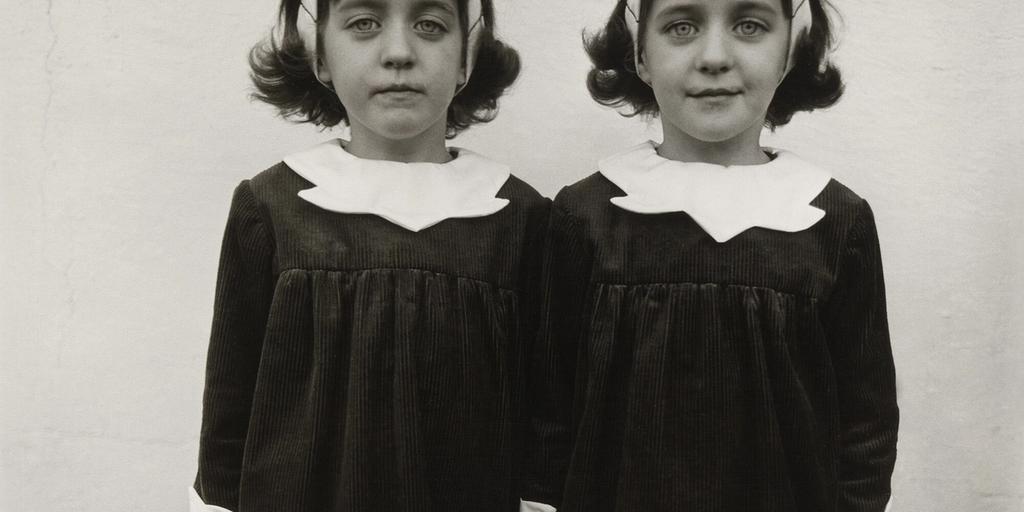
- In 2004, her photograph Identical Twins sold for nearly half a million dollars. Does the image ring a bell? It should: the photograph is widely believed to have inspired Stanley Kubrick's iconic shot of the twin girls in his film The Shining.
Annie Leibovitz

History
Annie Leibovitz is a world master of portraiture and fashion photography. It is hard to name a celebrity who has not been captured by her lens. Leibovitz presents people in the most unexpected guise, revealing an entirely new side of them — and no one is left indifferent. Issues of Rolling Stone and Vanity Fair featuring her photographs on their covers broke circulation records. We have already written about her biography in detail; here we have tried to gather only the most essential things to know about this great photographer.
Annie was born on 2 October 1949 into the family of a US Air Force officer, the third of eight children. As a girl she moved constantly because of her father's postings. Leibovitz would later recall that the frequent relocations sharpened her eye and her powers of observation.
Leibovitz did not come to photography immediately: she initially wanted to follow in her mother's footsteps and teach art, so after school she enrolled at the San Francisco Art Institute.
Photography captured her interest during a family trip to Japan. On returning home, Annie immediately signed up for evening photography classes. Around the same time she came to the firm realisation that teaching art was not her path and decided to leave university. In search of new experiences, Annie joined an archaeological expedition to Israel to excavate the palace of King Solomon.
After returning from an expedition in 1970, Annie became a freelance photojournalist for Rolling Stone. The magazine's founder, Jann Wenner, was deeply impressed by her photographs of anti-Vietnam War demonstrations and images from her recent trip to Israel. He gave her the freedom to pursue any creative idea she had, and within a few years she had become the chief photographer of one of the world's most celebrated music magazines.
From 1970 onwards, Leibovitz photographed Bob Dylan, Patti Smith, Bob Marley and other stars. The defining moment of her time at the magazine — one she would return to again and again — was accompanying The Rolling Stones on tour as their photographer. The result was a series of black-and-white portraits of the musicians, their fans and the backstage world that went on to become legendary.
In 1980, Annie took her now-famous photograph of a naked John Lennon embracing his wife. She recalls the session this way: "Yoko asked whether she needed to take off at least the top half of her clothes, and I said no, not necessary — I still didn't know exactly what the image should be. When John held her, it looked incredibly powerful. It looked as though she was cold and he was warming her. The first Polaroid test delighted them both."
A few hours after the shoot, the musician was killed. The cover featuring that photograph has been recognised as the best of several decades.

Annie worked at Rolling Stone for thirteen years, and from 1980 began shooting for Vanity Fair.
Vanity Fair art director Bea Feitler, as Leibovitz recalls, once told her: "Talent is not for life — like a child, it needs to be fed and nurtured constantly." When she made the move to glossy fashion publishing, she carried the reputation of a rock-and-roll photographer, and it took her a long time to adapt to the new rules of fashion photography, where a shoot surrounds you with an entire team of stylists, make-up artists and lighting technicians.
It was also around this time that she met the American writer Susan Sontag, who would go on to become her closest friend and life partner. Together they produced the book Women, in which portraits of celebrities and images of ordinary American women were interwoven with Sontag's essays.
Style
It was fashion photography that allowed Leibovitz to fully realise her talent and establish herself as a specialist in portraiture. "To take flawless pictures, I need to be in the thick of it — inside the situation, surrounded by it. The best shots are always about what surrounds you, when you yourself are part of that surrounding," she has said.
Portraiture has always been, and will always remain, her signature. Thanks to her acute perceptiveness, Annie's photographs have consistently felt candid, even when every frame has been meticulously composed.
Leibovitz is not afraid to play with contrasts or to provoke. The defining quality of her portraits is an insistence on each subject's singularity — the finest gradations of feeling and character are caught in them: love, fear, pride, longing, tenderness, restraint, strength. Arnold Schwarzenegger, who sat for her on numerous occasions, once said: "She somehow entered your world and became part of your life. At a certain point you stopped noticing that she was still shooting, still capturing everything on film. Wherever you were, Annie was there beside you — and it never even crossed your mind to say 'go away, you're in my way.' She was that much one of us."
Another landmark series was her group portraits of actors and models for Vanity Fair. Here Annie reveals herself as a fully realised artist and director: every pose, composition, light and colour is considered down to the smallest detail. These group portraits, like paintings from the Renaissance, invite long and careful looking. The precision of the detail is evident, the play of light and shadow is unmistakable, the compositions are intricate, and each subject holds a pose that speaks distinctly to their personality.
Interesting facts:
- During a trip to Japan, Annie bought her first camera — a Minolta SR-T 101
- In 1991 she held an exhibition at the National Portrait Gallery, becoming the second photographer to be exhibited there during their lifetime and the first woman to do so.
- At Leibovitz's request, Queen Elizabeth II removed her crown during the shoot. Annie felt that the crown made the image look "too dressed up"
- As a child, Annie's mother enrolled her in ballet classes with Russian émigrés — ageing dancers from the Ballets Russes, the company founded by Sergei Diaghilev. Although Annie struggled to understand her teachers because of their strong accents, she still looks back on the experience with admiration.
- In 2006 a documentary about her work was released: Annie Leibovitz: Life Through a Lens. It consists of a series of interviews with those she had photographed — Mick Jagger, Arnold Schwarzenegger, Hillary Clinton, Mikhail Baryshnikov and many others.
Martine Franck

"I think everything in this world can be painted, because painting allows you to change reality; but not everything can be photographed, and a photographer often comes home empty-handed, with images that have documentary value but rarely anything deeper. A photographer must accept that most 'clicks' will yield nothing worthwhile… and then, sometimes, miracles happen, without warning"
History
Martine Franck was a British-Belgian photographer, documentary maker and portraitist whose work belongs to the classical tradition of photography. She was one of the few women to become a member of the Magnum Photos agency. Franck was the second wife of Henri Cartier-Bresson, and co-founder and president of the Fondation Henri Cartier-Bresson.
Franck was born on 2 April 1938 in Antwerp, the daughter of Belgian banker Louis Franck and his British wife Evelyn. After Martine's birth the family moved to London, and a year later her father was called up for military service. Together with her mother, the young girl emigrated to the United States, spending the remainder of the Second World War on Long Island and in Arizona.
A sense of beauty was nurtured in Martine from an early age: her father collected works of art and took his daughter to galleries and museums. The boarding school for girls that Martine attended taught art history. "I had a wonderful teacher who truly inspired me," she later recalled.
Martine continued to study art history after school, enrolling at the University of Madrid and studying at the École du Louvre in Paris. Her dissertation focused on Cubism and its influence on sculpture, but after completing it she decided she had no particular talent for writing. It was then that Martine turned to photography.
In 1963 Franck set off on a journey through the Far East, taking with her a Leica camera given to her by her brother. On returning to France she met photographers Eliot Elisofon and Gjon Mili from Life magazine and became their assistant. Over the next few years she honed her craft, and by 1969 her photographs had begun to appear in publications such as Life, Fortune, Sports Illustrated, the New York Times and Vogue. During the same period she married the celebrated photographer Henri Cartier-Bresson.
In the 1970s she worked for the French agency Viva, and by 1980 her name had been put forward for membership of the celebrated photo agency Magnum. Three years later Martine became a full member, and in the early 2000s she was elected one of the agency's vice-presidents.
Style
"Martine was one of the classic Magnum photographers — we could all agree on that," said photographer Elliott Erwitt on the occasion of Frank's passing. "Talented, elegant, wise, modest and generous, she set standards that are rarely encountered in our profession."
Martine Frank was less drawn to commercial photography than to documentary work. When she did take on advertising commissions, it was never in the realm of fashion photography — a genre she felt little affinity for. Martine wanted her work to carry deeper meaning and to be of genuine use. That is why she worked extensively with Médecins Sans Frontières and the International Red Cross, an organisation that provides humanitarian assistance to the victims of armed conflict.
"Photography came to me as a substitute for the real world… I was painfully shy and found it hard to connect with people. The camera gave me something to do, a reason to be somewhere, to witness something without taking part in it," Frank said.
The photographer's shyness served her well: there is a sense of the "accidental witness" in Martine's work — someone who catches a glimpse of what is unfolding rather than orchestrating it. She makes no attempt to distort reality; she simply records what is touching and often invisible in everyday life. Frank preferred working outside the studio, using black-and-white film and a 35mm Leica.
Portraiture and documentary are not the principal themes of her work — her photographs are far more varied and rich in content. Several key directions can be identified. Geometry — a body of work devoted to landscapes and terrain, to the interplay of shapes and planes. Mirror — an entire series exploring people and their reflections. The portrait, towards which Martine held a special feeling; she often said that each sitting was a new experience of human connection. Old age — a theme to which she dedicated the book The Time to Grow Old, a collection of everyday photographs of elderly people. And the Théâtre du Soleil, whose official photographer Martine was from its very founding.
"I think romanticism resonates with photography. All those ideas bound up with passing time, with the moment, with emotion, nostalgia, dreaming — they feel close to me. Romanticism is also about discovering the other, about coming to know yourself through another person, the freedom to express yourself without fear."
Interesting facts:
- Frank travelled to Tibet and visited a monastery where children believed to carry the reincarnated souls of deceased lamas are raised. In an interview she shared: "Buddhism speaks to me — I admire the responsibility they bring to life and to those close to them, and the way they are able to face death without fear and prepare for it calmly."
- The famous photograph with Henri Cartier-Bresson has a story of its own. It was 1992, Martine Franck's birthday. Her husband asked what she would like as a gift. Martine asked him to draw his self-portrait. Henri sat down in front of a mirror and set to work, when suddenly an extraordinary image opened up before Martine: a triple likeness of the man
- Martine took her first photograph on Soviet soil in 1962, using her first Leica
- Martine's advice to aspiring photographers: "Learn languages. Watch films. Visit museums. Read widely. Travel whenever you can. But above all — don't close yourself off. Because photography is, first and foremost, the ability to make a connection. With a subject, with a landscape, with an unfamiliar culture."
Vivian Maier

History
Vivian Maier can rightly be called the most enigmatic photographer of the twentieth century. Throughout her entire conscious life she methodically documented street life in Chicago, using her frames to tell the American story of the 1950s through the 1980s. Vivian never sought to publicise her talent, and all her work went straight into a drawer. Fame came to her only after her death in 2009. Sadly, no relatives who had known Maier during her lifetime could be found, which is why so little is known about her. Yet all the existing details of her remarkable story we have already gatheredin a long feature on Vivian. Here we will share only the key moments of her life.
Vivian Maier was born in 1926 in New York to an Austrian father and a French mother. She spent her entire childhood moving back and forth between France and the United States. After her parents' divorce, Vivian and her mother moved in with a family friend, Jeanne Bertrand, who was a professional photographer. It is generally assumed that Maier learned the art of photography from her. She spent the whole of the Second World War in France, before returning to the United States at the age of twenty-five.
Shortly after the move, Vivian decided to try her hand as a nanny and went to live in Chicago. Maier proved highly capable in the role, and for forty years she worked raising children in well-to-do families. Her employers included the Ginsburgs, the Raymonds, and the American television host Phil Donahue.
Maier had a wonderful rapport with children. Her former charges remember warmly that Vivian was a "grown-up child" always ready for any adventure: a late-night trip to the cemetery, persuading the milkman to give the children a lift to school, endlessly exploring different corners of the city. This genuine curiosity and unfeigned enthusiasm for life were the foundation of the warm friendship between Vivian and the children in her care.
Vivian combined her work as a nanny with her passion for photography with remarkable ease. Maier was never without her camera and always took it along on walks with the children. Her perceptive eye was able to catch extraordinary scenes unfolding right on the streets of Chicago. The poor and the privileged, labourers and children, couples in love and urban eccentrics were the constant subjects of her photographs.
Vivian kept her hobby hidden from those around her: no outsiders were permitted to enter the room where she developed her photographs. In practice, she made these images solely for herself, as though the camera were a kind of frame through which she looked at the world.
Her talent was discovered by chance only after Vivian's death in 2009. At that time, real estate agent John Maloof purchased 100,000 of her negatives at auction for 400 dollars. Maloof quickly came to understand the value of what had fallen into his hands and began searching for Maier's family and friends. His efforts proved fruitless — Maier had never started a family of her own, and the only relatives he found were cousins in France who had been unaware of her existence. Thanks to Maloof, her photographs were seen at exhibitions across America, Europe and Asia.
Style
Despite never taking commercial commissions, the quality of Maier's work can hardly be called amateur. Professionals detect in her photographs the influence of Henri Cartier-Bresson, Robert Frank, Lee Friedlander, Diane Arbus and Weegee.
"Maier was an early poet of colour photography," writes Joel Meyerowitz. "Her photographs show that she was quick to catch people's behaviour, shifts in a situation, gestures, facial expressions — all the small events that turned everyday street life into a revelation for her."
Maier's style is far removed from documentary and reportage photography. She was a street photographer who, unlike a press photographer, had no specific assignment. She observed urban life and seized its vivid moments — a pair of crumpled trouser legs or clasped hands, a tired face or an enigmatic smile. Even a rubbish bin and a pigeon.
Vivian's photographs are like a pleasant breath of spring air — full of energy and vitality, dynamic and rich in content. It was as though she feared she might fail to capture the colourful everyday life of 1950s Chicago, and so she seized the most important things from the world around her with passionate intensity.
Interesting facts
- Vivian loved making self-portraits in the reflections of mirrors and shop windows. Over the course of her life she accumulated so many that they could easily fill an exhibition of their own.
- In the course of a year Maier shot nearly 200 rolls of film, a rate comparable to that of professional photographers.
- In 1960 she set out on an extended journey through Europe, the Middle East and South-East Asia — from Egypt to Taiwan and Indonesia — and never stopped photographing along the way.
- There is a view that Maier did in fact submit her work to exhibitions, but received rejections due to the gender inequality of the time and the perception of photography as an exclusively male profession.
Nina Sviridova

History
Nina Sviridova's name cannot be considered apart from her life partner and colleague Dmitry Vozdvizhensky. Together they entered history as the most affecting creative and personal partnership, one that gave the world hundreds of images of happy people. Their work was highly regarded not only in their home country but abroad as well.
Nina Sviridova was born in 1933 in Moscow. After graduating from the philology faculty of Moscow State University, she became a teacher of Russian language and literature. Even then she showed a strong inclination towards photography, documenting moments of school life with her amateur camera. Every week she attended the meetings of a youth photography club, gradually honing her craft.
In April 1961, Uchitelskaya Gazeta published the first professionally executed works of Nina Sviridova. Her talent immediately drew considerable attention from colleagues. Later, the newspaper Sputnik described this leap from amateur to professional photography as the transformation of a teacher into a "professor of photography." As early as September 1961, her photograph At the Kremlin Wall appeared in the magazine Sovetskoe Foto.

In the same publication, Soviet photographer Semyon Fridlyand devoted an article to her titled "Vocation." He wrote: "Nina Sviridova has been interested in photography for just over two years. Yet even in that short time, as we can see, a great deal has been achieved. Most importantly, she has crossed that threshold which so many amateurs find insurmountable — the point where mere 'clicking' ends and photography infused with creative thought begins. Ahead lies the path to mastery, and with it, perhaps, a professional career in photography. After all, this is exactly how most newspaper and magazine photojournalists began their creative lives." He predicted Nina's future: she did indeed go on to leave teaching and devote the rest of her life to photography.
And so Nina embarked on a career as a photojournalist. From the publication of her first image until 1966, she worked at Uchitelskaya Gazeta, after which she moved to the magazine RT, where she remained as a staff photographer until 1968. Her final post — one to which she gave ten years — was the State Committee of the Council of Ministers of the USSR for Broadcasting and Television. She travelled to the most varied corners of the Soviet Union: Transcarpathia, the Urals, Byelorussia, the Baltic states.
It was during this same period that the love story began which would give rise to the creative partnership of Nina Sviridova and Dmitry Vozdvizhensky. The story of how they met has the feel of a light romantic film: summer, a dacha settlement, a river. A conversation that started by chance, after which everything became clear to everyone. It was through Nina that Dmitry discovered photography — at the time, she had already been shooting for four years. She was a teacher of Russian; he was a postgraduate student at the Gubkin Oil Institute. Two opposites who complemented and inspired each other.
They never divided their photographs into "mine" and "yours." Every frame was the product of shared work, an expression of their love. Despite their different approaches — Nina photographed more intuitively, following instinct, while Dmitry thought through each shot with care — they sometimes could not tell themselves who had taken a given image. All their photographs they signed jointly: Nina Sviridova and Dmitry Vozdvizhensky. They were accordingly known officially as a creative tandem, even at competitions and exhibitions. They were awarded second prize and a medal from the French Ministry of Foreign Affairs in 1976, and participated in exhibitions in Hamburg and other European cities.
Nina and Dmitry's collaboration lasted forty years. In 2005, Vozdvizhensky died. Nina passed away three years later.
Style
Nina Sviridova said that what they loved most of all was each other and photography. She recalled: "An even greater pleasure for us was to look over the contact sheets and argue about who had shot what. We shot with two cameras and constantly swapped them. And our vision was the same — that, too, was a kind of miracle. We supported each other all the time. I am a philologist, and he was a technical person. He was drawn to conceptual photography — he would start from an idea, conceive of something, and then bring it to life. I, on the other hand, worked from emotion, catching happy moments and trying to capture what I saw. Then one day we suddenly realised that all our photographs were so alike that we could no longer work out who had taken what."
Nina's attention was drawn to sketches of everyday happiness — expressed through emotions, gestures and poses. It might seem as though only smiling faces and joyful moments found their way into her frames, as if in service of some propaganda of Soviet contentment, as if it were a parallel world. But that was not the case. Their son, Dmitry Vozdvizhensky Jr., recounted that they photographed only those subjects that "matched their own nature of enthusiasm". Soviet schoolchildren and simply charming passers-by, cheerful workers and people resting serenely on the beach — in all of this they found beauty and inspiration.
Points of interest:
- Nina Sviridova's photographs were published in the Soviet Union's foreign-language magazines Soviet Life and Soviet Union. In the view of the editors, they were ideally suited to presenting a vivid and happy image of Soviet life to audiences abroad
- many people link the optimism of Nina's photographs to the period in which her creative career flourished. It was the era of the Thaw, when the USSR was reaching new heights and everyone was filled with hope for a bright future
- the work Hello, Love was awarded a gold medal at the international exhibition Love, Friendship, Solidarity in Berlin
We also invite you to read biographies of celebrated photographers on Losko:
— Photographer Helmut Newton: "I Hate Good Taste"
— Peter Lindbergh: "Beauty Is the Courage to Be Yourself"
— Vivian Maier: the most enigmatic photographer of the twentieth century
— Annie Leibovitz. Life with a Camera
Follow us on social media so you never miss new content: Telegram.