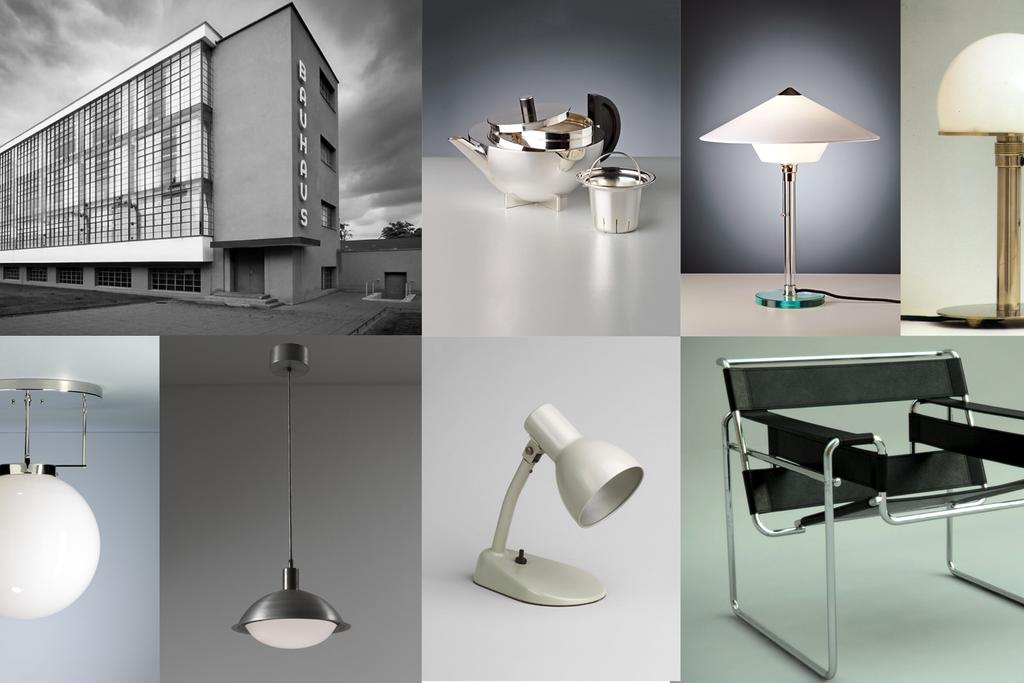
The Bauhaus was the most influential school of applied art, design and architecture of the twentieth century. Over its fourteen years of existence it brought about an artistic revolution, becoming the place where artists and craftspeople from many countries sought to reimagine the world. The Bauhaus movement laid the foundations of the principle of practical utility and rational form, and established a new approach to education, to working with urban landscapes, and to furniture and everyday objects.
In this article we trace the key stages of its development and explore how — and by whom — the principles of the twentieth century's most radical educational institution were established. You will also learn about the leisure life and famous parties of Bauhaus students, as well as some of the works created by its masters and students.
The Bauhaus in Weimar, 1919–1925

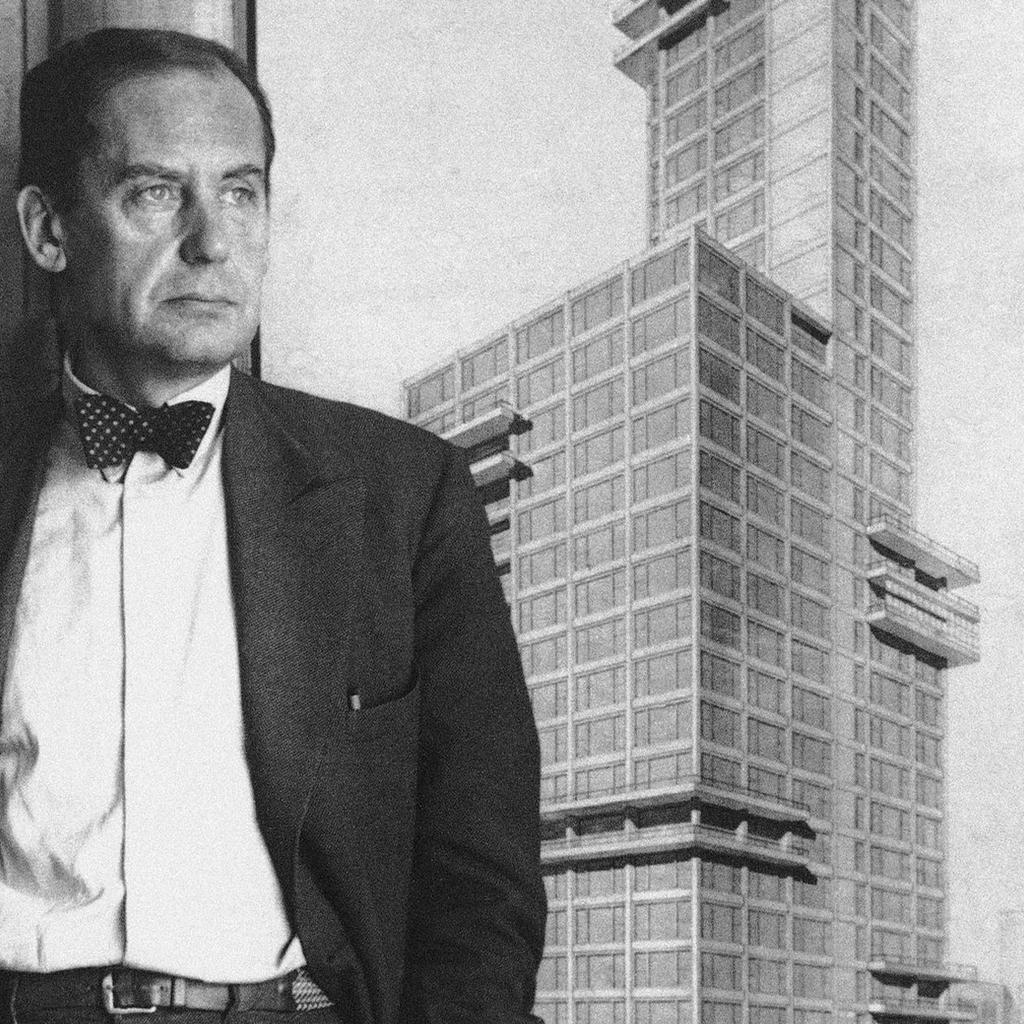
On 25 April 1919, the Staatliches Bauhaus — the State School of Building and Design — opened its doors in Weimar, with Walter Gropius as its director. While still on the front lines of the First World War, already a celebrated architect, Gropius had dreamed of an institution that would transform the meaning of design and the world at large. That opportunity came with his appointment as director of what would become the most influential design school of the twentieth century.
Gropius believed that every artist must know a craft and that there is no fundamental distinction between artist and craftsman. These and other principles were set out in his 1919 declaration. "Architects, sculptors, painters — we must all return to the crafts." The revolutionary spirit of the manifesto was entirely in keeping with the mood of the postwar era. It was accompanied by a woodcut by Lyonel Feininger titled Cathedral.

"Architects, sculptors and painters, we must all return to the crafts! There is no such thing as 'art as a profession'. There is no essential difference between the artist and the craftsman. The artist is an exalted craftsman. By the grace of Heaven and in rare moments of inspiration that transcend the will, art may unconsciously blossom from the labour of his hand, but a foundation of handicraft is essential to every artist. It is there that the primary source of creative work lies."
The approach to selecting and training students
Gropius decided that Bauhaus students should have two mentors for each subject. Craftsmen and tradesmen taught the practical skills of the discipline, while artists instilled aesthetic sensibility and a sense of taste. The first instructors were Johannes Itten, Lyonel Feininger and Gerhard Marcks. They were later joined by Wassily Kandinsky, Paul Klee and László Moholy-Nagy. Many of the earliest students subsequently remained at the Bauhaus as masters.
Bauhaus students ranged in age from seventeen to forty-five. Given the hardships of the wartime period, Gropius persuaded the Weimar Ministry of Education to waive tuition fees and to provide financial assistance to students whose work achieved commercial success.
Both men and women were eligible to enrol at the Bauhaus. In the early years, female students were assigned primarily to the weaving and textile workshops. Gropius believed that metalwork and architecture were ill-suited to the female mind. It is worth noting that one of the most celebrated students of the Weimar Bauhaus, Marianne Brandt, worked in precisely the metal workshop and became its director in 1928.
Gropius himself devised the Bauhaus curriculum, much of which centred on manual work. He was convinced that handcraft and machine production were not different in essence, but only in the scale of output they made possible. Only someone who understood a craft and worked directly with materials could competently and professionally oversee machinery. He wanted students not to draw on paper but to work with materials and produce real objects.
The Bauhaus curriculum in Weimar
The Bauhaus's first curriculum comprised three courses: a preliminary course, a practical course and a construction course. In the preliminary course, students explored the fundamentals of form and materials. In the practical course, they worked on craft and produced goods for mass consumption, examining questions of form and colour in depth. Each workshop focused on a specific material: stone, wood, metal, clay, glass, textiles or colour. In the construction course, apprentices moved onto actual building sites.

This approach to teaching gave Bauhaus students the chance to experience the joy of creating new objects. They were expected to understand that their future lay in industry and mass production.
One of the first teachers of the preliminary course was the Swiss artist Johannes Itten, whom Gropius personally invited to join the school. Sixteen of Itten's students from Vienna, where he had been teaching, came with him and became the first students of the Bauhaus.

Itten developed the Vorkurs — a new method of art education designed to help each student find their own path without suppressing their individuality. People arrived at the Bauhaus with widely varying levels of preparation, craft knowledge and art-historical background. At Itten's insistence, the Vorkurs was open to everyone who wished to study art.
The Vorkurs lasted one semester: students were encouraged to let go of inhibitions and free themselves from conventions, to choose a discipline and a material they found compelling, and to study the laws of colour and form. After the course, students moved into the workshops of their choice to study craft proper.
"To develop a sense of formal unity, I gave lettering exercises, asking students to work with type and various forms using the principles of the square, the triangle or the circle"
To help students relax and focus, Itten began classes with meditation and breathing exercises. In the art-literacy course, by contrast, students moved and danced freely and spontaneously to explore how rhythm might be rendered on paper.
After Itten's departure from the Bauhaus in 1923, the preliminary course was taken over by László Moholy-Nagy, and from 1928 by the artist and designer Josef Albers.
The 1923 exhibition in Weimar
Four years after the Bauhaus was founded, the government of Thuringia — the state in which Weimar is located — began to take a keen interest in the results of its work, and questions arose about whether taxpayers' money was being used wisely. In 1923 an exhibition of Bauhaus student work was held in Weimar.

The centrepiece of the exhibition was the Haus am Horn, a model residential house — an example of functional construction equipped with everything needed for modern living. The house was affordable for an ordinary worker, environmentally considered, and embodied the core principles of the Bauhaus.


The Theatre Course
One of the reasons for establishing the theatre course was the desire to bring students and teachers together and foster a sense of community among them. Theatre was envisaged as a discipline that would draw not only on artistic techniques but also on mechanics, optics and other areas of scientific knowledge.


In 1922, the Triadic Ballet premiered at the National Theatre in Stuttgart, for which the German artist Oskar Schlemmer designed four types of costume-form: 'Revolving Architecture', 'Marionette', 'Technical Organism', and 'Metaphysical Expressive Form'.
The stage design for the Dessau theatre was also the work of Schlemmer, who had joined the Bauhaus as early as 1920. It was Schlemmer who created the famous Bauhaus logo.
Course work
Every Bauhaus master had their own approach to teaching theory and running practical classes. Drawing, construction, singing, psychological exercises, and dance all served to unlock students' personalities, self-awareness, and creative potential. We have already written about the most celebrated objects conceived within the walls of the Bauhaus. Below are lesser-known works and studies produced in the course of that education.
Wassily Kandinsky joined the school in 1922, later became deputy director, and held that position until 1933. He was one of the most influential masters at the Bauhaus. His classes covered colour theory, analytical drawing, and the fundamentals of artistic design. In Kandinsky's studio, students examined the relationship between colour and form through the analysis of individual elements such as line, point, and plane.
The German composer Gertrud Grunow taught 'Harmonisation Theory' at the Bauhaus. She believed that a person's capacity for self-expression depended on their sensitivity to colour, sound, and form. Developing that sensitivity through logical exercises and even individual psychological sessions formed the core of Grunow's course.
Paul Klee set himself the task of teaching students the fundamentals of colour and form so that they could work with them independently. He avoided complex theoretical debates in his classes, aiming instead for harmony and naturalness. For his wise and penetrating manner of imparting knowledge at the Bauhaus, Klee earned the nickname 'magician'.
Non-stop dancing
The Bauhaus organised musical and dance evenings, lectures, and concerts. These events were open not only to students, teachers, and fellow designers and architects, but also to local residents. In this way, artists could engage with the ordinary people for whom they were designing, while those with no connection to the arts could learn a little more about design and architecture.

Dancing, festivals and masquerades, swimming in public waters (reportedly in the nude), and boxing were all an inseparable part of Bauhaus student life and attracted considerable attention. Dancing was especially popular in winter. Farkas Molnár, in his 1925 essay 'Life at the Bauhaus', wrote that winter was 'the season when one must dance in order to stay healthy'. He also remarked on the particular beauty of the female Bauhaus students.
"Kandinsky prefers to appear adorned like an antenna, Itten as an amorphous monster, Feininger as two equilateral triangles, Moholy-Nagy as a segment intersected by a cross, Gropius as Le Corbusier…"
A pretext for celebration was never hard to find. On a windy day, for instance, a "Festival of Aerial Games" was organised — more than two hundred kites of every conceivable size, shape and colour rose above the heads of students and masters. The costume parties deserve special mention: every outfit was unique, handmade specifically for that particular evening.
Bauhaus in Dessau, 1925–1931


The new building in Dessau, designed by Gropius, comprised workshop and classroom spaces, a stage and a dining hall for students, an administrative wing, twenty-eight apartments, and laundry and bathroom facilities. The entire complex was completed in just one year, by 1926.
The move to Dessau brought several changes to the curriculum. From this point on, a single master taught each class — the mandatory pairing of an artist and a craftsman was no longer required. The architecture department was substantially expanded, and courses in typography and layout were added.


In 1925, Bauhaus teachers and associates abandoned the use of capital letters in their work, in support of the Universal typeface developed by the Austrian graphic designer Herbert Bayer. German society did not embrace the initiative — in the German language, nouns are capitalised.

The closure of the Bauhaus
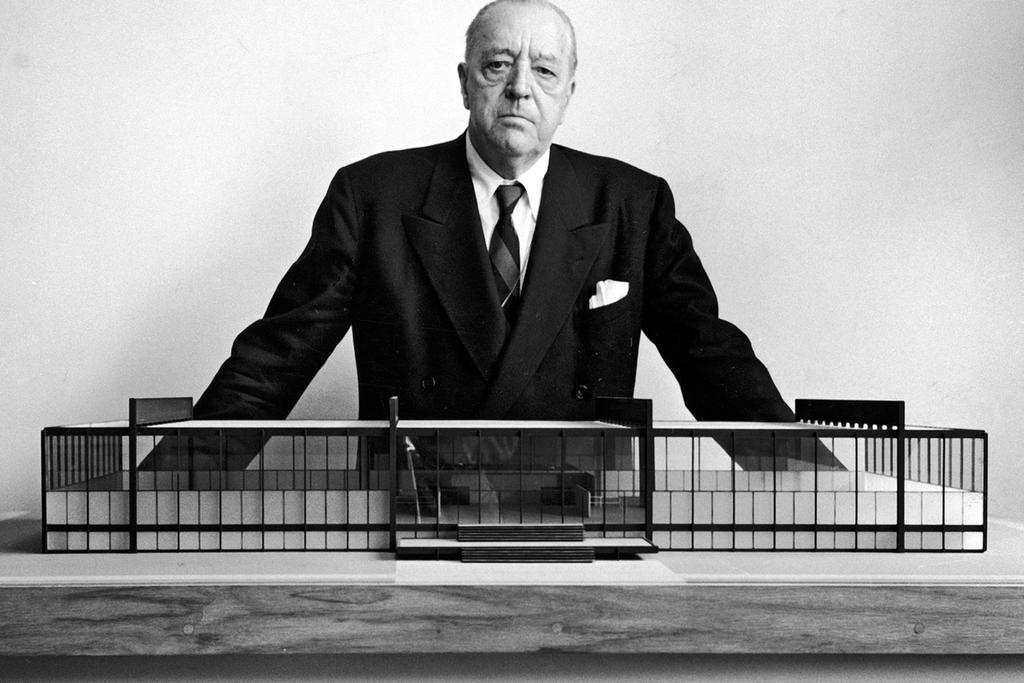
Walter Gropius served as director of the school for nine years; in 1928 he was succeeded by Hannes Meyer, who had headed the architecture programme. Gropius chose his own successor. Disagreements with the municipal authorities forced Meyer to leave the post after just two years. In 1930, the directorship passed to Ludwig Mies van der Rohe.
Mies remained director until the Bauhaus was permanently closed in 1933 in Berlin, to which the school had relocated the previous year. The building in Dessau was taken over by the National Socialist Party.
During the Nazi regime, many Jewish architects emigrated from Germany to Palestine. More than 4,000 buildings were constructed in Tel Aviv during the 1930s. These structures — a UNESCO World Cultural Heritage site — are known as the White City.
Why does the Bauhaus matter?
The following is the text that appeared on the cover of Austrian artist Herbert Bayer's book Bauhaus 1919–1928. The book was published in 1938 to accompany the Bauhaus retrospective at the Museum of Modern Art in New York, by which time Bauhaus principles had already exerted considerable influence on the worlds of art and design.
- The Bauhaus boldly embraces the machine as a tool worthy of the artist;
- The Bauhaus solves the problem of good design for mass production;
- The Bauhaus brings together more outstanding artists on its faculty than any other school of art;
- The Bauhaus bridges the gap between artists and industry;
- The Bauhaus dismantles the system that separates "fine" art from "applied" art;
- The Bauhaus understands that technique can be taught, but creative inventiveness cannot;
- The Bauhaus building in Dessau is the defining architectural work of the 1920s;
- Through trial and error, the Bauhaus conceived a new and modern idea of beauty;
- And, finally, because the influence of the Bauhaus has spread across the world and is felt with particular force today in England and the United States.
The Bauhaus was the first institution of its kind; its ideas and principles spread instantly through the creative community of the twentieth century and remain relevant to this day.
Nearly 100 years ago, Bauhaus students conceived houses, objects and furniture that we can no longer imagine our lives without. Accessibility, functionalism and aesthetics — these are the criteria that guide many contemporary designers and architects. "Less is more" is a principle we now understand almost intuitively.
We have put together a selection of interesting materials for those who wish to learn more about the Bauhaus
Watch
A lecture from Anna Bronovitskaya's series "Architects of the 20th Century. Part 2", devoted to Bauhaus director Walter Gropius:

A lecture by Artyom Dezhurko at the Jewish Museum and Tolerance Centre:

in English
— Documentary film DW Documentary 2019. Three forty-minute episodes explore how the Bauhaus legacy has been applied by its followers in the contemporary world;
— The 1994 documentary by Frank Whitford and Julia Cave "Bauhaus": Face of the Twentieth Century;
— A BBC documentary about the "Barcelona" chair by Ludwig Mies van der Rohe.
Read
in Russian
— Bauhaus books and journals in open access;
— Our article on the history of the Bauhaus and the iconic objects created within its walls;
— A biography of Ludwig Mies van der Rohe, the outstanding architect and last director of the Bauhaus;
— An interview with the director of the Bauhaus Dessau Foundation, Philipp Oswalt. On the Foundation's work and the popularisation and reinterpretation of Bauhaus ideas in the context of contemporary culture;
— The book by Swiss artist and one of the Bauhaus's first teachers, Johannes Itten: "Design and Form: The Basic Course at the Bauhaus and Later Schools".
in English
— Herbert Bayer's book "Bauhaus 1919–1928", published to accompany the Bauhaus exhibition at the Museum of Modern Art in New York;
— The book by Oskar Schlemmer, László Moholy-Nagy and Farkas Molnár on the Bauhaus theatre course, "The Theatre of the Bauhaus";
— A book by Éva Forgács on the phenomenon and development of the Bauhaus: «The Bauhaus Idea and Bauhaus Politics» Éva Forgács
Visit
— 2019 events marking the centenary of the Bauhaus, from Strelka mag;
— The Bauhaus Museum in Berlin;
— The Bauhaus Museum in Weimar;
— The Bauhaus Museum in Dessau;
— The official website dedicated to the centenary of the Bauhaus.