The work of Vivian Maier, often referred to as the 'nanny photographer', came to the world's attention only recently. Her street photographs can be read as a portrait of American life in the twentieth century. She kept her talent a closely guarded secret for many years, and so recognition came to her only after her death in 2009. No relatives who knew her could be found, and many details of Maier's life remain unknown. We have endeavoured, however, to bring together all the most important and illuminating facts about Vivian's story, so that anyone may feel a connection to the life of this remarkable woman.
In this article you will learn:
- where Vivian Maier was born and spent her early years;
- who discovered her hidden talent, and how;
- what makes Maier's key works so compelling;
- why a fierce dispute broke out over the copyright to her photographs;
- which figures from the art world Vivian is most often compared to.

Origins and early years
Vivian Dorothy Maier was born on 1 February 1926 and spent much of her childhood in New York, in a family headed by the Austrian Charles Maier and the Frenchwoman Marie Jaussaud. Vivian had a brother, Carl Maier, six years her senior. He grew up with a morphine dependency, struggled with alcohol and gambling, and was later diagnosed with paranoid schizophrenia.
Maier's parents were not happy in their marriage and divorced a year after her birth. When she was just four years old, she left for France with her mother and the family friend Jeanne Bertrand, settling in the small village of Saint-Julien-en-Champsaur. Little information about Bertrand has survived, but she exerted a profound influence on the development of Maier's abilities. The woman worked as a professional photographer in Connecticut, specialising chiefly in portraiture. Vivian, too, began her passion with portraits and landscapes, and many consider Jeanne to have been her mentor in photography.
Vivian's early years were split between two countries. She returned to America several times and tried to earn her first money there. Maier began at the age of eleven or twelve, selling sweets in a New York confectionery shop. It was only at twenty-five that she left France for good and moved to New York with Jeanne Bertrand.
The nanny photographer
Having settled in America, Maier decided to try her hand as a nanny and took a position with a family in Southampton. By this point she had already been practising photography for two years and had acquired a solid set of skills. In 1956 she moved to Chicago and continued working as a nanny. The calibre of her professionalism can be gauged by the families she worked with over many years, among them the affluent Ginsburgs and the Raymonds. American television host Phil Donahue, whose children Vivian also raised, recalls how, on their first meeting, he attempted to address her as 'Miss', only for her to reply firmly: 'Miss Maier, please. And I'm proud of it.'

'If Vivian Maier had been your nanny, she would have been the coolest adult you ever knew. All the children wanted to be with Vivian. She was a true eccentric who took the kids on wild adventures. She would take them to shows, plays and strawberry fields to explore the city. If she found a snake by the roadside, she would carry it straight into the house to show the children. And she always had her camera with her to capture it all.' — John Maloof on Vivian Maier
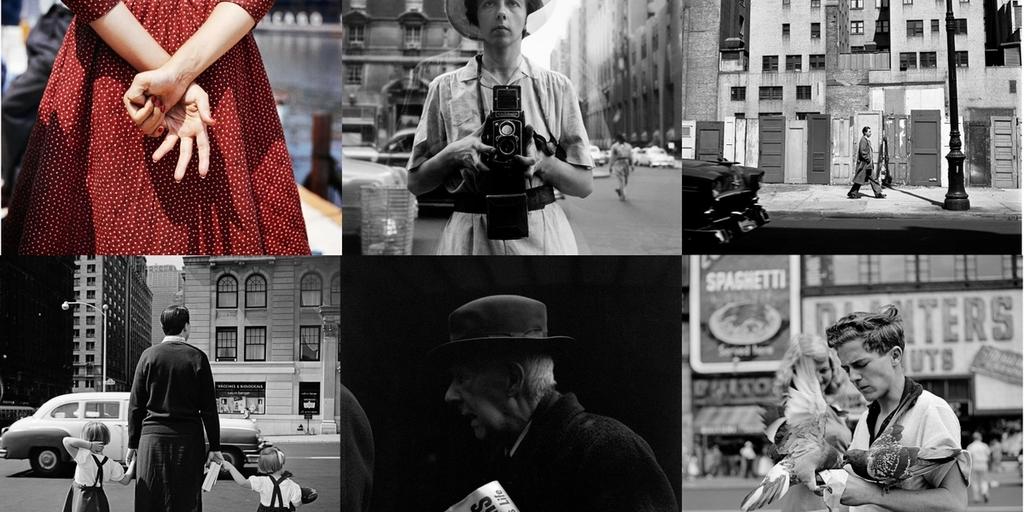
Vivian managed to seamlessly combine her daily outings with the children with her passion: she always carried a camera and made a point of capturing every detail of city life. Those who appreciate her work note that Maier's photographs are distinguished by a particular vitality. She left us black-and-white, and later colour, images — light, bold, often making a statement or unfolding an entire story. The emotions her photographs stir are direct proof of Maier's talent.
Vivian's passion was not limited to photography alone — she had a serious interest in documentary work. Maier was always drawn to people who had not been dealt a lucky hand in life. Exploring city streets, she sought out the poor and recorded video and audio portraits of them, doing so with no less professionalism than she brought to her still photography.
Keeping her work carefully hidden, Vivian developed her photographs in the bathroom and stored the negatives in boxes. Many of her prints she signed by hand on the back. She converted a separate room into a full darkroom, which she allowed no one to enter. When she moved to a new home, her first request was for a lock to be fitted on her door.
Vivian as a person
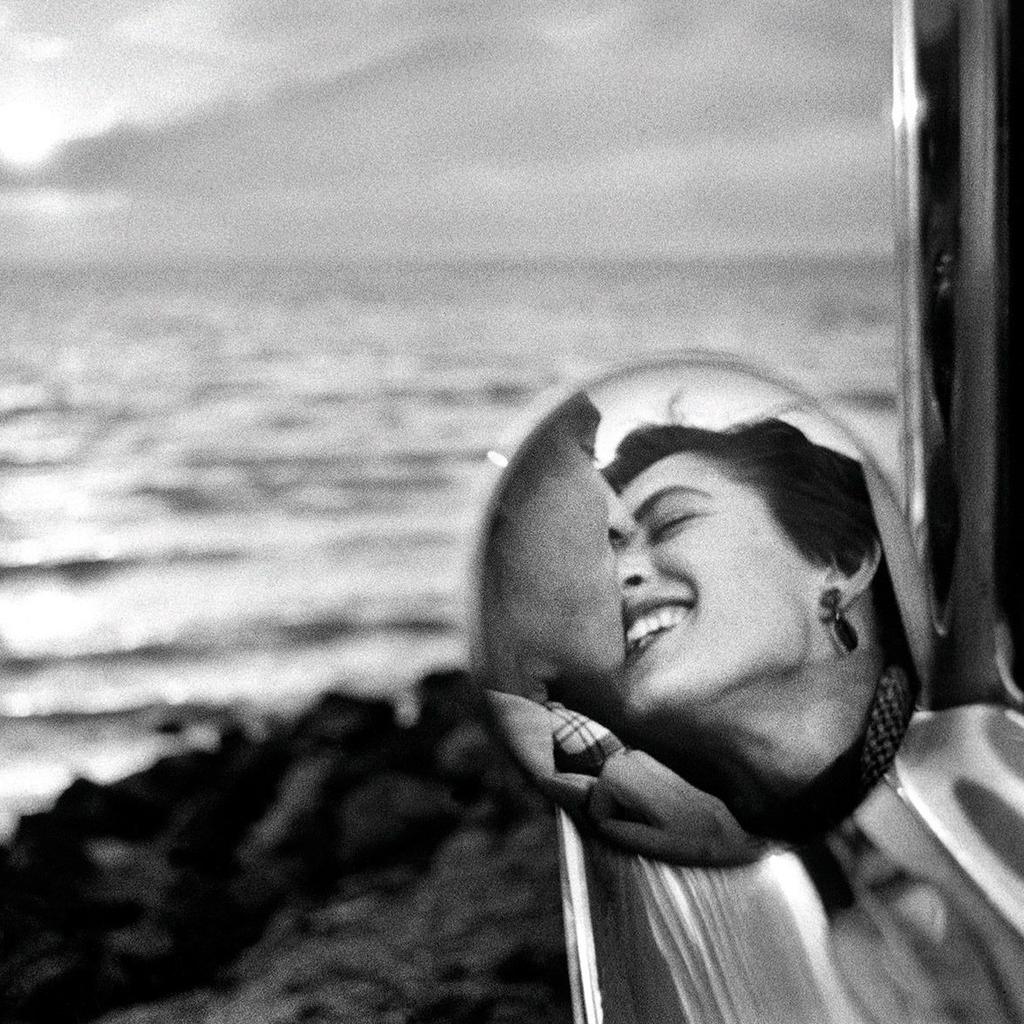
Vivian's self-portraits are striking in their originality and variety. There are so many that they could form an entire collection in their own right. They reveal how much she enjoyed playing with reflections: she could never walk past a mirror, a shop window, a train window or a small piece of polished metal without stopping. Her self-portraits never show Vivian alone — there is always something else: silhouettes, texture, geometry, light. She appears endlessly different, yet faithful to her own style: a beret or wide-brimmed hat, a short crop, a tailored jacket and a plain skirt.

Maier is associated with a kind of noble simplicity. Her photographs can be intricate, yet they are always clear and immediate in their effect. It is remarkable how this woman could find beauty in everything — whether a plain city shop window or the unremarkable face of a stranger in a hat. Ordinary things she was able to transform into something new and astonishing, arresting in their strangeness. She had no need for fame or public recognition. She simply did what she loved, and did it for herself, seeking no one's approval. Through her images, Maier hungrily seized life in all its varied expressions. Vivian looked not forward, but around her. Many of her photographs show hands, shoes, the hems of dresses, or other easily overlooked details.
Notably, the photographs Vivian made reflect her liberal sensibility and refined taste. They carry no burden of opinion or circumstance. We see only an image, an incident or an object, and are free to draw our own conclusions, let our imagination run, and fill in the picture ourselves. This is precisely why her works are all so different from one another — yet they share an elegance and an energy. She did not merely have an eye for detail; she succeeded in making everyone else look more closely too: her photographs, even the simplest ones, invite careful, unhurried attention.
When Vivian Maier was revealed to the world as a significant street photographer, her images were placed alongside the great practitioners of the craft in the twentieth century. Many people detect flashes of Diane Arbus, master of documentary photography, in her work, though unlike Arbus her pictures are particularly tender and sensuous. One can also find something akin to the work of the American-Swiss master Robert Frank. And the wit and comedy of certain images have been compared to the work of American photographer Berenice Abbott and American photojournalist Arthur Fellig, known by his pseudonym Weegee.
"She was a socialist, a feminist, a film critic, and the kind of person who always tells you the truth to your face, whatever that truth may be" — former charges on Vivian Maier
Vivian never married and had no children of her own, yet she was not without a sense of motherhood: over forty years of work as a nanny she raised many children and was to them like a mother. Children always saw Maier as a good friend — one with a touch of eccentricity and an irresistible passion for adventure.
"I suppose nothing should last forever. We must make room for other people. It is a wheel. You live and you must go all the way to the end. And then another person has the same chance to go all the way to the end, and so it goes, round and round" — Vivian Maier
She had an enduring hunger to broaden her cultural horizons, and at a certain point she decided to set off on a round-the-world journey alone. Vivian visited Canada twice, then travelled to South America in 1957, and two years later journeyed through Europe, the Middle East and Asia. She also travelled across the American South-East and the Caribbean.
Later years
From the 1980s, hard times descended on Vivian's life: money was short for paying rent, and she decided to put her camera aside for a while and focus on her difficulties. At one point Maier was very nearly homeless, but she eventually managed to move into a small one-room flat. Help with the rent came from a family for whom Vivian had previously worked as a nanny.
In 2008, Vivian slipped on ice in downtown Chicago and fell, striking her head. Doctors hoped for a swift and full recovery, but Maier's health began to deteriorate. With no one to care for her, she was placed in a nursing home. Shortly afterwards, in 2009, she died at the age of eighty-three. Vivian Dorothy Maier had spent her entire life in obscurity, and died with no idea that within a few years the whole world would be talking about her and her quiet passion.
How Vivian became known to the world
When Vivian was going through financial difficulties and could no longer pay her rent regularly, her landlord decided to put the boxes of her work up for auction, where he found a buyer straight away. That buyer was John Maloof, a former Chicago real-estate agent. In 2007 he acquired more than 100,000 negatives for $380.
"I was one of only a handful of buyers at that auction. I Googled 'Vivian Maier' and got no results. It was only in 2009, when I found an envelope with her name on it, that someone suggested I search for her again. I found her obituary, published just a few days earlier. Since then, Vivian has been my life" — John Maloof
Recognising the potential value of the photographs he had found, John set about promoting them through commercial galleries, museum exhibitions and photo-hosting platforms. To begin with, he posted around a hundred images to his blog, but this drew little response from his audience. Maloof concluded the platform was the problem, and published them on Flickr. One person wrote: "Wow! This is incredible!"; another said the images spoke for themselves and were an inspiration to other photographers. Before long, John was receiving hundreds of letters in the same vein.
Her first exhibition opened in 2011 in Chicago, for which John Maloof printed more than 80 of Vivian's photographs. To do so legally, however, he needed to acquire the copyright. Maloof turned to genealogists for help in tracing Vivian's closest living relatives. The search led to only one: a cousin of Maier's named Silvain Jossaud, who lives in France.
The matter did not end there. David Deal, a lawyer and former professional photographer, challenged Maloof's claim to ownership. Convinced that Vivian Maier had other close relatives to whom the rights to her photographs rightfully belonged, he filed a lawsuit. In his view, it was unjust to allow people with no connection to Vivian whatsoever to sell her work. Deal decided to conduct his own search for her heirs, which led him to Francis Baille, another cousin of Maier's.
"You can imagine what it is like to receive a call about a deceased person you never knew, and about this valuable inheritance. He is very, very surprised" — Denis Compigny, attorney for Francis Baille
Legal proceedings followed, during which John Maloof was left in a state of uncertainty and the exhibition of Vivian Maier's work in galleries was temporarily suspended. Today, her body of work has been officially recognised as part of the public domain.
Interesting facts
- In the 1950s and 1960s, the nanny-photographer shot primarily in black and white using a twin-lens Rolleiflex camera. It allowed Vivian to capture even the finest details in her photographs. From the 1980s onwards, she gradually moved to colour, working with 35mm Ektachrome film, a Leica IIIc, and various German SLR cameras. For new equipment, Vivian most often visited Central Camera — a venerable Chicago camera shop that has been in business for over 110 years.
- Vivian Maier was self-taught from childhood, and this extended well beyond photography. To master a language that was not her own, she attended English-language theatre productions — and achieved impressive results.
- Dozens of exhibitions dedicated to Maier's work are held around the world every year. Between 2009 and 2019, more than 18 solo and 12 group shows of Vivian's work were mounted, including one in Russia in 2013.
- Vivian Maier suffered from syllogomania: she collected and hoarded objects regardless of their practical use. Whenever she moved into a new household, she would always warn her employers: "I must tell you that I come with my life, and my life is kept in boxes."
- Vivian often introduced herself under a name that was not her own. When joining a new family, she would frequently call herself Meyer or Viv Smith.
- John Maloof, the holder of the largest collection of Vivian's photographs, decided to invest in a documentary film based on her story. Joining forces with producer Charlie Siskel, he released it under the title Finding Vivian Maier. The film proved so successful that it screened at several international film festivals and received nominations for both the Academy Award and the BAFTA.
- Several books have already been written about Vivian's life and work: writer Marvin Heiferman's monograph Vivian Maier: A Photographer Found, Elizabeth Avedon's essay collection Vivian Maier: Self-Portraits, the photo book Vivian Maier: Street Photographer, Vivian Maier: Out of the Shadows, and a monograph by Joel Meyerowitz, Vivian Maier: The Color Work.
- Despite spending the greater part of her life in America and speaking English fluently, Vivian retained a strong French accent throughout.
Other works by the photographer
Maier's Films
In the final years of her practice, Vivian increasingly experimented with film, shooting short videos of ordinary urban life. True to her approach, Maier focused on details: an elderly man who has dozed off by chance, a pregnant woman in a long queue, the unusual gait of a passerby, or a man settled on a stone bench eagerly reading a newspaper. What has survived and been assembled into a coherent reel offers a rare opportunity to glimpse that era and observe everyday American city dwellers.

The photographer's official website — vivianmaier.com
If you enjoyed this article about Vivian Maier, you may also be interested in the work of Cartier-Bresson and Saul Leiter.
Follow us on social media so you never miss new content: VKontakte, Telegram — @loskomagazine.