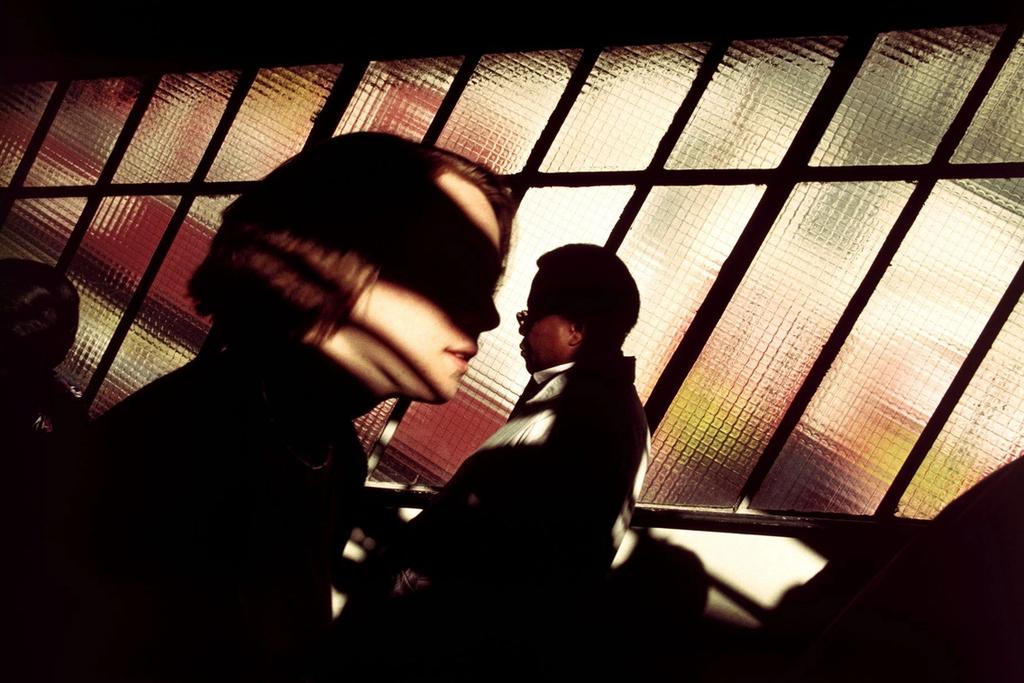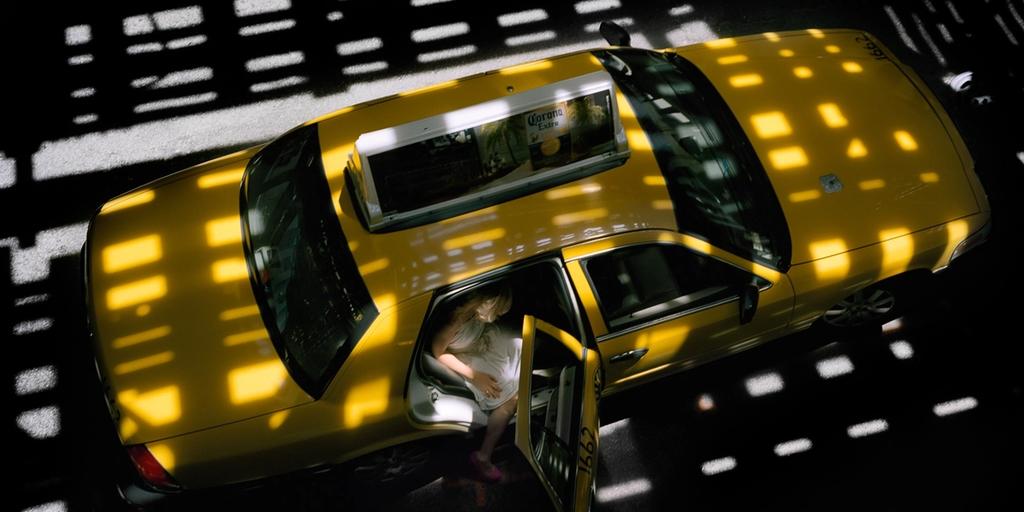
Clarissa Bonet explores the physical and psychological experience of urban spaces through her photography series City Space. Her work is defined by striking chiaroscuro contrasts, an expressive symbiosis of people and architecture, and a strong sense of geometry.
In this article you will discover why Bonet does not consider herself a street photographer, what draws her to the urban environment, and what lies behind the secret of her images.

Clarissa Bonet lives and works in Chicago. She was born in Florida in 1986 and lived there until 2006, when she left to study at college in Chicago, where she ultimately settled. Bonet earned a Bachelor of Science in Photography from the University of Central Florida and a Master of Fine Arts in Photography from Columbia College Chicago. Clarissa fell in love with photography while still at school, when she began taking classes in her senior years.
Paradoxically, Bonet is not a street photographer. Her work begins and ends in the city, but between those two points lies an enormous amount of labour. It starts with Bonet walking through the city, photographing urban spaces and the interactions between passers-by, buildings and light on a small camera. She also keeps a notebook in which she records her feelings, thoughts and observations about people doing something she finds intriguing. She then returns to the studio and begins developing a concept for each future photograph. The people in her images are either acquaintances or individuals who responded to online postings. Under Bonet's meticulous direction, a new urban environment takes shape — one captured at precisely the right time of day, with the exact lighting and atmosphere she requires. Each shot uses four to five rolls of film.


"For me it is more important to remake the images than to document them"
Bonet is drawn to creating images that reflect the impressions and emotions she experiences while walking through the city. "All of the photographs stem from personal experience. For me it is more important to construct images than to document situations, because in the moment something inevitably falls short of my expectations. When I recreate the scenes I have witnessed, I can charge them with the emotions or mood I am feeling at that time. I do this through light, colour and atmosphere," says Bonet of her work.
In Bonet's work, light plays a role not only as photography's eternal companion but as a subject in its own right, on equal footing with people and urban architecture. Light is one of Clarissa's chief sources of inspiration, alongside the photographic masters Saul Leiter and Ray Metzker.
What I love about light is its ability to transform the ordinary into something profound
Boné speaks about the role of light in her work: "On the whole, though, I find my inspiration in light itself. I know that sounds like a very typical thing for a photographer to say, but what I love about light is its ability to transform the ordinary into something profound. I would say that many of my images are built around light. I use it as a tool to convey an emotional dimension."


Before college, Boné had never lived in a major city, and through her work she attempts to understand what such a place means to her. All of Boné's work is about the city — about the emotional space it creates. Although every photograph was taken in Chicago, the series speaks to the urban landscape more broadly, and to its physical and psychological effects on the body.
One of the photographers who inspires Clarissa Boné is Saul Leiter, whose biography is featured on Losko. Another photographer's perspective on the city can be found in the pastel hues of East Asia by Jan Vranovsky.