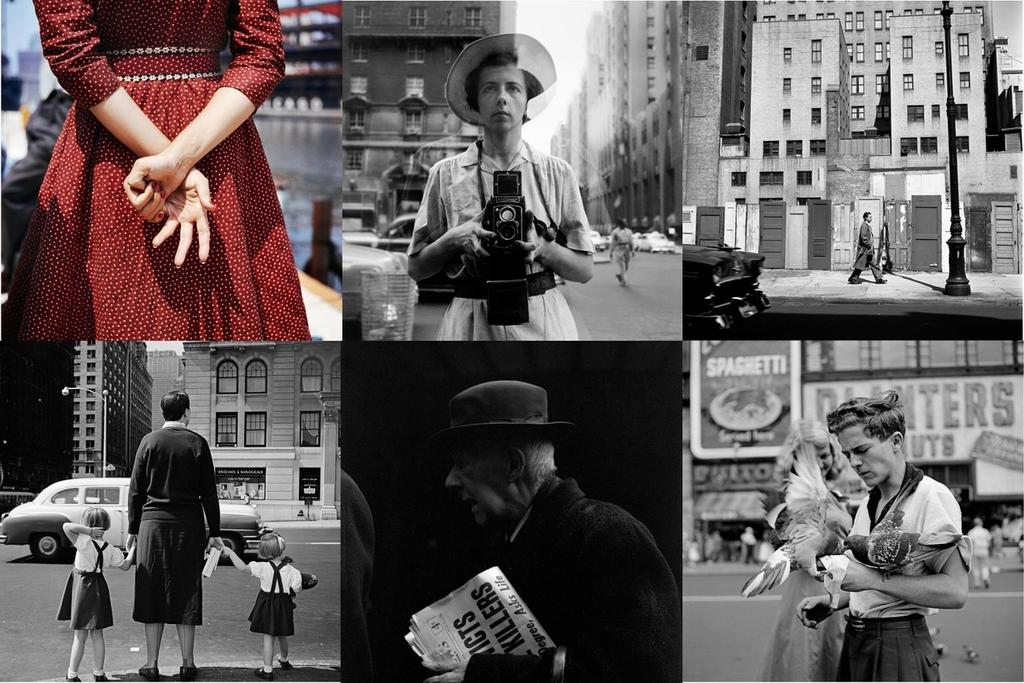
Saul Leiter was an artist and pioneer of colour photography. His images are photographic abstractions that reflect his love of painting, expired film, blur and unconventional composition. His extraordinary modesty and fear of fame led him to show his colour photographs only at the age of 77, when he found himself in financial difficulty.
Saul Leiter: A Biography

From Pittsburgh to New York
Saul was born in 1923 into an Orthodox Jewish family. His father was a rabbi who wanted his sons to follow in his footsteps. From the age of 12, Saul studied theology alongside his brothers and eventually enrolled in a rabbinical seminary.
Around the same time, he became captivated by painting. The conflict with his father began after he bought his first tubes of paint — in his father's view, painting was the pursuit of failures with a questionable way of life. At 23, following another argument with his father, Saul packed a suitcase and left home for New York. For the rest of his life, his brothers regarded the photographer as an oddity, and his father never forgave him.
From Painter to Photographer
In New York, Saul Leiter befriended the abstract painter Richard Pousette-Dart (Richard Pousette-Dart) and the photographer Eugene Smith (Eugene Smith). It was they who instilled in him a passion for photographic art and profoundly shaped his style: Eugene gave the future photographer a 35 mm Contax camera, while Richard drew Saul into the world of abstract expressionism.
It was 1949. Like everyone at the time, Saul shot on black-and-white film, but his style stood in sharp contrast to that of his contemporaries. He photographed from unusual angles, shot through fogged glass, and revelled in the interplay of shadows, reflections and silhouettes. Fog, rain and snow were his greatest allies, turning photographs into abstract images.
What I like about photography is its ambiguity. When the viewer is not quite sure what they are looking at… That moment of uncertainty is precisely what I value.
In 1953, some of Saul's photographs were included in the exhibition "Always the Young Stranger" at the Museum of Modern Art in New York. The magazines Esquire, Vogue and Harper's Bazaar took notice of his work. To make a living, Saul agreed to shoot for these publications. He spent the next 20 years doing so with little distinction. Despite the fame of the magazines themselves, almost no one knew who he was.
From black-and-white to colour photography
In the 1950s, colour film was avoided for two reasons. First, it was expensive. Second, colour photographs were associated with the vivid imagery of advertising, and using colour film was considered bad form.
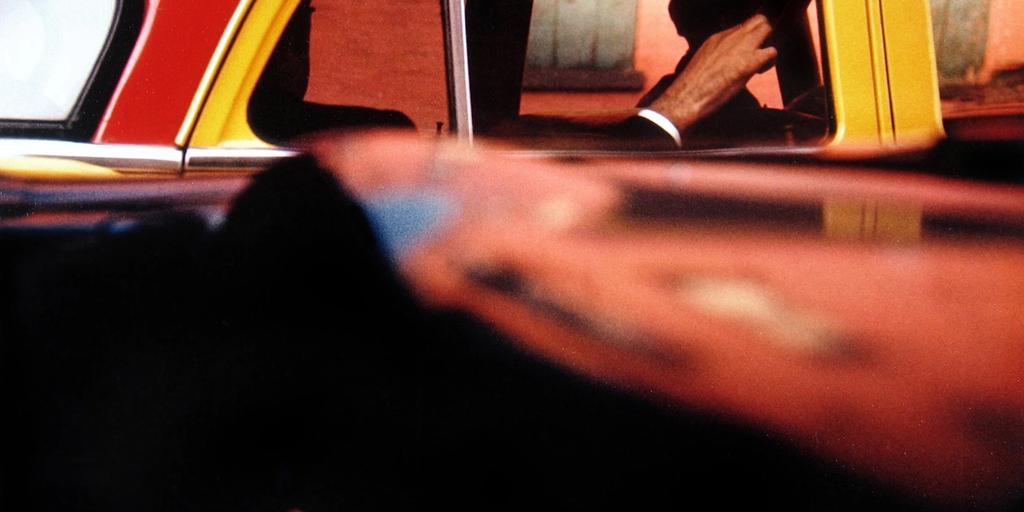
Saul felt that colour could say more. So he bought expired film and went out to photograph the streets of New York. He shot, however, only for himself. Leiter rarely printed his colour photographs, showing them to friends only occasionally, through a projector.
The defects produced by the expired film made Saul's images even more abstract. What is more, he would apply brushstrokes of paint directly onto the film and hand-colour some of the printed photographs, so that they occupied a space somewhere between photography and painting.
From fashion photography to street photography
Street photography emerged in the 1950s and quickly became a lucrative field. Large sums and widespread recognition went to emotionally charged images of poverty, squalor and post-war depression. It is little wonder that most photographers sought to capture New York in precisely that light.
"Some photographers think that by photographing human suffering they are solving serious problems. I do not think that poverty runs any deeper than happiness."
Saul never dreamed of fame or money. And so, in contrast to his peers, he looked for beauty in everyday life and in colours that were pleasing to the eye. Subject matter did not interest him. His works are poetic: indistinct figures, refracted light and a gentle, captivating ambiguity. Leiter never even tried to sell his photographs — they existed only for himself and his friends. He continued to earn his living shooting for magazines.
"Working for fashion magazines was, for me, purely a source of income. The rent had to be paid, the electricity bills, one had to get by somehow. But sometimes the ideas that came to me during a fashion shoot proved useful later in my own amateur photography," Saul would say.

From obscurity to fame
In 1993, gallerist Howard Greenberg first noticed several of Leiter's black-and-white works in a museum. Five years later, the two happened to cross paths at an event. Howard asked Saul whether he had any more work. Before long, Greenberg received several boxes of undeveloped film. Howard later recalled: "To take the rolls in for developing, I was literally blowing layers of dust off them. It turned out that no one had touched them for nearly 50 years!"
The opened boxes and Saul's reluctant "yes" to publication set in motion a chain of events: international exhibitions, three books about the photographer, a biographical film and a new generation of admirers. At the height of his fame, the 75-year-old Saul lived modestly out of sheer habit. He described his chief ambition as having his bills paid, and his only wish as always finding the right sauce in the cupboard when cooking his favourite pasta. The photographer died in 2013 at the age of 89.

5 Rules of Saul Leiter
When a photograph makes you look at it twice, that is a sure sign of a great shot. With Saul's work, you will look three times. His images are enigmatic stories you want to lose yourself in and discover more about.
1. Shoot through
Photographing through a window, tree leaves, a gap in a fence, or even a crowd — while focusing on a single subject — gives the feeling of secretly watching city life or a particular object unfold. This was Leiter's favourite trick, one that sparks curiosity and intrigue in anyone who looks at the image.
2. Play with focus
Saul frequently shot his main subjects out of focus while keeping secondary elements sharp. The results feel wrong, yet it is impossible to give them only a passing glance — they seem to magnetise the eye and compel you to linger.
3. Use different lenses
Saul enjoyed using lenses unsuited to the task at hand as a way of challenging himself and arriving at unexpected, interesting images. He borrowed this approach from Picasso, who once admitted that when he wanted a particular colour and couldn't find it nearby, he would reach for its complete opposite instead.

4. Experiment with formats
In the middle of the last century, photographers favoured horizontal formats. Here, too, Leiter brought his own vision. He shot almost exclusively in portrait orientation — a format that reminded him of Japanese painting, which he had admired since childhood. It later became one of the defining hallmarks of his work.
5. Work on the photograph
Saul never used editing software, but he did hand-finish certain photographs — literally, with gouache. He would deliberately leave paint marks on the film and add colour to printed shots.
Books and films about Saul
The books feature photographs, paintings and sketches that Saul Leiter personally brought to the publishers. To this day, more than a thousand undeveloped rolls of film remain in his apartment, their fate to be decided by his family.
Saul Leiter Retrospective — nearly 300 pages of the photographer's work. The book contains his early black-and-white and colour images, fashion photography, and nude works that Saul Leiter hand-coloured with gouache, as well as an introduction to his paintings and sketches.
Saul Leiter: Early Color — the first and most celebrated book of Saul's colour photography.
Saul Leiter — a book from Steidl, a publisher renowned for the finest print quality. If you want to see Saul's work reproduced to perfection, this is the book for you.
Saul Leiter (Photofile) — Saul's best work alongside critical commentary, in a book that fits in your pocket.
In no great hurry (In No Great Hurry) — a documentary about the photographer's life, with Leiter himself as the central figure. In the film, Saul Leiter shares 13 lessons he has drawn from life.
Extras — 7 short videos featuring Saul's reflections on life. The videos are available only after purchasing the film on the official website.
If you are interested in photographer biographies or abstract photographic art, read our articles:
— Biography of Andreas Gursky — the most expensive photographer of our time
— A photo project by Bernard Lang: fish farms as abstract art
— A photo project by Zak Sekler: abstract landscapes of Iceland
Follow us on social media to stay up to date with new content: VKontakte, Telegram — @loskomagazine.