Arata Isozaki is a Japanese architect working at the intersection of the city, the environment and social change, and laureate of the 41st Pritzker Architecture Prize. He is 87 years old, born in Japan, and his teacher was Kenzo Tange, who oversaw the reconstruction of Hiroshima after the bombings. Arata began his career within Metabolism — an architectural movement grounded in the principle of dynamic changeability and a focus on "emptiness." Today, Isozaki has no fixed style: he knows how to adapt to circumstance. Each of his projects fits seamlessly into its landscape, atmosphere and urban rhythm, thanks to the architect's aesthetic sensibility and rich imagination.

Architecture often needs an external catalyst to produce something truly worthwhile, and historical events can serve as precisely that. For Isozaki, that catalyst was the atomic bombing of Hiroshima.
"My first impression of architecture was the absence of architecture"
These words speak both to the aftermath of the catastrophe and to the dreary appearance of the city at large. Arata wanted to reshape its silhouette — initially working for his own country before demonstrating his abilities to the West as well. He became the first Eastern architect whose projects were realized outside his home country.
Isozaki draws on Japanese architecture while remaining attentive to Western traditions, yet stays resolutely contemporary. He speaks many architectural languages, questioning himself with irony and continually inventing something new. The architect occasionally returns to his affinity for Metabolism, weaving it discreetly into his projects. Buildings conceived in this vein are grounded in an analogy with living organisms: they are composed of prefabricated modules that can be updated, extended and "regenerated" in the future.
Oita Prefectural Library
Location: Oita, Japan
Year of completion: 1966
Material: concrete
The library in the architect's home city marks the beginning of Isozaki's career. An analogy with human anatomy served as his inspiration: he designed the building as though it were a skeleton, capable of growth and development.
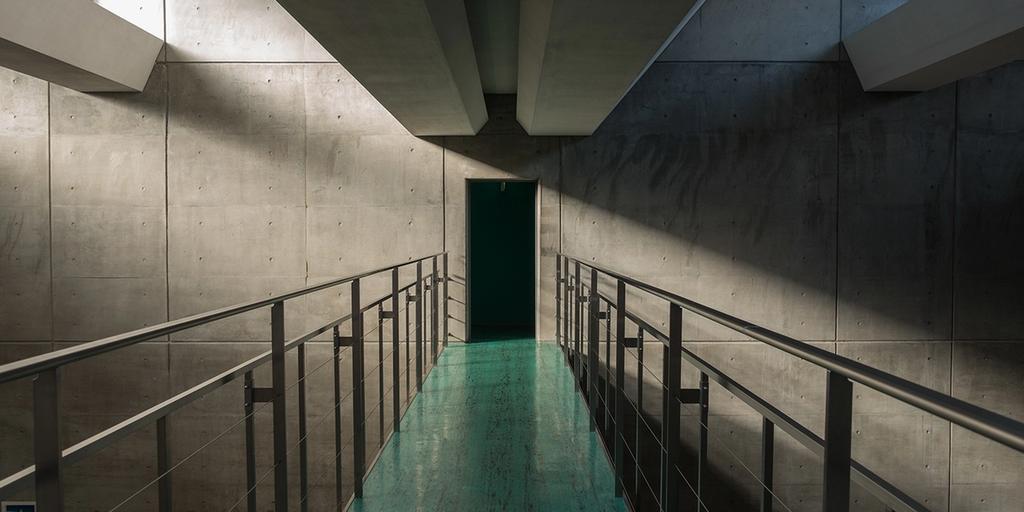
The Japanese architect wanted to emphasise the idea of "growing architecture" and demonstrate that urban planning need not remain static. He created a framework of concrete tubular beams and deliberately left them exposed, so that any of them could be extended in the future and services run through them.
Even here, the architect was blending cultures and architectural movements — Japan and the West, Metabolism and Postmodernism. The project reads as a post-Hiroshima, science-fiction building and stands apart from all of Isozaki's other work.
Art Tower Mito
Location: Mito, Japan
Year of completion: 1990
Materials: steel, glass, reinforced concrete
The tower forms part of a cultural complex, and its construction was timed to coincide with the centenary of the city of Mito. In designing it, Isozaki drew inspiration from Constantin Brâncuși's Endless Column and the technical innovations of Buckminster Fuller. Isozaki's spontaneity gave way to the fantastical: Art Tower looks like a giant film set — a spiralling robot cobra, poised to engulf the city.
The complex consists of 56 triangular silver-coloured panels angled in different directions. They reflect sunlight and provide natural illumination, while at night the tower is lit from within, making it stand out against the surrounding buildings.
"The most important thing an artist can do is confront society with something it has never seen before"
The building houses a theatre, a concert hall and a contemporary art gallery. A popular destination for tourists and locals alike, it regularly hosts art exhibitions by local and international artists, concerts and theatrical performances.
Palau Sant Jordi Sports Palace
Location: Barcelona, Spain
Year built: 1992
Materials: brick, ceramics, glass
The palace, with a capacity of 17,000, was designed specifically for the Barcelona Olympic Games. Construction proceeded from the top down, beginning with the erection of the domed brick roof. This approach ensures an unobstructed sightline from every seat in the venue.
The building is partially sunk below ground level so as not to obstruct views of the Montjuïc hillside. It hosts not only sporting competitions across virtually every discipline, but also music concerts and art exhibitions. The stadium has a light, airy quality thanks to the many columns supporting it around its perimeter; it is also home to the emblem of the Barcelona Olympics — the Calatrava tower. The sports palace is equipped with state-of-the-art audio systems and has been designed to prevent large crowds from forming: lifts and well-planned circulation routes ease the flow of visitors.
Although Isozaki did ultimately build his own stadium, he is quite critical of other such projects. He commented on the stadium designed by Zaha Hadid for the Tokyo Games as follows: "It looks like a turtle waiting for Japan to sink so it can finally swim away." Together with other architects — among them Toyo Ito, Kengo Kuma and Sou Fujimoto — he signed an open letter opposing the realisation of Hadid's design, calling it a "monumental mistake" and "an affront to future generations".
Kyoto Concert Hall
Location: Kyoto, Japan
Year built: 1999
Materials: brick, glass
The hall is located next to a library and the Kyoto Botanical Garden. The architect's intention was to bring together a combination of different geometric forms. A cylindrical tower housing a circular ramp leads to the concert hall. It is supported by a rectangular prism, while the street-facing facade is decorated with a wave-like pattern clad in clear glass. The foyer, too, is filled with geometric shapes: cubes, triangles, cylinders and circles.
Isozaki concealed the entrance at the rear of the building, placing it well away from the narrow street. The aim was to lead visitors to the box office and main doors through the northern part of the building, past a shimmering pond.
"In the United States, creativity is grounded in originality. But in Japan, one can be creative without it"
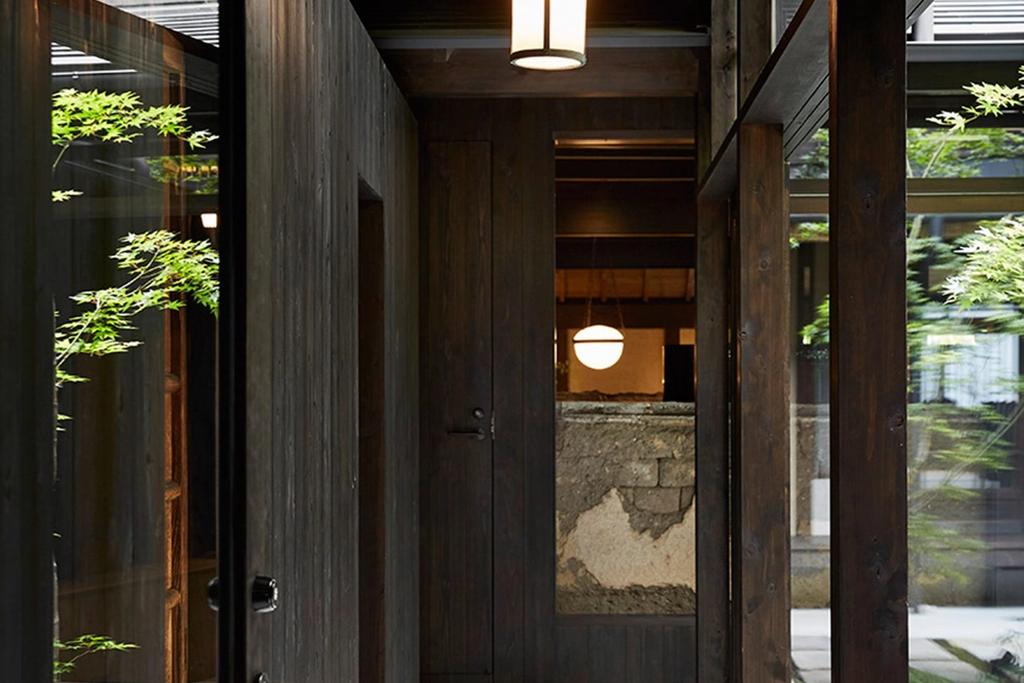
The influence of ancient traditions on Isozaki is visible throughout: the charred colour of the cylindrical tower recalls the Japanese wood-treatment technique used in Kyoto's old wooden townhouses; the curved pedestrian bridge spanning the pond is a reference to traditional Japanese gardens.
Himalayas Centre
Location: Shanghai, China
Year built: 2010
Materials: concrete, glass
While working on the project, Isozaki drew inspiration from nature and spent a great deal of time studying feng shui, which ultimately influenced the organisation of space. Generous open areas, concrete structures, and a contextual approach are among the architect's signature techniques. The Himalayas Center is located in Shanghai's modern Pudong district, near the central park.
The mixed-use centre has been dubbed a 'concrete forest.' Two glass towers of different heights and forms rise from a foundation of glass and concrete. The unusual concrete 'groves of trees' create a striking contrast with the conventionally corporate glass blocks.
Inside, the complex houses two hotels, a shopping mall, a contemporary art museum, an art theatre, offices, and a concert hall. Moving from one space to another requires passing through the sculptural 'forest facade,' and visitors find themselves unexpectedly transported to something resembling a cave.
MABIC Library
Location: Maranello, Italy
Year of completion: 2011
Materials: concrete, glass
A joint project from Isozaki's studio: a collaboration between the laureate himself and Japanese architect Andrea Maffei. This light-filled, contemporary cultural space is seamlessly integrated into its historic surroundings. The library is set apart by high walls, creating an intimate, enclosed atmosphere without any sense of encroaching on history.
The floor finishes, ceilings, and furniture are all white. The facade consists of a transparent membrane that opens up views of the surrounding area. At its base, artificial ponds serve both an aesthetic and a practical purpose: they reflect sunlight and everything around them. Built from concrete — the architect's preferred material — the library has two floors. The basement level contains two reading rooms and a café, while the ground floor houses a music library, a video library, an archive, a seminar room, and two further reading rooms.
The space feels nothing like the libraries most of us grew up with — artificially lit, heavy with the smell of old paper, and weighted by an oppressive academic atmosphere. This is a place where you genuinely want to sit with a book or simply enjoy a cup of coffee. It brings together a social and cultural centre in one, yet its very situation has the ability to separate visitors from the outside world.
D38 Office Building
Location: Barcelona, Spain
Year of completion: 2011
Materials: glass

The project forms part of a masterplan for an entire office district developed by the British design studio FOA. D38 is a large office space of approximately 70,000 square metres. The architect offers occupants several ways of using the building, allowing them to adapt it and experiment with his original concept.
Once again, Isozaki creates a great deal of open space and places emphasis on natural light. The facades combine different colours, chosen deliberately for their understated quality — so as not to distract — while their arrangement produces a neutral geometric pattern. The glass panels come in blue, silver, and green.
The structure is composed of glass blocks that, through their arrangement, form an open terrace with greenery. The blocks themselves appear to float in the air, attached to the neighbouring buildings. The absence of a conventional foundation or any visible supports gives the whole composition a sense of weightlessness.
Qatar National Convention Centre in Doha
Location: Doha, Qatar
Year of completion: 2013
Materials: concrete


Once again, a Japanese architect conjures a forest from concrete — this time, tree-shaped columns line the façade of the building. They appear everywhere: throughout the interior and beneath the roof. The design is a reference to the sacred Islamic tree Sidrat al-Muntaha.
The conference hall accommodates up to 10,000 people, holds LEED Gold certification, and ranks among the most iconic energy-efficient buildings in the world. It employs the latest water-saving techniques alongside design features such as solar panels, occupancy sensors and LED lighting. Isozaki demonstrated that contemporary architecture can exist in harmony with nature.
The project is the largest multipurpose convention centre in the Middle East. It also hosts concerts, ceremonial events and exhibitions. High-tech systems — including audiovisual and acoustic equipment — are housed within illuminated ceilings.
Ark Nova inflatable concert hall
Location: Japan
Year of completion: 2013
Material: PVC
Isozaki turns his attention to the planet's most devastating forces — earthquakes and tsunamis. The concert hall was designed two years after the catastrophes that struck Japan. Arata and the artist Kapoor created an inflatable, mobile concert hall and sent it to the affected regions. The benches, made from trees damaged during the tsunami, serve as a reminder of the tragedy. The work is an artistic gesture that offers a symbol of hope for life after disaster.
The Ark Nova concert hall project is a prime example of 'flexi-architecture' — an approach that involves relocating structures, altering individual components and transforming them in response to their surroundings. The PVC pavilion is the world's largest inflatable concert hall, with a capacity of 500 spectators. Built from materials that can be quickly inflated and deflated, it is straightforward to transport.
Shanghai Symphony Concert Hall
Location: Shanghai, China
Year of completion: 2014
Materials: bamboo, wood, brick
The opening of the hall was a gift to mark the 135th anniversary of the Shanghai Symphony Orchestra — the oldest in Asia and a custodian of Western orchestral tradition, while also championing contemporary Chinese music. Its location beside the Shanghai Conservatory of Music and numerous bookshops and music stores creates a distinctive cultural quarter, not unlike Lincoln Center in New York.
Through the use of cutting-edge technology, the hall achieves exceptional acoustics and a carefully calibrated sound balance. Lighting is integrated into the acoustic panels to visually expand the space. The building rests on springs that absorb vibrations from the railway lines running beneath it. The interior is adorned with reflective panels covered in woven bamboo, and the stage floor is made from cypress wood. The exterior is clad in terracotta brick, and the surrounding trees evoke a classical Chinese garden.
The concert hall comprises two spaces: a world-class rehearsal venue seating 1,200 and a recording centre seating 400. Open daily, the hall houses a café, a bookshop and an interactive music salon, and hosts art exhibitions as well as lectures on music and literature.
Follow us on social media so you never miss new content: VKontakte, Telegram — @loskomagazine.