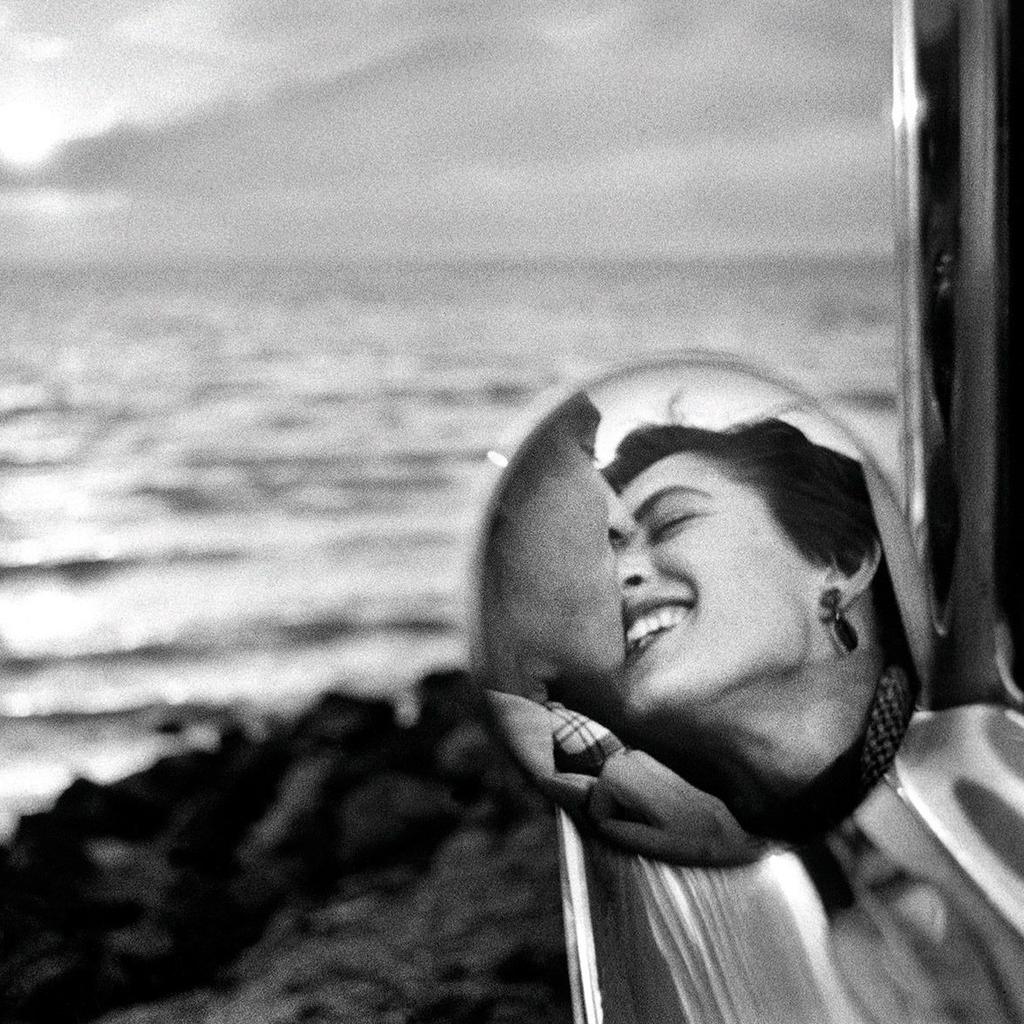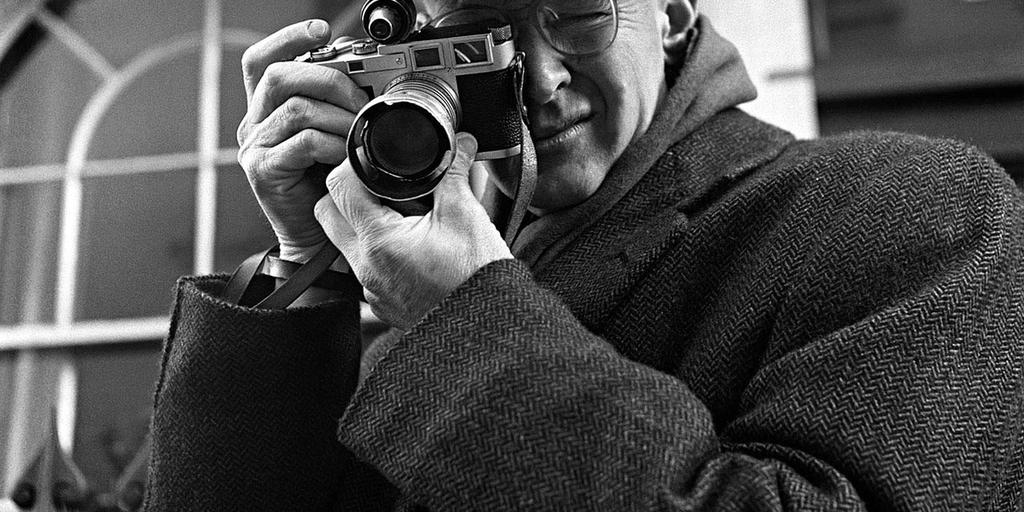
Henri Cartier-Bresson was a legendary French photographer, the founding figure of reportage and street photography, and one of the co-founders of the Magnum agency.
Henri lived a long and eventful life. He travelled to countless countries and photographed prominent figures — politicians, writers, and show-business stars. Yet the lives of ordinary people always remained at the heart of his work.

Henri had his own vision of photography. In his work he regarded geometry and structure as the paramount criteria. He took genuine delight in examining prints after developing them and discovering that all the pieces of the puzzle had fallen into place for a fraction of a second — and that he had managed to capture that moment.
In one of his last interviews, Bresson said that one cannot live for the sake of photography, because life itself will give you an abundance of material to shoot. You must do it because the process itself fills you with life.
Childhood and youth
Henri Cartier-Bresson was born on 22 August 1908 in Chanteloup, a suburb of Paris. The future photographer's double surname came about through the union of two families — the Cartier peasant family and the Bresson industrial dynasty. Henri showed an interest in painting and drawing from an early age, studying art at a fine-arts school. His parents, meanwhile, hoped that in time the boy would take over the running of the family factory.
At the age of five, Henri met his uncle Louis, who would exert a profound influence on the young photographer. After his uncle's death, Cartier-Bresson spent seven years studying in the studio of the painter André Lhote, and at twenty-one, in 1929, began attending painting lectures at the University of Cambridge. That same year Henri returned to Paris, where he fell in with representatives of the artistic and literary bohème.
Journey to Africa. The first camera.
In 1931 Henri left for Côte d'Ivoire, a country in West Africa. Bresson came across a photograph showing three boys leaping into Lake Tanganyika, taken by Martin Munkácsi. The image struck him with its dynamism and aesthetic power, and proved to be the final impulse that led Henri to take up photography.

Bresson acquired his first camera — a bulky black box, a black draping cloth and a tripod. Owing to their technical limitations, cameras of this kind could only photograph static subjects. Henri's first shots turned out poorly, and the camera itself gave up the ghost, unable to withstand the African climate.
Bresson soon contracted malaria, which forced him to return home. His recovery stretched over many months. Out of boredom, Henri purchased his first small-format Leica camera. The device, which had only recently appeared on the world market, allowed for reportage photography thanks to its compact size.
"All day long I prowled the streets, tense and ready to pounce — to trap life in the act"
Life in Mexico. The first exhibition.
At the age of twenty-four, Henri set off for Mexico, where he spent about a year photographing brothels and the nightlife of what he called 'the most surrealist country in the world.' In 1935, Julien Levy, the director of a New York gallery to whom Bresson had been introduced by a longtime friend, organised an exhibition of photographs that included Henri's work.

Early career
Just as Henri's reputation as a photographer was on the rise, he unexpectedly turned his attention to cinema. During a year spent living in New York, Bresson studied the principles of film editing. In 1936 he returned to Paris, where he became Jean Renoir's second assistant director; together they made the propaganda film La vie est à nous (Life Is Ours).
At twenty-five, Henri took a job as a photographer at a communist newspaper. In May 1937 he travelled to Britain to cover the coronation of King George VI. He returned with a large number of photographs — not of the monarch himself, but of ordinary people.
The Second World War. The Resistance.
In 1939 the USSR signed a non-aggression pact. The newspaper folded, and Henri, in a rage, burned a great many of his prints and negatives. Not long afterwards, the Second World War began. In May 1940 Bresson enlisted in the French army as a corporal in a film and photography unit. At the very outset of the conflict, France fell to the Nazis and Henri was taken prisoner. He spent thirty-six months in captivity, making three escape attempts, the last of which succeeded.
"I constantly feel like an escaped prisoner"
Bresson returned to Paris, where he joined the Resistance. Within its ranks, Henri again worked as a photographer. He brought together a group of journalists who documented life under the occupation and the retreat of Nazi forces. In 1945, the thirty-seven-year-old Bresson received a commission from the United States and made the documentary film Le Retour (The Return). He soon left for New York, where he exhibited his work at the Museum of Modern Art.

The Magnum Agency
In 1947, Henri Cartier-Bresson and four like-minded colleagues founded the photo agency Magnum. The name, according to legend, was inspired by the bottle of champagne of the same size that was drunk that evening. The photographers divided the world between them: Bresson was assigned India and China. He urged his colleagues to shoot exclusively with Leica cameras, never to crop their images, and to avoid staged photography.
"The main thing is to make people forget about the camera"
After opening the agency, Cartier-Bresson and his wife travelled to India. His wife's useful connections allowed the photographer to obtain permission to photograph Mahatma Gandhi.
Bresson had been commissioned to document this extraordinary figure — and in particular his hunger strike against the discrimination faced by certain sections of Indian society. Henri had barely begun shooting when Gandhi was assassinated. Bresson's camera was in action again immediately: he photographed the prime minister announcing the tragic news, Gandhi's body, and the crowds who came to pay their last respects.
The couple later travelled through Pakistan, Burma, Malaya and China. Henri Cartier-Bresson managed to photograph China just days before it was proclaimed a republic. In Indonesia, he documented the country's struggle for independence from the Netherlands. From his travels, Henri sent negatives to various magazines; agency representatives would then write to him enclosing cuttings so that he could see the final result of his work. He showed little interest in this, however, saying that the act of taking photographs appealed to him far more than the finished product.
The Decisive Moment. A Visit to the USSR.
In 1952, Henri Cartier-Bresson published the book The Decisive Moment. In addition to an essay, the volume contained around a hundred of the Frenchman's finest photographs. The proceeds from its sale were enough to keep the struggling Magnum afloat.
In 1954, Henri Cartier-Bresson was among the first foreign photographers to visit the USSR. The images he made during the trip appeared in the book People of Moscow. The reportage caused a great stir, though Bresson himself remained indifferent to the attention.
Around the same time, two of Magnum's founders died under different circumstances. Following the loss of his friends, Henri spent a long period trying to uphold Magnum's founding vision and prevent the agency from becoming a purely commercial enterprise.
Around the turn of the 1970s, Bresson published another book, Vive la France, and made two documentary films for CBS News. His first marriage ended. Shortly afterwards he married Martine Franck, a fellow Magnum photographer. In 1970 Henri returned to the Soviet Union, capturing all the changes the country had undergone in the intervening years. In 1974 another book of photographs from the trip was published.

As he grew older, Henri gradually gave up photography and returned to painting. He would take out his camera only to photograph his daughter, his wife and his cats.
Bresson died in 2004 at the age of 95 in the town of L'Isle-sur-la-Sorgue. He was buried in a private cemetery. In his lifetime Henri used to joke that he lacked imagination, which was why he never became a painter and had abandoned filmmaking. Photography, he would say, was always the simpler path.
Henri Cartier-Bresson's 8 principles:
Pay close attention to the geometry of the frame
"For me, the essence of photography lies in the lines of objects. The content of an image should be the photographer's constant concern."
The photographer matters more than the camera
"It is an illusion that photographs are made with a camera. They are made with the eye, the hand and the heart."
Travel as much as possible
"I believe that in discovering the world around you, you discover yourself."
Notice the small details
"In photography, the smallest thing can become the principal subject."
Bring a distinctive, artistic vision to the world
"For me, photography is the recognition, in a fraction of a second, of the significance of an event."
Never crop a finished photograph
"A photograph is good or bad from the moment it enters the camera."
Do not dwell on past successes — keep developing
"Photography itself does not interest me. I simply want to capture a fraction of a second of reality."
Never miss the moment
"Your eye must see the composition of the image — the one that life itself is offering you."
Other works by Bresson:
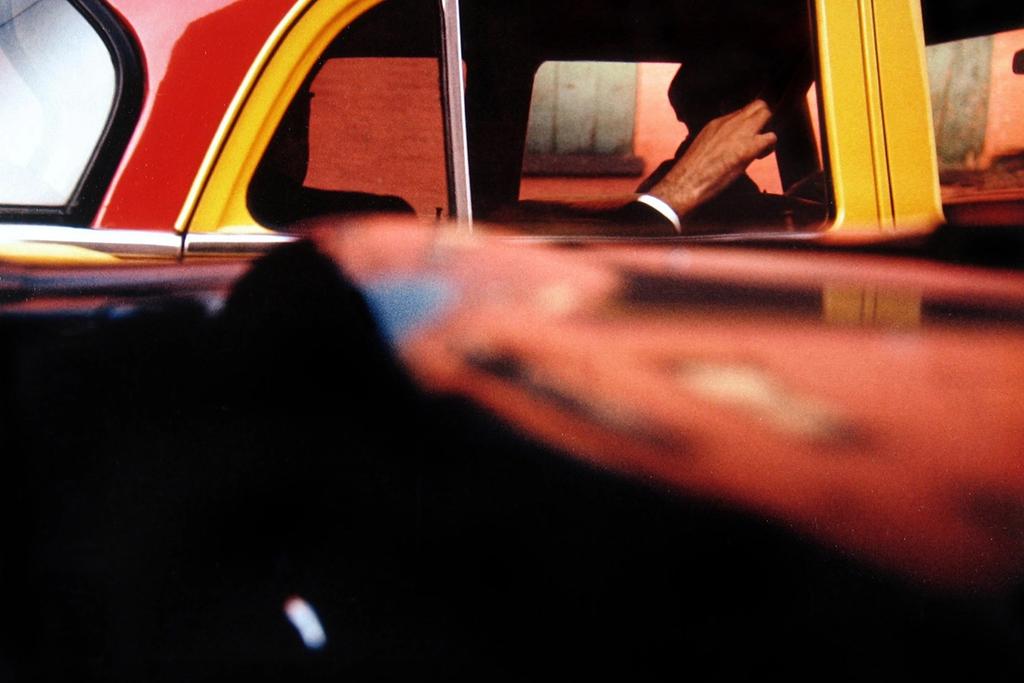
If you enjoyed the article about Henri Cartier-Bresson, you may also be interested in the work of Hiroharu Matsumoto and Saul Leiter.
Losko recently published a piece on five classics of street photography, which included Bresson.
Follow us on social media so you never miss new content: VKontakte, Telegram — @loskomagazine.
Photographs © Magnum Photos