The architecture of St. Petersburg is unique, especially on Kamenny Island, where the grand palaces of Russian nobility stand alongside modern buildings. In 1967, the state residence K-2 was built here, intended to receive high-ranking guests.

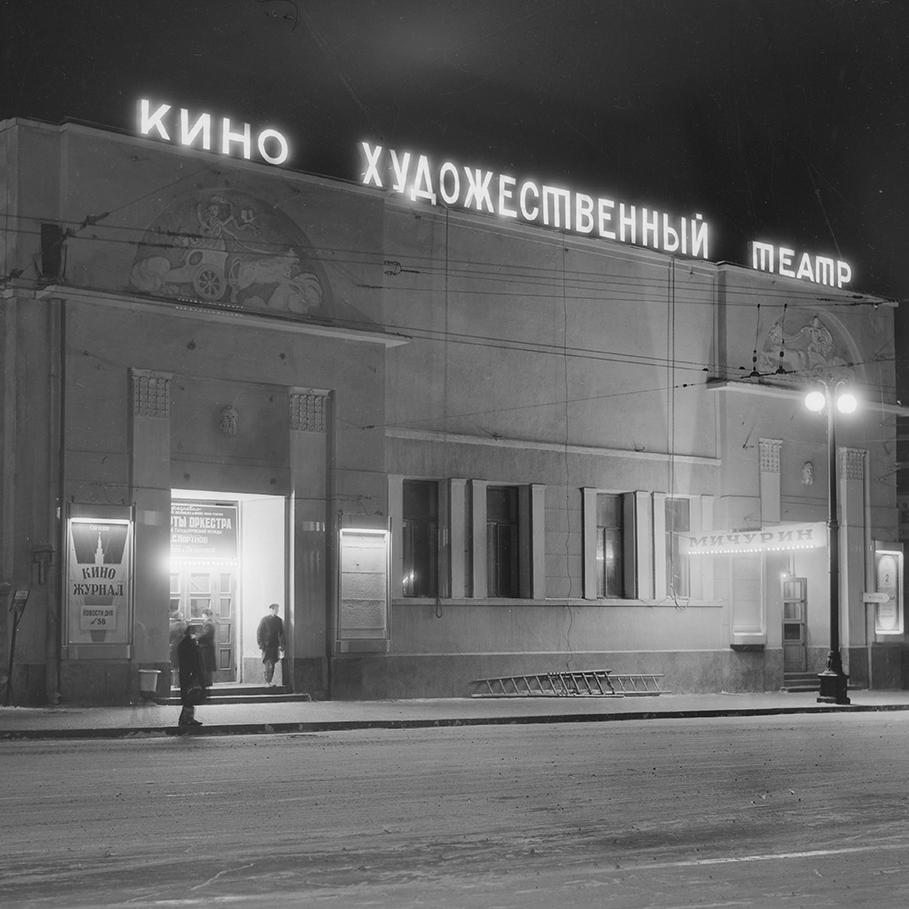
Residence K-2 was constructed on the site of a former dacha belonging to the industrialist N. Putilov, which had long since fallen into disuse. The project was undertaken by architect A. V. Zhuk. Born in 1917, he graduated in 1940 with the title of 'architect-artist'. His body of work includes such projects as the TYuZ theatre on Pionerskaya Square, Leningrad Air Terminal, the Oktyabrsky Grand Concert Hall, and the Alexander Nevsky Bridge. He also designed the station halls of several Leningrad Metro stations: Vladimirskaya, Chernyshevskaya, Vyborgskaya, and Dostoevskaya.

The exterior of Residence K-2 was shaped not only by the architects' enthusiasm for Finnish Modernism of the 1930s. The 1955 decree 'On the Elimination of Excess in Design and Construction' prohibited the overuse of decorative elements in architecture. This brought about a sharp shift from monumental classicism to functional, standardised architecture — marking the beginning of Soviet Modernism in the second half of the twentieth century. K-2 stands as a vivid example of the construction trends of its era.
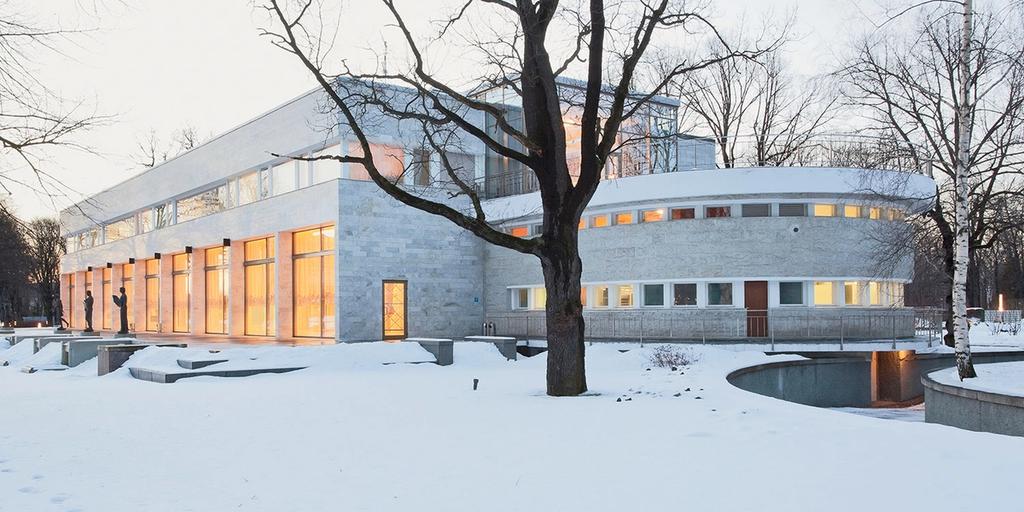
Although the residence is stripped almost entirely of ornamentation, a series of sculptures stands before it, lending contrast to the building's austere lines. Viewed from the façade, K-2 invites comparison with Le Corbusier's Villa Savoye — except that here the spaces between the slender columns are filled not with air, but with glass.

In the 2000s, K-2 was renovated and opened for various events, including weddings, corporate functions, and banquets. The interior, redesigned by architect F. K. Romanovsky, became overly ornate and now sits in jarring contrast to the building's exterior, undermining its original philosophy.
The residence stands on the bank of the Malaya Nevka river and has its own landing stage, making it accessible by small boat. Inside, the building houses a banquet hall, a billiard room, a conference room, a dining room, and ten guest rooms. It can accommodate 250 people for seated dinners, up to 800 for receptions, and in summer that number rises to 1,000 thanks to the use of the surrounding grounds.

K-2 looks particularly striking in winter: its white marble walls echo the dazzling snow and overcast sky, while bare trees and a row of sculptures create a visual boundary between the building and the surrounding landscape.


Residence K-2 looks particularly striking in winter. Its white marble walls echo the dazzling snow and the flat, overcast sky, while bare trees and a row of sculptures create a visual boundary between the building and the surrounding landscape. In the cold months, too, foliage no longer obscures part of the structure, so that from the opposite bank of the Malaya Nevka, K-2 resembles a riverboat drifting across the water.

Photography:Egor Rogalev