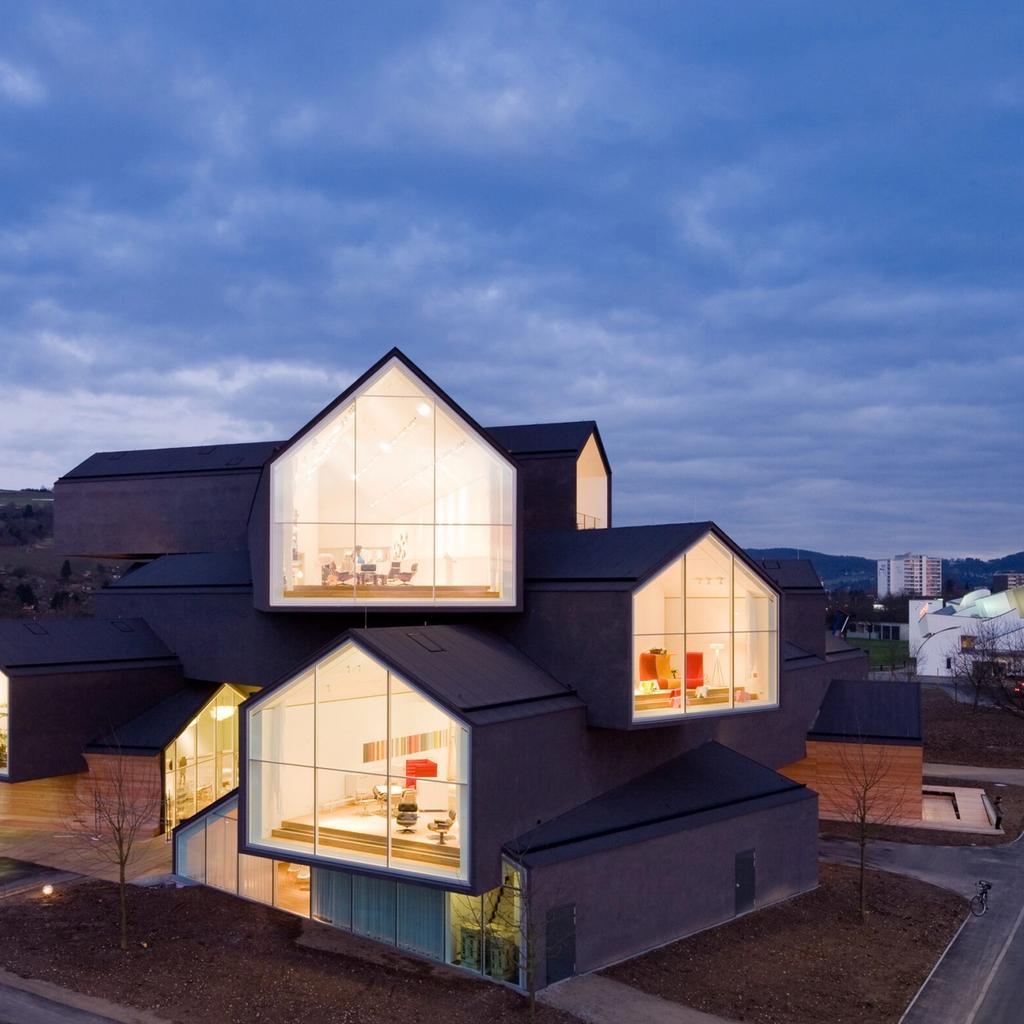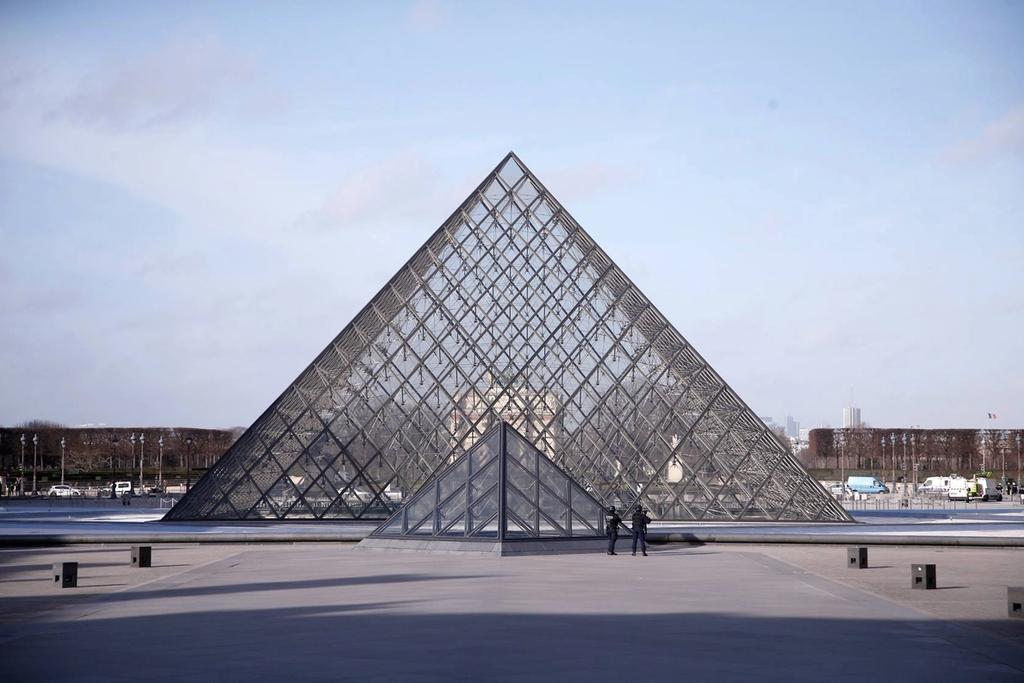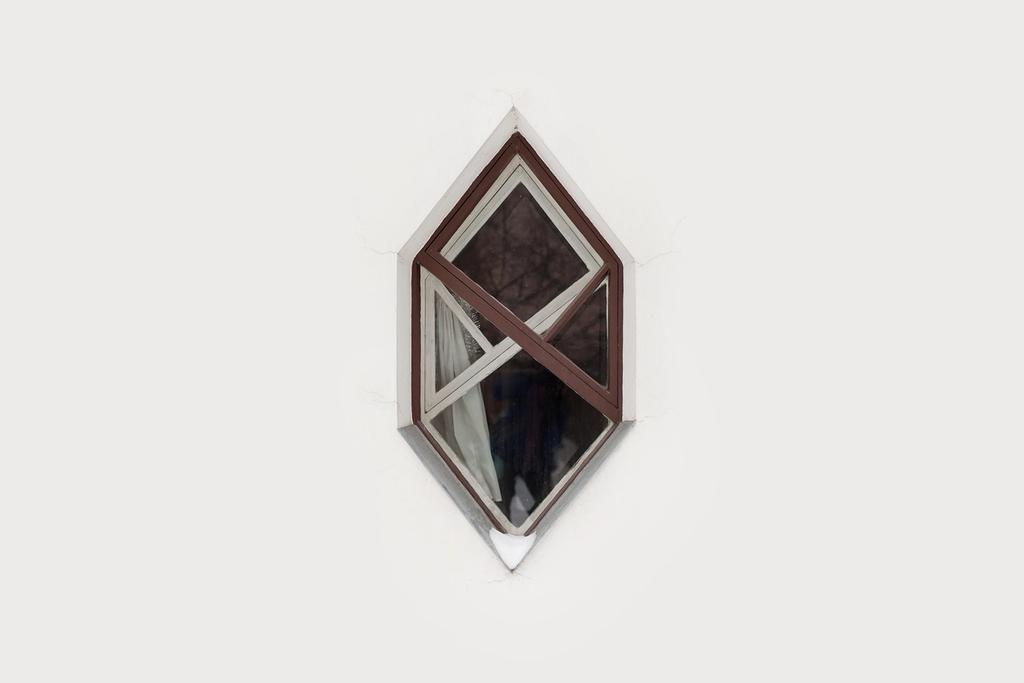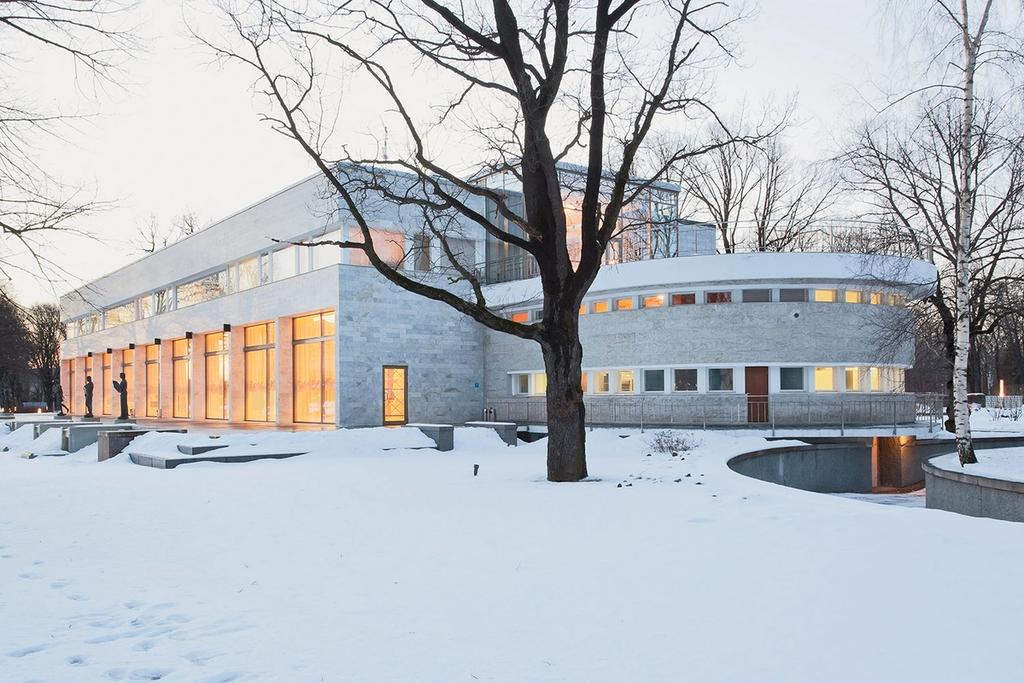
More than half a century has passed since the Swiss-French architect Le Corbusier, born Charles-Édouard Jeanneret-Gris, first called for radical change in architecture. Yet his ideas remain no less revolutionary today than they were decades ago. Le Corbusier is the greatest — and at the same time the most controversial — architect of the 20th century. A devoted writer, art theorist, sculptor, furniture designer and painter, loved and loathed in equal measure, he changed architecture and the world we live in forever.

The architecture of Le Corbusier is rightly regarded as pioneering. He invented a new architectural language that marked a definitive break with the traditions of the past. The modernist rejected superfluous decorative elements, embracing Ludwig Mies van der Rohe's philosophy of 'less is more', and introduced the practice of simple geometric forms, asymmetry, horizontal planes and open floor plans. He prized natural light and favoured a restrained palette of white and shades of grey. Le Corbusier was among the first architects to make extensive use of industrial materials such as concrete, steel and glass.
Whatever project he undertook — whether private villas, housing complexes or churches — he consistently pushed beyond convention. His contribution to modernism is immeasurable, and Le Corbusier's principles of functionalism became the foundation of the International Style. Below we present ten of the architect's landmark works from around the world.
The Architecture of Le Corbusier
Villa La Roche
Location: Paris, France
Years of construction: 1923–1925
The house comprises two separate, self-contained sections: the residential quarters of the architect's brother and the art gallery of collector Raoul La Roche, a passionate devotee of Cubism. The villa now operates as a museum and exhibition space for the Fondation Le Corbusier.
At Villa La Roche, Le Corbusier gave form to his revolutionary ideas for the first time. He would later call them the 'Five Points of Architecture': pilotis, a flat roof that could serve as garden and terrace, open-plan interiors, ribbon windows, and a façade independent of the load-bearing structure. The project is rightly regarded as the first truly Modernist house, with its unusual geometric forms, minimalist aesthetic, and restrained colour palette.
Villa Savoye
Location: Poissy, France
Years of construction: 1929–1931
Villa Savoye stands in a wooded suburb of Paris, designed by Le Corbusier and his cousin Pierre Jeanneret as a family country house. The project is a striking expression of the architect's innovation and a full embodiment of Le Corbusier's Five Points of New Architecture, which he finalised in 1927.
The building rests on pilotis that bear the weight of the structure, lifting it clear of the ground. Le Corbusier freed the interior from load-bearing walls and relieved the façade of any structural function. He sought to dissolve the house into its natural surroundings through wide ribbon windows, continuous glazing, slender greenish columns on the ground floor, and a flat roof terrace.
Chapelle Notre-Dame-du-Haut
Location: Ronchamp, France
Years of construction: 1950–1955
The Roman Catholic chapel at Ronchamp is one of Le Corbusier's most radical projects. The building marked a definitive break with the functionalist philosophy that had defined his earlier work.
"Everything in it is interconnected. The poetry and lyricism of the image are born of free creativity, the brilliance of rigorously calculated proportions, and the flawless harmony of every element."
The chapel was built on a pre-existing pilgrimage site that had been completely destroyed during the Second World War. Its sweeping concrete roof, evoking a seashell, is supported by thick, curvilinear walls punctuated by a scattering of irregularly shaped windows.
Residential Complex in Berlin
Location: West Berlin, Germany
Years of construction: 1956–1957
Heavy wartime bombing had left Berlin in the grip of a severe housing crisis after the Second World War. As a response, the architect designed a multi-storey social housing block comprising 530 apartments. The concrete building, reminiscent of an ocean liner, became a symbol of post-war German modernisation and a vivid example of Le Corbusier's 'machine for living.'
The concept of the 'housing unit' was first successfully realised in Marseille. The Berlin residential complex is an almost exact replica of the Marseille Unité d'Habitation, recognised as the most significant example of Brutalism of all time. Le Corbusier sought to create a 'city within a city' that would meet the everyday needs of its inhabitants.
'This is not architecture for kings or princes — it is architecture for ordinary people: men, women, children'
National Museum of Western Art
Location: Tokyo, Japan
Years of construction: 1957–1959
An art gallery situated in the heart of Tokyo, this is the great modernist's only project in East Asia and one of the rare examples of architectural Brutalism in Japan. As a work of art, the building is every bit the equal of the Picassos, Van Goghs, Monets and Pollocks on display within its walls.
Le Corbusier described the three-storey building, clad in textured concrete panels, as a 'square spiral'. From its structural elements to its architectural details and interior fittings, everything is governed by the Modulor system, which Le Corbusier based on the proportions of the human body. The staircase, symbolically placed outside the building, serves as an allegory for the ascent into a temple of art.
Couvent Sainte-Marie de La Tourette
Location: Éveux-sur-l'Arbresle, France
Years of construction: 1953–1960
A Dominican monastery near Lyon built for a community of monks, it resembles the ruins of a long-forgotten civilisation far more than a place of worship: raw concrete surfaces, bold colour contrasts, grass-covered flat roofs, asymmetry and an apparently illogical architectural composition.
The complex comprises a wide range of spaces: one hundred individual cells for private prayer and rest, a library, monastic quarters, a church and study rooms. Unlike most of Le Corbusier's buildings, the structure does not harmoniously complement its surroundings but asserts a stark dominance over the landscape, setting the austere purposefulness of faith against the chaos of untamed nature.
Palace of the Assembly
Location: Chandigarh, India
Years of construction: 1951–1962
The monumental eight-storey Palace of the Assembly forms part of the Capitol Complex — a governmental ensemble situated in northern India at the foot of the Himalayas. It was here that Le Corbusier first brought some of his ideas about the ideal city to life. The raw concrete technique used in the construction of the Capitol Complex became a defining point of departure for Brutalism.
'The city is a powerful image that acts upon the human mind. Can it not still be a source of poetry for us today?'
The main entrance is articulated by a portico in the shape of a curved hull, supported by eight concrete pylons. At the heart of the building is the assembly chamber, housed within an interior cylindrical structure that pierces the roof like an enormous chimney flue. Vivid, contrasting elements on the façades enliven the monumental composition.
Maison de la Culture de Firminy
Location: Firminy, France
Years of construction: 1961–1965
The community centre, completed in the year of Le Corbusier's death, was built on a steep cliff above a former coal quarry. The architect chose to preserve the old coal seam, thereby achieving a 'poetic resonance' between industrial and natural materials — a symbiosis between the building and its surroundings.
The asymmetrical curved roof, reminiscent of an inverted vault, is the result of an innovative structural solution: concrete slabs were laid across tension cables. Another distinctive feature of the building is its special glazing system, comprising purpose-built partitions and glass panels of varying sizes.
Heidi Weber Pavilion (Centre Le Corbusier)
Location: Zurich, Switzerland
Years of construction: 1963–1967
Le Corbusier's final project completed during his lifetime was commissioned by Heidi Weber, a Swiss designer and devoted admirer of the great modernist. The building, intended to house a collection of Le Corbusier's own graphic works, sculpture, furniture and sketches, subsequently became his creative testament. Today it is home to a museum dedicated to the architect's life and art.
The building was constructed from materials uncharacteristic of Le Corbusier: glass and steel. In place of the raw concrete slabs typical of the architect's late period, enamelled coloured panels were used. The roof, assembled from steel sheets, is independent and clearly separated from the main structure. Like a giant umbrella, it shields the master's artistic legacy from the outside world.
Church of Saint-Pierre de Firminy
Location: Firminy, France
Years of construction: 1971–1975, 2003–2006
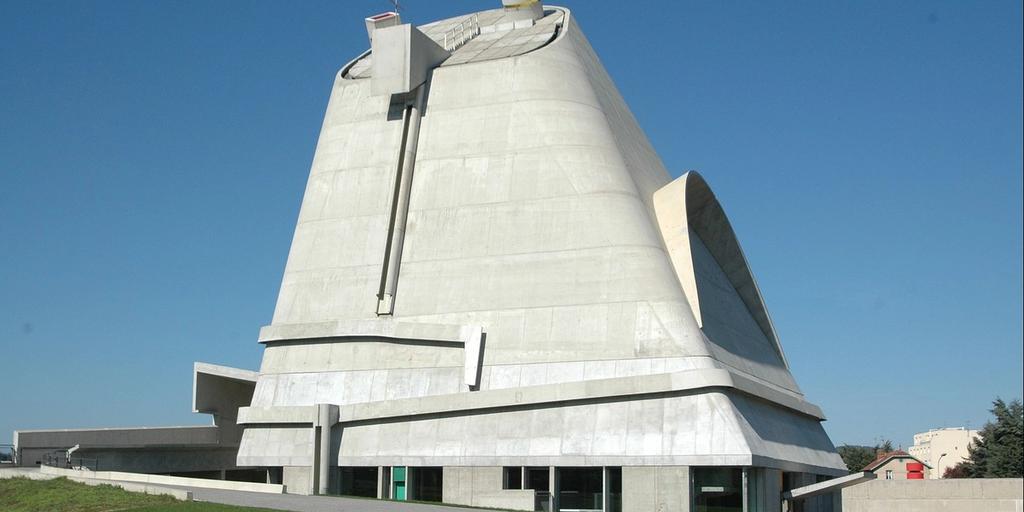
The church in Firminy was Le Corbusier's last major project — one that was never realised during his lifetime. Begun in 1960, it was completed 41 years after his death. The concrete, pyramidal church looks more like an industrial structure or a spacecraft than a place of religious worship. The architect's choice of such an unusual form was driven by a desire to capture the spirit of the place: the building stands in a small mining town.
"The church must be spacious, so that the heart may feel free and elevated, so that prayers within it may breathe."
Simple geometry laden with complex cosmological symbolism: the structure, square at its base, narrows as it rises and sheds its rigid form — a metaphor for the transition from the earthly to the heavenly. Tiny circular windows, scattered across the wall like a constellation of stars, project the constellations of Orion onto the church's eastern wall in beams of light. Cone-shaped coloured windows, symbolising celestial bodies, illuminate the interior differently depending on the time of year and religious feast days.
Also read the biography: Le Corbusier — a visionary innovator in modern architecture
Follow us on social media so you never miss new content: VKontakte, Telegram — @loskomagazine.