Singular designs, an experimental spirit, bold decisions — that is what defines the houses architects create for themselves and their loved ones. It is the one instance in which an architect acts simultaneously as designer and client, giving form to their most unconventional ideas.
In this article you will learn:
- which houses the celebrated architects of the twentieth century lived and worked in;
- how their principles shaped the design and realisation of their own homes;
- what stories lie behind these projects.
Melnikov House-Studio
Years of construction: 1927–1929
Location: Moscow, Russia
Materials: brick, wood

It is more of a cultural anomaly than an architectural marvel. Konstantin Melnikov, the foremost visionary of the Soviet avant-garde, managed to build an experimental three-storey family home at a time when housing was in acute short supply. The project, intended to introduce new architectural forms into everyday practice, was conceived as a prototype for Soviet communal houses.
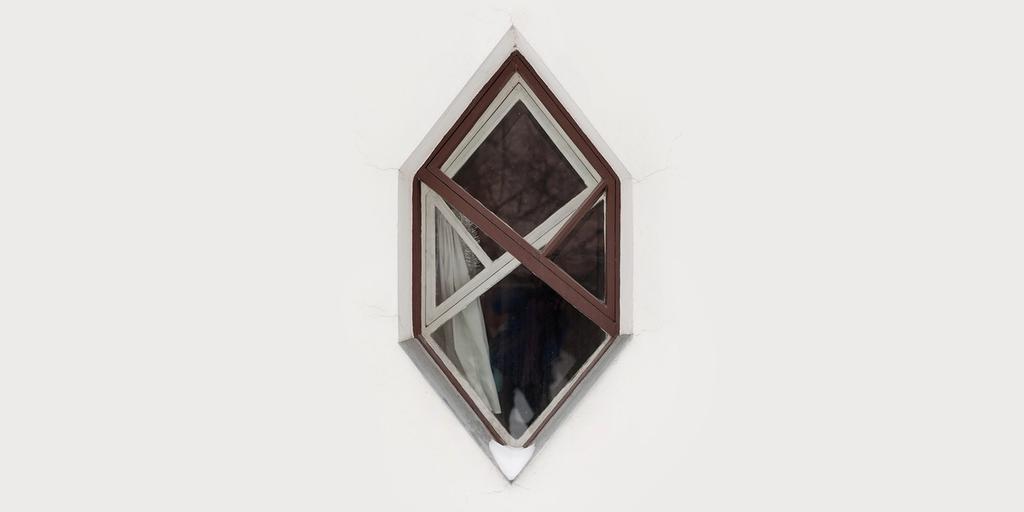
The building consists of two interlocking vertical cylinders. Numerous hexagonal windows perforate the façade in an ornamental pattern, while the light-filled, cathedral-like studio on the third floor crowns the composition. Above the entrance, the words 'Konstantin Melnikov Architect' are proudly carved in relief.
Despite a fifteen-year loan granted by the Moscow Soviet, Melnikov was severely constrained financially. The house was built under conditions of strict economy, using the cheapest traditional materials — wood and brick. The interior contains no load-bearing structures and almost no enclosed rooms.
From the low-ceilinged ground floor to the lofty, luminous studio and the rooftop terrace, the space of the house seems to expand as one moves upward. The painter's colour palette heightens the effect: honey yellow in the bedroom, lilac in the generous living room, white in the architect's studio. Even the heavy antique furniture feels entirely at home within these modernist interiors.
Le Corbusier's Cabanon
Years of construction: 1951–1952
Location: Roquebrune-Cap-Martin, France
Materials: wood, plywood
Not a house so much as a hut — the great modernist's final retreat on the French Riviera, where he spent the last years of his life. A compact space of 15 m², barely larger than a ship's cabin, it stands as an exemplar of the architect's idea of minimal dwelling. Although the hut resembles a traditional log structure from the outside, it was meticulously designed according to the modular system Le Corbusier developed from the proportions of the human body.
'Not a single square centimetre was wasted. A small cell in the realm of human existence, in which every eventuality had been anticipated'
Built from prefabricated parts and defiantly modest materials, the house contains everything necessary: a workspace, a rest area, storage cupboards, plumbing and a rudimentary ventilation system. The walls are enlivened by vivid murals and the ceiling is covered in a layer of paint. Constructed beside a restaurant, the house required no kitchen: the door opened directly into the dining room.
The only building designed by Le Corbusier exclusively for himself is difficult to dismiss as a soulless 'machine for living'. Despite its apparent contradiction of some of the modernist's own principles, the hut offers compelling proof that rigorous attention to proportion and light are the keys to architectural perfection.
Oscar Niemeyer's Casa Canoas
Year of construction: 1951–1953
Location: Rio de Janeiro, Brazil
Materials: reinforced concrete, glass, timber
Oscar Niemeyer, the last classic modernist and a pupil of Le Corbusier, was his teacher's complete opposite. Le Corbusier's architecture was grounded in functionality, ergonomics and technology. Niemeyer's was poetic, sensual and soft. Inspired by the Brazilian landscape and the curves of the female form, he tempered the severity of shapes with the expressive flow of a supple line. Niemeyer was the first to demonstrate that concrete can be as yielding and plastic as clay.
The architect's own home overlooking the ocean is a classic example of organic architecture and a manifesto of lyrical modernism. The use of materials such as reinforced concrete and glass, the fluid forms, the close dialogue with nature — all these principles work together to define an individual style that encapsulates the entire essence of Oscar Niemeyer's architecture.
'Architecture must be functional, but above all beautiful and harmonious'
A curved flat roof supported by slender steel columns and transparent glass walls make the building one with the world around it. A granite boulder — part of which sits outside while the rest rises within the living room — effectively becomes the focal point of the entire composition. Niemeyer underscores that all barriers and boundaries with the outside world are conditional.
The house's layout further confirms the architect's break with convention. Niemeyer plays deftly with the notions of privacy and openness. The fully glazed ground floor accommodates the living room and kitchen. From the upper floor, a staircase leads to an enclosed zone containing the bedrooms, bathrooms and the architect's study. A small, sheltered refuge, nothing more, within the boundless world of a nature that answers to no one.
Alvar Aalto's Experimental House
Years of construction: 1952–1954
Location: Muuratsalo Island, Finland
Materials: brick, timber, ceramics
The summer house of Alvar Aalto — is a kind of laboratory for the architect, his testing ground for experimentation. The house sits in a picturesque spot on the rocky shore of a lake sheltered by coastal forest. It is here that the Finnish modernist finds the freedom to conduct architectural experiments with materials, construction techniques and architectural forms.
The house consists of two wings: the smaller contains the living room, while the main wing houses three bedrooms, a kitchen and a dining area. The defining feature of the architectural composition is a courtyard with a dedicated fire pit. Two tall white brick walls, reminiscent of ancient ruins, complete the picture. Together with the wings of the house, these walls enclose the courtyard, giving the space the feel of a Roman atrium. Alvar Aalto drew inspiration from Italian architecture. He was fond of saying that every one of his projects began with a journey to that country.
"Every architectural solution must carry a human motive, born from an analysis of living reality"
In his creative laboratory, Alvar Aalto experimented with materials, foundations and a solar heating system. The architect divided the courtyard's walls and floor into 50 sections, each differing in brick type, laying pattern and the presence of ceramic inserts. This allowed Aalto to assess the durability of the materials and their response to a harsh climate.
The interior is finished in a style typical of Aalto: white plastered walls, an abundance of wood in the detailing, bent-plywood furniture and vivid contrasting textiles. In addition to the main building, the architectural ensemble also includes a barn, a Finnish sauna and a boat dock — the boat itself designed by the architect.
The Eames House
Year built: 1945–1949
Location: Los Angeles, California, USA
Materials: glass, steel, concrete, aluminium, wood
The home of designer couple Charles and Ray Eames, located in the suburbs of Los Angeles, was designed as part of a programme for experimental residential construction. The architects who participated in the programme used the latest materials and technologies developed during the Second World War. The houses were intended to embody a contemporary aesthetic and be straightforward to build. The Eames House, originally conceived as a demonstration project for the programme, subsequently became the couple's own home.
The building sits on a hillside and rests against a massive concrete retaining wall. The structure itself consists of two rectangular glass volumes: one houses a studio-workshop, the other the living quarters. The steel frames are filled with rectangular infill panels — of glass, aluminium and asbestos — varying in both colour and size. The Eames House reads as a living realisation of Piet Mondrian's abstract paintings.
The interior is a riot of mismatched furniture in natural materials and an abundance of decorative objects. There is no strict division of space. The wealth of wood, the soft diffused light filtering through the coloured panels, and a certain creative disorder all combine to produce a singular, deeply personal atmosphere.
The Walter Gropius House
Years built: 1937–1938
Location: Lincoln, Massachusetts, USA
Materials: stone, brick, wood, glass block, steel, plastic

Walter Gropius, one of the most influential architects of the 20th century and founder of the Bauhaus school, emigrated to the United States in the 1930s and began teaching at Harvard University. Around the same time, he built his own home — a hybrid of traditional New England architecture and the modernist principles he espoused. Gropius demonstrated that American mass-produced goods could be used to great effect in contemporary design. This new architecture absorbed local traditions without any sacrifice to modernism.
The building has a strict rectangular form and a flat roof. Long ribbon windows stand out against the white timber cladding. The foundation is built from natural stone. The only exterior ornaments are a porch with a glass-block wall and a metal spiral staircase — a separate entrance to the architect's daughter's room.
The ground-floor space is divided into zones by transparent glass panels. Almost all of the furniture was made in the Bauhaus workshops in Dessau, making this the largest collection of Bauhaus furniture outside Europe. The interior is anchored by personal belongings that Gropius brought out of Nazi Germany. For the interior finishes, the architect employed a minimalist colour palette consisting primarily of black, white, pale grey and earth tones.
Particular attention during the design of the house was paid to the most advanced technologies of the time. Gropius devised a natural ventilation system and installed acoustic insulating panels made from plastic. The household made use of rainwater, collected by means of specially angled roof planes.
Philip Johnson's Glass House
Years of construction: 1948–1949
Location: New Canaan, Connecticut, USA
Materials: glass, steel, brick


Inspired by Ludwig Mies van der Rohe's Farnsworth House project, Philip Johnson embarked on his first large-scale undertaking, guided by the German architect's principle of 'Less is more.' The modest single-storey house with an open plan was conceived as a simple rectangular structure of glass and steel.
The interior of the house consists of a single room divided into zones by low wooden modules. The only fully enclosed space, partitioned from floor to ceiling, is a cylindrical brick bathroom. The amount of furniture has been reduced to a strict minimum.
'This thing is the purest thing I have ever done in my life in architecture'
The relationship between interior and exterior was central to this American modernist. The Glass House was not merely an architectural object but part of a carefully considered landscape project. Johnson regarded the surrounding scenery as a visual extension of the home's interior — like the furniture, an integral part of it. He himself liked to say: 'I have very expensive wallpaper.'
The Glass House was the first of 14 structures that Philip Johnson built on his Connecticut estate over the course of fifty years of creative activity. The architectural complex also includes a guest house, art galleries and pavilions.
The Rietveld Schröder House in Utrecht
Years of construction: 1923–1924
Location: Utrecht, the Netherlands
Materials: reinforced concrete, steel, brick, wood

Gerrit Rietveld, the most celebrated Dutch architect and designer of the 20th century, designed a house in Utrecht at the request of Truus Schröder — the widow who would later become his common-law wife. A recently widowed mother of three, she wanted the house to reflect her vision of an ideal home entirely. She dreamed of a space that would place no limits on her.
The house was designed in accordance with the principles of Neo-Plasticism and the Dutch artistic movement De Stijl, of which Rietveld was a member. The movement's defining characteristics include a drive toward universality, strict geometric form, and artistic purity and austerity. The house reads as an ordered system of black, grey, white, blue, red and yellow elements. The building does not serve as a backdrop for an abstract composition — it is the composition.
The house's frame is constructed from reinforced-concrete slabs and steel sections, with brick-laid walls. The ground floor follows a fairly conventional layout — kitchen, studio and library divided by walls. The upper floor is a space that can be easily reconfigured by means of sliding panels. Coloured plywood shutters were used in place of curtains. In keeping with the principles of Neo-Plasticism, the interior furnishings were painted in the colours of the primary palette. All the furniture in the house was made by Gerrit Rietveld himself.
The Vanna Venturi House
Years of construction: 1962–1964
Location: Philadelphia, Pennsylvania, USA
Materials: brick, wood

In the 1960s, the young architect Robert Venturi designed for his mother what is considered the first 'anti-modernist' building in history. Two years after construction was completed, Venturi published his manifesto Complexity and Contradiction in Architecture, in which he critiqued modernism and the International Style. The work would soon give rise to the postmodern movement, even though Venturi himself never regarded himself as a postmodernist.
Behind the seemingly simple façade lies a complex and contradictory architectural concept. In place of the asymmetry that had become commonplace, there is near-perfect symmetry, broken only by the positioning of the windows. The pitched roof — unusual for the architecture of the time — the pediment split in two, and the massive chimney stack each read as a kind of protest against modernism. From the outside, the house can appear considerably larger than it actually is: Venturi deliberately distorts the sense of scale.
Distortions of proportion are present in the interior as well. The dimensions of the fireplace bear no relation to the size of the room, while the wide, low doorways and mismatched windows heighten this visual effect still further. At the architect's mother's request, all the principal living spaces are on the ground floor. The entire upper floor — with its generous bedroom-studio and terrace — was taken by Robert Venturi himself.
Venturi demonstrates that a pursuit of layered, ambiguous architecture, with all the contradictions that entails, need not come at the cost of functionality or coherence. To Ludwig Mies van der Rohe's celebrated dictum 'Less is more', Venturi offered a witty riposte: 'Less is a bore'.
The Frank Gehry House
Years of construction: 1978–1979
Location: Santa Monica, California, USA
Materials: asphalt shingles, asbestos, aluminium, fibreglass, wood, corrugated steel, plywood, glass, chain-link fencing

The house of Frank Gehry in California is not a new house built by an architect from scratch, but a traditional California bungalow transformed beyond recognition. The architect turned a standard American dwelling into a symbol of deconstructivism — a subject of enduring debate, criticism and admiration.
Gehry believed that 'a structure under construction is always more poetic than a finished work.' Guided by this idea, he stripped the house down to its bare frame, exposed the electrical wiring and left the raw asphalt floor in the kitchen. Sharp angles and fractures, distorted surfaces, an abundance of unconventional materials, and the juxtaposition of old and new — the house looks out of place among the cookie-cutter buildings of Santa Monica's affluent suburbs. The crown of the original house peers timidly through the chaos of forms and materials, giving the whole structure the appearance of a construction site that never quite reached completion.
The interior stands in sharp contrast to the building's postmodern exterior. In a space cut through with irregularly shaped windows, conventional furniture feels superfluous. The heart of the entire house is the living room, which serves as a kind of avant-garde art gallery.
'We were told the house was haunted. I decided they would be the ghosts of Cubism.'
The movement of forms expressed by Cubism is an apt metaphor for the dynamism and incompleteness of Frank Gehry's architecture. He called the house his architectural laboratory and continued working on it for decades.
Follow us on social media to stay up to date with new content: VKontakte, Telegram — @loskomagazine