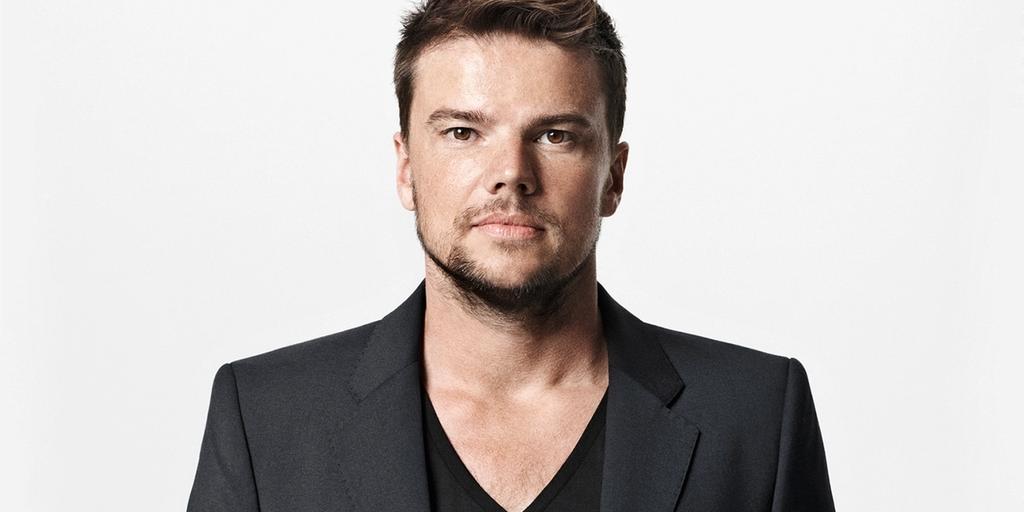
Bjarke Ingels is one of the most inventive and sought-after architects in the world. He grew up in Copenhagen, in a house with an enormous garden, and has since striven to bring greenery to everything around him. Although he does not consider himself an environmental activist, his projects make clear that the natural world is very far from an afterthought for him.
In this article you will discover:
- where the architect studied;
- the key stages of his creative journey;
- Bjarke's most significant projects;
- the name of his dog;
- how sustainability can be made comfortable;
- cities of the future in the ocean and on Mars;
- fascinating facts from the architect's life.

The beginning of a creative journey
As a young boy, Bjarke was passionate about drawing, and until the age of nineteen his greatest ambition was to make comics — but his parents felt that an architectural education should come first. He enrolled at the Royal Danish Academy of Fine Arts, graduated, then moved to Barcelona to continue his studies at the School of Architecture.
Bjarke had wanted to use the drawing skills he acquired in his early years of study to become a good animator. But once he found himself at the School of Architecture, Ingels suddenly decided to immerse himself in the core subjects of the discipline. Architecture captivated him; he grew fascinated by tectonics and admired the approach of architects working in that tradition: Alvar Aalto, Álvaro Siza, and Enric Miralles.

The desire to study under the last of these was one of the main reasons he enrolled at the School in Spain. But once he joined Miralles's class, Bjarke was disappointed and left. He disliked the way Enric blended everything together — French philosophy with patterns in nature, poetry with historical references, the movement of the body through space with the plans of medieval cities. Bjarke could not see what any of it had to do with urbanism: traffic flow, pedestrians, shops, the things that actually surround people.
The Barcelona School of Architecture awoke in Ingels what he calls a "serial monogamy" towards architects. He was infatuated with one, then another, then yet another, and was deeply determined to become a true professional himself. With these thoughts in mind, Bjarke left Barcelona and returned home to Copenhagen.
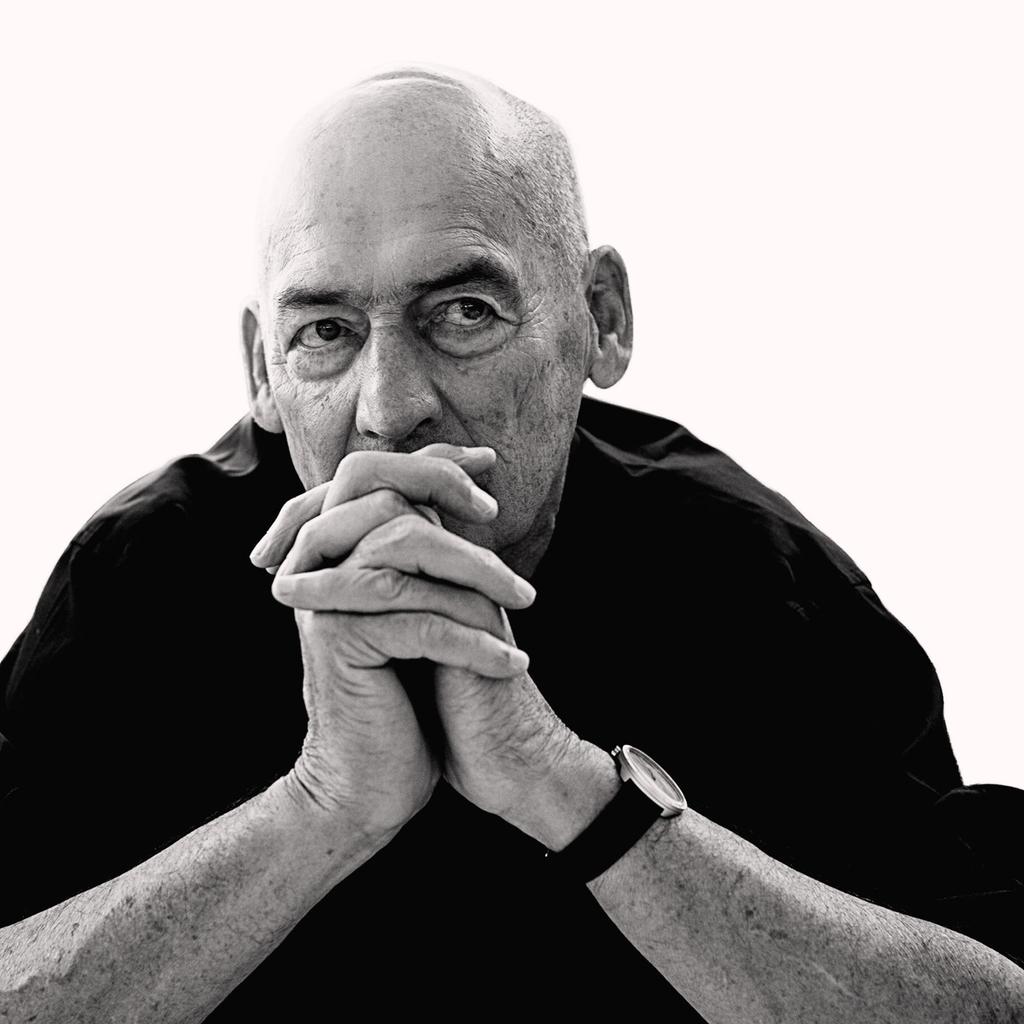
Back in his native Denmark, Ingels joined the office of Rem Koolhaas. Bjarke regards his time there as a vital part of his education. Around the same period, in 2005, he co-founded a practice with his friends: Bjarke Ingels Group (BIG).
BIG studio
To attract attention, BIG began building affordable housing. The buildings were very inexpensive and drew clients in. In their projects, the architects sought to unite accessibility and functionality with environmental responsibility, producing results that were beneficial to both society and the surrounding environment.
BIG moved fairly quickly from a bold young practice to a sizeable firm. The team had to grow, the company had to expand. The first critics appeared: some regarded BIG's projects as an accumulation of dull glass boxes whose only appeal was their low cost. Bjarke takes criticism very calmly and believes that if an architect is active, a reaction to their work is inevitable — especially in the internet age. Dismissing comments along the lines of "my nine-year-old builds more interesting things in Minecraft" without a second thought, Ingels simply gets on with his work.
The comic book Yes is More
In 2009, Bjarke Ingels finally fulfilled his childhood dream and published the comic book Yes is More, a manifesto of the BIG studio in an accessible format. The architect reflects on how the process of creating projects — the methods, tools and concepts involved — is constantly questioned and revised, and how that is perfectly normal. The comic captures the spirit of the studio, expresses its irreverence towards excessive formalism, and calls for the public to be drawn into its creative work.

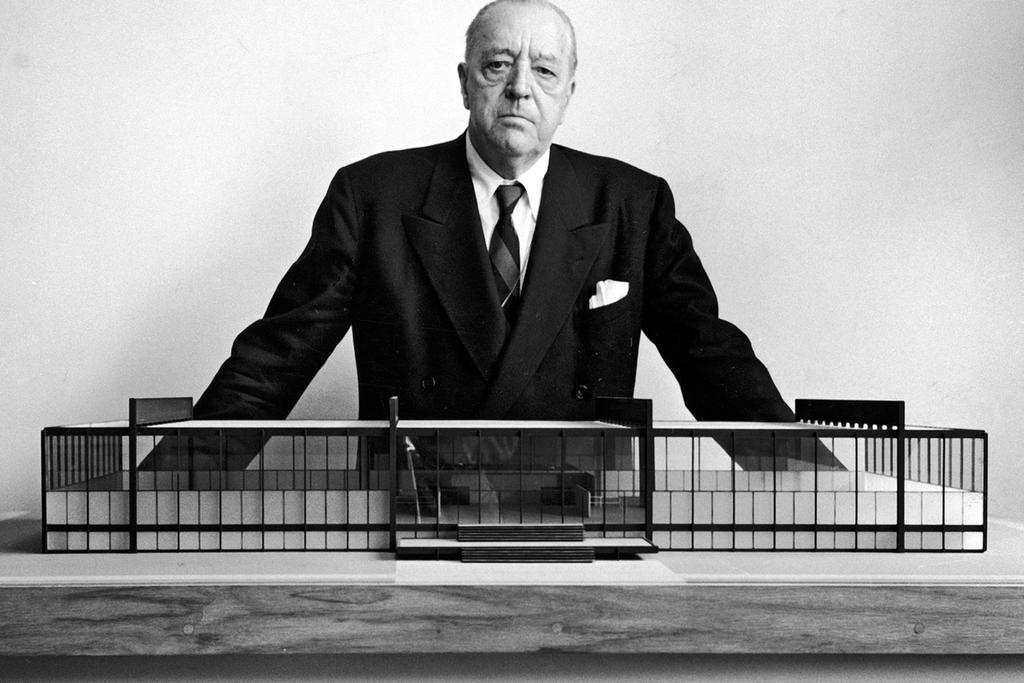
Speaking at TED Talks, Bjarke explains the thinking behind the title. The German Modernist architect Mies van der Rohe, who popularised the revolutionary Modernist style, is celebrated for the aphorism "Less is more". Later came postmodernism, and one of its founding figures, Robert Venturi, countered with "Less is a bore". The first Pritzker Prize laureate, Philip Johnson, signalled his openness to new ideas by saying "I'm a whore". And Barack Obama, during the global financial crisis, declared "Yes we can".
With the title Yes is More, Bjarke challenges the widespread assumption that architectural avant-gardism is almost always defined by opposition — against something or someone. The stereotype of the radical architect is an angry young man rebelling against society, or an unappreciated genius in despair because the world refuses to follow his ideas. Bjarke argues that this is not always the case.
Early projects
Bjarke first made his mark in 2005. He was 31, and Danish architecture was in a state of hibernation at the time. Danes did not imagine that anything could change about the outward face of their country. But Ingels's proposals were so ambitious and revolutionary that people were forced to wake up. Thanks to Bjarke and a handful of Danish architects — among them Henning Larsen, Lene Tranberg and others — contemporary Danish architecture has become known the world over.
Bjarke is convinced that people exert an enormous influence on their surroundings. That power can either be used to cause harm or to give material form to one's ideas. The latter is far more interesting, which is why the architect prefers to be, in his own words, 'a shaman with brick and mortar.' This attitude towards architecture echoes the central idea of Christopher Nolan's film Inception: that in real life the sheer number of constraints makes it impossible to realise all of one's dreams, whereas in the world of dreams anything can be created.

Family
Bjarke keeps the details of his personal life out of the public eye, so very little is known about it. The architect grew up in Copenhagen in the family of engineer Knud Jensen and dentist Elisabeth Ingels. His parents influenced his choice of profession and now speak with pride about his achievements and the thoughtful gifts their son brings them. One such gift was a dog that Bjarke brought back from Cuba. It was named Fidel, because the name Cuba had already been taken by a neighbour's dog.
In 2016, the architect met his wife, Spanish architect Ruth Otero, at the annual Burning Man festival held in the Black Rock Desert in Nevada. The couple are now raising a son together.
Bjarke Ingels's Major Projects
VM Houses residential complex
Location: Copenhagen, Denmark
Year: 2005
Materials: glass, steel
VM Houses was the first residential project by BIG under Bjarke's leadership. 'At that point we hadn't built so much as a doghouse,' he says. Even so, more than 100 apartments were sold in a single Sunday after sales opened. Two-storey apartments with large panoramic windows, generous balconies and an abundance of natural light — such is the life of those fortunate enough to have been among the first to appreciate Bjarke Ingels's residential architecture.
'Nobody will trust you to build a building until you've built a building.'
Another residential complex by the Danish architect later appeared nearby, but for the time being VM Houses stood out sharply against the surrounding buildings. BIG, led by Bjarke, caused quite a stir. The building proved so universally admired that it received the Scandinavian architecture and design award given annually by the Swedish magazine Forum AID in the category of Best Building in Scandinavia.
The complex consists of two blocks shaped by the letters V and M. The blocks are designed to flood the apartments with generous daylight and to offer impressive views from every window. For every three floors there is one central corridor. Rather than paying for a corridor on each floor, the design makes do with a single one spanning three levels, thereby reducing costs and improving functionality.
Mountain Dwellings residential complex
Location: Copenhagen, Denmark
Year: 2008
Materials: glass, wood, concrete
Three years later, a now-celebrated 'mountain' appeared next to the first residential complex. The building takes its name from its unusual form and the pattern of snow-capped peaks adorning its exterior.
When buying a flat, people are often forced to choose between life in a large city and a house in the countryside surrounded by nature. Bjarke combined both, designing a residential complex in which every apartment owner has their own private garden. All the gardens are intentionally positioned on the sunny side of the building to maximise the amount of natural light. Beneath each garden lies an underground car park, and it is through this car park that residents access their apartments.
Bjarke's 'Mountain' is the embodiment of a dream in which a residential building need not look like a grey monolith — it can resemble anything, even an artificial mountain. Once you manage to reconcile mutually exclusive concepts, a new hybrid emerges that resembles nothing that came before. Ingels's work is architectural alchemy and pragmatic utopia — a utopia that is becoming ever more real.
World Expo 2010
In 2010, at the World Expo in Shanghai, Bjarke worked on the design of the Danish Pavilion. By bringing together everything that defines his homeland, he succeeded in projecting a strong Danish spirit.
Ingels transported the world-famous Little Mermaid statue from Copenhagen to Shanghai so that visitors could fully immerse themselves in Danish culture. 'It is easier to bring the Little Mermaid to Shanghai than to bring 1.3 billion Chinese to Copenhagen,' the architect remarked. The Copenhagen waterfront did not stand empty in the meantime: the landmark's place was taken by three different mermaids created by three leading Chinese artists — one for each month.
Cycling is a very common mode of transport in Denmark. Visitors were therefore given 1,500 bicycles and invited to ride them through the pavilion, which took the form of a large loop. Ingels's central idea was to demonstrate that living sustainably need not require sacrifice. There is no need to give up flying because of the carbon footprint it leaves. The real task is to work towards sustainable urban development that raises the quality of life in cities. Through the Danish Pavilion, Bjarke showed that in his country convenience and environmental responsibility go hand in hand.
8 House
Location: Copenhagen, Denmark
Year: 2010
Materials: glass, metal
The figure-of-eight house brought Bjarke worldwide recognition. The residential complex unites simplicity with functionality. Shaped like a figure of eight, it consists of several levels and resembles a layered urban cake. The lower tier houses offices and shops, the middle tier apartments, and the upper tier penthouses.
8 House contains two internal courtyards separated by a cross-shaped link. A wide corridor allows residents to move between the western edge of the complex and its green zone, and the southern side, where the water canals are located. Open staircases leading to the apartments create a relaxed and welcoming neighbourly atmosphere. Each resident has their own terrace with a tree, and the shared lawns in the courtyard are open to all.
The grounds can be explored by bicycle: riders can pass by all the apartments, visit the two landscaped inner courtyards connected by metal tunnels, cycle up to the vast green roof and take in the surrounding views from above.
World Trade Center 2
Location: New York, USA
Completion year: 2022
Materials: glass, steel
It is BIG that is working on the new World Trade Center, to be built across the street from the towers destroyed in the terrorist attack of 2001.
Construction of WTC 2 began in 2010 but was soon suspended. It was not until five years later that BIG won the competition and gained the opportunity to realise its own design. The old foundations from a previously shelved project by another architect were retained, but the building's appearance was completely transformed. The neo-modernist tower will take the form of a staircase composed of block-like volumes resembling stacked cubes. Plants will be cultivated on the roofs of each 'step' — the architect never overlooks nature in any of his projects.
Bjarke described the redesign concept as follows: 'World Trade Center 2 is essentially a vertical village of bespoke buildings that can be read as a single tower.' Construction is expected to be completed by 2025.
The ski slope on the roof of the CopenHill power plant
Location: Copenhagen, Denmark
Year built: 2017
Material: neoplast
The plant runs on industrial waste and is so environmentally sound — with such a negligible carbon dioxide output — that only harmless steam escapes from its chimneys, leaving the surrounding air perfectly clean. There were even plans to emit the steam in rings, but the inventor Peter Madsen, who played a key role in the project, was sentenced to life in prison for murder. Yet even without the smoke rings, Bjarke managed to prove that a chimney need not be a symbol of pollution — and that you can ski on the roof of a green factory.
The plant's sloping roof is a vast park and ski slope, surfaced with a material developed specifically by Neveplast. It looks like green grass, yet thanks to new technology it glides exactly as snow should. The innovative material can be recycled multiple times and renewed every 10–15 years.
Inside there is a restaurant, a ski school, and the world's tallest climbing wall, as well as several panoramic viewing points where visitors can observe the waste-processing operation. The slope is served by a ski lift powered by the plant's own energy, with a running track and walking trail alongside.
The future city of Oceanix City
Location: somewhere in the ocean
Year built: 2050
Material: bamboo
'By 2050, nine of the ten largest cities in the world will be at risk from rising sea levels' — a statement Bjarke made at a one-day UN event. Oceanix City is the first sustainable, self-sufficient floating city, designed as an artificial ecosystem. It can produce its own food and electricity, and manage its own water and waste. Oceanix City is also built to withstand extreme weather conditions.
A shortage of affordable housing in the context of global warming could become a serious challenge in the future. Designers and architects are reimagining the urban landscape by opening up new territories — waterborne ones.
BIG's concept is a city of the future with a population of up to 10,000, built on hexagonal islands. These are anchored to the ocean floor using a material that stimulates the growth of limestone from mineral deposits in the sea. Floating cities can be prefabricated on shore and later towed to their final location. This approach will reduce construction costs and, combined with low oceanfront land rental prices, create an affordable model for living.
Mars Science City
Location: Dubai
Year: coming soon
Material: Martian sand, geodesic domes, plastic
The only prototype of a Martian settlement of this size and scale anywhere in the world. It will consist of interconnected geodesic domes made from ultra-lightweight plastic, anchored deep in the desert sand. Inside each dome, visitors and resident researchers will be able to move through open spaces. The dome structures will be 3D-printed to achieve the greatest possible sense of immersion.
In a recent TED Talk, Bjarke speaks about the striking number of similarities between Earth and Mars. Both planets rotate on their axes in roughly 24 hours, share the same structure of core and crust, and have comparable landscapes. Bjarke is convinced that humanity already has the capabilities needed to work with Mars's resources.
'When you go to Mars, you should not try to bring the skyscrapers and shopping malls we have on Earth. We should try to become Martians.'
Another planet is a specific and unforgiving environment for design: water is frozen, and the atmosphere consists almost entirely of carbon dioxide. Bjarke wants to design an architecture native to Mars itself — creating a kind of Martian regionalism.
BIG has been working on Mars Science City since 2017. The $140 million city was developed by a team of Emirati scientists, engineers and designers from the Mohammed bin Rashid Space Centre. The dome-shaped structure, covering 1.9 million square feet, will be the largest space-simulation city ever built. Mars Science City will offer a range of programmes for researchers and visitors, as well as a museum dedicated to humanity's greatest achievements in space.
Interesting facts
— In 2015, Time included Ingels in its list of the 100 Most Influential People in the World.
— During Expo 2010, when the Little Mermaid statue was relocated from Copenhagen to Shanghai, anyone could follow her life in China via a live stream.
— At the same exhibition, a Chinese businessman took an interest in BIG's project The People's Building. He noted that the shape of the structure resembled the Chinese character for 'people'. The Mayor of Shanghai felt that Bjarke's project could serve as a bridge between ancient Chinese wisdom and tradition and China's progressive future.
— The Bjarke project that has become a particular favourite with children is the Lego House in the Danish town of Billund. The building is constructed entirely from Lego bricks, and visitors can build something of their own from the world-famous toy inside.
— One of the primary materials for building the city of the future, Oceanix City, will be bamboo: it is six times stronger than steel, leaves no carbon footprint, and can be grown locally.
— In addition to his architectural practice, Ingels has been a visiting professor at the Rice University School of Architecture, the Harvard Graduate School of Design, the Columbia University Graduate School of Architecture, Planning and Preservation, and, most recently, Yale University.
— Bjarke Ingels made a cameo appearance in the HBO series Game of Thrones.
— Bjarke designed Google's headquarters in California and London.
— While working on Mars Science City in Dubai, Bjarke drew inspiration from the desert architecture of Tunisia and from the famous cliff dwellings of Arizona. Underground homes offer protection from both heat and cold, and on Mars they could provide shielding from solar radiation.
— Episode 4 of the Netflix series Abstract: The Art of Design (2017) is dedicated to Bjarke. A documentary about the Danish architect, Big Time (2017), directed by Kaspar Astrup Schröder, has also been made.
Other projects
Read more on Losko about other architects, such as Rem Koolhaas, theorist and practitioner of architecture.
Also follow us on social media so you never miss new content: VKontakte, Telegram — @loskomagazine.