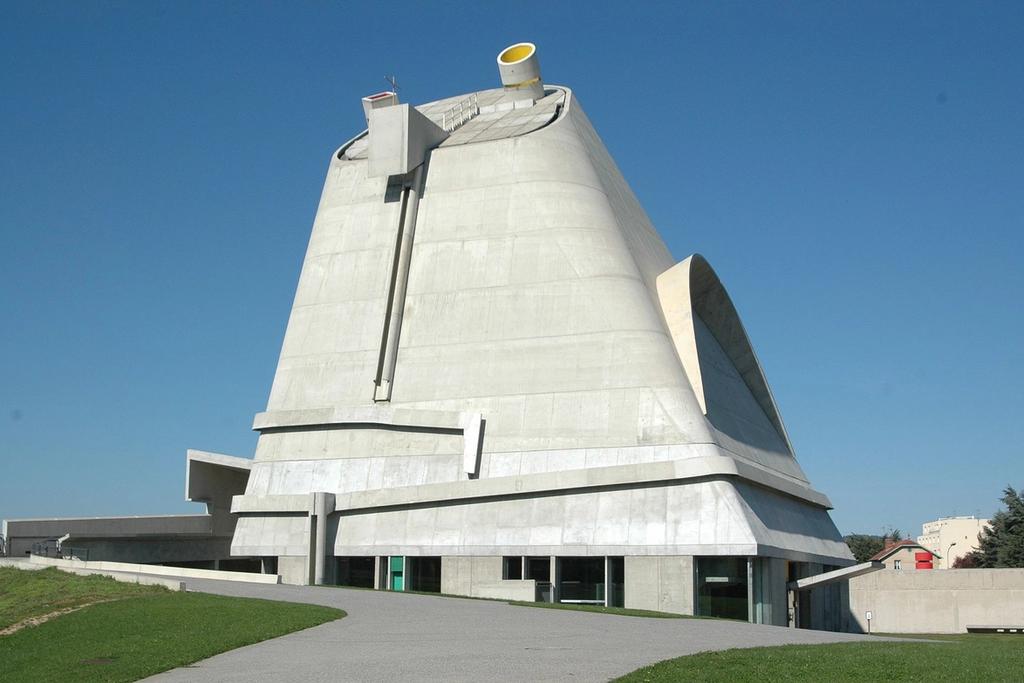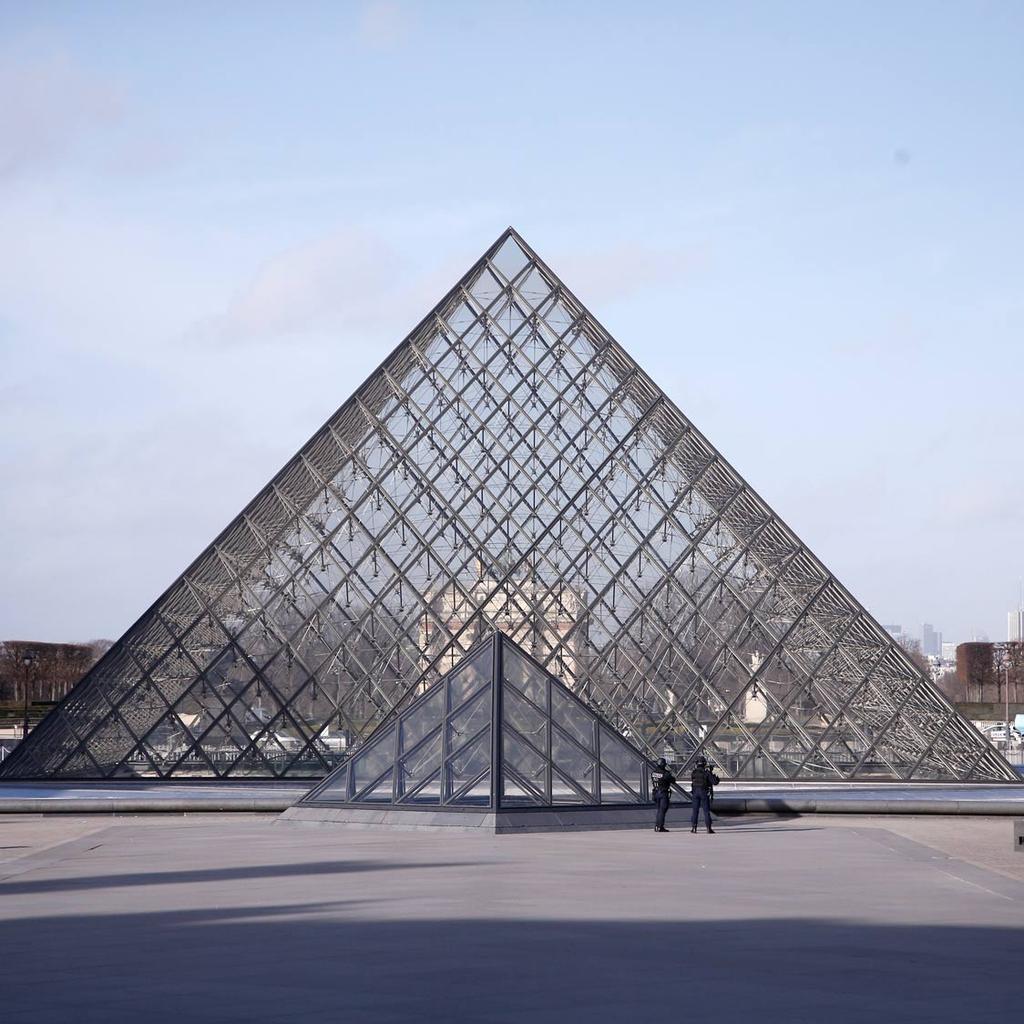
The Pritzker Prize is the most prestigious architectural award in the world, often described as the Nobel of architecture. The prize was established by Jay and Cindy Pritzker, owners of the Hyatt hotel chain. First awarded in 1979, it swiftly became the field's most coveted honour. To receive it is to gain a new standing within the architectural community.
In this article you will learn:
- why the owners of a hotel chain decided to create an award for architects;
- how laureates are selected;
- about several laureates and their finest projects;
- interesting facts about the Pritzker Prize.
The origins of the Prize
In 1967, the Pritzkers built the Hyatt hotel in Atlanta. It was the world's first hotel with an atrium and a glazed, transparent elevator. This spirit of innovation showed that the Pritzkers had a genuine interest in architecture and understood its significance as a distinct art form. Later, J. Carter Brown, director of the National Gallery of Art in Washington, came to them and proposed the idea of creating a prize to honour living architects.
"Designing and building hotels made us realise that architecture can influence human behaviour"
The Pritzker family had long been fascinated by architecture. They attribute this interest to the influence of Chicago — a city of the first skyscrapers and of works by such celebrated masters as Louis Sullivan, Frank Lloyd Wright andMies van der Rohe. "While Chicago's architecture helped us appreciate this art form, designing and building hotels made us realise that architecture can influence human behaviour," says Tom Pritzker, son of the Prize's founders and chairman of the jury.

Jay and Cindy Pritzker were immediately captivated by Brown's proposal, and in 1979 they presented the first award to American architect Philip Johnson, the pioneer of the International Style. The couple believed that the Prize would not only raise architecture's profile among a wider audience, but also inspire practitioners themselves to greater inventiveness.
How the Prize is awarded
As stated on the official website, the Pritzker Architecture Prize is awarded to living architects whose built work demonstrates a combination of talent and commitment that has produced consistent and significant contributions to humanity and the built environment through the art of architecture.
To identify nominees, representatives of the Prize send letters to respected figures in architectural circles, asking them to name which living practitioners deserve the highest honour, or which emerging architects are worth watching. Jury members travel incognito to cities where nominees' work can be seen, studying the buildings in person and in the context of their surroundings.


The award ceremony takes place in different countries around the world, in buildings of architectural significance. In 2004, for instance, Zaha Hadid received her prize at the Hermitage Theatre in St Petersburg. The award comprises a grant of $100,000, an official certificate of laureate status, and a bronze medallion. The prize itself, of course, matters less than the status it confers — one that brings not only new clients but also greater creative freedom.

Pritzker Prize laureates
Christian de Portzamparc — 1994
Christian de Portzamparc is a French architect born in Morocco who trained in Paris. In his architecture, Christian combines elements of classicism and modernism to create a distinctive aesthetic of his own. The Pritzker Prize jury described Portzamparc as "a mighty poet of form and a creator of expressive spaces".


Portzamparc is also known as an urban planner. One of his celebrated projects is the Les Hautes Formes housing development in the 13th arrondissement of Paris, comprising several different building types. Portzamparc conceived the concept of the "open block", in which buildings are arranged along a street without being attached to one another — an approach that allows them to vary in form and scale, producing a diverse urban landscape.
Tadao Ando — 1995
Tadao Ando — a self-taught Japanese architect. His approach to building is known as "critical regionalism": Tadao combines technology with local tradition, materials, and the qualities of the surrounding environment. His work makes extensive use of concrete and natural light. Ando's buildings are often compared to Japanese haiku: their pronounced emptiness and absence of ornament give expression to the beauty of simplicity.


When Tadao Ando received the Pritzker Prize in 1995, he donated the entire $100,000 to victims of the earthquake in Kobe. The disaster struck in January of that very year — the year the prize was awarded. One of Ando's projects, the Rokko Housing complex, was under construction in Kobe at the time. Unlike the buildings around it, the complex survived the catastrophe.
Rem Koolhaas — 2000
Rem Koolhaas — a Dutch architect and architectural theorist. He founded the firm OMA, where Zaha Hadid began her career. Koolhaas did not start studying architecture — in London — until he was 24; before that he had worked as a journalist. He also had a hand in cinema: he acted in films, worked as a cinematographer, and wrote screenplays. Together with director René Daalder, for example, he co-wrote "White Slave" — a noir film from 1969.


Koolhaas's professional life has been closely bound up with Russia, and with Moscow in particular. He took part in the renovation of the building that became the Garage Museum, designed the entrance zone at Skolkovo, created the educational programme for the Strelka Institute in Moscow, and taught there from 2010 to 2011. Koolhaas has said that Russia played an important role in his life and in shaping his worldview.
Jean Nouvel — 2008
Jean Nouvel — a French architect whose most celebrated project is the Louvre Abu Dhabi, built on an artificial island in the UAE. This ambitious undertaking brings together great works of art from across the ages, drawn from 13 French museums. The complex's many buildings are sheltered beneath a vast latticed dome through which light filters as if through palm fronds in an oasis.


Nouvel's style varies considerably from project to project, shaped by cultural and regional context as well as the client's wishes. His central idea is that architecture should reflect the spirit of the present age rather than reinterpret historical heritage. Recurring motifs in his work include the manipulation of light and the play of transparent or opaque layers.
Toyo Ito — 2013
Toyo Ito — a Japanese architect and the originator of the concept of "conceptual architecture", in which he merges the physical and the imaginary worlds. Ito's buildings range from crematoria to stadiums, from residential housing to museums. He also works in design: he collaborates with the Italian company Horm, for whom he creates simple yet refined furniture.


Toyo Ito's projects are distinguished by dynamic, light-handed forms. In recent years his buildings have shifted somewhat under the influence of his interest in postmodernism and have become more monumental. One of Ito's most outstanding projects is the pristine, minimalist International Baroque Museum in Mexico, which brings together baroque masterpieces from around the world.
Points of interest
— The founder of the Pritzker dynasty, Nikolai Yakovlevich, arrived in Chicago from Kyiv in the late nineteenth century and soon prospered. He was a cousin of the Russian existentialist philosopher L. I. Shestov.
— Before approaching the Pritzkers with the idea of an architectural "Nobel Prize", J. Carter Brown first proposed it to Paul Getty, the oil magnate and industrialist, who turned it down.
— Any architect may enter the competition, and it is even permissible to nominate friends, relatives — or oneself. That is precisely what Gordon Bunshaft did, and in 1988 he was awarded the prize.
— That same year the laureate was also Oscar Niemeyer. That was the only year in which two independent architects were awarded simultaneously. The decision was made to mark the tenth anniversary of the Pritzker Prize.
— The 2015 laureate Frei Otto did not live to see the award ceremony and was honoured posthumously. He died at the age of 89.
— The youngest laureate is Japanese architect Ryue Nishizawa. When he received the prize jointly with Kazuyo Sejima, he was 44 years old. The oldest is Indian architect Balkrishna Doshi, who was 90 at the time of the 2018 ceremony.
— Zaha Hadid was the first woman to receive the Pritzker Prize.
Losko has written about Pritzker Prize laureates on a number of occasions. You can read more about them in the following articles:
— Frank Gehry — the expressive genius of Deconstructivism;
— Oscar Niemeyer — a master of reinforced-concrete curves;
— Renzo Piano — the founder of High-Tech architecture;
— Zaha Hadid — the first woman to receive the Pritzker Prize.
Follow us on social media to stay up to date with new articles: VKontakte, Telegram — @loskomagazine.