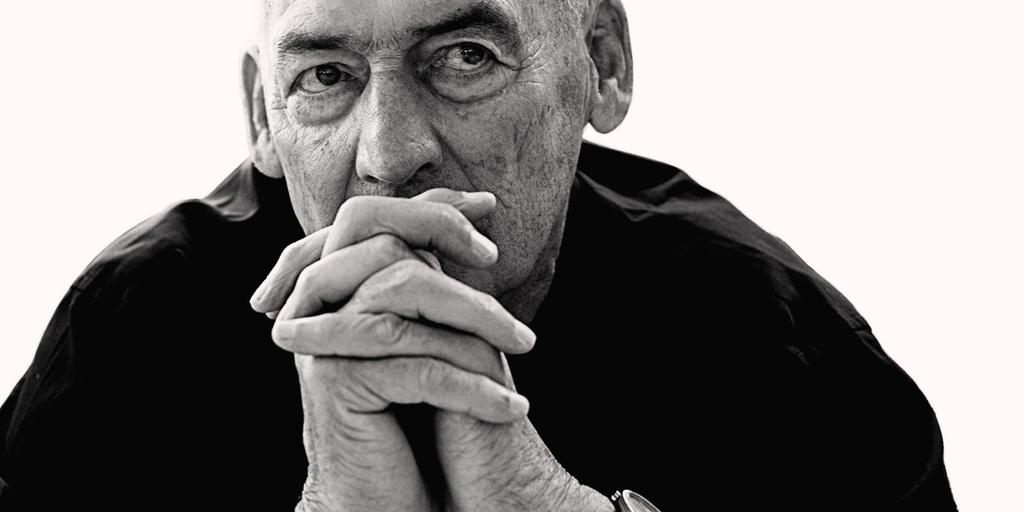
Rem Koolhaas is a rare combination of philosopher and pragmatist, theorist and prophet. His ideas about buildings and urban planning made Rem one of the most talked-about contemporary architects in the world even before any of his projects had been realised. Like the work of Le Corbusier, Koolhaas's theoretical writings are the most provocative, and in many respects the least acknowledged, contribution to world architecture.
On the eve of the 75th birthday of the incomparable founder of OMA and recipient of the Pritzker Prize, we look back at the life story and defining projects of this legend of Dutch urbanism — a figure who remains every bit as revolutionary in his work today as he was at the very start of his career.

Family and Childhood
Remment Lucas Koolhaas was born in the Dutch city of Rotterdam in 1944, at the height of Europe's postwar devastation. Growing up at the heart of a major port city reduced to rubble by German bombing, Rem witnessed the birth of grand modernist reconstruction plans. While many of his generation came to despise the artefacts of the postwar era, Koolhaas played among the ruins of the state archive building and found its ghostly symmetries and raw, unprogrammed spaces utterly captivating.
Rem grew up in a family steeped in cultural bohemia. His maternal grandfather, Dirk Roosenburg, was a modernist architect. His father, Anton Koolhaas, was a writer, theatre critic, film school director and editor of a weekly newspaper. He wrote screenplays for Bert Haanstra's films, which received Oscar nominations. Rem's father was a vocal advocate for Indonesian independence from the Netherlands, and when the country gained it, he was invited to lead Jakarta's cultural programme. Rem thus spent nearly four years in an exotic environment, where he had his first genuine encounter with the megalopolis and all its moral contradictions.
Early Years: Koolhaas and Cinema
When Rem turned 15, the family returned to the Netherlands, where four years later he began a career in journalism at the liberal publication Haagse Post in The Hague. Together with his father, Koolhaas frequented Amsterdam's literary and artistic circles, where he met Dutch Surrealist writers and a group of young filmmakers called the '1,2,3 Group', led by René Daalder, which he later joined.

In 1965 Rem appeared in the short film1,2,3 Rhapsody, and collaborated with Jan de Bont, who went on to direct Speed (1994) and Twister (1996). Koolhaas later wrote a screenplay for the American king of soft pornography Russ Meyer, and for Daalder's White Slave.
His experience in cinema profoundly shaped Koolhaas's architectural practice — not so much visually as structurally and conceptually. In his own words, there is a remarkable parallel between filmmaking and architecture: "you look at episodes, and you have to construct a narrative in such a way that it is interesting and mysterious." Entering buildings designed by Koolhaas, you feel as though you are moving through an edited film — except that instead of shots, there are spaces that transition into one another, sometimes fluidly, sometimes abruptly.
The Beginning of an Architectural Career
One day, Rem's friend Gerrit Oorthuis, a lecturer in architectural history at Delft University, invited him to talk to a group of architecture students about cinema. It was then that Koolhaas realised he actually wanted to build — and to "swap places with the students."
Rem made his final decision to become an architect in 1967, when Gerrit, an admirer of the Russian avant-garde, took him to Moscow. There Rem encountered the work of Rodchenko and the theory of de-urbanism, which rejected the positive role of large cities. He was seduced by a series of avant-garde architectural illustrations that expressed bold ideas and defined the content of a society.
At 28, Koolhaas enrolled at the Architectural Association School in London (the AA). His graduation project, titled Exodus, was a fantasy on the theme of London being divided by a wall akin to the Berlin Wall. The drawings Rem produced for this project were a bold example of modernist utopian thinking.

In 1972 he was awarded a Harkness Fellowship to conduct research in the United States, where he completed his architectural education under Oswald Mathias Ungers and Peter Eisenman at Cornell University, before becoming a visiting research fellow at the Institute for Architecture and Urban Studies in New York.
It was while in New York that he wrote Delirious New York — an urbanist manifesto that brought him international acclaim and defined his future architectural strategy, with the city at its centre. In the book, whose whimsical illustrations were created by Rem's wife Madelon Vriesendorp, Koolhaas celebrates the hyper-dense culture of the metropolis, where unexpected interactions can give rise to innovation and creativity. Today, the 'retroactive manifesto for Manhattan' has become a canonical text on contemporary architecture and society.
OMA
After studying in New York, Koolhaas returned to London, where in 1975 he co-founded his firm — the Office for Metropolitan Architecture — with colleagues from the AA; they were later joined byZaha Hadid. Together, the group began working on a series of conceptual projects aimed at addressing the needs of contemporary society and producing a relevant architecture.

When the firm won a major competition to expand the parliament building in The Hague (1976), Koolhaas moved the headquarters from London to Rotterdam. By that point Zaha had left the practice and was soon making her own mark. Her studio would later beat OMA in the competition for a new museum of contemporary art in Rome.
In 1987, OMA secured its first major commission — the Netherlands Dance Theatre in The Hague. The resulting three-level building, in which the structural qualities of volumes of different shapes and materials collide to generate new kinds of space, embodied many of the ideas from Delirious New York and brought the studio international recognition. In the March issue of Art & Antiques, Phyllis Lambert, founding director of the Canadian Centre for Architecture in Montreal, named the Netherlands Dance Theatre one of the nine best buildings of the twentieth century.
In the late 1980s and early 1990s, OMA entered a number of high-stakes competitions, investing enormous amounts of time and money in projects that ultimately remained on paper. In 1989, Koolhaas won a major competition to build the Centre for Art and Media Technology in Germany. The design called for the building's façade to function as a projection screen — anticipating Times Square by several years. At the last moment, however, the city's mayor cancelled the project, a genuine blow to Rem, who had already begun designing the door handles. To stay afloat, the firm sold architectural models and drawings, while Koolhaas himself agreed to teach at Harvard on the condition that he would not lead a design course but instead run an annual seminar on topics of his own choosing — such as the study of cities in the Pearl River Delta or an investigation of Lagos, Nigeria.
In 1996, OMA won its first American commission — the headquarters for Universal Pictures. Koolhaas proposed a series of towers whose façades could open entirely in response to the weather. The client received the design with enthusiasm and construction was about to begin. Shortly afterwards, however, Universal Pictures' parent companies Time Warner and AOL merged, and the board began to question the wisdom of investing many millions in a purely physical asset.


Koolhaas also proposed to the Dutch government the creation of an artificial island in the Atlantic Ocean, at the centre of which would stand a vast airport, surrounded by an expansive complex of entertainment, business and residential spaces. This project, too, never saw the light of day.
"The beauty of architecture is that it is a leap of faith — but an extraordinarily laborious leap of faith"
A delicate thread of anguish over unrealised possibilities runs through S,M,L,XL, the weighty compendium of OMA projects published in collaboration with Canadian designer Bruce Mau in 1995. The book — encompassing photographs, plans, essays and Koolhaas's incidental reflections on his largely unbuilt work — brought his ideas within reach of a much wider audience.

By Koolhaas's own admission, alongside his love of architecture he harbours a love of the city. His first real test of urban theory came in 1994, when the challenge of unbuilt projects was placed at the very heart of the studio's work. At that time, OMA won a competition to design a vast site on the outskirts of Lille, France. Connected to a new high-speed rail line, the project — named Euralille — incorporated a shopping centre, a conference and exhibition centre, and office towers set amid a tangle of motorways and railway tracks.
The following decade brought a sweeping expansion within OMA, with the founding of the architectural think tank and research unit AMO in 1999, which offers clients analysis of the relationships between people and built structures. Through this mirror twin of OMA, Koolhaas hopes to broaden the understanding of what architecture is. While OMA's projects inhabit the real, physical world, AMO's research operates in a virtual one — the world of the future. And the research unit's central proposition is that constructing a new building may not, in fact, be the answer to a given problem.
Global Recognition
Despite the setbacks of unrealised projects over thirteen years of practice, by 2000 — a short span by architectural standards — Koolhaas had completed work across numerous countries, including the Netherlands, France, Portugal, South Korea, Japan and Germany. For these achievements he was awarded the Pritzker Prize, becoming the first Dutch architect to receive the honour.
The ceremony at which Rem received the prize took place at the Jerusalem Archaeological Park — a site as laden with religious significance as religion is with architectural meaning. In the jury's view, Koolhaas had "firmly established himself in the pantheon of significant architects of the last century and the dawn of this one." Rem himself was more struck by the fact that the prize jury had acknowledged his contribution as a writer and recognised that disciplines adjacent to architecture — such as the craft of writing — are no less important.
"If we do not free ourselves from our dependence on actual, recognised architecture as a way of thinking about every issue — from the political to the purely practical — and if we do not liberate ourselves from eternity in order to grapple with intractable and urgent new problems such as poverty and the disappearance of nature, then architecture may not survive to see 2050"
The Pritzker Prize lent Koolhaas's work still greater authority and definitively sealed his status as a starchitect — a phenomenon he himself regarded with some scepticism.
Following OMA's victory, the firm was commissioned to work on several major international projects, including the Guggenheim Hermitage in Las Vegas (2001), the Casa da Música in Porto (2003), the Galerie Malingue in Hong Kong (2010) and the China Central Television headquarters in Beijing (2012).
Following the Pritzker Prize, in 2003 Koolhaas received the Praemium Imperiale from the Japan Art Association for "virtually inventing a new architecture that breaks all the rules of how architecture should function." That same year he became a guest editor of Wired magazine, and in 2005 co-founded Volume.
Yet the most provocative, and in many respects least understood, contribution Koolhaas has made to the cultural landscape is his urban theory. Like Le Corbusier, Rem possesses a remarkable ability to write brilliant, provocative essays and to create extraordinary spaces. He has argued that the glory of a city lies in its exceptional, excessive and extreme character.
His favourite fact, which he cites in his lectures, is that the Pearl River Delta in China produces 500 square kilometres of urban space per year — the equivalent of two Parises. By comparison, Western architects build almost nothing. Koolhaas sees places like this as the future, preferring to focus on the possibilities they present.

In 2008, Koolhaas was invited to join the European "group of wise men" chaired by former Spanish Prime Minister Felipe González, to help "design" the future of the European Union. For this project, AMO developed its own European Union flag, distinguished by a complex arrangement of colours drawn from the flags of all member states.
Venice Biennale
2014 was one of the most significant years in Koolhaas's career: he was invited to serve as curator of the Venice Architecture Biennale. In preparation, Rem requested two years rather than the customary six months, and made clear from the outset that the Biennale under his direction would not be a showcase of contemporary architecture.
The Central Pavilion was devoted to a historical, practical, sociological and philosophical examination of 15 of the most fundamental and ordinary components of any architecture: ceiling, window, corridor, floor, balcony, fireplace, façade, roof, door, wall, ramp, staircase, toilet, escalator and lift. In this way, Koolhaas demonstrated that studying seemingly trivial things can be far more illuminating than it first appears, and that paying close attention to them offers a way to outmanoeuvre the contemporary system.
As a result, Rem Koolhaas was awarded the Golden Lion for Lifetime Achievement at the 12th International Architecture Exhibition. In the view of the Venice Biennale jury, he had "expanded the possibilities of architecture," and his influence had "reached far beyond its boundaries."
Rem and OMA today
Today, OMA is no longer a Rem-centric structure. In addition to its Rotterdam headquarters, OMA has six further offices — in Beijing, Hong Kong, New York, Doha, Dubai and Sydney — and carries out projects across the world.
Rem plays a connective role in the office's work. The design process at OMA is organised more like an architecture school, where team members first gather data on a given project, its programme and context, and then develop a wide range of design solutions. Koolhaas himself is comfortable with the idea of his firm as a laboratory, though he never instructs anyone — it is a mutually beneficial process of exchange.
At the Rotterdam headquarters, filled with open spaces and bare floors, Koolhaas occupies two offices. A corner office with a large light-wood desk serves as Rem's "public face," where he holds his meetings. In the other office, fitted with a white metal desk and bookshelves, Koolhaas writes. "I think of myself as much a writer as an architect," he says. Writing affords him far greater freedom than architecture, allowing him to give full expression to his idealistic thinking — from dismantling architecture down to its fundamental elements, to the possibility of building smart cities and his research into the urbanisation of Lagos.
"People can inhabit anything. And they can be miserable in anything and ecstatic in anything. More and more I think that architecture has nothing to do with it. Of course, that is both liberating and alarming."
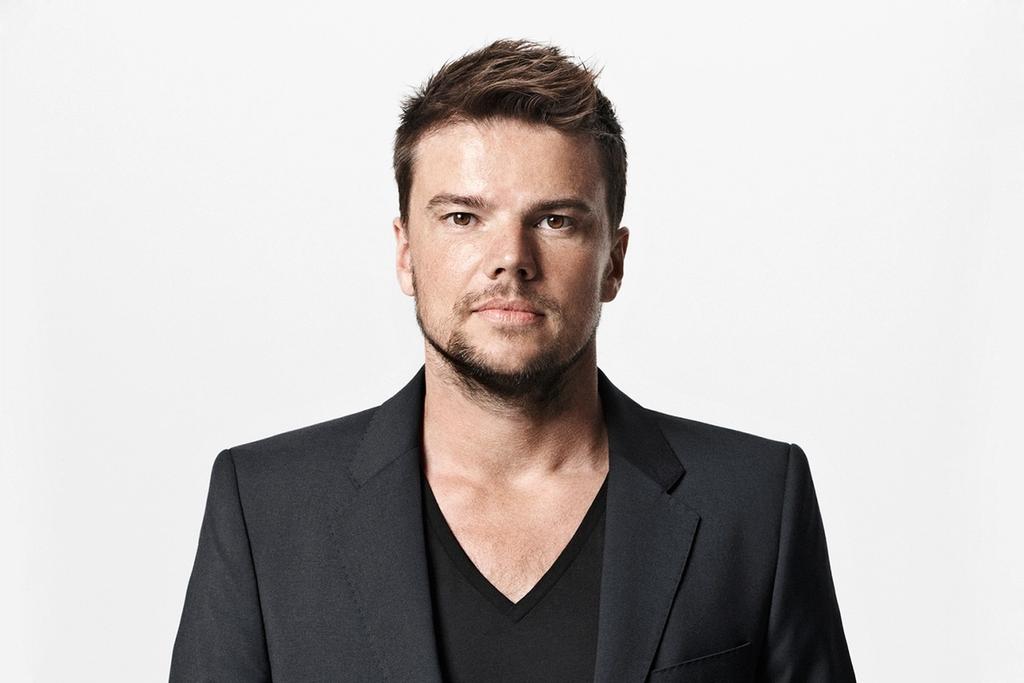
OMA has nurtured a remarkable number of talented architects. Besides Zaha Hadid, Bjarke Ingels, Ole Scheeren, Farshid Moussavi, Jeanne Gang, Winy Maas and many others all began their careers here. Koolhaas now frequently finds himself competing against the very people he once hired. In the competition to design the new headquarters for Axel Springer media company on a site that once formed part of the Berlin Wall, both Bjarke Ingels Group (BIG) and Büro Ole Scheeren beat OMA.
Personality and personal life
In 2011 Koolhaas divorced Madelon Vriesendorp and now lives in Amsterdam with his partner Petra Blaisse — an interior and landscape designer responsible for the interior spaces and surrounding landscape of his projects. He has two children with Madelon: a son, Thomas, and a daughter, Charlie. Thomas became a film director and made the most intimate portrait of his father since Nathaniel Kahn's My Architect. Charlie is a sociologist and photographer who has documented many of her father's buildings for publications and press releases.

Koolhaas surrounds himself with warm and unpretentious people. He maintains an international circle of friends — museum directors, graphic designers, journalists, philosophers — who supply him with information that never goes to waste. Everything he learns, he puts to use.
Koolhaas is a devoted swimmer and always tracks down a pool wherever he happens to be staying. He has swum in Lagos, Milan, Switzerland, Rotterdam, London, Los Angeles and Las Vegas — all within a single week.
"We moved to an Amsterdam devastated by the war. My parents were poor. The idea of luxury was very remote then, and it has remained so for me. My pleasures today — swimming, for instance — cost almost nothing."
There are moments when it seems as though he has approached architecture the way Michelangelo, Raphael or Jefferson did: not as a primary vocation, but as an intellectual and humanist challenge.
Koolhaas and Russia
When Rem first visited Moscow at the age of twenty-six, he not only made up his mind definitively to become an architect, but also began gathering material on Ivan Leonidov — who had captivated him — the designer responsible for the interiors of the Moscow House of Pioneers and Octobrists in 1935 and the interior of the Museum of the Soviet Army in 1959.
"When I came to Russia, I understood for the first time that form is not the essence of architecture. Architecture does not simply construct buildings — it defines the fabric of society."
Together with his teacher and mentor Gerrit Oorthuys, he resolved to write a book about the great Constructivist, but Gerrit failed to fulfil his obligations regarding the visual material, and the book was never published.
In 2010 Rem began a new engagement with Russia through the Strelka Institute. Until 2012 he led the institute's educational programme, developed in collaboration with AMO. The OMA headquarters in Rotterdam has frequently served as a base for Strelka students and staff. To this day, Strelka's educational projects continue to confront students with ideas and challenges that reach well beyond the boundaries of a conventional architectural education.
In 2015, commissioned by Dasha Zhukova — Russian by origin but Californian by upbringing, and the wife of Roman Abramovich — OMA under Koolhaas's direction transformed the abandoned Vremena Goda restaurant into the Garage Museum of Contemporary Art.
The Dutch architect subsequently unveiled plans for the reconstruction of the New Tretyakov Gallery in collaboration with the Russian firm Reserve. The project envisions creating the largest museum and exhibition space in Moscow, bringing together an education centre, exhibition hall, conference centre and art storage facility.
Rem Koolhaas: 5 key projects
Seattle Central Library
Location: Seattle
Year: 2004
Materials: glass, steel
Seattle Central Library is organised vertically: Koolhaas devised a series of five irregularly placed platforms that project forward, backward and sideways, giving the building's exterior its complex polygonal form. This prioritisation of organisation over structure has always been at the heart of OMA's approach.
The interior is defined by generous spaces flooded with natural light filtering through the glass walls. The bulk of the library's collection is housed on a gradual spiral that winds through four floors dedicated entirely to books, with each section painted in vivid colours.
With this project, OMA sought to rethink the conventional idea of a library as an institution that is no longer concerned solely with books but serves instead as a repository of information. It is a revolutionary structure that taps into Seattle's urban energy and creates a new space for the dissemination of knowledge.
CCTV Headquarters complex
Location: Beijing
Year: 2012
Materials: glass, steel
The CCTV headquarters takes the form of a square loop: two towers rise from a shared base, leaning toward each other before being joined by a corner bridge. Each tower has its own structure and character — the main tower combines editorial areas, offices and studios, while the second houses a hotel, a visitor centre, a large public theatre and exhibition spaces. It is the first time a television network the size of CCTV has been brought together under one roof.
The irregular grid pattern on the façade is an expression of the forces acting across the entire surface of the building. The façade thus becomes a visual manifestation of the building's structure.
An international jury that included architect Arata Isozaki and critic Charles Jencks selected OMA's design for the building because it 'revolutionises' the Beijing skyline as well as the world of architecture by redefining the concept of the skyscraper.
De Rotterdam complex
Location: Rotterdam
Year: 2013
Materials: steel, glass
The De Rotterdam mixed-use complex comprises three 44-storey glass towers connected by a shared podium. The seemingly random shifts between the building's blocks create gaps that lend the composition dynamism and bring a human scale to the glass monoliths.
This vertical city forms part of the redevelopment of the old Wilhelminapier port district, and the name De Rotterdam itself recalls the ships of the Holland America Line that carried thousands of European emigrants to the United States.
It is not only a tall building but also a deep one, occupying an entire city block and accommodating offices, apartments, a hotel, conference rooms, shops, restaurants and cafés — spaces shared freely by residents and workers alike.
Garage Museum
Location: Moscow
Year: 2015
Materials: concrete, polycarbonate
The Garage Museum of Contemporary Art is a reconstructed 1960s restaurant called Vremena Goda (Seasons), which stood abandoned in Gorky Park for 20 years. The design preserves original Soviet-era elements, including a mosaic wall, tilework and brickwork. Koolhaas describes this process as 'not the restoration of the building, but the preservation of its decay.'
OMA draws on the qualities of the existing structure to serve its new purpose as a gallery: open floor plans function as large, uninterrupted spaces for exhibitions, projects and events, while the more fragmented areas house research and educational facilities.
The building's original facades had deteriorated, so OMA designed a translucent double-layer polycarbonate envelope that provides diffused light throughout the gallery interior. The facade is also raised more than 2 metres above ground level, connecting the building visually to the park.
The building's entrance is formed by panels cut from the facade and lifted 7 metres above roof level, evoking garage doors. These panels reference the museum's first home — an avant-garde bus terminal designed by Constructivist architect Konstantin Melnikov in the 1920s.
Qatar National Library
Location: Doha
Year: 2017
Materials: concrete, marble, glass
The Qatar National Library is a large, monolithic building with a diamond-like form created by corners lifted off the ground. It is a single vast space for people and books, interrupted only by a few slender columns. Daylight enters through a corrugated glass facade and is diffused by a glossy white ceiling.
The bookshelves, made from the same white marble as the floor, are arranged around a central triangular space and recede into the building's interior, interspersed with areas for reading and socialising. This configuration allows the library to weave together moments of bustle, interaction and solitude, enriching the experience of reading.
The Qatar National Library reflects an approach in which space, light, air, views, materials, landscape and user experience take precedence over bold experimentation and radical form.
There is a similarity between architecture and the making of books: both have an incredibly long history, yet both must continually renew themselves in order to survive.
The National Library plays a central role in Qatar's Education City, whose masterplan was developed byArata Isozaki in 1995. It encompasses educational and research institutions, including branches of internationally renowned universities and the Qatar Foundation headquarters, also designed by OMA. With its gleaming white concrete, the library building echoes both of these structures in its ambition to enter into dialogue with its surroundings.
Interesting Facts
- While working at De Haagse Post, Koolhaas wrote pieces on art and culture, including interviews with Dutch architect and artist Constant Nieuwenhuys and Italian film director Federico Fellini;
- His English is impeccable, but he swears with a Dutch accent, shouting 'Feck!';
- He stayed in hotels so frequently that he eventually wanted to design one of his own;
- Rem D. Koolhaas, founder of the footwear company United Nude, is his nephew;
- In 2012, the architect appeared in an episode of The Simpsons, comically teaching an architecture course using a Lego version of his CCTV building in Beijing;
- Rem is a member of the International Advisory Committee for the creation of the Melnikov House museum in Moscow;
- The drawings from Koolhaas's final project at the AA are among the most sought-after items in MoMA's collection;
- OMA means 'grandmother' in Dutch;
- In 2008, Time magazine included Rem in its list of the 100 most influential people in the world;
- In one interview, Rem Koolhaas said: 'I hate being an architect. And I hate architects in general.'
Other projects
Useful links
— A website dedicated to the documentary film about Rem Koolhaas, directed by the architect's son;
— Rem Koolhaas's interview with television host Vladimir Pozner at the Moscow Urban Forum in 2018;
— The most interesting moments from that interview, as compiled by Strelka Mag;
— The website of the architecture firm OMA;
— All of Rem Koolhaas's projects on ArchDaily.
Special thanks for assistance in preparing this piece to Alexandra Galanina
Cover — Darya Malysheva
Photography: Philippe Ruault, Iwan Baan, Bruce Damonte, Yuri Palmin, Ossip van Duivenbode
Follow us on social media so you never miss new content: VKontakte, Telegram — @loskomagazine.