Organic architecture is not merely a current of architectural thought but a genuine philosophy, founded on the idea of harmony between human beings and the world around them.
The History of Organic Architecture
Organic architecture emerged in the 1890s as a counterpoint to functionalism. Its first mention is attributed to Louis Sullivan, but it was his disciple Frank Lloyd Wright who was destined to popularise the style, formulating the core principles of organic architecture during the 1920s through to the 1950s.
Throughout its existence, the original idea of an unbreakable bond with nature and landscape has evolved, giving rise to new variations (bionic architecture, ecological architecture).

The contemporary surge of interest in organic architecture is driven by a human desire to once again become part of the surrounding world. People have grown weary of the rush, oversaturated by the sight of identical tower blocks and endless roads. As a result, more and more architects are working in this style, advancing the eco-friendly tendency. So what are the defining hallmarks of contemporary organic architecture?
Maximum integration into the surrounding landscape
This branch of architecture is defined by the creation of buildings that sit naturally within the landscape. Their form must each time arise from the specific purpose of the building and the unique environmental conditions in which it is constructed. There is no tradition here of deliberately setting a structure apart from its surroundings.
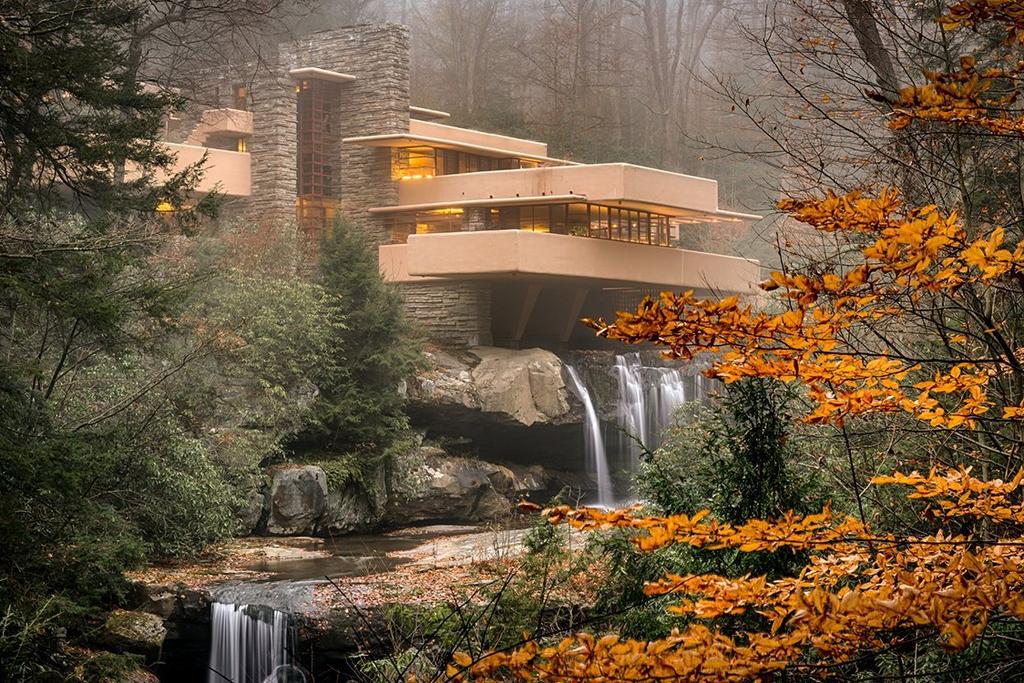
The house is conceived as a natural extension of the landscape, achieved in two ways: through biomorphism (the imitation of natural forms) and through direct integration into an existing natural feature. The canonical example of organic architecture is Fallingwater by F. L. Wright, built between 1936 and 1939.

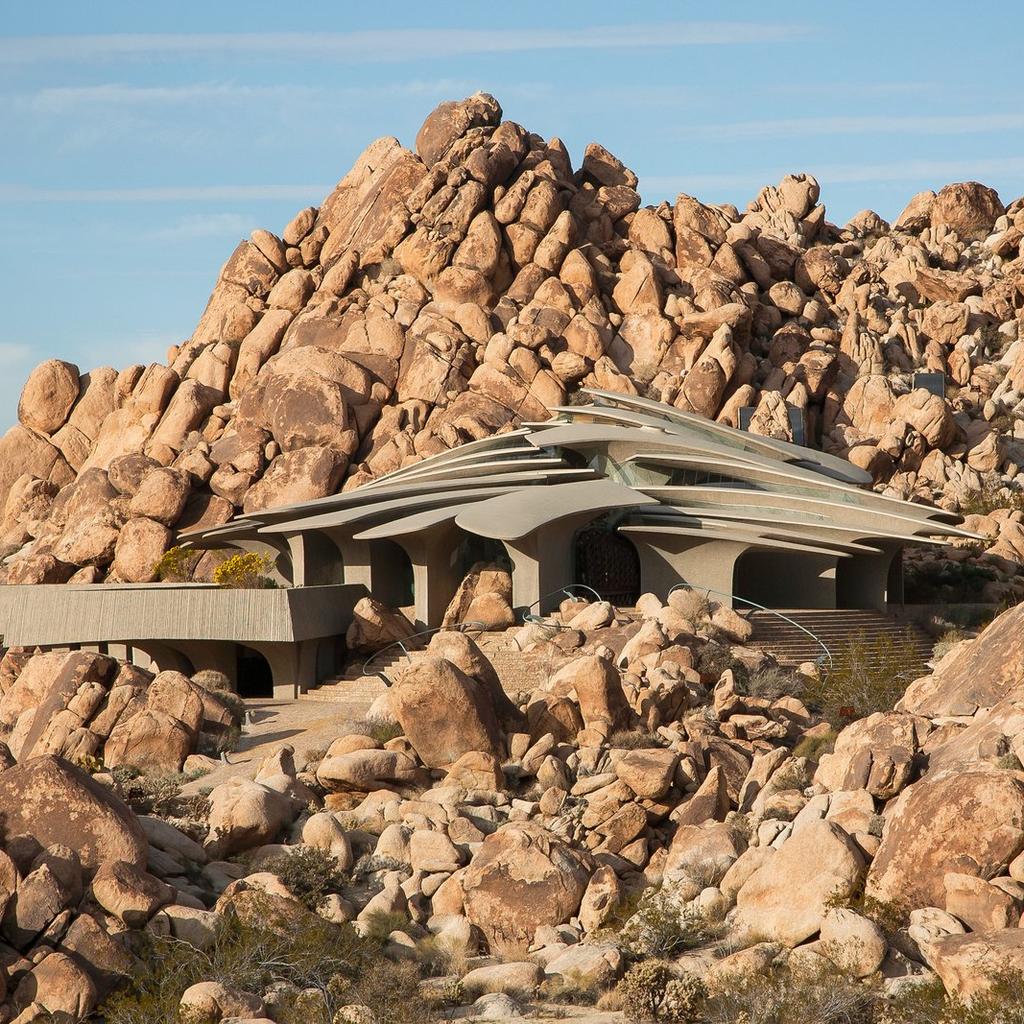
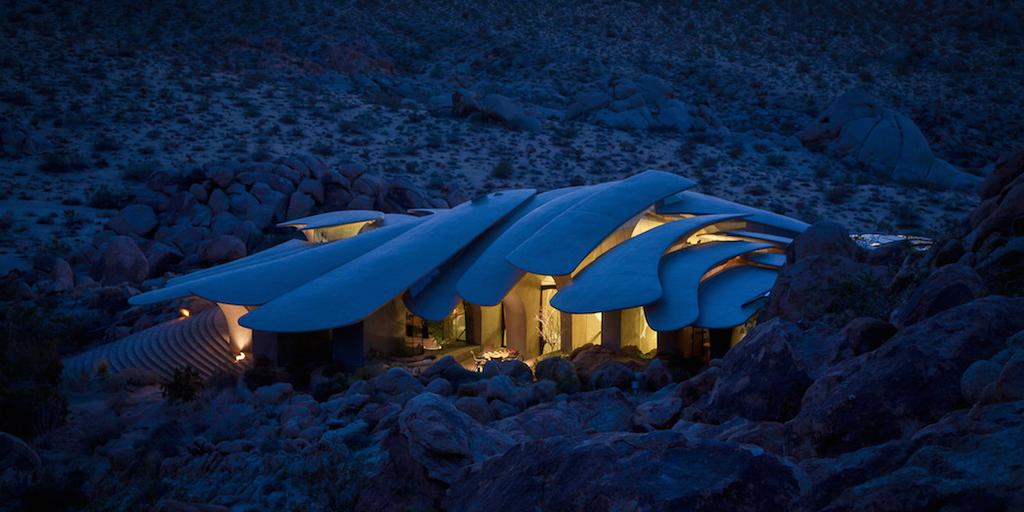
The High Desert House, USA
The idea of creating a unique house in the California desert was born in 1986, when artist couple Jay and Bev Doolittle conceived the project. Architect Kendrick Bangs Kellogg was brought in to realise it, and The High Desert House now stands as a striking example of biomorphism — the imitation of natural forms both inside and out.

House by the Rock, Norway
Like Fallingwater, the house by Norwegian architects Lund Hagem is built directly into a natural feature — a rock face that replaces one of the walls. "The project is about making use of a naturally sheltered site, surrounded by large rocks and dense vegetation," the architects said.

The use of natural materials
Where early organic architecture typically called for a single material — stone or timber — contemporary practice more often combines lightweight structures with heavy, massive elements in textured, unfinished materials. This approach eliminates the need for additional interior decoration.
Dayang Sanghoi, South Korea
Architects from the South Korean practice TUNEplanning took advantage of the mountainous terrain of the Pyeongchang district in Seoul to create a quiet refuge from the noise of the city. The building is owned by a private company that has housed an office, a training centre, a studio, a restaurant and a café on the premises.
Two natural materials were used in the construction and fit-out of Dayang Sanghoi: stone and pine. The space was designed so that the rock face immediately catches the eye of visitors, providing a backdrop for the bar. Even the furniture is arranged seemingly at random, as though placed by nature itself with no particular plan in mind.

Amangiri Hotel, USA
In the article "Lost Among the Rocks: Amangiri Hotel in Utah" Losko has written about a hotel nestled among desert rocks. The hotel is not only seamlessly integrated into its surroundings but also built from natural materials whose sandy tones carry forward the austere spirit of the desert.

An abundance of natural light
Light shapes space and is a powerful instrument of emotional influence. It was F. L. Wright who was among the first to introduce ribbon glazing, clerestory windows and panoramic windows into architecture — innovations that seemed eccentric at the time, yet feel entirely familiar to us today.
Glass is used not only for windows but also to zone the interior. Natural light, admitted through generous glazing across the living space, creates the atmosphere of freedom and boundlessness that is characteristic of organic architecture.
The paradise-like house, China
The owner of this house spent his entire childhood close to nature. After years of city life, worn down by noise and bustle, he asked designer Xu Fu-Ming to create his own private paradise — a place that could bring him back to nature. Yet the designer went beyond natural materials and full-height windows overlooking the garden. To evoke a particular sense of calm and security, Xu Fu-Ming positioned the bedroom windows against massive boulders.

Hidden Pavilion, Spain
The fully glazed walls of Hidden Pavilion ensure that the owners of this residence, designed by Penelas Architects, can enjoy unobstructed views of the picturesque forest outside Madrid. It fully lives up to its name, tucked away among the woodland.
To flood the interior with natural light, almost all surfaces are either glass or reflective, allowing daylight to linger inside Hidden Pavilion for as long as possible.

Blurring the boundaries between interior and surrounding nature
One of the defining hallmarks of contemporary organic residential design is the flow between spaces. Harmony between interior and exterior — between the built environment and the natural one — is most often achieved through glazing.
Organic architecture is shaped by climate, which is why contemporary architects find it important not only to erase the boundary between house and landscape but also to bring the natural environment inventively into the interior as an extension of it. Here are several examples in support of that idea.
Hotel Valentinerhof, Italy
What makes this hotel exceptional is the near-complete absence of any visual boundary between the indoor pool and the sweeping Alpine views beyond. The architects at noa* achieved the effect of an infinity pool suspended in the sky through panoramic glazing and a sequence of stepped pools.

The Sirdalen House, Norway
Architects from Filter Arkitekter designed a contemporary home that sits in natural harmony with the snow-covered expanses of a ski resort. When the weather makes it impossible to glaze every surface, the only truly organic solution is to create a sense of flowing space — so that the elements outside become a natural extension of the interior, and vice versa.

Elements of living nature in the interior
To bring human beings into fuller harmony with the natural world, contemporary architects are turning to large-scale greening of residential spaces. Living vegetation is used here alongside minimalist interiors. The more closely the planting echoes local flora, the more organically the whole structure reads within its surroundings.
MM House, Mexico
A fine example is the MM House in Mexico City by Nicolas Schuybroek Architects in collaboration with Marc Merckx. Clean lines and an ultra-minimalist interior palette are enriched by generous 'green pockets' of native plants — a combination that produces a quietly calming effect on the human spirit.

Magic Breeze, India
Architecture studio Penda recently proposed an ecological project for greened skyscrapers in India, in which every apartment would have its own private garden. A project brimming with vitality, it follows the finest traditions of organic architecture and promises to transform the aesthetic of the urban skyline.

Alvar Aalto is the most influential figure in organic architecture in Europe. You can read more about him in our article 'Alvar Aalto — the benchmark of Scandinavian architecture'.