On the south-eastern coast of the Huangqi Peninsula in China's Fujian Province stands a three-storey house with an unusual semi-cylindrical roof. The Chinese architecture practice Vector Architects, which rebuilt the house in spring 2017, succeeded not only in making it more resilient to the elements — twenty years of sea and rough weather had taken a considerable toll — but also in giving it character and making it resemble its owner, a sea captain.

The architects' first priority was to protect the exterior of the house from erosion. The decision was made to reinforce the existing brickwork with a twelve-centimetre concrete shell. This proved not only a sound technical solution but also opened up creative possibilities for the interior. It enabled a successful reconfiguration of the floor plan: the bathrooms on the first and second floors, which had previously faced the sea, were moved to the side looking onto the neighbouring house. The living room, dining room and master bedroom now face the sea.
In this way, the main rooms receive ample natural light and fresh air. The interior is dominated by shades of white, grey and blue, simple geometric forms and warm-toned wood. A ship's wheel on the living-room wall serves as a reminder of the owner's profession.

The thickening of the walls also gave rise to an interesting detail that the architects call the 'window-furniture system': the layer of concrete means that the windows are effectively recessed into the walls, turning their sills into shelves, work surfaces and platforms. The windows in the Captain's House act as intermediary spaces between domestic warmth and the elements outside. One can sit by a window to read or work, while in the living room a wide sill offers a comfortable perch from which to take in the view. On the exterior, the window frames also project quite noticeably from the wall, preventing rainwater from running into the windows.
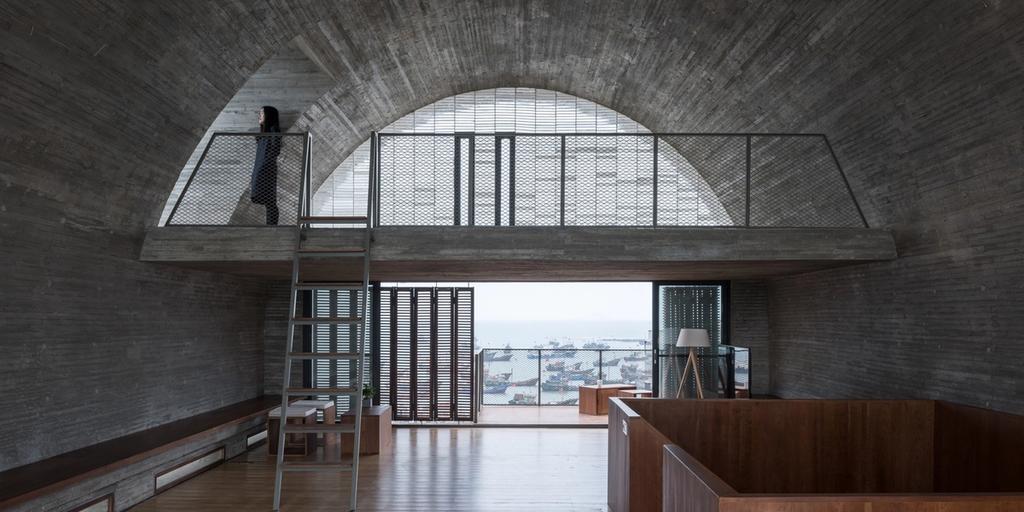
The third floor of the house was also added by Vector Architects, as the captain's family found two storeys insufficient for comfortable living. This gave rise to a semicircular vault that prevents water from pooling on the roof. The roof takes the form of a half-cylinder, its ends connecting the tranquil sea on one side with the busy river port on the other.


The third-floor space is furnished with an ascetic restraint, serving as a prayer room, gymnasium, family activity room and guest accommodation all at once. Steel grey dominates the interior, and the distinctive glazing of the semicircular windows, together with a second tier fitted with metal railings, lends the atmosphere a high-tech edge — yet the same warm timber used to finish the lower floors prevents the interior from feeling too cold, which would be unacceptable in a home by the sea.
Vector Architects succeeded in creating a distinctive and eloquent project that reflects the character of the family who live there, turning technical solutions into design discoveries and exploring the theme of transition from turbulent nature to domestic calm. The house seems made for contemplation — securely sheltered from the elements by thick walls and projecting features, yet open at once to light and sea.
If you are inspired by the combination of cool concrete and warm timber in interiors and design, take a look at our selection of brutalist minimalist interiors.