We write a great deal about impressive buildings, masters of their craft, and architecture in general. In this article we suggest taking a few steps back — to the origins of modern architecture — to examine what lies at its foundation.
We revisit the history and defining characteristics of the principal architectural movements of the twentieth century: Functionalism, Constructivism, Expressionism, Brutalism, and Metabolism.
Functionalism, 1910–1940
History
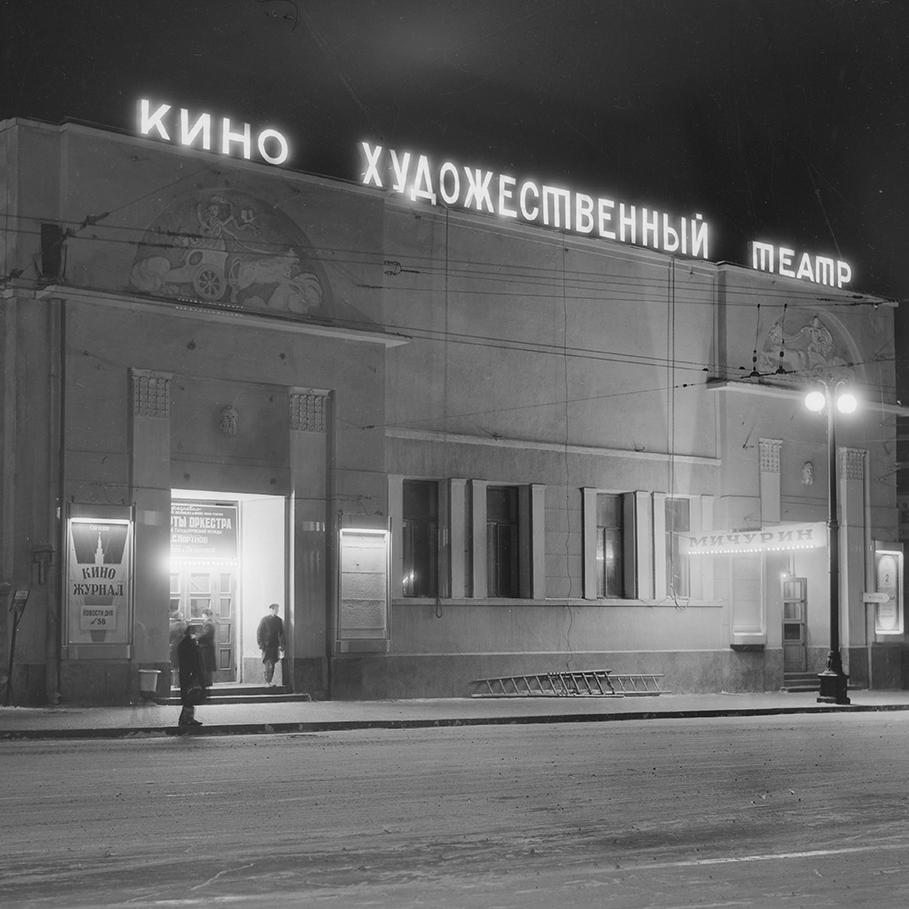
Form must follow function — such was the guiding principle of the architectural movement that emerged in early twentieth-century Europe. Functionalism is a worldview that equates economy of means with intentionality. As far back as the first century BC, the architect Vitruvius argued that architecture rests on firmness, utility and beauty. Over time, however, the balance shifted heavily towards style. Only towards the end of the nineteenth century did voices emerge in opposition to excessive ornamentation — among them the very founders of functionalism.
One of the pioneers of functionalism was Louis Sullivan — Frank Lloyd Wright's teacher, the father of American modernism, creator of the first skyscraper and the concept of organic architecture. It was Sullivan who proclaimed the principle of form following function in the 1880s, and a little later, already in the twentieth century, Le Corbusier famously called the house a "machine for living."
Functionalism officially came into its own by the 1930s, owing largely to the rise of the Bauhaus and, in particular, to Walter Gropius. The school building in Dessau remains an icon of functionalism to this day. Like Le Corbusier, Gropius championed standardised mass construction as a means of addressing the acute housing shortage of the post-war years.


Architectural principles
The revolution in architecture was made possible by a breakthrough in construction technology — specifically, the advent of reinforced concrete. It allowed architects to move away from massive brick walls and reduce the structural system to a skeletal frame. Columns replaced load-bearing walls and enabled the introduction of ribbon glazing, flooding far greater areas with natural light. Pitched roofs were likewise transformed, giving way to flat, usable roof terraces.
Without delving into engineering, one can observe that none of these changes were arbitrary. Every element has its rationale — as does every absence of an element. The purpose and function of each component dictate the broader transformation of a building's exterior. Beauty, in turn, lies in honesty: if concrete is used, it is left exposed; a ramp becomes a focal point within the interior; windows fundamentally alter the character of the building. Every element is self-sufficient and open to the observer.
Defining features:
- Simple geometric forms
- Rejection of ornament: structural elements such as concrete slabs or timber beams are often left exposed
- Flat, usable roof
- Horizontal ribbon glazing
- Ramps in place of staircases
- The building raised off the ground on pilotis
Architects:
- Le Corbusier
- Ludwig Mies van der Rohe
- Peter Behrens
- Walter Gropius
- Jacobus Johannes Oud
- Philip Johnson
Constructivism, 1920–1930
History
Soviet architects took functionalism as their starting point and wielded architecture as an instrument of political propaganda, extolling proletarian austerity. In the view of the revolutionary architects, the foundation of the new person's life was to be collective labour in service of the state. Distracting concerns — domestic chores, for instance — were to be delegated to public infrastructure. The result was the emergence of communal housing blocks, factory kitchens, workers' clubs and palaces of labour.
Vladimir Tatlin, author of the celebrated Monument to the Third International, was one of the founding figures of constructivism. He was also profoundly influenced by the Vesnin brothers, who, together with Moisei Ginzburg, established the Union of Contemporary Architects (OSA), bringing together the most promising Soviet architects of the era.
In opposition to the masters of constructivism — the members of OSA and VOPRA — stood the rationalists of the Association of New Architects (ASNOVA) and the Association of Urbanist Architects (ARU). The rationalists argued for architecture's power to shape human consciousness, urging society to advance towards progress.


Architectural Principles
The design process was grounded in a careful analysis of how industrial and residential buildings function. Each function called for its own volumetric and spatial solution. The dynamic interplay of clean vertical and horizontal lines determined the external appearance of the buildings.
Unlike Functionalism, Constructivism as a movement embraced a far greater variety of architectural forms: cubes, rectangular prisms, circular windows, streamlined balconies and multi-tiered sections. Rather than producing visual chaos, these forms complement one another in harmony.
Characteristics:
- Monumental scale
- Solidity
- Sectional composition
- Diversity of geometric forms
- Rejection of ornament
Architects:
- Moisei Ginzburg
- Konstantin Melnikov
- The Vesnin Brothers
- Ilya Golosov
- Ivan Leonidov
Expressionism, 1910–1920
History
Expressionism in architecture emerged alongside literature, music, cinema and the visual arts, though somewhat later — in the aftermath of the First World War, between 1919 and 1922. Given the difficult economic and political conditions of the postwar period, architecture was expected to provoke a positive emotional response. Germany became the movement's centre, with Erich Mendelsohn as its leading architect.
The defining symbol of Expressionism is the Einstein Tower, an astrophysical observatory in Potsdam designed by Mendelsohn. The building reads more as sculpture than architecture, serving as a spatial metaphor for Einstein's theory of relativity. Yet despite its extravagant appearance, the composition is rigorously considered: the Tower was conceived to house a solar telescope. Every detail has been worked through with extraordinary precision — even the ventilation ducts have been absorbed into the fabric of the façade.
Harsh economic conditions meant that many projects, regrettably, never moved beyond the drawing board. Ideas found expression primarily in exhibition pavilions and in theatrical and cinematic set design. One of the most significant examples was Bruno Taut's Glass Pavilion. In the world of cinema, Fritz Lang's Metropolis stood out, with architect Hermann Finsterlin responsible for its visual conception.


Architectural Principles
Architecture became, in a sense, an instrument for the transformation of society, giving rise to a vision of the future that was in part utopian. Bruno Taut's series of drawings, Alpine Architecture, offered one such vision: in it, the architect sought a return to nature through sunlit glass buildings that rose like mountains.
Unlike Functionalism — the style in which form follows function — Expressionism required that form correspond to a particular psychological state. The emotional impact on the viewer was achieved through the distortion and fragmentation of conventional forms: flowing windows, eccentric angles, curves. Nothing was intended to repel or to disturb.
Characteristics:
- Streamlined and plastic forms
- Curves
- Unity of material
Architects:
- Erich Mendelsohn
- Rudolf Steiner
- Michel de Klerk
Brutalism, 1950–1970
History
The architectural style emerged in the mid-twentieth century and, after a brief existence, collapsed under the weight of its reputation for poor taste. Its starting point was Le Corbusier's Unité d'Habitation in Marseille, while the true revolutionaries of Brutalism were Alison and Peter Smithson. Their school in Hunstanton astonishes with its total exposure of the building's systems, right down to the electrical wiring run along the walls.
In the post-war era, honesty mattered to people, and Brutalism became a kind of anti-bourgeois protest. Beyond that, the style served another purpose: its low construction costs and rapid build times made it possible to provide housing for large numbers of working-class people.
Shaped by socialist ideals, the predominant building types were residential blocks, libraries, sports complexes, educational institutions and government buildings. Spreading across the world, Brutalism found its most vivid expression in Britain and the communist countries of Eastern Europe.


Architectural Principles
The name derives from the French béton brut — raw concrete — reflecting the movement's reverence for the material and its inherent qualities. It was prized for its rough, unpretentious honesty and uncompromising character. Structures expressed the functions of the building, yet unlike the International Style that then prevailed, they were deliberately heavy and crude.
Buildings with double-height ceilings, massive walls and a monochrome palette left nothing to the imagination. Their sheer bulk seemed to assert their right to exist as they were — they are physically difficult to demolish or alter. These hostile, even unsettling buildings make Brutalism the most contested of all architectural styles.
Characteristics:
- Functionality
- Massiveness of form
- Absence of decoration and cladding
- Predominance of concrete
- Raw surfaces
Architects:
- Alison and Peter Smithson
- Louis Kahn
Metabolism, 1950–1960
History
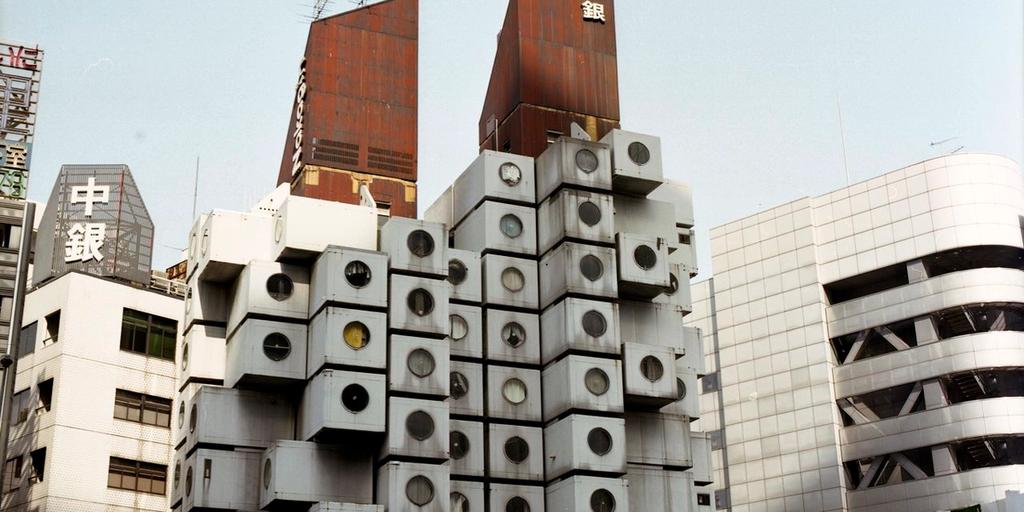
Metabolism was above all an urban-planning theory, whose aim was the wholesale transformation of city space. It emerged in Japan in the 1950s and began to develop rapidly in the 1960s, driven by the country's sharp economic growth.
Among its founding figures were architects such as Kisho Kurokawa, Kiyonori Kikutake and Fumihiko Maki, with Kenzo Tange at their head — the man who had overseen the reconstruction of Hiroshima after the bombing. For Japan, Metabolism was a breath of fresh air, a promise of renewal after the Second World War.
In 1960, the World Design Conference was held in Tokyo, where the manifesto Metabolism: The Proposals for New Urbanism was presented. It described the cities of the future and comprised several chapters, each written by a different member of the group. Cities, in the architects' view, would be composed of individual capsules and might float in the ocean or travel through space. Rebuilding an already existing urban structure is, of course, enormously difficult, and many of the projects never advanced beyond the drawing board. Even so, the ideas of Metabolism left a significant mark on history and exerted a profound influence on every subsequent generation of Japanese architects.


Architectural Principles
Japanese architects built their theory of metabolism on the concept of a living organism's development. Everything, as in nature, follows the stages of birth, growth, decline, death and rebirth. A building may contain both permanent elements and elements that change organically over time. It is hardly surprising that Japan became the birthplace of metabolism: the approach is inseparable from the country's culture and its view of the world.
A defining quality of the style is a certain incompleteness — an open-endedness that anticipates further development. These structures cannot be regarded as finished works; they are, rather, frameworks that allow something to be added, altered or removed in response to the demands of our ever-changing world.
Characteristics:
- Modularity
- Cell-like structure
- The 'unfinished' effect
Architects:
- Kisho Kurokawa
- Kiyonori Kikutake
- Fumihiko Maki
- Kenzo Tange
- Arata Isozaki
If you enjoyed this article, we recommend taking a look at 10 projects by the architect Le Corbusier or Arata Isozaki. You might also enjoy our selection of books on architecture.
Follow us on social media so you never miss new content:
— Telegram