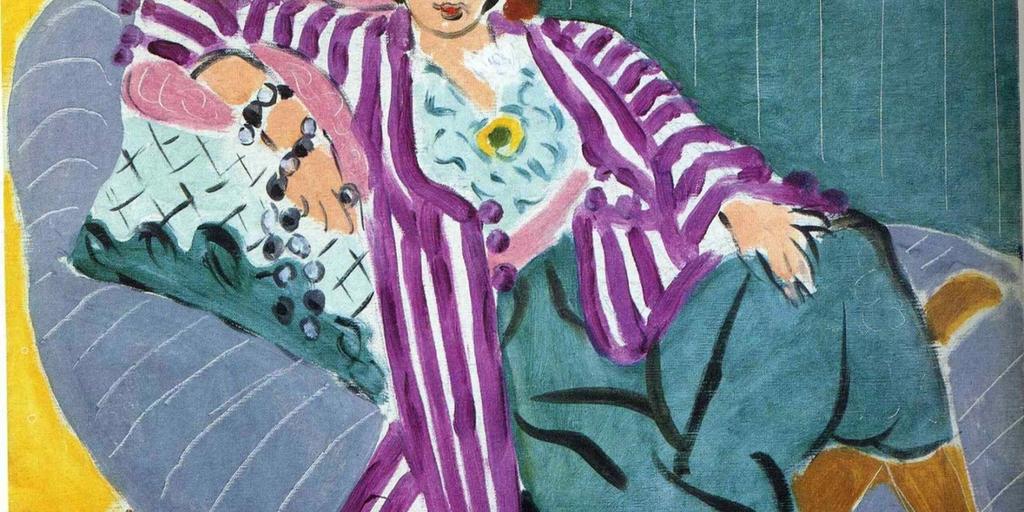
The French artist Henri Matisse is known to the world as a great explorer of colour. Despite coming to art at a comparatively late age, this did not prevent him from making a wealth of discoveries that artists continue to return to today.
Reserved and unassuming in his personal life, Matisse poured all his emotions and feelings into his canvases: by depicting fewer details, he sought to convey more. Let us trace how Henri arrived at his distinctive style and founded Fauvism — the artistic movement that shaped the art of the twentieth and twenty-first centuries.
In this article you will learn:
- how his style took shape
- the role played in his life by the Russian art patron Shchukin
- on Matisse's philosophy of painting
- which visual discovery laid the foundation for graphic design
- which artists, designers and fashion designers continue to draw inspiration from his work

From office clerk to art school student
Henri Matisse was born on 31 December 1869 in a small town in northern France, the son of a ceramicist mother and a prosperous grain merchant. As the eldest child, he was expected to carry on his father's business — such were the conventions of the time. From childhood he was groomed for a distinguished future: Matisse received his education at a prestigious school and went on to the lycée. Yet the rebel in Henri surfaced early: he was never afraid to tell his father openly that he had no intention of following in his footsteps.
Matisse came to art relatively late. He first trained as a lawyer in Paris, and on returning to his home town took a position as a clerk in a law firm. He did not stay long, however: at the age of twenty he suffered a severe bout of appendicitis that confined him to hospital for two months. To keep her son from growing bored, his mother brought him paper and paints. Drawing captivated him so completely that on his recovery Matisse abandoned law — to his father's profound disappointment — and enrolled in an art school.
In 1893 Matisse began his studies at the École des Beaux-Arts in Paris, where he was taught by the distinguished French painter Gustave Moreau. A strict adherent of academic principles, Moreau liked to send his students to the Louvre to copy the great masterworks. It was Moreau who laid the groundwork for Matisse's future explorations. "One must dream in colour," he told his students — and the idea resonated deeply with Matisse. He sought to invent a colour of happiness, harmony and perfection: qualities that had until then been conveyed exclusively through precise detail and symbolism. Matisse believed that colour, independent of form and other nuances, was capable of producing a more profound effect, and that superfluous detail only stood in the way of genuine engagement with a work.

In search of a personal style
At the turn of the twentieth century, the visual arts were governed by the rules of the classical school — the strict canons of painting rooted in Roman classicism and Renaissance art. As one of Moreau's students, the young artist had already made a name for himself in academic circles, and many saw great promise in him. Yet despite his growing success, Matisse found himself drawn to the more progressive work of Manet, the bold canvases of Van Gogh, the exotic painting of Gauguin, the revolutionary pictures of Cézanne and the refinement of Japanese printmaking.
A fateful encounter for Matisse was his meeting with John Russell — an Australian painter who soon became his mentor. Through Russell, Matisse returned to thinking about colour and its role on the canvas. He recalled: "Russell was my teacher; he explained the theory of colour to me." The influence of the Impressionists is already discernible in Matisse's work from this period, along with the first hints of his own vision: it was then that his earliest landscapes — Bois de Boulogne and Luxembourg Gardens — appeared.


Even in these works Matisse was unafraid of bold, sweeping brushstrokes; he disregarded form and perspective in favour of contrast and vibrancy, simplified his figures by stripping them of shadows while simultaneously lending them volume through saturated colour.
How Matisse became a Pointillist
In 1904, Henri Matisse held his first exhibition, which passed largely unnoticed by the art world. Yet for Henri himself it proved decisive: it was there that he met the Pointillist Paul Signac. The two soon travelled together to Saint-Tropez in search of fresh ideas and new impressions. The Pointillist style, with its characteristic bright, stippled brushwork, captivated Matisse, and he returned from the trip with his first masterpiece, Luxe, Calme et Volupté.
Yet Matisse was not destined to join the Pointillist movement: before long he abandoned the technique in favour of vigorous brushstrokes and bold, uninhibited colour.
"Charm, lightness, freshness — these are all fleeting sensations… The Impressionist painters… shared similarly delicate sensibilities, which is why their canvases resemble one another. I prefer, even at the risk of stripping a landscape of its charm, to bring out its defining character and achieve something more enduring."
Even then, Henri had come to understand that colour need not be used simply to represent reality as faithfully as possible. It was equally capable of expressing attitude, mood, image and the emotions the artist himself experienced. Matisse once said: "if I wanted an exact likeness, I would call a photographer." Turquoise, red, orange — all the colours that painters had previously shied away from, concealing them beneath careful blending — began appearing on his palette. At last, the pigments on his canvases were finding their voice.


A defining moment in Matisse's development as an independent artist was his meeting with his future wife. Henri and Amélie met at a friend's wedding, and from the very first both knew they had fallen in love. Tender letters, long-awaited reunions, bouquets of violets. Amélie was the first to believe in Matisse's talent, convincing him that he must continue pursuing his art and searching for his own style. Before their wedding, Matisse confessed to Amélie that, although he loved her deeply, painting would always come first. She accepted this truth and went on to become the great muse of his life. Amélie bore him two sons and raised his illegitimate daughter, whom Matisse had had with his model Caroline Joblaud.

During difficult periods, when their income barely covered the family's needs, his wife opened a millinery salon whose earnings sustained them for many years. Patient, compassionate and possessed of an unshakeable faith in her husband — such was Amélie.
Wild Beasts of Painting
At the Salon d'Automne of 1905, a group of young artists presented their "revolutionary" paintings to the general public. Henri Matisse, André Derain and Maurice de Vlaminck exhibited works made during a summer trip to Collioure, a fishing village on the Mediterranean coast. Their canvases were distinguished by vivid, unnatural colours applied loosely across the picture surface, an indifference to compositional rules and a schematically rendered perspective. The works were met with a storm of criticism.
Camille Mauclair compared their paintings to "a pot of paint flung in the face of the public." Some visitors even attempted to tear or deface Matisse's Woman with a Hat. The critic Louis Vauxcelles devoted a scathing review to the group, titled "Donatello among the wild beasts!", in which he sardonically dubbed the painters wild animals — fauves, from the French les fauves. The label stuck, giving the movement its name, with Henri Matisse at its head.
Fauvist paintings challenged the viewer and defied convention, compelling one to engage, to be surprised. They could not be dismissed or pretended away. They made no attempt to deceive: their impact was entirely sincere and honest. Through their expressive canvases, the Fauves drew attention to the conditioned nature of our perception of the world. Reality was transformed to the point of absurdity, as though the artists were deliberately stripping it back to something primal — removing the superfluous details and nuances that had accumulated in the human mind over centuries.
The Salon of 1905 proved a turning point in Matisse's work — at last, the dreams of colour his first mentor Moreau had spoken of were realised. Fauvism was an informal movement: there was no manifesto, no programme, and interest in it was sustained for only two or three years. Even so, the Fauves exerted a profound influence on the subsequent development of twentieth-century art, astonishing an academically seasoned public with their play of colour and form. Green portraits, crimson landscapes and vibrating still lifes defied every canon then in existence.

The gradual dissolution of the Fauvist movement had no effect on Matisse's work. Patrons began to appear among his admirers, enabling him to continue his explorations of style.
Gertrude Stein was the first patron to recognise Matisse's talent and to have the courage to acquire his controversial paintings. A celebrated writer with an exceptionally refined artistic sensibility, Stein was drawn to collecting works by young artists. Woman with a Hat, notwithstanding the outrage and caustic criticism it provoked, struck Gertrude as entirely natural.
The fragmentation of colour led to the fragmentation of form and contour. The result: a vibrating surface… I began to paint in flat areas of colour, seeking to achieve harmony through the relationship of all the colour planes.
In Search of the Exotic
Matisse travelled extensively, and this could not fail to leave its mark on his painting. A new location often inspired artists to take bold decisions and to see their work from a fresh angle. His journeys to Morocco and Algeria proved to be exactly that.
The scorching southern sun, tall date palms, vivid contrasting fabrics and painted ceramics — all of this immersed him in an entirely different world, unfamiliar to Matisse yet so close to his sensibility in its richness and intensity. Monochrome Paris, with its characteristic intellectual restraint, gave way to the vibrant colours of Africa, with its local culture and customs. The blinding sun added brilliance and contrast to the local landscapes and winding streets.
Matisse returned to France with a new way of seeing. The aggressive colours disappeared from his paintings, replaced by harmony, calm and depth. Henri sought to capture that barely perceptible vibration of southern lands. It is for this reason that the colours in his canvases seem to glow from within.


From his travels Matisse brought back souvenirs: brightly patterned fabrics, rugs and tablecloths, which subsequently appeared frequently in his paintings. By setting one decorative textile against another, he created an illusion of space, even though the conventional rules of perspective were formally absent from his canvases. Remarkably, this did not make the paintings any less spatially resonant. The varied textures established a distinctive rhythm that spoke not to the rational but to the emotional in the viewer.
Picasso: Friendship or Rivalry?
Having met at the Steins' Parisian salon, Matisse and Picasso realised that no one else understood them as well as they understood each other. Matisse was twelve years Picasso's senior and, by that point, his name resounded across all of France. The young Spanish artist was only at the beginning of his career, spoke poor French, and saw in Matisse a rival for the title of the defining artist of the age.
Despite their different approaches to painting — Picasso was absorbed by form, Matisse by colour — each was capable of pushing the other towards an unexpected solution. This is hardly surprising: what united them was the fact that both of their arts broke boundaries. Picasso once said: 'We must see as much of each other as possible. When one of us dies, the other will find there are certain things he simply cannot discuss with anyone else.' They not only analysed each other's paintings and debated their merits and shortcomings, but also exchanged canvases.
The Birth of Dance and Music
In the late nineteenth and early twentieth centuries, Russian merchants supported young artists and collected their work. The names of these patrons can still be heard at exhibitions today: Sergei Shchukin, Savva Morozov, Pavel Tretyakov. This was especially true of French painters, of whom the selective Morozov and the passionate Shchukin had no shortage in their collections — Matisse among them. Yet it was with Shchukin that the artist formed a particularly warm relationship.
Shchukin saw Matisse's painting The Joy of Life at one of the Autumn Salons and was deeply struck by the artist's mastery. By that point Shchukin already had an impressive collection of Impressionist and Neo-Impressionist works, but Matisse was the first artist he decided to meet in person. The collection began with the still life Dishes on a Table. Shchukin asked to take the painting home for a few days, on one condition: if his interest in the work endured, he would buy it. That was the beginning of a friendship between the creator and his patron.


Although the work did not yet possess the expressive qualities of Fauvism, Shchukin already sensed something in it that spoke to him. What makes this remarkable is that the patron trusted Matisse's taste entirely and granted him complete creative freedom — every artist's dream. It has been suggested that the decorative character of Matisse's work appealed especially to Shchukin because of his own profession. As a textile merchant, he had a well-trained eye for quality materials, which made him unusually receptive to such innovative work.
Between 1908 and 1909, Matisse was simplifying his paintings: fewer colours on the canvas, broader brushstrokes forming a monolithic whole. The culmination of these ambitions was the celebrated Dance and Music. These were decorative panels intended for the stairwell on the second floor of Shchukin's Moscow mansion. Discussing the idea, Matisse told Shchukin that he wanted to create something that would 'govern the emotions of someone climbing the stairs.'
It is said that Shchukin and Matisse took a long time to reach a shared vision for the panels. The patron worried that a composition of five nude dancing female figures would appear too explicit; he even suggested to Matisse that they be 'dressed', but the artist held firm. The idea of the dance had long been with him, though it had never before been distilled to such brilliantly spare simplicity. Even in the 1905 canvas The Joy of Life, one can spot the familiar silhouette of dancing figures at the centre of the composition.


'I simply went one Sunday to the Moulin de la Galette. I watched the dancing… On returning home, I composed my dance to four metres in length, humming the same tune,' Matisse recalled.
'Dance' and 'Music' are two opposing poles forming a remarkably powerful pictorial chord. 'Dance' is an intensely rhythmic work that draws us back almost to something primal and elemental. For Matisse, the point was not to depict a specific dance but to convey the very idea of it: a surge of energy that sweeps everything beyond the frame and beyond reality. To this 'feminine' world of 'Dance', Matisse counterposed the balanced, 'masculine' world of the static 'Music'. These works contain the heart of Matisse's revolution: using just three primary colours, he creates a composition full of rhythm and vitality that acts directly on the emotions. At the same time, 'Dance' is deeply musical — it has its own resonance, generated by the lines that trace the silhouette.
Matisse presented the painting to the public at the 1910 Salon d'Automne, which Shchukin also attended. The work was sharply criticised; many condemned it for its crudeness and primitivism. No one recognised its value except Guillaume Apollinaire — poet and art critic. Shchukin, ordinarily indifferent to criticism, was this time unnerved by the public reaction and withdrew from the commission. Matisse was deeply troubled: his daughter recalled how he could not sleep and would sit before the paintings searching for flaws.
Yet on returning to Moscow, Shchukin changed his mind: '…on the whole I find the panels interesting and hope to love them one day. I trust you completely.' The patron believed that time would prove the works' greatest ally. And so it did.
Matisse had long dreamed of visiting Russia — he wanted to see a Russian winter and to stand inside the Hermitage. His wish was granted when Shchukin invited him to oversee the hanging of paintings in his Moscow mansion. Unfortunately, the Hermitage was closed for renovation, so that visit never happened. Russia made a profound impression on Matisse, above all its icons. He spoke of them in these terms: 'The Russians have no idea what treasures they possess. Italy offers less in this regard. Everything that modern art has been struggling towards and has only just achieved — all of this existed in Russia as far back as the fifteenth century.' The relationship between Shchukin and Matisse came to an end with the outbreak of the First World War, as shipping paintings simply became impossible.
Matisse's philosophy of colour
But what exactly was Matisse seeking to achieve through his experiments with colour? For many people, Henri's art remains a puzzle to this day — after all, 'a child could draw like that.' Herein lies the central paradox: Matisse was striving to create an art that would be accessible to everyone, requiring no prior knowledge of symbols or complex subject matter.
'…But what I dream of above all is an art of balance, of purity, of serenity, free from troubling or disturbing subject matter — an art that would be consistently good for the intellectual worker as well as for the businessman and the writer alike: something that would soothe and calm the mind, much as a comfortable armchair gives the body relief from physical fatigue.'
Henri sought to find colours capable of conveying joy or calm, harmony or gaiety, sorrow or tension. His role as an explorer lay in studying the effect of colour on the human being. He deliberately distorted perspective and volume — functions that were instead fulfilled by the contrast of one surface texture against another. Even broad brushstrokes on his canvases are never accidental: the way they are placed sets the tempo of the composition.
Despite the vivid brilliance of Matisse's work — particularly during his 'wild' period — few people would have described him as a rebel. A settled family man and father of three who rarely shared details of his private life, he carried himself with great composure in public and gave the impression of a modest, thoughtful person. Matisse always looked impeccably put together — a well-cut suit, a neatly trimmed beard — a standard he owed in no small part to his wife, who had no tolerance for slovenliness. Meeting Henri, no one would have guessed that such intensely colourful canvases were his work. It seems likely that he poured the full, vivid range of his emotions onto the canvas rather than expressing them in his way of life. Then again, painting was his way of life.

Matisse was concerned above all with expressiveness — with an image that did not always have to correspond to reality. Women were often his models, yet many viewers found his paintings of them repellent. Matisse expressed beauty independently of the model, even independently of physical reality. The context in which a model was placed, the ornament, the palette, the lines — all could serve as instruments of expression, and every detail of such a composition worked toward the creation of a particular image. Once, someone asked Matisse: 'Do you really find such women attractive?' He replied: 'If I were to meet such a woman, I would run for my life. But I do not paint women — I paint pictures.'
Matisse's style is recognisable not only for its distinctive painterly qualities. The artist was attached to seemingly ordinary objects: figurines, coffee pots, fabrics, small vases, a goldfish bowl. His own paintings frequently appeared as backdrops within his canvases. One object or another keeps turning up across his works — especially in his celebrated series of interiors and in his still lifes.


Final Years
By the 1920s Matisse had achieved worldwide renown: exhibitions were held across Europe and the United States, and his name was becoming widely known. Around the same time, his wife fell ill and the household needed someone to help care for her. It was then that Lydia Delectorskaya appeared on their doorstep — a Russian émigré whose family had perished during the civil war.
Madame Matisse had no particular concern about having a young woman in the house. She and Lydia got along wonderfully: the girl was neat, unassuming, and attentive to her. Besides, fair-haired Lydia was not Matisse's type — he was drawn to petite, dark-haired women of a southern appearance. For a long time he barely noticed her. Then one day Lydia was sitting beside Amélie's bed, hands folded over the back of a chair, her head resting on them, listening intently. Matisse's gaze lingered on her and he asked her not to move. He made a few sketches, and from then on began to paint her portrait more and more often.


'Every time I feel low, I sit down to paint a portrait of Madame Lydia — and the melancholy vanishes,' Matisse would say.
His wife was unhappy with this turn of events, even though there was no obvious infidelity or open expression of feeling between Matisse and Delectorskaya. What Amélie feared was something else: she had always been his sole muse, his source of inspiration, his support. Now Matisse seemed to come alive only in Lydia's presence. Before long the marriage between Amélie and Henri broke down, after which Matisse spent more than twenty years with Delectorskaya. She became his secretary and assistant. She nursed him through illness, mixed his paints, and coloured paper for him. There was never a physical relationship between them; theirs was a platonic love, and a deeply sustaining one. 'Every time I feel low, I sit down to paint a portrait of Madame Lydia — and the melancholy vanishes,' Matisse would say.
Matisse's Cut-Outs: a Whim or a Work of Genius?
After an operation to remove intestinal cancer in 1941 left Matisse confined to a wheelchair, he lost the ability to work standing up. Yet this led him to devise a new means of artistic expression — the technique known as découpages, or cut-outs.
Scissors and paper painted with gouache came into play. Cutting out abstract figures of animals, people and plants, Matisse arranged them into compositions and assembled them as collages. The works were distinguished by their minimalism and concision, which provoked controversy. The cut-out birds, plants, fish and simplified forms had a childlike spontaneity, but once placed within a unified composition every apparent flaw became an asset: they introduced dynamism and reinforced form.


The discovery was innovative and audacious for its time — entirely in Matisse's spirit. As always, the artist astonished everyone with his "inventiveness", yet he himself was overjoyed to have at last found the perfect means of expression through colour. Matisse dedicated a book to his collages — Jazz — which contains printed reproductions of works in this style.
In 1948, Matisse was given the opportunity to design the Chapel of the Rosary, where he used the découpage technique for decorative purposes. He continued working in this manner right up to his death in 1954.
What alarmed the critics?
Matisse was convinced that every artist has the right to set their own criteria of beauty and their own laws of art. The art establishment of the day, however, feared such declarations, certain that everything new undermined existing values. Because of their excessive "decorativeness", many French critics dismissively referred to Matisse's paintings as wallpaper.
Matisse was accused of infantilism and a lack of craft on account of his simplified forms and perspective. At the same time, it was precisely the scandalous nature of his work that allowed him to make his name and distinguish himself from thousands of others. He had no need for universal recognition, though he received it towards the end of his life. The move towards simplification was a deliberate choice.


Experts maintain that for an academically trained artist, nothing is harder than shaking off what one has previously studied and returning to a "childlike" perception of reality. The critic Alexander Benois wrote: "One can perhaps 'learn perfection' by imitating the perfect, but one cannot 'learn to unlearn'. Much can be accumulated and stored in memory, but it is far harder to forget. And harder still, having forgotten everything… to find it anew from within oneself, through one's own experience."
When Matisse's works were brought to Russia and shown at the Izdebsky Salon of 1910, they were received negatively. Ilya Repin considered them "painting sustained by the spirit of profit", and collecting such things merely another eccentricity of the Moscow merchant class, on a par with buying a performing pig at the circus. People began to say that paintings so wild were confusing the younger generation of artists and corrupting them.
At a time when calls for justice and freedom were growing louder in Russia, Matisse's festive and refined works seemed excessively bourgeois and remote from ordinary people. Yet there were those who, despite rejecting the paintings themselves, did not diminish Matisse's genius — and who, moreover, admired his honesty.
Matisse gives an immense lesson in honesty," Benois said.
"But a hope immediately arises: what if precisely this rawness, this simplicity — which Matisse strives to acquire by force and which already exists naturally within us — what if these very national traits of ours might save us and give rise to that longed-for childlike spirit from which a new era of art must emerge. Matisse gives an immense lesson in honesty." So said Benois. And yet he considered Dance and Music "terrible failures".
How Matisse changed twentieth-century art and influenced the work of others
The scale of Matisse's influence is difficult to grasp: the expressive forms he discovered surround us everywhere in daily life. His colour palettes, techniques and approaches have become embedded in applied design — more than that, they have become its very starting point. His découpages, with their legible forms and colours stripped back to their essentials, were graphic in character. Matisse was among the first to recognise the decorative power of painting — a power accessible to anyone who feels beauty, not only to a select circle of connoisseurs. Painting capable of working through line and colour alone, forming a single symphony of beauty.
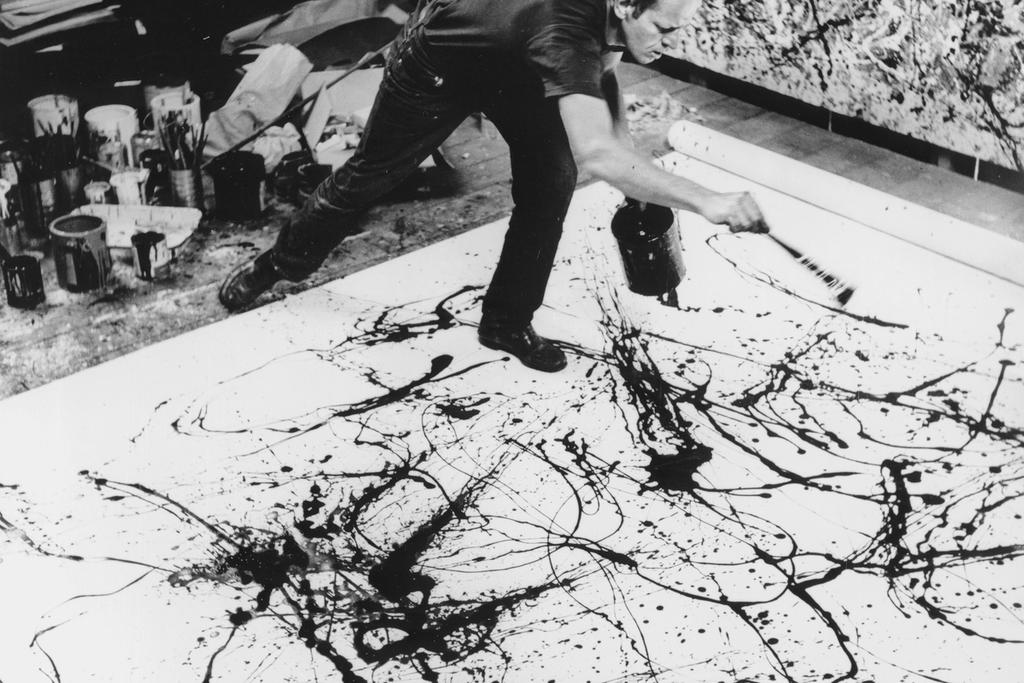
Picasso, Pollock and Rothko are generally regarded as the pioneers of modern art. Yet Matisse abandoned traditional painting before any of them, and in doing so emboldened generations of artists who came after him. He gave an unspoken permission to create as the painter himself desired — to be unafraid of criticism and to express oneself freely.
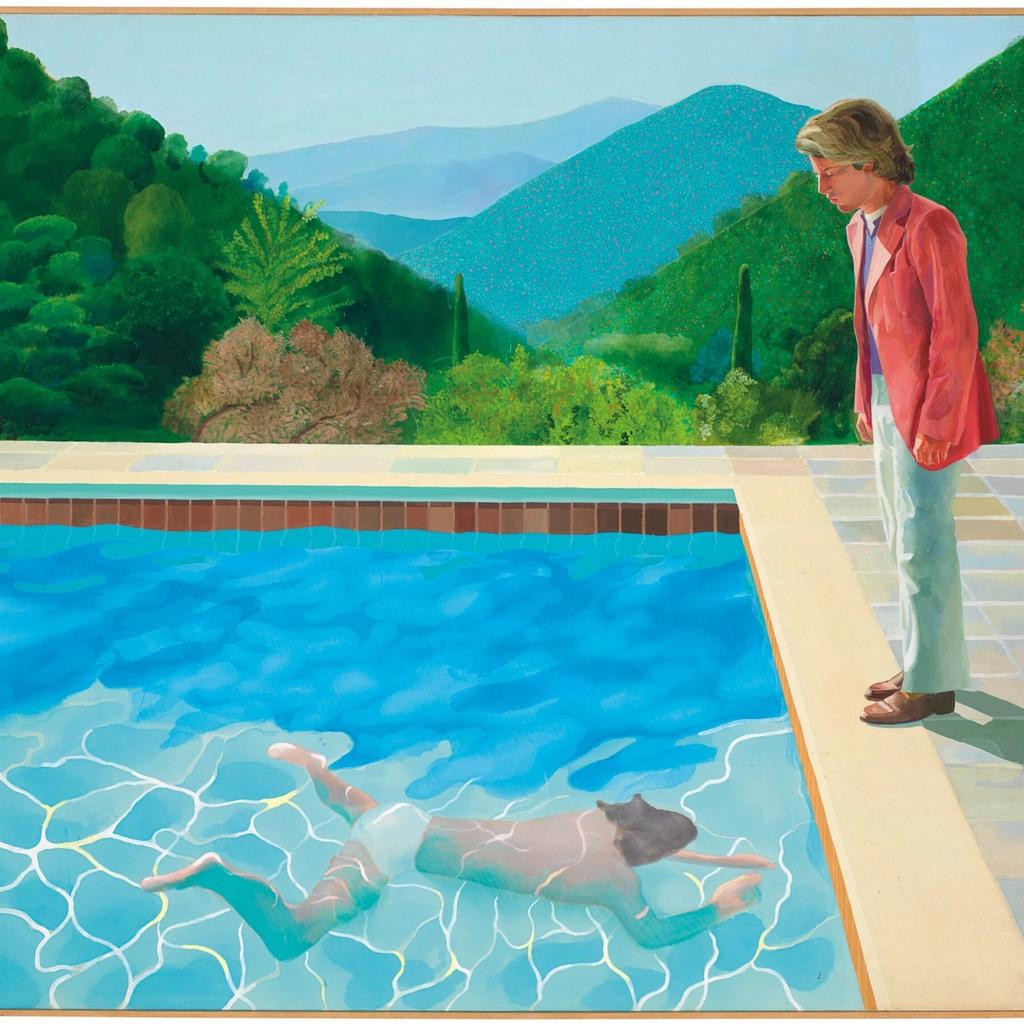
Henri's techniques are recognisable in the work of many celebrated artists. Bold colour combinations, flat silhouettes that suggest rather than define an object, skewed perspective, figures rendered in blue and coral — all of these qualities can be seen in the paintings of Milton Avery. And if you have had the chance to encounter the work ofDavid Hockney, his vivid landscapes invariably carry traces of Fauvism. The vibrant, celebratory canvases of Miriam Schapiro likewise call to mind the Frenchman's signature devices. The influence of his postwar découpage style is visible in the work of Ellsworth Kelly and in the installations of Judy Pfaff.
Designers and fashion designers treat Matisse's famous snail almost as a reference book. Paul Smith, for instance, has spoken of returning to it regularly in search of inspiration: take any colours from it, and they will work beautifully together.

It is remarkable how completely this great artist was possessed, throughout his entire life, by a single governing idea: the simpler the means, the more powerfully the feeling is expressed. He never stopped discovering new things or seeking ways to reduce form to its essential state.
It takes little introspection to understand the effect Matisse's works have on us — the feelings they provoke are entirely genuine. It is extraordinary that more than a hundred years on, they continue to inspire so many people, and that echoes of his ideas can be found everywhere.
Matisse surrounds us in everything.
Interesting facts:
- Every year Matisse gave Lydia Delectorskaya one portrait. Over time she accumulated a whole collection of them. She donated many of the paintings to the Soviet Union — a country she herself was never able to return to.
- Does the tablecloth pattern in The Red Room look familiar? What if you were to imagine it in blue? The painting was originally rendered in the same tones as Still Life with Blue Tablecloth. On the eve of the exhibition, Matisse felt the canvas lacked sufficient decorative impact, and repainted it in red.
- Pablo Picasso treated the paintings gifted to him by Matisse with great care: he would take each canvas to a safe for safekeeping.
- With the support of the Stein family, Matisse founded his own Academy of Art. Young, ambitious artists flocked to it hoping to learn to paint like Matisse — with the same boldness and revolutionary spirit. To their surprise, however, they found exactly the same classical approach as in any other school or academy. Matisse was convinced that without a solid academic foundation, a true artist cannot exist.
- In 1920, commissioned by the celebrated impresario Sergei Diaghilev, Matisse designed the costumes and sets for the ballet The Song of the Nightingale.
- Two days before his death, Matisse suffered a minor stroke. Delectorskaya recalled entering his bedroom on the eve of his passing and saying: "On another day you would have asked for a pencil and paper" — to which he replied: "Then bring me a pencil and paper."
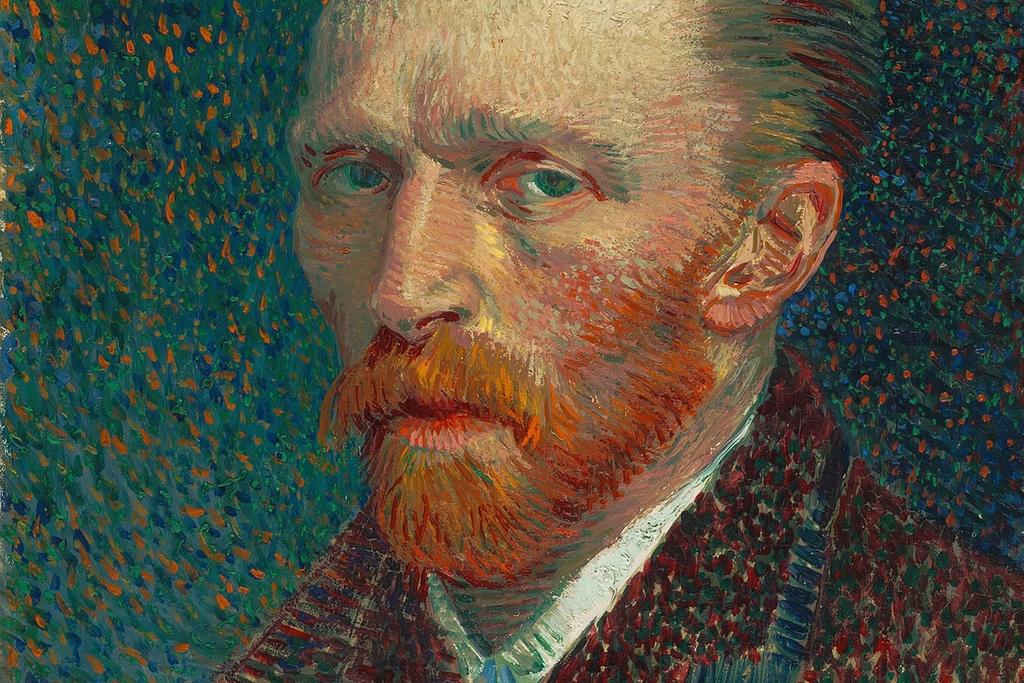
Also read our other artist biographies: Van Gogh, David Hockney, Georgia O'Keeffe, Wassily Kandinsky, René Magritte, Frida Kahlo, Edward Hopper.
Follow us on social media so you never miss new content: Telegram.