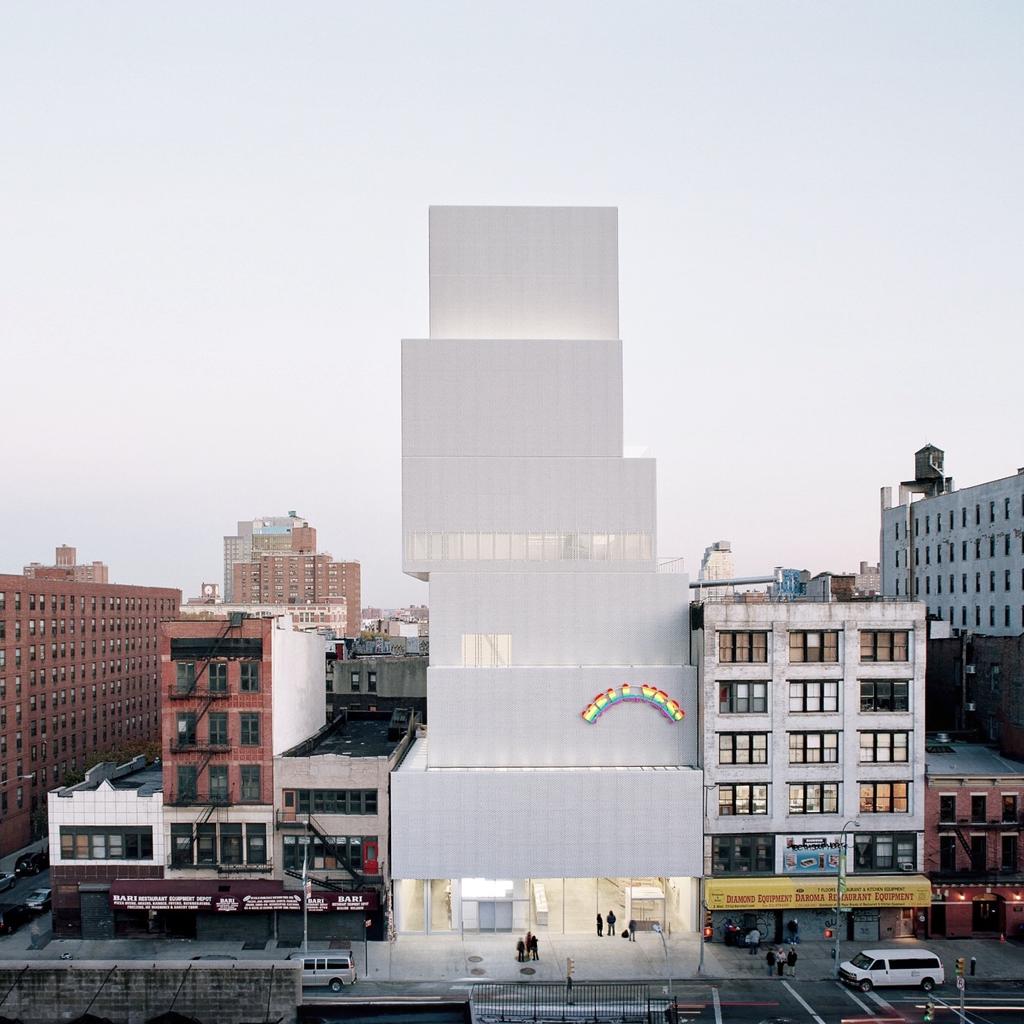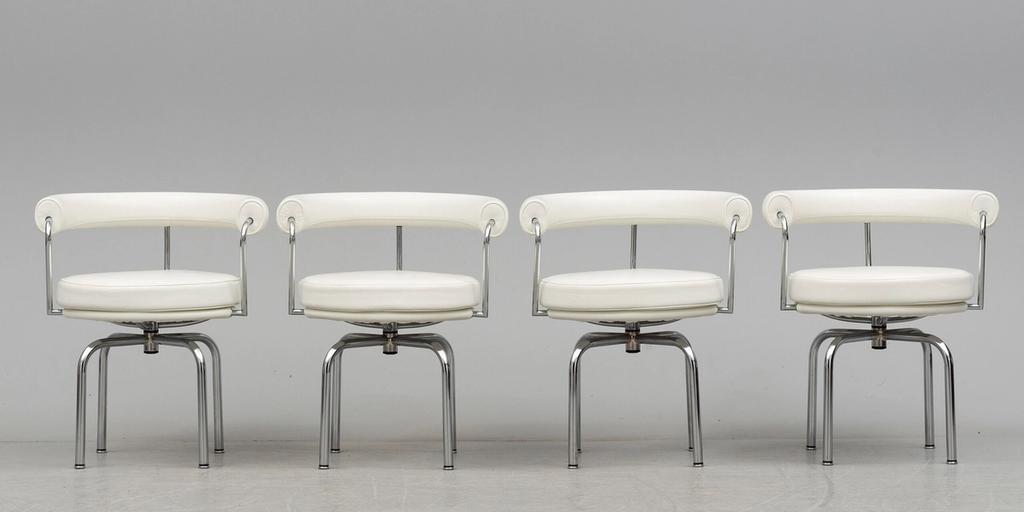
Mies van der Rohe designed a chair for the King of Spain, Alvar Aalto founded his own furniture company, and Marcel Breuer invented the first tubular steel chair in the history of design.
Architects have frequently designed furniture, and many of the defining designers of the twentieth century trained as architects.
Losko, together with Soft Kultura — an educational platform for architects and interior designers — presents 10 architects who created objects that became icons of twentieth-century design.
Jean Prouvé
French architect and designer Jean Prouvé is remembered as an innovator who found simple, functional solutions to every challenge. The lightweight metal curtain wall he devised for the Maison du Peuple in Clichy became the prototype for decorative façades — an idea that would later help preserve and refresh the visual character of the most varied buildings around the world, including the Ministry of Culture in Paris. And the Maison Démontable (Demountable House) he created in 1944 became the forerunner of all modern rapid-assembly mobile homes.

In 1924, Prouvé opened a small furniture workshop at his home. Within twenty years it had grown into a large studio producing furniture on an industrial scale — a necessity of the difficult postwar era. Having conceived a piece on paper, the designer would immediately set about building it, testing the finished result on his household first. If everyone approved of the chair, table or armchair, he would produce it in a series for a wider audience. That is how the Cité armchair, the Rayonnage Mural wall shelf and many other works came into being.
The legendary Standart SP chair was designed for a competition to furnish a student residence in Nancy. The rear legs are conical and taper downwards, in counterpoint to the classic tubular front legs. The seat and back are made from oak plywood, and the chair's upright form encourages good posture during study. The School Desk — a unit combining desk and chairs — is an innovative take on the workstation that remains popular in schools both in France and around the world.
Verner Panton
A visionary of futurism, bold colour and pliable materials, Danish architect and designer Verner Panton was afraid of neither colour nor form. Among the first architectural projects Panton developed — the lobby of the Hotel Astoria in Trondheim and the canteen for the editorial offices of Der Spiegel in Hamburg — are alive with vivid colour and geometric patterns.

Rather than the wood traditional to Scandinavian design culture, Panton favoured materials that were new to the twentieth century: Plexiglas, plastic, polypropylene, fibreglass. This passion for innovation was shaped in large part by Poul Henningsen, Panton's mentor and teacher, and by architect and designer Arne Jacobsen, in whose studio Verner worked during the 1950s.
One of the designer's most revolutionary works was the Living Tower residential installation, created in 1969. It became one of the first pieces of furniture to change its configuration according to the needs of its users. But Verner Panton's greatest design passion was chairs and lamps: "Sitting in a chair should be not only comfortable but interesting — like a game," believed Panton.
In keeping with that principle came the celebrated curved Panton Chair, produced today by Vitra, the Cone Heart armchair, the C1 chair, and several other iconic models. The designer also created more than 20 different light fixtures, including the decorative Fun chandelier and the bold semicircular Flowerpot shades.
Charlotte Perriand
French designer and architect Charlotte Perriand was architecture's first feminist. It was she who popularised the open-plan kitchen and living room, giving women the freedom to entertain guests while keeping an eye on the cooking. In her tiny Paris apartment she installed a bar counter to visually divide the space. For twentieth-century France, accustomed to a small, separate kitchen off-limits to guests, all of this amounted to something close to a genuine revolution.

When Perriand was 24, she approached the already celebrated Le Corbusier at his studio hoping to find work, only to receive a stinging rejection: 'We don't embroider cushions here.' Shortly afterwards, following the Paris Autumn Salon where Perriand exhibited her tubular furniture, the maestro apologised and offered her a position.
In the 1920s, together with Le Corbusier and Pierre Jeanneret, Charlotte Perriand produced the legendary LC1 and LC7 armchairs and the LC4 chaise longue — pieces that became symbols of the design century. Working in Le Corbusier's studio, where expensive metal furniture was the norm, she was simultaneously pursuing a parallel goal: making modernist design accessible to everyone. The result was the spare wooden Berger chairs and stools, so that people of modest means could make their homes tidier and more contemporary.
Until the end of February, a major exhibition dedicated to Charlotte Perriand at the Fondation Louis Vuitton in Paris presents the furniture and interiors she created.
Marcel Breuer
One of the most important architectural innovators of the mid-twentieth century, Marcel Breuer trained under the founders of the Bauhaus and went on to work as a sculptor and artist in one of the school's workshops. As an architect, Breuer was among the first to unlock the potential of reinforced concrete, now so widely used. He strove to create buildings and homes that were at once compact, functional and visually pleasing. World-famous modernist structures — among them the Whitney Museum in New York, the Doldertal apartment complex in Zurich, and the IBM research centre in the French village of La Gaude — are all works by Breuer.

While working at the Bauhaus in the German town of Dessau, the architect got around the city mostly by bicycle. It is generally held that the steel handlebars of his Adler bicycle were the inspiration for his tubular-steel furniture. The result was the celebrated B3 chair, later renamed Wassily in honour of Breuer's friend and colleague Wassily Kandinsky. The artist was so taken with the design that he asked Breuer to make him one.
The Italian furniture manufacturer Gavina, which later produced the B3, liked the story and renamed the model after its first admirer. The tubular-steel furniture series also came to include the Laccio table and the Cesca chair — named after the architect's adopted daughter, Francesca. In the early twentieth century, the original Wassily armchair and Cesca chair, with their tautly stretched fabric, had the quality of genuine Constructivist sculptures.
From 1925 to 1928 Breuer headed the Bauhaus furniture workshop, and his tubular objects achieved a popularity previously unknown: because the designs were not patented, almost anyone could manufacture similar pieces. Tubular furniture thus became the benchmark for office interiors, and the Cesca and Wassily chairs, together with the Laccio table, are still produced today by the American company Knoll.
Ludwig Mies van der Rohe
Less is more — the defining motto and guiding principle of the legendary American architect of German origin, Ludwig Mies van der Rohe. He was the first to build long, geometric structures of steel and glass, free of interior walls yet flooded with natural light and air.

This sense of openness and space defines the Villa Tugendhat in Brno, the Neue Nationalgalerie in Berlin, the Farnsworth House, the Illinois Institute of Technology campus, and many other buildings by the architect. Simplicity, minimalism, geometry and open-plan layouts — all of which entered the mainstream largely thanks to LudwigMies van der Rohe — remain as relevant today as ever.
When Mies was designing the German Pavilion for the World's Fair in Barcelona, he knew that King Alfonso XII of Spain would be paying a visit. No furniture had been planned for the pavilion, but the architect created the now-iconic Barcelona Chair especially for the Spanish monarch; it was later put into production by Knoll. Another of Mies van der Rohe's furniture masterpieces, the Brno Chair, also came about through a commission — when he was designing a house in Czechia for Fritz Tugendhat and his wife Greta.
Charles and Ray Eames
The celebrated American couple — architect Charles Eames and his future wife, the artist Ray Kaiser — met while studying at the Cranbrook Academy of Art, which at the time was a gathering point for the most brilliant creative minds of the age. The Academy's president was the distinguished Finnish architect Eliel Saarinen, and one of its visiting instructors was Bauhaus founder Walter Gropius. After graduating, Charles Eames became head of the industrial design department, while Ray began designing covers for a popular Californian architecture and art magazine.

When Charles and Ray married and opened their own studio, they set about creating comfortable, functional furniture. For an international competition for low-cost furniture suitable for mass production, organised by New York's Museum of Modern Art, MoMA, the Eameses conceived the Eames Plastic Chair — a piece that would go on to become a true classic. Its seat was shaped to follow the contours of the human body, making it as comfortable as possible.
The chair went on sale, but production was soon halted: the seat shell was made from fibreglass-reinforced plastic, a material that was quickly deemed highly detrimental to the environment. It was not until 2000, when the material was replaced with recycled polypropylene, that the Eames Plastic Chair went back into production.
The famous Eames Storage Units, created by the couple in 1949, were equally groundbreaking: owners could now decide for themselves which configuration of shelves and drawers worked best for them. Today, the Eames Plastic Chair, ESU modules, the playful and practical Hang It All, and other Eames creations are available through Vitra.
In 2011, an excellent documentary about Charles and Ray Eames was released: Eames: The Architect & The Painter (2011).
Alvar Aalto
"A work of genius" — that was how, in 1939,Frank Lloyd Wright described the Finnish Pavilion at the New York World's Fair, designedby Alvar Aalto. Aalto was indeed a true genius of twentieth-century architecture and design: he created buildings and conceived functional furniture for them that went on to sell widely around the world.

Alvar Aalto is widely regarded as the founding father of modernism in Northern Europe. The architect designed one of MIT's campuses in the United States and the celebrated Paimio Sanatorium, for which he and his wife Aino designed all the furniture: metal beds with no sharp edges, chairs for the meditation room and chaise longues for sunbathing — so that tuberculosis patients could rest outdoors in a semi-reclined position, the Aaltos conceived the now-iconic Paimio Chair. The Side Table 606 also came about at this time, originally conceived by Aino as a stool on which patients could sit while changing their shoes.
Many pieces of furniture emerged directly from Aalto's architectural projects. The three-legged bent-birch Stool 60, for instance, was made specifically for the lecture hall of the library in Vyborg — then the Finnish city of Viipuri. The L-shaped legs are the architect's own innovation: their stable form makes them virtually impossible to loosen, and they are far stronger than conventional peg legs. The Tea Trolley on wheels, meanwhile, was created especially for the Finnish Pavilion at the 1937 World's Fair in Paris.
Today, virtually all of the iconic furniture conceived by Alvar and Aino Aalto is produced by Artek, the company the couple founded in 1935.
Gerrit Thomas Rietveld
A member of the Leiden-based De Stijl circle, Dutch architect, artist and designer Gerrit Thomas Rietveld sought new means of expression in art and design. He created furniture that resembled works of art and interiors that would later be inscribed on the UNESCO World Heritage List. Rietveld's first architectural work was a house for his partner Truus Schröder in Utrecht. He effectively transposed the De Stijl manifesto and the principles of Neo-Plasticism into three-dimensional space: the furniture moves and transforms with ease, right angles are everywhere, and the entire interior is executed in the movement's canonical colours — red, blue, yellow, white and black.

Of the celebrated ZigZag chair, the architect said that it was "not a chair but a designer's joke." For the first time, an everyday piece of furniture dispensed entirely with conventional legs, a back and armrests. The designer wanted to create a fully monolithic chair and experimented at length with metal and wood before settling on the simplest possible construction of four plywood sheets. He later produced the chair in other variations: with armrests, with a lowered seat and with a perforated back.
Another Rietveld masterpiece is the Red Blue Chair. Initially monochrome, it acquired its recognisable colouring — reminiscent of Piet Mondrian's canvases — in 1923. The Hanging Lamp and Table Lamp were also created as a tribute to De Stijl, adhering to the core principles of Neo-Plasticism: functional, practical and geometric. Today, most of the objects Rietveld created are on display at MoMA in New York and the Stedelijk in Amsterdam.
Alexander Girard
American designer and architect Alexander Girard — an inveterate traveller — was among those who broke away from classical modernism and the monochrome aesthetic fashionable in the 1960s. He brought colour and decorative abundance back into vogue. His printed textiles made for Herman Miller, his vivid figurines inspired by the folk art of Mexico, India and Egypt, and his multicoloured tableware mark an important moment in the history of minimalist design.

The famous home of actor Irwin Miller, designed by Eero Saarinen and furnished by Alexander Girard, served as the prototype for Don Draper's New York apartment in the hit series Mad Men. The bold furniture — including chair No. 66310 for Herman Miller, the brand where Girard headed the textile department — along with many other Girard design objects, entered the collection of the Vitra Design Museum.
In addition to designing interiors, fabrics, furniture and decorative objects, Alexander Girard also published a children's book, Color, in which the designer used 26 pages of playful illustrations to tell children everything about colour.
Arne Jacobsen
A true perfectionist who liked to see every project through from start to finish, Danish architect and designer Arne Jacobsen created complete architectural schemes encompassing furniture and decorative objects — among them the world's first designer boutique hotel. For the SAS Royal Hotel in Copenhagen, Jacobsen not only conceived the architectural design but also developed all the furnishings, from armchairs and beds to ashtrays and bedside lamps. For the lobby in particular, he created the iconic Egg, Swan and Drop chairs, and devised the minimalist AJ floor lamp, which subsequently went into wider commercial production.

When developing furniture pieces, the architect would often begin by sculpting a clay prototype of the model, in order to determine the ideal form precisely and work out the scale and proportions.
Arne Jacobsen created his iconic Ant and Series 7 chairs using the Eameses' innovative technique of bending sheets of plywood to produce a single continuous form. Today hugely popular, the Ant and Series 7 were not an immediate success. It was only when the designer replaced the classic black with red, white and brown that restaurants, bars and other public spaces began ordering them. Furniture produced to Arne Jacobsen's designs can today be ordered from the Danish manufacturer Fritz Hansen.
For more inspiring examples, professional development, contemporary skills and insights into the working culture of architects and interior designers, visit the educational courses and the Soft Culture blog.
You can explore beautiful design objects in our features, such as:
Less is more: Iconic pieces from the Bauhaus school or Russian designers: 7 talents in product design.
Follow us on social media so you never miss a new piece: VKontakte, Telegram.