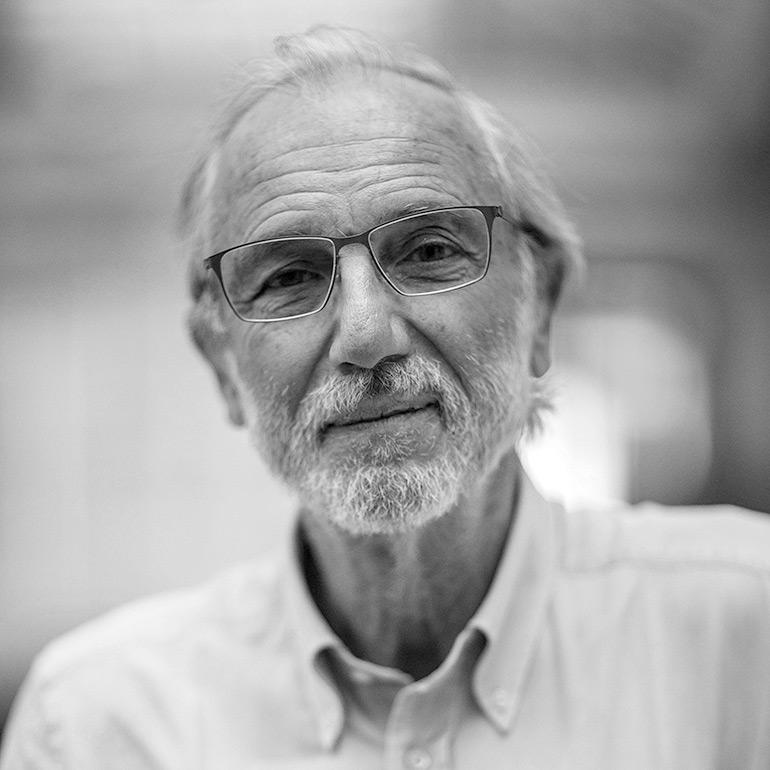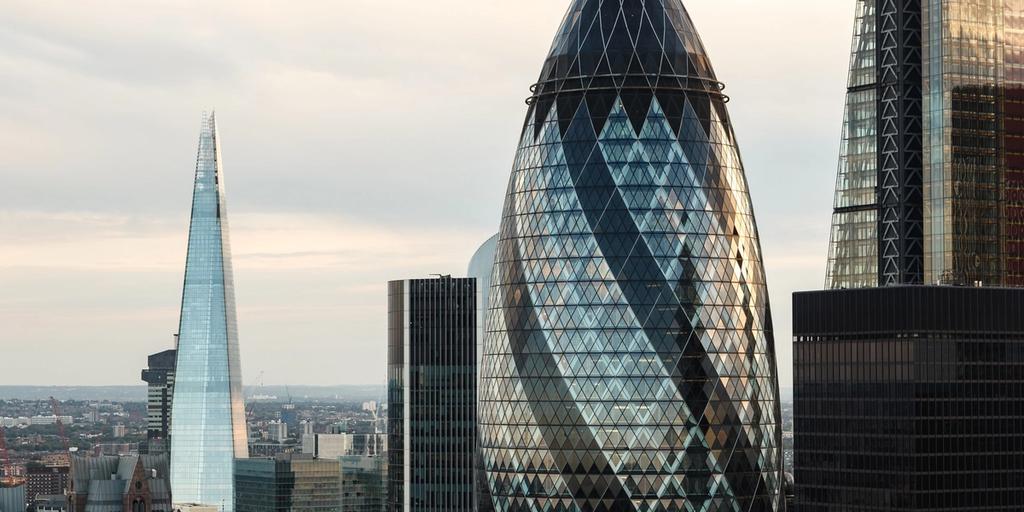
Norman Foster is the British architect who pioneered the high-tech style. Every project he undertakes invariably sets a record — in scale, innovation, versatility, height or budget.
In this article you will discover:
- a brief biography of Norman,
- the philosophical ideas behind his architecture,
- the most significant buildings that have shaped contemporary architecture,
- the sources of the architect's inspiration,
- fascinating facts from Foster's life.
Biography
Norman was born on 1 June 1935 in the British city of Manchester. His father worked as a painter and decorator, and his mother as a general labourer in a factory. At sixteen, Foster left school to find work and help his parents pay their bills. A university education was the furthest thing from his mind.

While working as a salesman in a furniture shop, Foster developed an interest in spatial modelling. He spent every spare moment studying urban planning and architecture. His exceptional dedication and talent earned him, at twenty-one, a scholarship to study in the United States. After two years at the Yale School of Architecture, he graduated with a Master's degree.
During his time at Yale, Norman met Richard Rogers — a gifted architect from England. After graduating, the two returned to Britain together and founded the Team 4 practice. Alongside the architects, their wives also worked at the firm. Over the ten years of the practice's existence, the architects produced nothing of particular note. Yet one discovery was enough to make their names known to the world. Inspired by the work of Russian engineer Vladimir Shukhov, the four pioneered a new architectural style: high-tech.
The team sought to advance the idea of ecological architecture. They designed buildings that consumed less energy, caused less pollution and sat more gently within their surroundings. Sadly, their ideas were never realised, but they laid the groundwork for concepts and buildings that would find their moment in the future.
Foster soon closed the practice and founded a new one, Foster and Partners. In the early years the firm took on smaller projects, but gradually began to collaborate with leading architects and engineers.
In 1971 Foster was invited to join a team of architects working on the Willis Faber and Dumas insurance company headquarters. There he met the American architect, engineer and inventor Buckminster Fuller. Fuller noticed Foster's unconventional way of thinking and became curious to see what kind of building would emerge if he simply stayed out of Norman's design process and agreed to every one of his ideas.

The result caused a sensation. News of this innovative office type spread rapidly beyond the country's borders. The building was unlike anything that had been built before. Its walls were composed entirely of dark glass. The roof housed a garden and a swimming pool for staff, which also functioned as a heat sink. The building was equipped with numerous technological innovations besides. All of this was revolutionary for the mid-1970s. It was here that Norman first made his ideas known — his conviction that energy-efficient design mattered and that architecture had a meaningful social role to play.


Fuller was pleased with the outcome. Seeing enormous potential in Norman, he encouraged him not to be afraid of breaking the rules and to pursue even the most audacious ideas. Foster spoke of Fuller as his inspiration and mentor. The two worked side by side until Buckminster's death.
"Fuller showed me how even the smallest detail can completely transform a room, a building — and even an entire city."
After such a successful project, commissions began to pour in. Foster was no longer willing to take on just anything. He chose only large-scale projects where he had the greatest scope to realise his vision and ideas.
Each new project made Norman more celebrated. He began building new structures and renovating existing ones across the world, while also teaching at leading universities in the United States and Europe. He devised architectural solutions that transformed the entire high-rise construction industry, and through them Foster and Partners became the most authoritative firm in the field of tall-building design.
"I am not a creature of habit. I love exploring and finding new ideas in unexpected places."
By the early 2000s Foster had collected the most prestigious prizes in his field. Following the award of the Pritzker Prize, he was invited to Russia to design a number of projects. His relationship with our country proved to be an ambivalent one.
Foster's team designed buildings for St Petersburg, Moscow, Khanty-Mansiysk and Yekaterinburg. A scale model of the 600-metre Russia tower was completed for Moscow City, and a high-rise tower called Crystal was designed for Khanty-Mansiysk. The firm entered the competitions for Zaryadye park in Moscow and New Holland in St Petersburg, and designed the Apelsin mixed-use residential and office complex, whose futuristic architecture was more reminiscent of Frank Gehry's work. For various reasons, not a single one of these projects was ever built.
Today, Foster's firm is renowned for its high-tech design across many fields. The practice works in urban planning, airport and bridge construction, public buildings, residential and office developments, the restoration of historic structures, workplace design and the production of building materials.
The 82-year-old architect now moves constantly between 25 offices in different countries. Norman personally oversees every project — making sketches, joining discussions and keeping a close eye on every stage of the process.
Norman Foster: a philosophy of architecture
As a child, Norman was fascinated by steam locomotives and aeroplanes. During his school years Foster loved to wander around his hometown, study buildings and sketch the ones that caught his eye. In the army, serving as a pilot, Norman never missed a chance to get to grips with the inner workings of aircraft first-hand. It was from this union of technology and architecture that Foster's philosophy was born.
High-tech: an architectural style for a rational age
Foster believes that contemporary society needs a functional, comfortable, economical and environmentally conscious urban environment — all of which, he argues, the high-tech style he pioneered can provide. He equips his buildings with cutting-edge technology to the point where they resemble complex machines run by a central computer.

That said, he does not blindly pack his buildings with technological innovations. Only after a meticulous study of the site, the urban context and the climatic and ecological conditions does Foster begin developing a design.
Energy conservation — the best way to care for future generations
Foster is called a 'green architect' for good reason. His gaze is always fixed on the future. For him, the use of energy-saving technologies is not a concession to fashion but a matter of the health of our planet and the survival of those who come after us.

In the final stages of development, Foster uses specialist computer software. It shows how air circulates through a building, how much carbon dioxide is present inside, how strongly different parts of the structure are heated by the sun, how the wind moves around the building at particular times of year, and how much electricity the structure will consume.
In each of his projects, Foster aims to make the fullest possible use of inexhaustible natural resources — sunlight and air.
Solar panels supply the building with electricity. Air currents enter through partially open facade panels and circulate between the greenery-lined corners of the interior. In this way the building ventilates itself and regulates its own temperature.
Architecture is an expression of civic values
Foster believes that buildings should reflect the values of society. The main material chosen for London's City Hall, for instance, was transparent glass. While the windows may mirror the sky and clouds by day, the building becomes entirely see-through by night. This is Norman's interpretation of uncensored democracy.

Another example is the office buildings Foster has designed, which resemble vertical cities more than conventional workplaces. Alongside offices, they house swimming pools, gyms, spas, rooftop gardens, and a variety of restaurants and cafés. At weekends the buildings become venues for various urban events. In this way Foster expresses his vision of the working environment as a place where people genuinely enjoy both working and spending their leisure time.
Historic buildings must be adapted to the modern world
Foster believes that, among other things, architecture is a connection with the past. When Norman receives a commission to renovate a historic building, he does not simply replace old bricks with new ones — he adapts the structure for the contemporary world and for new generations. This approach to renovation has its own distinct name: adaptive reuse.

Norman endeavours to introduce energy-saving technologies wherever the building's framework and interior allow. He also reconfigures floor plans, adding domes and additional structures. Foster believes that all of this makes historic buildings more compelling for future generations. After such 'adaptations', everything is often replaced except the exterior walls — which perhaps explains why Foster attracts most of his criticism for precisely this kind of radical renovation.
The building as a vertical city
Norman always thinks in terms of infrastructure. Foster's buildings feel less like offices or residential blocks and more like vertical cities. The architect strives to equip his buildings with everything a person could possibly need. In his skyscrapers, alongside shops, restaurants, rooftop parks and gyms, Foster finds room for libraries, museums, theatres and even churches.

The spatial planning of such high-rises is another of the architect's innovations. We are accustomed to seeing a building's entire infrastructure concentrated on just the first few floors, but because Foster thinks of buildings as cities, floors become streets for him. Accordingly, he distributes infrastructure from the very bottom of the building to the very top. This arrangement encourages people to move between floors without creating bottlenecks — and, most interestingly, leads them to associate each floor, much like a street, with what can be found there.
Foster's most significant projects
Over a career spanning half a century, Norman Foster has built an extraordinary number of structures. Almost every project, upon completion, earned some superlative title: the most environmentally sustainable house, the tallest skyscraper, the longest bridge, the most innovative and multifunctional building, and so on.
We will focus on eight buildings that have had the greatest impact on contemporary architecture and brought Foster worldwide renown.
HSBC Building. Hong Kong, 1986
In 1979, one of Asia's largest banks required a new headquarters. Foster received no easy brief: the bank's directors wanted a building that would be the most technologically advanced, the tallest, the most imposing, and constructed in accordance with the principles of feng shui.
At the time, skyscrapers were quickly becoming obsolete due to the limitations of their load-bearing structures. Building any higher was simply too dangerous. Foster could not turn down such a challenging yet fascinating commission, and so had no choice but to invent an entirely new system for constructing skyscrapers.
Features of the building
- Foster removed all internal load-bearing structures, retaining only an external skeleton assembled from lightweight materials.
- The new structure made it possible to move all utilities and lift shafts to the building's outer frame, while the office spaces were arranged in an open-plan layout around a twelve-storey atrium.
- The bank building sits on the waterfront of the bay. This gave Norman the idea to devise a new energy-efficient air-conditioning system. The building is cooled by seawater drawn through underground tunnels.
- The facade panels are coated with a semi-transparent film that limits direct sunlight and protects the interior spaces from overheating.
- Lifts in the 48-storey building exist in a rather nominal sense. They stop only at a handful of floors. All other levels are connected by a system of staircases and escalators.
- A solar reflector on the building's facade channels light into the interior through a system of mirrors, illuminating the atrium, the banking hall and the skyscraper's service complex.
- The office layout was designed according to ancient Chinese principles: special partitions visually conceal the entrances and exits, the interiors are kept as open as possible, and the sense of lightness is achieved through expansive windows, glass walls and screens of thin slats.
The resulting project elevated Norman from the ranks of internationally recognised architects to the very top of the profession. He took his place alongside such acknowledged masters and living legends as Mies van der Rohe, Oscar Niemeyer and Le Corbusier.
Commerzbank Tower. Frankfurt am Main, 1997
Features of the building
- The building takes the form of a triangle made up of office spaces, pierced through the centre by a 160-metre atrium running from the first to the top floor.
- At different levels on each side of the tower sit four-storey gardens. The ten gardens evoke the flora of specific regions: Mediterranean, North American and Asian.
- The gardens serve as natural filters, purifying the air inside the building.
- Around the perimeter of the structure are panoramic terraces, designed not only as spaces for relaxation but also as the building's principal sources of natural light.
- Foster insisted on using steel as the primary material. This eliminated the need for massive load-bearing columns but significantly increased the cost of construction.
- To keep all the skyscraper's systems running in harmony, Norman employed a Siemens building automation system. It connects more than 30,000 sensors, switches, fans, humidifiers, pumps, blinds and lighting groups.
The gardens, the glass-roofed restaurant and the panoramic terraces are accessible to bank employees only. Visitors are permitted on the ground floor alone.
The Reichstag. Berlin, 1999
The reconstruction of the Reichstag was conceived as a symbol of national atonement and, at the same time, a demonstration to the world of a renewed, democratic Germany.
The German parliament held a competition for the best construction plan. The jury selected the most compelling proposals from all the submissions, and Foster was commissioned to realise the project.
Under the brief, the architect was required to preserve the historic appearance of the facades, recreate the burnt dome and redesign the interior so that parliament could work in comfort while tourists found the building compelling to explore. Adhering to the instruction to retain the facades, Norman's first act was to demolish all the interior walls — a move that shocked parliament and drew a wave of criticism. The result, however, was an engineering marvel infused with layers of history.
Features of the building
- On the ground floor, a transparent cone is set into the floor. Through it, visitors can observe sessions in the plenary chamber located on the basement level.
- A spiralling ramp runs along the interior of the dome. Visitors ascend it all the way to the top of the dome, where an observation platform offers a panoramic view.
- Between the ground floor and the top of the dome stands a funnel-shaped support column clad in 360 mirror fragments. It may look like a striking art installation, but it is in fact a concealed ventilation shaft. The air passing through it is used for heat exchange, reducing the energy required to cool and heat the building.
- A specialised mechanism rotates the mirrors of the funnel at varying angles so that they catch sunlight and channel it into the building's interior.
The Reichstag is now the most visited parliament in the world — transformed by Foster's efforts into a tourist attraction in its own right. Visitors come to encounter politicians and watch them at work, to dine at the rooftop restaurant overlooking the city, to see the walls still bearing Soviet soldiers' inscriptions and bullet marks, and, above all, to marvel at the extraordinary achievement of contemporary engineers and architects.
Millau Viaduct. Millau — Creissels, 2004

The Millau Viaduct is part of the high-speed motorway linking Paris with the town of Béziers. At the time of its construction, it was the tallest and longest bridge in the world. It stretches 2.5 km, and one of its piers reaches 341 metres — slightly taller than the Eiffel Tower.
This unique engineering structure was built using an equally extraordinary method: the road deck was raised into position through the already completed piers using hydraulic jacks controlled by satellite.
Structural features
- The Millau Viaduct is a highly complex engineering structure equipped with a large array of instruments and sensors. They take nearly 100 measurements per second, monitoring the bridge's response to weather conditions and detecting even the slightest shifts.
- The viaduct rests on seven piers, each crowned with a pylon. Eleven pairs of stay cables are attached to each pylon. To confirm that this design was ideal for the region's climatic and geological conditions, the engineering team spent ten years on research.
- To prevent the steel deck from deforming, the research team developed a new type of asphalt based on mineral resin.
Critics were slow to give this ambitious project a moment's peace. They argued that the €400 million construction cost would never be recouped, that tourists would not make the journey, and that the bridge's location was too hazardous due to the instability of the gorge floor.
One of those concerns proved well-founded. Recouping the expenditure will require roughly a hundred years of uninterrupted traffic across the bridge. The toll currently ranges from €6 to €29 depending on the type of vehicle. Fears about a lack of tourists and the structure's safety, however, turned out to be unfounded.
30 St Mary Axe. London, 2004

The tower was designed as the London headquarters of the insurance company Swiss Re, and is sometimes referred to by that name.
The clients gave Foster no specific instructions apart from one: the building's windows had to afford views of all the principal landmarks of central London. When the city government learned of the forthcoming construction under Foster's direction, it immediately issued a requirement — the building must fit within the historic character of the area. The architect met the client's wishes perfectly; the government's directive, however, he appears to have interpreted in his own way.
Building features
- Thanks to its cigar-like form and near-transparent structure, the tower casts less shadow than a rectangular skyscraper. The building is also more resistant to wind loads: air flows smoothly around the aerodynamic shape without creating turbulence or wind eddies.
- The facade is constructed from a light-transmitting diagrid shell. The abundance of natural light means the tower consumes roughly half the electricity of comparable buildings of its type.
- The facade is also fitted with panels that allow fresh air into the building and ventilate it naturally.
- One of the upper floors houses a bar-restaurant with panoramic views, while the very top floor is home to an observation deck that occasionally hosts conferences.
- The sheer volume of innovative solutions developed during the design process, combined with the use of cutting-edge technologies and exclusively ecological materials, made the 30 St Mary Axe building the most expensive structure ever built in the United Kingdom.
After construction was completed, Foster found himself subjected to criticism — as is customary — though this time it was particularly sharp. The London Planning Authority was displeased with the building's appearance and its evident incompatibility with the historic city centre. British architect Ken Shuttleworth advised Foster to demolish the structure and in future approach his work more responsibly, since maintaining such a skyscraper costs several times more than a conventional one.
Despite the negative reception, the project won the Emporis Skyscraper Award for the best skyscraper in the world and the Stirling Prize from the Royal Institute of British Architects.
Hearst Tower. New York, 2006

In 1928, William Hearst dreamed of building a grand tower for his publishing empire. The Great Depression halted construction at the sixth floor. Seventy years later, Norman Foster resumed the project. The skyscraper grew out of the original structure without disturbing its historic facades.
Building features
- Rainwater collected in rooftop reservoirs is used to irrigate plants and power the air-conditioning systems.
- Norman did not overlook this tower's facades either, equipping them with the same smart panels that allow air to flow through and naturally ventilate the building.
- The tower is wrapped in a diagrid shell that also serves as its load-bearing structure. Thanks to this solution, the architect used 21% less steel than would be required for a comparable skyscraper.
- The building's large windows are fitted with panels of armoured glass — each one four storeys tall.
- Almost all of the metal used in the building's construction is the product of recycling.
The skyscraper is currently one of the greenest in the world and the first in New York to receive LEED (Leadership in Energy and Environmental Design) certification.
Spaceport America. Sierra, New Mexico, 2011


Virgin Galactic, the space tourism company, held a competition to design the world's first private spaceport. Who better than Foster — the man who builds the future — to win it.
To call the chosen site remote and isolated would be an understatement. The spaceport sits in the middle of the desert, with the nearest settlement 32 km away. Foster's primary challenge, therefore, was to design a fully self-sufficient building that met the most exacting standards of ecological responsibility and technological sophistication.
Building features
- The building blends into its natural surroundings and resembles a desert frog in its form.
- The structure is partially buried in the ground to harness geothermal energy for heating and cooling.
- The roof is designed to capture wind and channel it for natural ventilation. Solar energy, in keeping with Foster's signature approach, serves as the primary power source.
- Inside the building are a hangar for seven aircraft, a passenger terminal, a mission control centre and various technical spaces. A restaurant is planned for the near future.
- The entrance to the spaceport takes the form of a long underground corridor, its walls lined with an exhibition tracing the history of human space exploration.
Construction delays and problems with the rocket planes meant that full commercial flights did not begin until three years after the spaceport opened. A two-hour flight currently costs around 14.5 million roubles. Possibly due to funding difficulties and a shortage of passengers, the company has launched a new service — space burials. For 300,000 roubles, you can send a container holding one gram of ashes into low Earth orbit.
Masdar City. Abu Dhabi, 2017

In 2006, the UAE government conceived the idea of building the world's first zero-carbon, zero-waste city. Without holding any competition, they immediately commissioned Norman Foster to design and build it.
City features
- One architectural element stands out immediately: the lightweight canopies stretched between the rooftops of buildings. They shade the streets and protect residents from the heat.
- The buildings in the city reflect Foster's principles — every structure is designed to consume the absolute minimum of electrical energy.
- The city cannot, of course, do without electricity entirely. Unsurprisingly, Masdar draws all of its power from the sun. Just outside the city operates what was the world's most powerful solar power station, covering 200 square kilometres.
- Businesses wishing to operate within the city are subject to a strict requirement: they must demonstrate that their activities produce no harmful emissions into the environment.
- Vehicles with internal combustion engines are prohibited in Masdar. Residents travel by electric car and make use of a rapid monorail network.
The city is now nearly complete. The one remaining — and highly contentious — element yet to be built is a high wall encircling the entire urban area. It is considered the only viable protection against the scorching desert wind.
Facts of interest:
- During his military service, Norman earned a pilot's licence. Thanks to that skill, the architect now flies his own plane, travelling between construction sites around the world.
- In 1990, Queen Elizabeth II knighted the architect.
- This year, at the age of 82, Norman started an Instagram account. You will find none of the self-promotion or curated highlights typical of celebrities. Foster shares ordinary — and all the more compelling for it — photographs: a favourite cake, site visits, working in the office, his family, sport —@officialnormanfoster.
- In addition to buildings, Foster has designed a yacht that proved to be not only the most expensive but also the fastest in the world.
- A major scandal erupted around London's City Hall. Critics took issue not only with the appearance of the building but also with its claimed energy-saving properties. The most agitated experts even carried out measurements, which proved that there was indeed almost no saving at all.
- In 2010, Norman Foster appeared in a biographical documentary about himself, How Much Does Your Building Weigh, Mr. Foster?
Foster's sources of inspiration
To recharge his inspiration, Foster devised a ritual: he boards his plane and flies to another continent. During the flight he studies mountains, the geometry of cities, and the curiously winding rivers and roads below. All of this puts him in a particular frame of mind and gives him a wealth of ideas.
Of course, there was a time when the architect could not afford to fly to another continent simply to look at the landscape from above. In one interview, Foster shared a list of things from which he drew inspiration at the start of his career:
— Le Corbusier's Towards an Architecture, 1923.
— Henry-Russell Hitchcock's In the Nature of Materials: The Buildings of Frank Lloyd Wright, 1942.
— The Architectural Review. Articles from the 1950s. During that period the magazine published a great deal of South American landscape photography, which Norman singles out in particular.
— The projects of Oscar Niemeyer.
— Scandinavian architecture of the twentieth century.
If you enjoyed this biography of Norman Foster, we invite you to read about the lives of other legendary architects of our time:
— Le Corbusier, a visionary innovator in modern architecture
— Zaha Hadid, the first woman to receive the Pritzker Prize
— Frank Gehry, the expressive genius of deconstructivism
— Alvar Aalto, a pioneer of Finnish architecture and a defining figure of twentieth-century Scandinavian design
Follow us on social media so you never miss new content: VKontakte, Telegram — @loskomagazine.
Photos: Foster+Partners