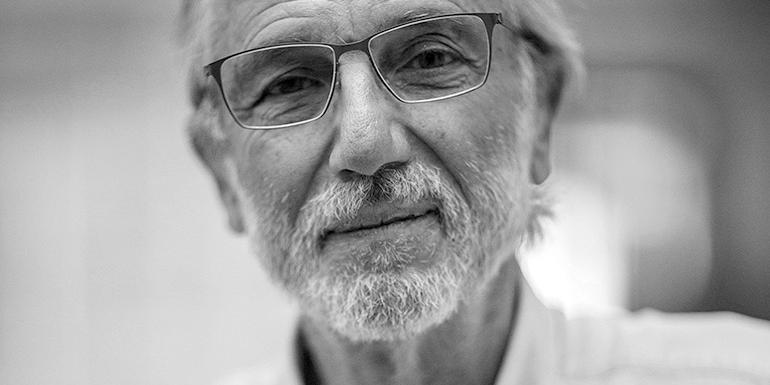
Renzo Piano is one of the most sought-after architects of our time. He is the 1998 Pritzker Prize laureate, one of the founders of the High-Tech style, and the principal of the architectural practice Renzo Piano Building Workshop.
In this article you will learn:
- about Renzo Piano's life;
- the defining characteristics of his architecture;
- about several of the architect's most significant projects;
- what the High-Tech style is;
- interesting facts about the architect.

Renzo Piano is the architect behind the Centre Pompidou in France, The Shard skyscraper in London, the New York Times Building in New York, the Astrup Fearnley Astrup Fearnley museum and the NEMO science museum in Amsterdam. Work has recently begun in Moscow on the renovation of the former GES-2 power station on Bolotnaya Embankment, where a cultural space is planned to open. Renzo Piano has completed projects across Europe, the United States, Australia, Korea, Japan and even New Caledonia. His building types range from residential complexes and office skyscrapers to bridges and airports — there is even a Ferrari wind tunnel and a sailing boat. Above all, however, he loves building museums, galleries and other cultural spaces.
Among Piano's achievements is his involvement with UNESCO. He worked on the restoration of historic buildings and old towns in Italy, Crete and Malta. Renzo Piano also served as a UNESCO Goodwill Ambassador for fifteen years. In 2006, Time magazine named him one of the world's most influential people, and in 2013 he was appointed a senator for life in Italy.
Piano is one of the founders of the High-Tech style, alongside Norman Foster, Nicholas Grimshaw, James Stirling and Richard Rogers. High-Tech — also known as Late Modernism — emerged in the 1970s. According to architect and founder of The Architects' Journal Colin Davies, the style represents a kind of balance between functionality and expressiveness. The principal materials of High-Tech are metal and glass.
Childhood
Renzo Piano was born in Genoa in 1937 into a family of builders. His grandfather, father, three uncles and brother all worked in the family firm. In the post-war years the company flourished, constructing houses and factories and selling building materials. Renzo himself initially wanted to become a musician, but, concluding that he lacked sufficient musical talent, chose the path of an architect.

Piano's childhood coincided with the grim years of Mussolini's National Socialist state. He grew up during the war and the devastation that followed. Piano watched as the country gradually rebuilt itself, new buildings rose and life found its footing again. As the son of a builder, Renzo frequently visited construction sites. 'If from childhood you watch a building go up and see that a column you are helping to raise grows taller every day — that this can be done with your own small hands — you understand that architecture is a miracle,' Renzo has said.
Another force that shaped Piano's outlook was Genoa itself. It is a port city, intimately bound up with the sea and the spirit of travel. Renzo's father often took him to the harbour as a child, where imposing ships resembling floating houses made a profound impression on the boy. Inevitably, the architectural heritage of Italy also played a part in the formation of the future master: 'Any architect born in Italy lives within the space of tradition,' Piano has said.
Education
Renzo Piano studied at the school of architecture of the Politecnico di Milano. While still a student he collaborated with several practices, worked for his father and spent time in the office of Franco Albini, an outstanding architect of his generation. Among Albini's achievements was the restoration of Renaissance buildings; the Italian government declared his body of work a national historic legacy. During those same years Piano married Magda Arduino, whom he had known since his school days in Genoa, and together they had three children.

After graduating from architecture school, Renzo Piano went on a placement in Philadelphia and then in London. The architect received his first significant commission whenhe was 32 years old. The brief was to design an Italian industrial pavilion for Expo 70 in the Japanese city of Osaka. The construction itself was overseen by Renzo Piano's brother, Ermanno, who went on to take part in a number of other projects until his death in 1993. The Expo 70 pavilion attracted considerable attention, including that of Richard Rogers, who would become Piano's future colleague. The two architects discovered they had a great deal in common and began working together.
Career
1971–1976
In 1971 Renzo Piano and the British architect Richard Rogers founded the practice Piano & Rogers in London. In the same year they won the competition to design the Centre national d'art et de culture Georges-Pompidou in Paris — also known as the Beaubourg, after the surrounding district. The project brought them fame and recognition and went on to become one of Paris's defining landmarks. Piano was just 34 at the time. During this period the architects also worked on several other projects — among them, in 1972, the headquarters they built for B&B Italia in Novedrate, north of Milan.


1977–1980
From the mid-1970s Piano stepped back from his collaboration with Rogers, and in 1977 he opened the Studio Piano & Rice together with the engineer Peter Rice. Before meeting Renzo, Rice had already worked on such celebrated projects as the Louvre Pyramid and the Sydney Opera House. His collaboration with Piano had begun during the construction of the Centre Pompidou. Together they completed several projects, including the flexible residential complex Il Rigo Quarter in Perugia and a workshop in Otranto, Italy. By 1981 the partners had closed their studio, yet Piano's collaboration with Rice continued until the engineer's death in 1992.
1981–...
By 1981 Studio Piano & Rice had already closed, and Renzo Piano founded a new studio,Renzo Piano Building Workshop(RPBW). In choosing this name, the architect paid tribute to his family and underscored the importance of the hands-on experience he had gained in childhood.
At the age of 55, Renzo Piano married for the second time. His new wife was Emilia Rossato, whom he had met when she came to work at RPBW. Piano had separated from his first wife some years earlier, during the construction of the Pompidou Centre, when he moved from Genoa to Paris. Piano and Rossato have a son, Giorgio.
In 1998 Renzo Piano received thePritzker Architecture Prize. By that year he had already designed a great many major and distinguished projects. Beyond the Pompidou Centre, these included the Menil Collection museum, offices for Lowara, the Prometeo music space, the San Nicola stadium, the Rue de Meaux housing complex, Kansai Airport in Japan, the NEMO museum in Amsterdam, and many others.
Notable Projects
The Shard
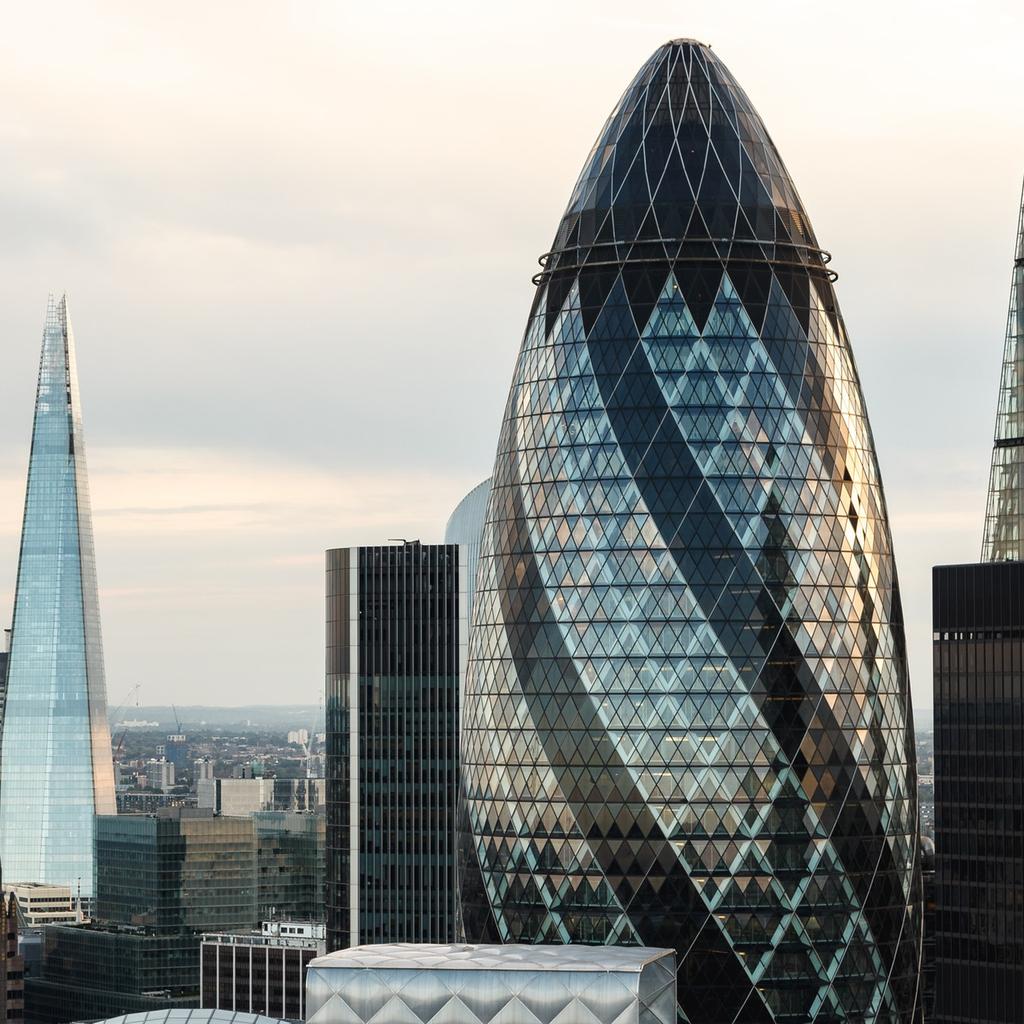
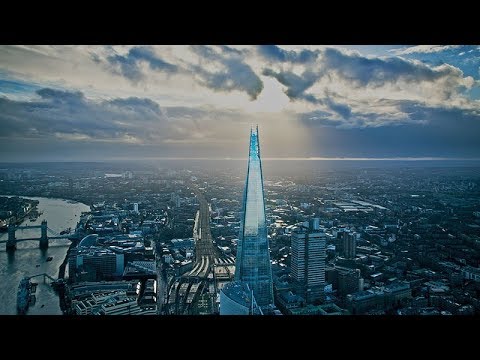
In 2012, construction was completed on the tallest building in the United Kingdom — The Shard. It was built right in the heart of the city, near London Bridge, on the site formerly occupied by the Southwark Towers office complex. The area is also home to the major London Bridge transport hub: the lower levels of the Shard connect directly to a railway station, a bus terminal, and an Underground station. The building houses office floors, residential apartments with panoramic views, restaurants, and even a hotel. From the observation deck at a height of 240 metres, visitors are treated to a breathtaking view over London.


Origins
The story of this building began in 1999, when Irvine Sellar decided to redevelop the ageing 1970s office blocks on the site and replace them with what he called a "vertical city". Sellar brought the idea to Renzo Piano, who, despite his personal aversion to skyscrapers, agreed to take on the project. He was drawn by the concept of a multi-functional building at the centre of the city.
The project was made possible by London's Mayor Ken Livingstone, whose policy sought to increase the density of development around the city's key transport hubs. Such an approach makes it easier for people to reach their offices by public transport, reducing congestion on the roads. Progress was not entirely smooth at first: the financial crisis of 2008 brought construction to a halt. Work resumed only in March 2009, when Qatari investors decided to back the project.
Architectural Features
The Shard is a fully glazed, pyramidal building standing nearly 310 metres tall. Despite the large number of people who work there, the car park provides only 40 spaces — a figure made possible by the skyscraper's location atop a major transport hub. In developing the building's form, the architect drew inspiration from the sailing masts that once crowded the Thames.
The material and form of the Shard serve not only an aesthetic purpose but also help to make the tower appear less massive against the surrounding cityscape. Piano chose extra-clear glass, which reflects the sky as faithfully as possible, blending into it while still allowing natural light to flood the interior. The walls are double-layered, preventing excess heat from entering the building. Between the layers sit blinds that respond automatically to changing light levels.
Criticism
Local residents were outraged by the Shard even while it was under construction: The Shard rose directly in the middle of London's historic centre and, in their view, spoiled the skyline. Today the building has become a local landmark and an inseparable part of the urban landscape. Critics also took aim at the skyscraper — for the excessive schematism and simplicity of its facades and the absence of human-scale detail. But Piano, as a leading exponent of High-Tech architecture, placed functionality above aesthetic elaboration.
The Pompidou Centre
As noted above, the project that brought Renzo Piano his fame was the Georges Pompidou National Centre for Art and Culture — or the Beaubourg, as it was originally known. The project was conceived by French President Georges Pompidou in 1969. In 1971, the French Ministry of Culture announced an international competition that drew 681 entries from 49 countries. The winners were ultimately Renzo Piano and Richard Rogers. The Pompidou Centre opened on 31 January 1977.


Origins
The Centre for Art and Culture came into being in the wake of Red May in 1968 — a period of social crisis in France that erupted into mass protests by students, intellectuals and workers. The events of May 1968 led to a change of government and the resignation of President Charles de Gaulle, whose place was taken by his political rival Georges Pompidou. The architects wanted to reflect that turbulent moment in history through their design.
Architectural Features
The central architectural idea of Piano and Rogers — the one that won them the competition — was to move all the building's service systems to its exterior. In doing so, they freed up an enormous amount of space inside the Pompidou Centre, space that could be given over entirely to art. The point of exposing these ungainly inner workings was also to reveal and demonstrate the very principles by which the Centre functions.
Every system has its own colour. The structural framework is painted white; staircases and lift structures are silver-grey; ventilation ducts are blue; water pipes and fire-suppression pipework are green; electrical elements are yellow and orange. The lift cabins and other means of movement are painted red. The most striking and memorable element of the facade is the red escalator, 150 metres long, which offers a remarkable view over the city.
After opening in 1977, the Beaubourg gradually became one of the city's landmarks. Today the Pompidou Centre houses the Museum of Modern Art (MNAM), a public reference library, a centre for industrial design, a children's library, an arts centre, a centre for audiovisual research (IRCAM) and several restaurants. All of this draws an enormous number of visitors, and the building now welcomes up to 3.8 million people a year.
Criticism
Although the Pompidou Centre is now one of the city's most popular destinations, it was initially met with a barrage of criticism for its provocative appearance — it was even compared to an oil refinery. Rogers himself had a memorable encounter while standing outside the building one day. It was raining, and a lady invited him to shelter under her umbrella. On learning that the man beside her was one of the authors of that 'dreadful' structure, she promptly struck him with that very same umbrella.
Renzo Piano is himself clear-eyed about the contradictions of his most celebrated project. He has said that the Pompidou Centre is 'a double provocation: a challenge to academicism and a parody of the technological imagery of our time. To read it as high-tech is a misunderstanding.' Piano describes it as 'the provocation of ill-mannered youth', and speaks of himself and Rogers as madmen.
Jean-Marie Tjibaou Cultural Centre
This cultural centre is located in New Caledonia, an island territory in the Pacific Ocean. It was conceived to ease ethnic tensions between the indigenous population and Europeans. New Caledonia is a special collectivity of France situated on one of the islands of Melanesia. The cultural centre was built to preserve and promote the culture of the islands' indigenous inhabitants, the Kanak people.
Origins
In the 1980s, New Caledonia was swept by independence movements that included mass demonstrations and armed guerrilla warfare. Tensions came to a head with the hostage-taking on the island of Ouvéa in 1988. The French government, unwilling to negotiate with the protesters, carried out a brutal operation in which several Kanaks were killed. Shocked by the incident, France made concessions. A decision was subsequently reached to grant New Caledonia a high degree of autonomy and to devote attention to the protection of local culture.
The leader of the civil conflict was Jean-Marie Tjibaou — son of a tribal chief, graduate of the Sorbonne, and founder and head of the Kanak Socialist National Liberation Front. The cultural centre built between 1993 and 1998 was named in his honour. Piano was assisted in developing the project by the revolutionary's widow, Marie-Claude Tjibaou, and anthropologist Alban Bensa. The architect himself also spent time among the local community in order to gain a deeper understanding of their culture.
Architectural features
In designing the project, Renzo Piano drew inspiration from the traditional thatched dwellings of the islands' indigenous people. The pavilions are constructed from iroko, a durable African timber resistant to termites. Air temperature within the pavilions is regulated by natural airflows moving in from the bay — an effect achieved through two architectural devices. First, the walls are double-layered: an outer shell of timber and an inner one of glass. Second, horizontal louvres respond to air currents, helping to control the temperature.
The ten pavilions are arranged in three clusters, each of which contains one hut taller than the rest — echoing the principle of a tribal chief's dwelling. The pavilions house an open-air theatre, offices for historians, researchers and exhibition curators, a multimedia library, conference halls, and a school where children learn traditional local arts. There are also exhibition galleries for permanent and temporary displays, where visitors explore Kanak culture and history, as well as studios for creative practice: dance, painting, sculpture and music.
Criticism
Despite all the acclaim, Piano's project has not been without its critics. Although the Centre's form is abstractly beautiful and ecologically considered, it is inevitably foreign to local culture and building tradition. Even the timber used for the huts is imported, despite being intended to evoke materials native to local construction. The result is that a monument to Kanak culture has, like the Kanak people themselves, become a casualty of pervasive globalisation.
GES-2
The conversion of former industrial buildings into cultural spaces has become a widespread phenomenon. Their vast, raw interiors, steeped in history, are remarkably well suited to contemporary culture. The next such building to undergo this transformation — in 2019 — will be the former GES-2 power station, situated near Krasnyi Oktyabr in Moscow.

History
GES-2 came into being at the start of the twentieth century, when Moscow's first tram lines were being laid. To supply them with electricity, the city's first state power station — GES-2 — was built in 1907. The project was designed by V. N. Bashkirov with the involvement of V. G. Shukhov. The station was closed in 2006, and in 2014 Leonid Mikhelson, founder of the V-A-C Foundation for contemporary art, decided to build a museum on the site and acquired the building. Renzo Piano was invited to serve as architect.
Architectural features
This project echoes the Centre Pompidou: Piano plans to make the building's engineering systems partially visible, but in a softer, more understated way. The architect wants to show visitors everything that goes on behind the scenes to keep the building running sustainably. For example, certain sections of the air-intake ducts are to be made transparent, so that the ventilation equipment inside can be seen.
A museum is a very interesting project in terms of people. Constructing buildings is interesting, but imagining new spaces is even more so.
In this project, Renzo Piano aims to create a space where people can come for art, new experiences, a sense of unity and shared values. 'A museum is a very interesting project in terms of people. Constructing buildings is interesting, but imagining new spaces is even more so,' says Piano.
Sustainability is another central idea of the project. The pipes that once carried dirty air out of the building, for instance, will be replaced with steel ones that draw in clean air from a height of 70 metres. The building's main façade will shield the interiors from the cold, generate electricity from solar energy, and protect the galleries from direct sunlight. In addition to solar power, the project plans to harness energy from the river. A small birch grove will be planted in the courtyard of GES-2.
The interior of the building will be made as open and transparent as possible. Glass ceilings and walls on the ground floor will admit an abundance of natural light. Piano plans to divide the interior into zones with a wide variety of functions: spaces for all kinds of exhibitions, displays and educational programmes. There will also be a School of Arts, where critics, art historians and exhibition curators can study.
The defining characteristics of Renzo Piano's architecture
In his early projects, Renzo Piano experimented with various materials and construction methods, pursuing flexibility and lightness of space. One focus of his research was unconventional materials and the possibilities of applying them in construction. This process ultimately shaped his future style.
Renzo Piano does not work within rigid frameworks. He believes that architecture must respond to the needs of people and the environment, and serve its intended purpose. As a result, his projects tend to look quite different from one another. Even so, there are several qualities that recur throughout Piano's architecture.
Merging with the environment
Renzo Piano pays close attention to the setting in which a future building will take shape: he seeks to integrate the structure into the landscape and uses local materials to blend with the surroundings. The main material of the Padre Pio Church in the Italian province of Foggia, for example, closely resembles the local red sandstone.

Piano strives to understand the environment and create something that responds to local needs. The Paul Klee Centre in Switzerland, which continues the rolling hills of the surrounding landscape, is one such example. The architect describes his approach: 'There are people who arrive with their architecture like a suitcase and move it from America to Europe, from Paris to Madrid, from New York to Sydney. As for me, I first take a stroll with my cigar and look, look…'
The building turned inside out
Exposed services are the most striking feature of the Centre Pompidou. Piano employed the same technique in several other projects as well. The first such structure was the Expo 70 pavilion, followed later by the Thomson Optronics factory in France and the headquarters of B&B Italia.

The Centre Pompidou's colour-coded services are fully on display, demonstrating the principles by which the building operates. With the same aim in mind, certain sections of the air-intake ducts at the GES-2 cultural centre will be made transparent, so that the ventilation equipment can be seen.
Light and air
Another defining characteristic of Renzo Piano's architecture is his love of light, air and the manipulation of space as a whole. 'In my architecture I try to use immaterial elements such as transparency, lightness and the vibration of light. I believe they are as much a part of the composition as form and volume,' the architect says.

'The ingredients in architecture are always the same: light, air and a breeze'
The New York Times building, for instance, is entirely glazed, allowing natural light to flow freely inside. Here Piano also embedded the idea of the newspaper's own 'transparency.' 'The ingredients in architecture are always the same: light, air and a breeze,' Piano shares his view on architecture.
Energy efficiency
Piano frequently builds structures with a double-skin envelope. This reduces energy consumption through improved thermal exchange and by making the most of natural light and wind energy. The walls of the Cité Internationale complex in Lyon, for example, are made of glass and terracotta. The gap between them acts as a heat exchanger, retaining warmth inside the buildings.

Alongside energy-saving technologies, Piano regularly incorporates landscaping into his projects. These include the Stavros Niarchos Foundation Cultural Center in Greece and the roof of the California Academy of Sciences. The American Institute of Architects recognized the latter as one of the most striking and effective examples of green architecture.
Renzo Piano on architecture
In his Pritzker Prize acceptance speech, Piano said a few words about what architecture means to him. First and foremost, he regards it as a service — an art that serves a specific purpose. An architect bears an especially high degree of responsibility for what he creates. A bad book can be closed; music can be switched off. But an ugly building outside your window is inescapable. Architecture, Piano believes, should be open and welcoming to people.
Architecture is society, because it cannot exist without people and their aspirations.
Renzo Piano also compared architecture to an iceberg. Its tip is what the ordinary observer sees. But what pushes it above the surface is the submerged mass, made up of three elements: society, science and art. Piano regards these as the most essential components of his work. Architecture is society, because it cannot exist without people and their aspirations. Architecture is also science: an architect must be a researcher, possessed of curiosity, courage and a drive for adventure. And finally, architecture is art: it stirs emotion in people, doing so in its own language — one composed of space, proportion, light and materials.
Other works by Renzo Piano
Interesting facts
— Renzo Piano originally dreamed of becoming a musician, and explained his ultimate choice of profession this way: 'I wanted to be a musician, but I wasn't good enough, so I became an architect.'
— Renzo Piano was involved in UNESCO activities. The architect reconstructed the city of Otranto in 1979, restored the historic centre of Genoa, the ancient arsenals of Chania on the island of Crete, the city gates of Valletta in Malta, and built the Jean Marie Tjibaou Cultural Centre in Nouméa. He also created the experimental UNESCO & Workshop studio in Vesima, Italy. In 1995, Piano was appointed a UNESCO Goodwill Ambassador.
— Piano has 50 employees and three offices: in Paris, Genoa and New York — in the countries where he receives the most commissions. He lives in Paris in an old seventeenth-century house, close to his office.
— Renzo Piano's favourite architect is Brunelleschi, the Renaissance master who designed the dome of the famous Cathedral of Santa Maria del Fiore in Florence.
— Renzo Piano's daughter Lia is the only one of his children to have followed in her father's footsteps and become an architect.
— In January 1995, a 7.0-magnitude earthquake struck Kobe, Japan, causing enormous destruction throughout the city. The Kansai Airport, designed by Piano, stood at the same distance from the epicentre, yet not a single pane of glass was broken there. Later, in 1998, the airport withstood a devastating typhoon with winds of 200 km/h.
— The Shard might have become the tallest skyscraper in Europe. But while it was under construction, it was overtaken by Moscow's OKO, Federation and Mercury towers, and now also by the Lakhta Center in St Petersburg and the Akhmat Tower in Grozny, both still under construction.
An interview with Renzo Piano in English
If you are interested in Renzo Piano's work, we invite you to read about his Astrup Fearnley Museum of Modern Art in the article on Norwegian architecture. Losko has also published profiles of other architects:
— Le Corbusier — a visionary innovator in modern architecture;
— Ludwig Mies van der Rohe — the genius of open-plan design;
— Frank Gehry — the expressive genius of deconstructivism;
— Alvar Aalto — the benchmark of Scandinavian architecture;
— Zaha Hadid — the first woman to receive the Pritzker Prize.
Follow us on social media to stay up to date with new content: VKontakte, Telegram — @loskomagazine.